Need Specifications or a Quote?
Share your ventilation project requirements and our engineers will reply within 12 hours with technical specs, pricing, and lead time.


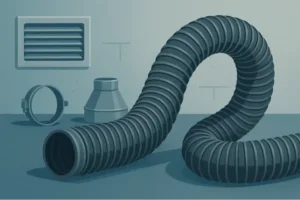
When it comes to optimizing airflow for HVAC systems, industrial applications, or automotive setups, selecting the right air duct hose is critical. Each application demands specific properties, from flexibility and heat resistance to durability and compatibility with existing components. Yet, with so many material options and performance factors to consider, how do you determine the best fit for your needs?
A poorly chosen duct hose can lead to inefficiencies, costly delays, or even system failures, making an informed decision essential to achieving reliable and energy-efficient performance. Whether you need a flexible duct hose for tight installations or durable industrial-grade tubing to handle abrasive particles, understanding key factors—such as material selection, sizing, and longevity—ensures optimal functionality and cost-effectiveness for your application.
In this guide, we’ll explore the essential considerations behind selecting the best air duct hose. From discovering advanced materials to learning maintenance strategies, you’ll gain actionable insights to tailor your choice for HVAC, industrial, or automotive systems. Let’s dive into the specifics that will help you make an effective and lasting decision.
Choosing the right air duct hose is essential for ensuring optimal performance across different applications, from HVAC systems to industrial and automotive uses. Below are the key takeaways that provide insights into materials, application-specific requirements, and important considerations to help professionals make informed decisions.
By understanding the nuances of material properties, installation requirements, and maintenance strategies, professionals can select the best air duct hose for their specific application, ensuring efficient operation and long-term reliability. In the following sections, we’ll explore various material types, performance factors, and installation best practices to help you make the perfect choice for your needs.
Selecting the correct air duct hose begins with a clear definition of the operating environment. Commercial, industrial, and automotive systems all impose different mechanical, thermal, and chemical stresses on a flexible duct hose or rigid duct solution. Misjudging these conditions is one of the most common reasons for premature hose failure and performance loss.
Professionals should first document the basic operating parameters. These include ambient and process air temperatures, exposure to UV light or weather, potential contact with oils or solvents, the likelihood of abrasion from particulates, and whether the hose will experience static pressure, vacuum, or both. This initial analysis will heavily influence whether you choose a lightweight HVAC duct hose or a more rugged industrial air duct designed for harsh service.
Once the environment is understood, the next step is to align airflow, pressure, and application-specific constraints with suitable hose constructions, reinforcing how critical accurate requirement gathering is to the overall system design.
The performance of any ventilation hose depends on how it responds to system pressures and flow rates. Static pressure capability, burst pressure, and vacuum resistance all differ by hose type, materials, and reinforcement design.
In low-pressure commercial HVAC systems, a standard HVAC duct hoses product is often adequate, as static pressures rarely exceed a few inches of water column. However, for industrial fume extraction, dust collection, or engine intake systems, hoses must often tolerate significantly higher negative pressures and pulsing flow. In such cases, spiral-wound or wire-reinforced air intake ducting becomes essential to prevent collapse and maintain cross-sectional area under suction.
Airflow volume further shapes selection. For long runs with high cubic feet per minute (CFM), friction losses in the hose wall can increase fan energy use and reduce capacity. Engineers frequently use smooth-bore hoses or transition to rigid spiral duct materials to minimize pressure drop. Matching hose diameter and internal surface characteristics to fan performance curves, often in tandem with well-sized axial fans, can reduce energy consumption by 10–15% across a typical commercial system.
With airflow and pressure parameters defined, temperature ratings and thermal cycling come next, especially for industrial and automotive applications where overheating can rapidly degrade hose materials.
Temperature is one of the most decisive factors when choosing the best air duct hose for HVAC systems or industrial service. Every material, whether thermoplastic, elastomeric, or metallic, exhibits a defined operating range and a distinct behavior under continuous heat, cold, or rapid cycling.
Standard polyester or PVC-based flexible duct hose is suitable for typical HVAC supply and return air, generally operating from -20°C to 80°C. For higher-temperature exhaust, bakery ovens, paint booths, and metalworking fume extraction, silicone-coated fiberglass or aluminum-laminated hoses may be required, with continuous service temperatures in the 150–260°C range. Automotive turbocharger or engine bay ducts may need to withstand even more extreme hotspots, demanding specialized high-temperature silicone composites or metal ducting.
Thermal cycling—frequent changes between hot and cold conditions—accelerates fatigue in both the substrate and any reinforcement wire or fabric. In an industrial case study, a metal fabrication plant replaced a low-cost PVC exhaust hose on cutting tables that cycled from ambient to 120°C daily. The hoses repeatedly cracked within months. After switching to a silicone-glass composite hose rated for 250°C and improved thermal shock resistance, service life extended from 4 months to over 3 years. Despite the higher unit cost, the plant realized an estimated $120,000 in avoided downtime and replacement labor over that period.
Once temperature constraints are clear, chemical exposure and contamination risks must be evaluated to avoid unexpected reactions, swelling, or material degradation.
Chemical compatibility and abrasion resistance are often underestimated in industrial air duct selection. Yet, contact with cleaning agents, solvents, oils, and particulate-laden air can dramatically shorten hose life or introduce contamination risks.
In automotive and industrial plants, oil mist and cutting fluids can attack certain thermoplastics, leading to softening or embrittlement. For example, a flexible PVC ventilation hose exposed continuously to petroleum-based vapors may deform or suffer micro-cracking. In such environments, polyurethane (PU), neoprene, or specialized chemical-resistant compounds provide significantly better service life.
Abrasion is another frequent failure mode. In dust collection or grain handling, the inner wall of the hose is continuously eroded by particles. A thin-wall fabric hose may wear through in months, whereas a heavy-duty polyurethane-lined hose can last years under the same load. Selecting hoses with thicker inner layers, abrasion-resistant PU, or transitioning to rigid rectangular duct and fittings in straight runs can reduce replacement cycles by 50–70% in high-dust applications.
Outdoor or rooftop installations require attention to UV and weather resistance as well. Many standard polymer hoses degrade quickly under direct sun exposure, while UV-stabilized or coated materials offer far longer lifespans. Situations involving corrosive fumes may justify stainless steel ducting or coated double wall rectangular duct for sections exposed to harsh conditions, then transitioning to flexible hoses only where movement and vibration must be managed.
With environmental and chemical exposures characterized, engineers can proceed to the next crucial dimension: the mechanical behavior of the hose, including flexibility, bend radius, and installation constraints.
Different air duct hose materials are optimized for specific balance points between flexibility, temperature resistance, durability, machinability, and cost. Commercial buyers and designers must recognize that there is no universal “best” material; suitability always depends on application context and performance priorities.
The main options include textiles (often polyester or fiberglass), PVC and vinyl compounds, polyurethane (PU), silicone, neoprene, and metallic constructions such as aluminum or stainless steel. Each reacts differently to heat, chemicals, mechanical fatigue, and negative pressure.
To simplify comparison, the table below summarizes typical performance characteristics of several common hose materials used in HVAC duct hoses and industrial settings.
| Material | Typical Temp Range | Chemical Resistance | Abrasion Resistance | Flexibility | Cost Level | Typical Use Cases |
|---|---|---|---|---|---|---|
| PVC / Vinyl | -20°C to 80°C | Fair (limited vs. oils/solvents) | Low–Medium | High | Low | General HVAC, light ventilation |
| Polyurethane (PU) | -40°C to 90°C | Good for many oils, fuels | High | Medium–High | Medium | Dust collection, granular media |
| Silicone-Coated Fiberglass | -60°C to 260°C | Good (varies by compound) | Medium | Medium | High | High-temp exhaust, ovens, engines |
| Neoprene-Coated Fabric | -35°C to 135°C | Good vs. oils, moderate chemicals | Medium | High | Medium | Vehicle, machinery ventilation |
| Aluminum / Stainless Metal | -50°C to 400°C+ | Excellent (stainless), good (aluminum) | High | Low (rigid) | High | High-temp, corrosive or structural runs |
Understanding how these baseline characteristics translate into real-world reliability and total cost of ownership is the key to how to choose the right air duct hose for any given project.
PVC-based hoses are common in light-duty HVAC and general ventilation due to their low cost and good flexibility. They are often reinforced with a helix of spring steel wire to provide shape retention while keeping the wall thin and bendable.
These hoses perform well for conditioned air, bathroom or office ventilation, and low-temperature exhaust where the air stream is clean and chemical exposure minimal. PVC is also commonly used for economy-grade dryer or temporary ducts. However, PVC softens at elevated temperatures and can become brittle in extreme cold, limiting its use in demanding industrial or automotive settings.
Commercial buyers should treat PVC as a baseline option. It works best in environments similar to those described in HVAC air duct system basics, where air is near ambient conditions and contamination risks are low. For more aggressive conditions, upgrading to polyurethane or coated fabrics will provide longer service life and lower lifecycle cost.
Polyurethane hoses offer a valuable combination of abrasion resistance and flexibility. For dust, chips, sawdust, or grain, PU’s excellent wear properties significantly outlast PVC, which is why many high-performance industrial air duct and dust collection systems use PU as the primary material.
PU can tolerate moderate oils and fuels, making it suitable for automotive plant ventilation, machining centers, and mixed industrial environments. Its temperature range covers most non-extreme applications. In one woodworking facility, replacing standard PVC duct hoses with heavy-duty PU hoses decreased hose-related downtime incidents by over 60% and reduced annual hose replacement costs from approximately $80,000 to $45,000, while keeping performance stable over three seasons.
For long, straight runs, pairing PU hoses with rigid spiral duct materials or rectangular duct and fittings allows facilities to balance flexibility where needed with durable, low-loss rigid ductwork elsewhere. This hybrid design often yields the most economical solution.
When temperature requirements exceed conventional thermoplastic limits, engineers turn to silicone-coated fiberglass and neoprene-coated fabrics. These materials are common in high-temperature air intake ducting for gas turbines, engine compartments, ovens, and industrial process exhaust.
Silicone-coated fiberglass hoses typically handle continuous temperatures up to 260°C and short bursts even higher. They maintain flexibility across a wide temperature swing and resist many chemicals. Neoprene-coated fabrics have excellent flex-fatigue performance and good resistance to oils, fuels, and outdoor environments, making them well-suited to mobile equipment and vehicle HVAC systems.
Because these hoses are generally more expensive, they are best reserved for zones where standard materials would fail prematurely. For example, a commercial bakery originally used medium-grade PVC ducts near oven doors. High temperatures caused deformation and frequent replacements. Upgrading to silicone-coated fabric ducts, combined with double wall rectangular duct for insulated supply lines, increased hose lifetimes by over 400% and improved temperature control uniformity, enabling a 12% reduction in energy consumption over a year of operation.
After deciding on the base material, the next consideration is whether to use flexible hoses, rigid ducts, or a combination, and how this choice interacts with system design constraints.
For extreme temperatures, structural requirements, or highly corrosive environments, metallic ducting—aluminum, galvanized steel, or stainless steel—often provides the most robust solution. While not typically described as “air duct hose,” these rigid systems commonly work alongside flexible ducts to create a complete HVAC duct hose network.
Galvanized or stainless spiral duct materials offer smooth interiors for low pressure drop, long service life, and excellent mechanical strength. Stainless steel excels in corrosive or high-temperature environments, such as chemical processing exhausts or food manufacturing washdown areas. For noise-sensitive or thermally critical zones, insulated double wall rectangular duct introduces an additional barrier for acoustic and thermal control.
Many high-performance installations use composites: flexible silicone or neoprene expansion joints connect segments of rigid metal duct to accommodate thermal expansion, vibration, or machinery movement. This composite approach optimally balances rigidity, durability, and targeted flexibility.
With material options clarified, the focus shifts to specific industry sectors, where the same materials behave differently due to distinct duty cycles and regulatory requirements.
In commercial and residential HVAC, the primary goals are comfort, energy efficiency, safety, and compliance with building codes. Here, air duct hose selection must support consistent airflow distribution, low leakage, appropriate acoustic performance, and fire safety classifications.
Commonly, HVAC projects blend rigid duct and flexible hose. Long runs are executed in rigid galvanized ducts—such as rectangular duct and fittings or spiral duct materials—with short lengths of flexible duct used to connect diffusers or equipment, minimize transmitted vibration, and simplify field connections. Improper use of long, undersized flexible duct runs can introduce excessive static pressure and noise, as described in resources like HVAC air duct system basics.
Residential systems often emphasize insulated flexible ducts for thermal and condensation control, whereas commercial facilities may prioritize ease of cleaning, accessibility, and compatibility with top HVAC ductwork supplies like dampers and fire/smoke controls. Flame spread ratings, smoke development indices, and plenum requirements influence allowable materials for HVAC duct hoses in code-governed spaces.
Having established HVAC priorities, we can contrast them with industrial environments, where mechanical and chemical stressors take precedence over human comfort.
Industrial plants, fabrication shops, and process facilities impose far more demanding conditions on industrial air duct systems. Dust, fumes, hot gases, abrasive particles, and corrosive vapors are common. System failures risk not only production downtime but also worker safety and regulatory non-compliance.
Dust collection and bulk material handling can rapidly wear down hoses that are not designed for abrasion. Facilities often adopt heavy-duty PU or rubber-lined hoses for high-wear sections and rigid metal ductwork for main trunks. In welding or cutting shops, high-temperature, spark-resistant hoses are vital to avoid fire hazards. Chemical plants may require stainless steel ducts and chemically resistant hose sections to integrate with process equipment.
A metal finishing facility, for instance, replaced a patchwork of general-purpose PVC hoses with application-specific, abrasion-resistant ducts in its grinding and blasting area. This upgrade, combined with optimized layout and diameter selection, increased capture efficiency by 20% and reduced rework due to contamination by 15%. The net effect was a documented $5.3M in annual productivity gains and reduced environmental compliance costs.
With industrial demands explored, the automotive sector illustrates another distinct pattern: high vibration, space constraints, and often elevated temperatures.
Automotive and transportation applications require hoses that withstand continuous vibration, motion, temperature fluctuations, and exposure to oils, fuels, and road contaminants. Under-hood ducts for air intake or turbo systems must maintain structural integrity, dimensional stability, and leak-tightness under demanding conditions.
Flexible neoprene, silicone, and EPDM-based hoses are widely used for engine air intake and HVAC systems inside vehicles. These materials balance heat resistance, flex fatigue, and chemical compatibility. For vehicle service bays and garages, tailpipe exhaust extraction systems use high-temperature, crush-resistant ventilation hose to move exhaust safely outdoors without kinking or collapsing when driven over or misaligned.
In heavy-duty fleets, poor hose choices can lead to recurring failures. One logistics operator documented a pattern of cracked intake hoses on diesel trucks, resulting in unmetered air entry, incorrect fuel-air ratios, and reduced engine life. After switching to high-temperature silicone air intake ducting assemblies with better oil resistance, intake-related failures dropped by 75%, and average engine overhaul intervals improved by approximately 80,000 miles.
These industry-specific scenarios highlight how different operational profiles reshape what “durable” or “cost-effective” means in practice, leading into the crucial dimension of mechanical design and flexibility.
One of the main reasons to choose a flexible duct hose instead of rigid ducting is the need to navigate tight spaces, accommodate misalignment, or isolate vibration. However, every hose has a minimum recommended bend radius. Exceeding this limit increases internal stresses, crush risk, and pressure drop.
The bend radius is typically specified as a multiple of hose diameter. For instance, a 200 mm diameter hose may have a minimum bend radius of 300–400 mm. Tightening this radius to “make it fit” around building structure or machinery may cause kink points that restrict up to 30–50% of cross-sectional area, creating significant localized noise and loss of airflow.
In HVAC retrofits where space is constrained, careful 3D coordination between housings, ducts, and other trades reduces pressure to over-bend hoses. Where tight turns are unavoidable, rigid elbows or formed transitions combined with short flexible connectors often outperform a single sharply bent hose section both in efficiency and durability.
Flexible hoses subjected to vacuum, external mechanical loads, or foot traffic require excellent crush resistance. Cut-rate thin-wall hoses might appear cost-effective initially but can flatten under negative pressure or occasional impacts, leading to blockages and unplanned maintenance.
Spiral-reinforced hoses, especially those with steel or rigid plastic helixes, maintain cross-section better under suction. For industrial vacuum and dust collection, selecting a hose rated for the system’s maximum vacuum pressure and including a safety margin is critical. In automotive garages, heavy-duty exhaust hoses are specifically designed to recover shape after being driven over, preventing chronic flow restrictions.
Pairing appropriate hose stiffness with correct support spacing, which will be discussed next, ensures long-term reliability even in high-traffic or high-vacuum environments.
Even the best air duct hose will sag if unsupported over long spans. Excess sagging increases friction losses, traps condensate or dust, and places additional stress on the hose wall. Following good support practices, such as those highlighted in common air duct installation issues & performance loss prevention, can significantly improve system performance.
Manufacturers generally specify maximum support spacing for each hose type. Light cloth or PVC ducts might require supports every 1–1.5 meters, while heavier reinforced hoses can span slightly longer distances. Horizontal runs particularly benefit from hangers or saddles that preserve the hose’s circular shape without pinching or flattening it.
Sharp transitions, sudden area changes, or improper splices also degrade performance. Using factory-made connectors, reducers, and adapters from a high-quality supply line such as top HVAC ductwork supplies often yields more predictable airflow behavior and fewer field issues than improvised fittings.
Once the mechanical layout is sound, attention turns to system-level performance considerations such as pressure drop, noise, and energy consumption.
System designers must balance hose diameter and length to control frictional losses. For a given airflow, smaller diameters increase velocity and friction, generating higher static pressure and requiring more fan power. Longer runs compound this effect. Flexible hoses typically have a higher roughness factor than smooth metal ducts, further raising resistance.
In a commercial HVAC retrofit, replacing 25 meters of undersized, overly wrinkled flexible duct with 18 meters of smooth spiral duct materials and only 7 meters of properly sized flexible duct allowed the fan to operate at lower speed while still maintaining design airflow. The building’s annual fan energy usage dropped by 18%, saving roughly $27,000 in electricity costs, while noise levels fell by 4–5 dB in occupied spaces.
Such examples illustrate how hose choice and layout directly influence operating costs, not just installation expense.
Air turbulence, abrupt direction changes, and resonance within vent lines are significant contributors to system noise. Flexible ducts with corrugated interiors can generate more turbulence than smooth-walled ducts, especially at high velocities or sharp bends.
In noise-sensitive environments—offices, hospitals, studios—designers often use rigid metal ducts for main trunks and then short, acoustically lined flexible connectors near diffusers. Insulated or double-wall ducts, such as double wall rectangular duct, can also provide built-in acoustic damping. Hoses specifically marketed as “acoustic” often include internal lining or structural features that break up noise waves.
Optimizing fan selection alongside duct design, referencing tools and guidance similar to those for axial fans, further reduces tonal noise and vibration, contributing to occupant comfort and equipment longevity.
Every leak, restriction, or turbulence source within an HVAC duct hose system manifests as wasted energy. In many buildings, poorly installed or low-quality ducts contribute to 20–30% energy losses through leakage and inefficiencies. Industrial plants can fare even worse, as systems are frequently modified, extended, or patched over time.
Choosing higher-quality hoses with robust cuffs and collars, using compatible rigid ducts like rectangular duct and fittings, and ensuring proper sealing can substantially reduce these losses. For instance, a large retail distribution center conducted an air distribution audit and replaced aging, leaking fabric ducts and connectors with new, properly sized hoses and sealed metal trunks. The retrofit reduced measured leakage by approximately 40% and delivered a verified 14% reduction in annual HVAC energy costs.
To maintain these gains, systematic maintenance strategies are required, because even well-designed systems degrade over time without proper inspection and cleaning.
Before installing any air duct hose, designers and contractors must verify that hose diameter, temperature rating, and pressure capability match the engineered design. Deviations in diameter can dramatically affect performance; upsizing a hose might reduce velocity too much, while downsizing increases noise and resistance.
Reviewing design documentation and, when needed, leveraging guides such as the air duct material selection guide helps avoid costly rework. Checking compatibility with fans, dampers, and diffusers—and confirming that hose end fittings match mating components—saves time and prevents unreliable field improvisations.
Leaks commonly occur at joints between flexible hoses and rigid ducts or equipment connections. Best practice is to use purpose-built collars, clamps, or flanges that ensure full circumferential contact. Metal band clamps with tensioning mechanisms generally provide better, more consistent sealing than simple worm gear clamps, especially on larger diameters.
Where flexible ducts connect to metal trunks, round take-offs or transition pieces should be used instead of direct tap-ins, which can create uneven airflow distribution. Integrating transitions with high-quality components such as top HVAC ductwork supplies and matching surface finishes helps maintain air-tightness and minimize pressure losses.
Sealing materials must be compatible with hose composition and operating temperature. Solvent-based sealants may attack certain plastics, while silicone sealants perform better in high-temperature applications.
Proper routing avoids physical damage, minimizes airflow restrictions, and ensures compliance with mechanical and fire codes. Hoses should not be routed across sharp edges, subjected to continuous rubbing against structural elements, or squeezed behind equipment with insufficient clearance.
Where ducts pass through walls, floors, or fire-rated assemblies, transition to appropriate rated rigid ducting—such as double wall rectangular duct or other code-compliant assemblies—is often necessary. Flexible duct may be limited or prohibited in certain concealed spaces or plenums depending on local codes, emphasizing the importance of working within regulatory frameworks.
With installation complete, maintaining system performance over its full life cycle requires proactive inspection, cleaning, and component replacement programs.
Regular inspection of air duct hose components is vital for retaining efficiency, safety, and indoor air quality. Many failures occur gradually and can be mitigated with planned checks rather than reactive repairs.
Facility managers should implement inspection schedules that align with guidance similar to air duct maintenance tips. High-stress industrial hoses may warrant quarterly inspections, while standard HVAC hoses in clean environments might only need annual reviews. Key inspection points include visible wear, cracking, soft spots, discoloration from heat, loose connections, and evidence of leaks or condensation accumulation.
Dust, biological growth, grease, and other contaminants can accumulate inside hoses, affecting both airflow and hygiene. In HVAC systems, microbial growth and particulate buildup contribute to poor indoor air quality and occupant complaints. In manufacturing, residue buildup may contaminate products or increase fire risk.
Hoses should be selected with cleaning in mind. Smooth-bore hoses and rigid ducts are easier to clean than rough fabric interiors. For processes involving food, pharmaceuticals, or sensitive electronics, hoses must meet appropriate cleanliness standards and allow access for sanitization or replacement. Leveraging insights from performance loss prevention, facilities often design access panels in rigid segments and use quick-disconnect couplings on hoses to simplify periodic cleaning.
When hoses exhibit damage, decision-makers must balance repair and replacement costs against reliability and safety. Temporary repairs using tapes or clamps can address minor issues but should not become permanent solutions in critical exhaust, fume, or high-temperature applications.
A structured lifecycle analysis might reveal that using higher-quality hoses, even at higher initial cost, reduces overall expenses. For example, an automotive parts manufacturer tracked hose failures over three years and found that premium PU hoses with heavier helix reinforcement cut emergency repair events by 65% compared with economy PVC hoses. This reduced unplanned downtime by an estimated 220 hours annually, equating to over $1.8M in recovered production capacity.
With maintenance and lifecycle strategies in place, the final dimension in selecting and managing air duct hose systems is understanding emerging trends and innovations that can further improve performance and sustainability.
Advances in polymers, composites, and surface treatments are expanding the capabilities of flexible duct hose products. New formulations of polyurethane and silicone offer improved temperature ranges, chemical resistance, and low outgassing properties for sensitive applications such as semiconductor manufacturing or pharmaceutical production.
Specialized coatings can reduce internal roughness, lowering friction losses and making hoses easier to clean. Anti-microbial inner linings, for example, support hygiene-focused facilities like hospitals, food processing plants, and cleanrooms. Pairing these advanced hoses with high-quality rigid components like spiral duct and fittings or rectangular duct and fittings allows designers to create hybrid systems that maximize both performance and cleanliness.
As buildings and factories move toward Industry 4.0, air duct hose systems are increasingly integrated with sensors and data analytics. Differential pressure sensors installed across filters, hose sections, or critical bends provide real-time feedback on clogging or wear. Temperature and vibration sensors can alert operators to abnormal conditions that might signal hose degradation or system imbalance.
By combining these sensor outputs with predictive maintenance algorithms, facilities can schedule hose replacements or cleanings before failures occur. In one logistics warehouse, adding simple differential pressure sensors and analytics to its high-volume HVAC duct hoses network reduced unplanned outages from clogging events by 70% and optimized filter change intervals, saving approximately $120,000 per year in maintenance and energy costs.
Holistic system design increasingly treats hoses, rigid ducts, fans, and controls as a single integrated package rather than separate components. Leveraging tools and expertise akin to those on BromingHvac, designers can model duct routings, choose appropriate HVAC duct hoses, and match them with axial fans or other air movers for optimal efficiency.
This integrated approach encourages judicious use of flexible hoses—employing them only where they meaningfully add value in vibration isolation, alignment tolerance, or equipment serviceability—while relying on high-performance rigid ducts like double wall rectangular duct to minimize losses and simplify maintenance. As building codes and sustainability standards tighten, this combination of informed material selection, smart technology, and best-practice installation will define the next generation of high-performance air handling systems.
Choosing the appropriate air duct hose is no longer a straightforward decision, as distinct environments and operational demands require customized solutions to balance durability, flexibility, temperature resistance, and cost-effectiveness. The integration of various hose materials and ducting systems across commercial, industrial, and automotive applications showcases a critical need to understand each context’s unique stressors and how they impact system reliability and efficiency.
From defining the operating environment to matching airflow and pressure needs, the initial stages of selection are far-reaching in their impact. For commercial applications, lightweight HVAC duct hoses often suffice, whereas industrial and automotive settings demand more rugged materials like polyurethane-lined or silicone-coated hoses. Failure to account for temperature extremes or chemical exposure could result in premature degradation, costly replacements, and operational risk.
The analysis has also underscored the importance of system calibration, exemplifying how well-sized hose diameters and smooth transitions between rigid ducts, such as rectangular duct and fittings, reduce turbulence, noise, and energy waste. Engineers leveraging these principles save resources while maintaining consistent airflow performance and occupant comfort.
Emphasizing material advancements like silicone composites or anti-microbial liners, paired with monitoring tools like differential pressure sensors, reveals the growing role of technology in air duct optimization. These cutting-edge solutions, combined with techniques such as transitioning to advanced rigid ducts like spiral duct materials or double wall rectangular duct for critical installations, enhance reliability while improving energy efficiencies across varied applications. Smart system integration reflects the forward-looking evolution of duct hose technology into the realm of predictive maintenance and sustainability.
Across sectors, the requirements diverge dramatically. The need for fire safety classifications in residential air duct hose contrasts with industrial zones grappling with abrasion resistance or chemical compatibility. Yet, each of these spaces benefits from a hybrid system design that utilizes flexible hose sections for vibration isolation and rigid ductwork for pressure loss optimization. This approach, highlighted in scenarios like upgrading filtration and airflow in welding facilities or turbocharger ducts in vehicles, provides measurable productivity gains and lower operational costs.
Routine inspections and proactive maintenance strategies remain pivotal to extending hose lifespan and reducing lifecycle costs. Facilities using robust hoses, such as silicone-coated composites or polyurethane ducting, paired with smart monitoring systems, avoid downtime while minimizing labor-intensive repairs. Proper sealing, support spacing, and routing practices ensure durability and airflow integrity, as detailed in resources like performance loss prevention.
For instance, facility managers adopting systematic cleaning schedules for rough-surface hoses and simplistic access points safeguard air quality while avoiding contamination—especially in sectors like food processing or healthcare. These insights underscore the impact thoughtful lifecycle management has on operational reliability and budgetary outcomes.
The next generation of air duct systems will prioritize energy-efficient designs, advanced materials, and digital monitoring for unparalleled performance. Facility designers can reduce energy costs by integrating smarter technologies directly into air duct frameworks, further leveraging innovative materials and hybrid systems to cater to both high-demand zones and sensitive environments. For example, the adoption of dynamic smart monitoring paired with optimized rigid fittings, such as double wall rectangular duct products, will revolutionize air handling performance while meeting tightening environmental standards.
In conclusion, the selection, installation, and lifecycle management of air duct hoses and their complementary systems operate as the backbone of efficient, sustainable, and safe ventilation across industries. Whether ensuring comfort in commercial spaces or meeting compliance in abrasive industrial zones, the right choices offer substantial returns through energy savings, reliability, and innovation. With a deep understanding of operational needs and access to advanced products alongside practical guides like those available at BromingHvac, professionals can unlock the full potential of air duct systems to meet tomorrow’s challenges today.


