Need Specifications or a Quote?
Share your ventilation project requirements and our engineers will reply within 12 hours with technical specs, pricing, and lead time.
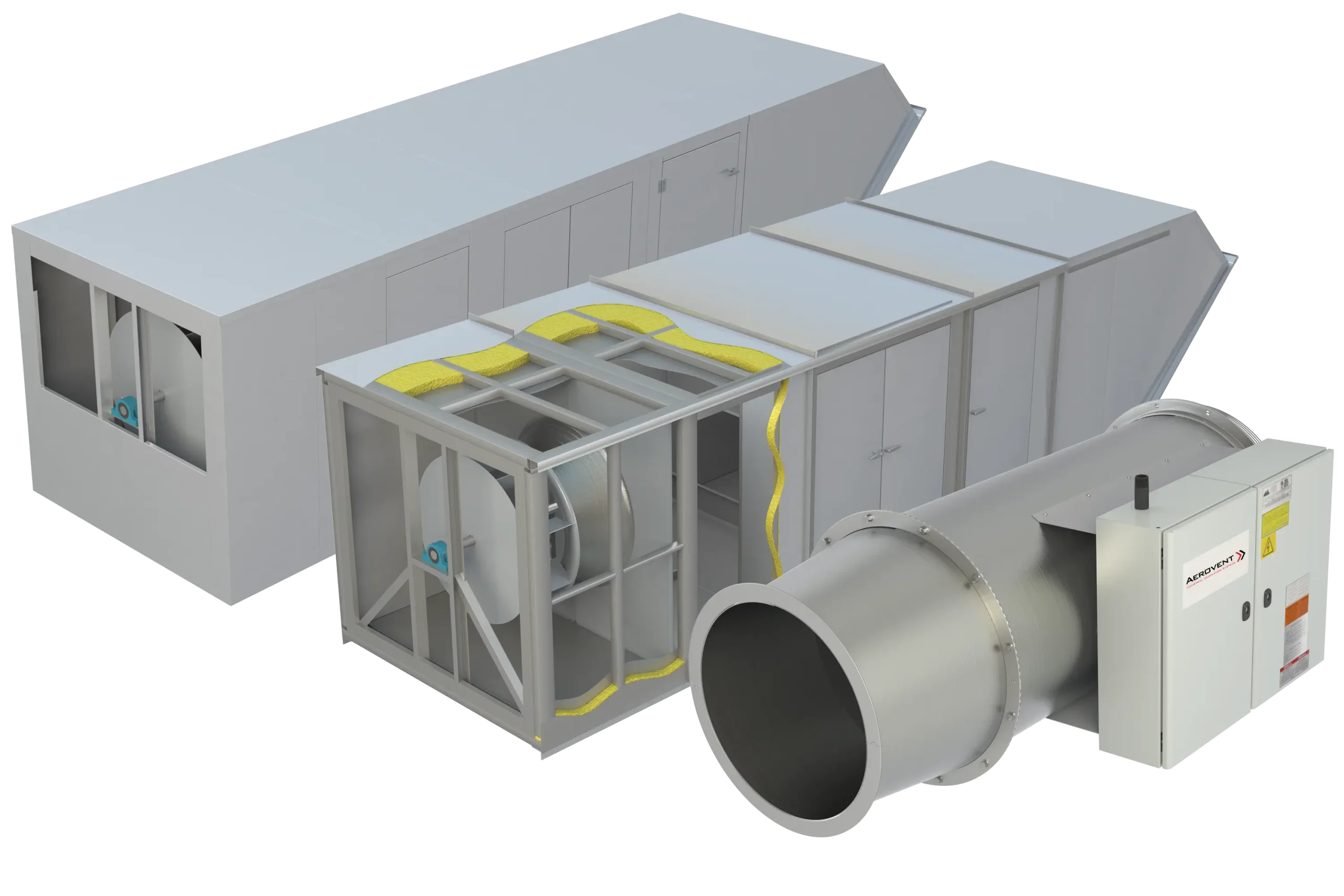



In the complex landscape of modern infrastructure, the built environment accounts for nearly 40% of global energy consumption, a reality that places immense responsibility on the shoulders of mechanical engineers and system designers. At the very center of this challenge lies hvac ventilation design—a discipline that has evolved far beyond the rudimentary objective of air exchange. Today, it serves as the critical intersection of advanced fluid dynamics, thermodynamic efficiency, and environmental stewardship. The stakes are high: a suboptimal design does not merely result in thermal discomfort or stagnant air; it actively degrades a building’s energy profile, accelerates the wear on capital equipment, and creates health risks associated with poor Indoor Air Quality (IAQ), directly impacting the productivity and well-being of occupants.
True mastery of mechanical ventilation systems necessitates a decisive move away from legacy rule-of-thumb estimates toward rigorous, data-centric methodologies. The physics governing airflow within a structure are unforgiving, and every component choice creates a cascade of effects throughout the system. For instance, the strategic selection of ductwork involves analyzing friction loss coefficients and aspect ratios; choosing between Spiral Duct and Fittings and Rectangular Duct and Fittings is a calculation of static pressure efficiency and acoustic control, not just spatial fit. Similarly, the deployment of robust air movers, such as a Tubeaxial Commercial Fan Belt Driven unit or other industrial Axial Fans, requires precise load matching. Overcoming the resistance of the distribution network without incurring the heavy energy penalties of oversizing requires a nuanced understanding of system curves and fan laws.
Beyond the mechanics of airflow, the contemporary design paradigm must embrace the shift from static, constant-volume operations to dynamic, intelligent building ecosystems. As regulatory bodies enforce stricter sustainability standards, the integration of energy recovery technologies and automated demand control is no longer an optional luxury but a baseline requirement. Effective ventilation system design now mandates a holistic approach where Air Ducts, dampers, and terminal devices like Grilles and Registers function as a cohesive, responsive network. By leveraging IoT sensors to monitor CO2 levels and occupancy in real-time, modern systems can modulate airflow with surgical precision, ensuring that superior air quality is maintained without unnecessary energy expenditure.
For facility managers, contractors, and HVAC professionals, understanding these engineering principles is vital for constructing high-performance environments that are both sustainable and resilient. This comprehensive guide offers a technical deep dive into the calculations, regulatory standards, and technological innovations required to execute a superior ventilation strategy, equipping you with the knowledge to optimize performance from the mechanical room to the breathing zone.
Effective hvac ventilation design serves as the intersection of engineering precision, environmental stewardship, and occupant health. As modern buildings become increasingly complex, the convergence of traditional fluid dynamics with smart building ecosystems is essential for achieving optimal performance. The following takeaways outline the critical strategies for mastering these advanced systems.
Understanding these core pillars is vital for engineers and facility managers aiming to construct or upgrade high-performance environments. The subsequent sections provide a technical deep dive into the calculations, regulatory standards, and technological innovations required to execute a superior ventilation strategy.
In the current era of high-performance architecture, legacy estimation methods based solely on square footage or generic air change rates are increasingly obsolescent. Relying on simple rule-of-thumb calculations fails to account for the complex thermal gradients and variable loads present in modern commercial structures. HVAC ventilation design is no longer just about moving volume; it is about managing fluid dynamics within a defined envelope. Engineers must analyze the flow characteristics of air as a fluid, considering turbulence, boundary layer separation, and pressure drops that occur across complex duct geometries.
To achieve precision, design methodologies must re-center on fundamental physics, specifically Bernoulli’s principle and the continuity equation. These principles dictate that as the velocity of the fluid (air) increases, its static pressure decreases, a relationship that is critical when sizing variable air volume (VAV) terminals and duct transitions. The continuity equation, expressed as Q = V * A (where Q is flow rate, V is velocity, and A is cross-sectional area), serves as the immutable law for balancing system branches. However, a significant industry gap exists: technical specifications often treat these physics as static values. The reality of modern infrastructure requires acknowledging that mechanical ventilation systems have evolved into data-driven ecosystems. A robust design must integrate solid fluid dynamics with the adaptability of IoT sensors, allowing the system to respond to real-time changes in air density and viscosity caused by temperature fluctuations.
Furthermore, the relationship between air density, temperature, and velocity cannot be overstated in system performance. Standard air density (0.075 lb/ft³ at 70°F) is rarely the operating reality. In industrial applications or high-altitude installations, failing to correct for density altitude can result in significant fan performance deration. Engineers must calculate mass flow rates rather than just volumetric flow rates to ensure that the thermal capacity of the air is sufficient to meet the sensible and latent heat loads of the building.
A critical, often underestimated component of ventilation design is the management of building pressurization. Strategies must be strictly defined based on the building’s functional use. For healthcare facilities, isolation rooms require negative pressure to contain pathogens, while operating theaters and cleanrooms demand positive pressure to prevent contaminant infiltration. In commercial office spaces, a slight positive pressure (typically 0.05 to 0.10 inches w.g.) is maintained relative to the outdoors to prevent the infiltration of unconditioned, humid air which can disrupt the interior climate control.
Envelope leakage is a parasitic load that fundamentally alters calculated hvac ventilation design requirements. If the building envelope is not airtight, the mechanical system must work harder to maintain the desired pressure regime. This exfiltration and infiltration must be quantified during the design phase using blower door test data or rigorous modeling. Ignoring leakage results in systems that are either oversized, leading to short-cycling and humidity issues, or undersized, failing to meet indoor air quality (IAQ) standards.
Balancing exfiltration and infiltration is also a matter of structural integrity. In humid climates, negative building pressure can draw warm, moist outdoor air into wall cavities. When this air contacts cooled interior surfaces, it reaches its dew point, leading to condensation, mold growth, and structural rot. Conversely, in cold climates, positive pressure drives humid indoor air into the walls, causing freezing damage. Design requires a meticulous dew point analysis of the wall assembly to ensure the ventilation strategy does not compromise the building shell.
Finally, makeup air units (MAU) are essential for balancing high-exhaust zones. In facilities with commercial kitchens, laboratories, or industrial bays, exhaust fans remove massive volumes of air. Without a dedicated MAU introducing conditioned outdoor air, the building will depressurize, causing back-drafting of combustion appliances and slamming doors. The integration of these units must be synchronized with exhaust operations to maintain neutral or targeted pressure balances.
Precision sizing begins with selecting the correct calculation procedure. The Ventilation Rate Procedure (VRP) from ASHRAE 62.1 prescribes rates based on floor area and occupancy count, providing a deterministic baseline. However, the Indoor Air Quality Procedure (IAQP) offers a performance-based alternative, allowing for lower outdoor air intake if contaminant concentrations are monitored and controlled. While VRP is straightforward, IAQP often yields energy savings by leveraging air cleaning technologies, though it requires more complex calculations and ongoing validation.
Compliance with ASHRAE Standard 62.1 is the non-negotiable baseline for minimum air exchange requirements in commercial buildings. This standard dictates the “breathing zone” outdoor air flow required to dilute human bio-effluents and building-generated contaminants. It is not a static target; it varies by zone type—from conference rooms to corridors. Engineers must perform zone calculations to determine the critical zone that drives the system-level outdoor air intake, ensuring no space is under-ventilated.
Adjusting calculations for variable occupancy is a key strategy for energy conservation. Designing strictly for peak occupancy results in massive energy waste during partial load conditions. By utilizing dynamic resetting logic, ventilation rates can scale down when zones are sparsely populated. This requires precise calculation methodologies. For those seeking deep mathematical frameworks and industry-standard equations, referencing resources on mastering HVAC ventilation calculation formulas provides the necessary algebraic tools to verify compliance and efficiency.
Total External Static Pressure (TSP) is the sum of all resistance the fan must overcome, including duct friction, fittings, dampers, coils, and filters. A slight miscalculation in TSP can result in a fan that falls short of its design airflow or operates in an inefficient, noisy region of its curve. Detailed friction loss calculations are required, typically targeted at 0.08 to 0.1 inches of water column (w.c.) per 100 feet of ductwork for low-pressure supply systems, though this varies by velocity and duct size.
“System effect” is a phenomenon where fan performance is degraded due to poor inlet or outlet conditions. If a duct turns immediately at the fan discharge, the velocity profile is distorted, creating turbulence that acts as additional, unmeasured static pressure. Standard fan curves are generated under ideal laboratory conditions with straight runs of duct. Therefore, designers must apply system effect factors (SEF) to the TSP calculation to account for real-world installation constraints.
Critical Design Warning: Ignoring the dynamic losses caused by fittings (elbows, transitions, take-offs) is a primary cause of system failure. A single poorly designed mitered elbow without turning vanes can generate as much resistance as 50 feet of straight duct. Always calculate equivalent lengths for every fitting in the critical path to ensure the fan is sized correctly for the actual installed resistance.
The cross-sectional geometry of ductwork has a profound impact on aerodynamic efficiency, material usage, and acoustic performance. While rectangular ducts are often the default for tight ceiling plenums, they are aerodynamically inferior to round profiles. Circular ducts maintain a more uniform velocity profile and lack the corners where turbulence and pressure drop accumulate. Below is a comparison of these two primary geometries.
| Feature | Spiral (Round) Duct | Rectangular Duct |
|---|---|---|
| Aerodynamic Efficiency | High. Uniform airflow, reduced turbulence. | Lower. Eddy currents form in corners. |
| Friction Loss | Lowest per unit volume of air. | Higher, especially at high aspect ratios. |
| Leakage Class | Class 3 or better (inherently tighter). | Class 6 to 12 (requires extensive sealing). |
| Material Usage | Uses ~32% less metal for same airflow capacity. | Requires more metal and reinforcement. |
| Installation Cost | generally lower due to fewer hangers/sealant. | Higher labor due to transverse joints/stiffeners. |
Spiral Duct and Fittings are engineered for high-velocity systems where minimizing pressure drop is paramount. The helical lock seam adds rigidity, allowing for lighter gauge metal while maintaining high static pressure ratings. Furthermore, the round shape naturally attenuates low-frequency breakout noise, making it ideal for exposed architecture.
However, spatial constraints often necessitate the use of Rectangular Duct and Fittings. When ceiling voids are shallow, rectangular ducts can be flattened to fit, though this comes at a cost. Engineers must monitor the aspect ratio (width-to-height). Aspect ratios exceeding 4:1 significantly increase friction loss and operational costs. High aspect ratio ducts are also more prone to “rumble” and require heavier gauging or cross-breaking to prevent panel vibration.
Material roughness dictates the friction factor in the Darcy-Weisbach equation. Galvanized steel is the standard, with a roughness factor of approximately 0.0003 to 0.0005 feet. Aluminum is smoother but softer, while flexible ducting has a significantly higher roughness coefficient due to its helical wire reinforcement. Flexible duct should be limited to terminal connections (maximum 6 feet) to prevent excessive pressure drops.
Best practices for Air Ducts involve maintaining laminar flow wherever possible. Turbulence not only increases energy consumption but also accelerates erosion and noise. Transitions should be gradual—expanding at no more than 15 degrees and contracting at no more than 30 degrees—to prevent flow separation. Lining ducts with insulation is critical not only for acoustics but to prevent thermal gain or loss.
Condensation control is equally vital. If the duct surface temperature drops below the dew point of the surrounding air, water will condense, saturating insulation and degrading indoor air quality. Closed-cell insulation or double-wall construction is recommended for cold air supply in humid environments. For a deeper dive into optimizing these parameters, engineers should explore how to improve airflow efficiency with optimal design and materials.
The operating point of an HVAC system is the intersection of the system resistance curve and the fan performance curve. The system curve is parabolic (pressure increases with the square of flow), while the fan curve is determined by the manufacturer. Selecting a fan requires ensuring this intersection occurs in the stable, efficient range of the curve—typically to the right of the peak pressure point but left of the maximum flow limit.
Operating in the “surge region” (to the left of the peak) causes aerodynamic instability, where the fan alternately pumps and stalls. This creates severe vibration that can destroy bearings and ductwork. Conversely, operating too far right leads to “choking” and inefficiency. Brake Horsepower (BHP) must be calculated to size the motor correctly, including a safety factor (usually 10-15%) for drive losses and aging.
The Fan Laws (Affinity Laws) are essential for predicting performance adjustments. They state that CFM varies directly with speed (RPM), static pressure varies with the square of speed, and horsepower varies with the cube of speed. This cubic relationship highlights why Variable Frequency Drives (VFDs) are so effective: a small reduction in fan speed yields massive energy savings.
Selection criteria diverge significantly between commercial comfort cooling and industrial processes. Commercial systems prioritize acoustic performance and efficiency, often utilizing centrifugal or plenum fans. Industrial applications, however, prioritize durability and pressure capabilities to handle particulate-laden air or high-velocity exhaust.
For general ventilation where large volumes of air must be moved at low to moderate pressures, Axial Fans are the standard. Their straight-through flow design allows for compact installation within duct sections. However, they are sensitive to inlet conditions and system effects.
In robust industrial environments requiring higher pressure generation or the removal of fumes, the Tubeaxial Commercial Fan Belt Driven is a superior choice. The belt-drive configuration isolates the motor from the airstream, protecting it from high temperatures, moisture, or corrosive contaminants. These units often feature adjustable pitch blades to fine-tune performance and require substantial vibration isolation bases to prevent structural transmission of mechanical energy.
Decarbonization mandates are forcing a paradigm shift in mechanical design. The goal is to minimize the energy penalty associated with conditioning outdoor air. This involves tightening building envelopes to reduce uncontrolled infiltration and optimizing the mechanical ventilation rates to match actual demand, rather than peak theoretical assumptions.
Energy Recovery Ventilators (ERVs) and Heat Recovery Ventilators (HRVs) are now standard requirements in most energy codes for systems above a certain CFM threshold. HRVs transfer sensible heat (temperature) only, while ERVs transfer both sensible and latent heat (moisture). In humid climates, an ERV is crucial for rejecting humidity from the incoming air stream, reducing the latent load on the cooling coil. The Return on Investment (ROI) is calculated by determining the recovery effectiveness (typically 50-80%) and the resulting reduction in chiller and boiler sizing.
Air-side economizers are another critical efficiency tool. When outdoor ambient conditions are favorable (low enthalpy), the system modulates dampers to use 100% outdoor air for free cooling, bypassing the mechanical refrigeration stage. This sequence of operation must be carefully programmed to prevent bringing in air that is cool but excessively humid.
Navigating standards such as LEED v4.1 and the WELL Building Standard requires a holistic view of ventilation. LEED awards points for enhanced indoor air quality strategies, including increased ventilation rates (30% above ASHRAE 62.1) and rigorous construction IAQ management plans. WELL focuses heavily on occupant health, demanding filtration levels often exceeding MERV 13 and real-time monitoring of pollutants.
Energy codes like ASHRAE 90.1 set strict limits on Fan Power limitation (BHP per 1,000 CFM). This forces designers to select low-pressure drop components and highly efficient duct layouts. Variable Air Volume (VAV) systems are instrumental here; by throttling back airflow during part-load conditions, they significantly reduce fan energy consumption compared to Constant Air Volume (CAV) systems. For a detailed breakdown of necessary hardware, refer to the guide on HVAC ventilation design essential components and optimization strategies.
Demand Control Ventilation (DCV) represents the intersection of physics and logic. Instead of ventilating for maximum occupancy at all times, DCV utilizes CO2 sensors to estimate the actual number of occupants in a space. The Building Management System (BMS) modulates the outdoor air dampers to maintain CO2 levels typically below 1,000 ppm (or 700 ppm above ambient). This prevents the energy penalty of over-ventilating empty conference rooms or cafeterias.
Advanced integration allows the BMS to act as a centralized brain, aggregating data from occupancy sensors, thermostats, and IAQ monitors. Beyond immediate control, this data fuels predictive maintenance. AI analytics can detect subtle shifts in airflow trends or motor current, flagging a dirty filter or a slipping belt weeks before a failure occurs. This moves facility management from reactive to proactive.
The future of HVAC lies in adaptive learning algorithms. Modern controllers can “learn” the thermal lag of a building, adjusting start times to ensure the building is at the setpoint exactly when occupants arrive, maximizing energy efficiency. These systems continuously optimize the PID loops to reduce hunting and actuator wear.
For retrofitting older buildings where running new control wire is cost-prohibitive, wireless mesh sensor networks provide a viable solution. These sensors communicate via protocols like Zigbee or BACnet/IP, allowing legacy structures to benefit from smart logic. Engineers looking to stay ahead of the curve should explore future trends in smart and sustainable systems to understand how machine learning is reshaping the thermal envelope.
Selecting the appropriate filtration is a balancing act between air quality and energy consumption. Higher MERV ratings capture smaller particles but impose a significant static pressure penalty. For general commercial spaces, MERV 13 is the new standard, capable of capturing droplet nuclei that may carry viruses. Engineers must verify that the selected fans have sufficient static pressure reserve to handle the “dirty filter” pressure drop, not just the clean value.
In healthcare and critical environments, HEPA filtration (99.97% efficiency at 0.3 microns) is mandatory. However, due to their high resistance, HEPA filters are often placed in terminal units or dedicated recirculation modules rather than the main air handler. Supplementing filtration with UV-C germicidal irradiation within the ventilation system design—specifically irradiating the cooling coil—prevents biofilm growth and neutralizes airborne pathogens passing through the AHU.
Relative Humidity (RH) control is vital for mitigating Sick Building Syndrome. RH levels above 60% encourage mold growth and dust mite proliferation, while levels below 30% dry out mucous membranes, increasing susceptibility to respiratory infections. The “sweet spot” for human health and pathogen inactivation is between 40% and 60%.
In humid climates, standard cooling cycles often satisfy the temperature setpoint before removing sufficient moisture. Active dehumidification sequences, such as hot gas reheat or desiccant wheels, are necessary to decouple sensible and latent loads. Additionally, monitoring Volatile Organic Compounds (VOCs) emitted by furniture and cleaning agents allows the ventilation system to flush the building when off-gassing levels peak, ensuring a healthy indoor environment.
The success of a design is ultimately judged by the occupant’s thermal comfort, which depends on how air enters the room. Terminal device selection requires analyzing throw (distance air travels), drop (vertical fall), and spread. If the throw is too short, the room suffers from stagnation; if too long, it causes drafts. The Coanda effect—where high-velocity air clings to the ceiling surface—should be utilized to mix conditioned air with room air before it enters the occupied zone.
Proper placement of Grilles and Registers ensures that air sweeps the room effectively without short-circuiting directly to the return grille. In heating mode, minimizing stratification is key, often requiring diffusers that can adjust their discharge angle. Acoustic issues frequently originate at the terminal point; utilizing lined plenums or boot connections can attenuate the aerodynamic noise generated by the damper.
Design is theoretical; performance is reality. The two rarely match perfectly without Commissioning (Cx). Cx is a quality assurance process that verifies the building systems operate according to the Owner’s Project Requirements (OPR). This involves Testing, Adjusting, and Balancing (TAB) to ensure airflows match the design documents within a tolerance of +/- 10%.
Beyond balancing, commissioning involves functionally testing control sequences. Does the economizer close when outdoor enthalpy rises? Do VAV boxes modulate correctly in response to static pressure setpoints? Calibrating sensors and verifying damper actuator operation prevents the “drift” that plagues many systems post-occupancy. A master log of these baselines provides facility managers with the data needed for ongoing troubleshooting and optimization.
The transition from static rule-of-thumb estimates to dynamic fluid dynamics represents a fundamental shift in how we approach the built environment. As we have explored, modern HVAC ventilation design is no longer satisfied by simply moving air volumes; it requires a masterful command of pressure regimes, thermal gradients, and aerodynamic principles. By grounding design methodologies in physics—specifically acknowledging the relationships between velocity, pressure, and density—engineers can create systems that are not only compliant but truly high-performing.
The efficiency of any ventilation strategy hinges on the integrity of the distribution network. While spatial constraints often dictate the use of Rectangular Duct and Fittings, understanding the aerodynamic penalties associated with high aspect ratios is crucial for minimizing energy waste. Wherever architectural allowances exist, prioritizing Spiral Duct and Fittings ensures a more uniform velocity profile, reduced friction loss, and superior acoustic performance. These geometric decisions directly influence the static pressure calculations that drive fan selection.
Selecting the appropriate air mover is an exercise in precision. Whether the application calls for standard Axial Fans for general ventilation or robust Tubeaxial Commercial Fan Belt Driven units for industrial exhaust, the goal remains the same: operating within the stable region of the fan curve. Avoiding the surge region and accounting for system effects ensures longevity and reliability, preventing the structural vibrations that compromise system integrity.
Sustainability is no longer an optional add-on; it is a core design requirement driven by evolving codes like ASHRAE 90.1 and LEED. The integration of Energy Recovery Ventilators (ERVs) and economizers allows buildings to reclaim energy that would otherwise be lost, drastically reducing the carbon footprint of conditioning outdoor air. However, hardware alone is insufficient. The future belongs to data-driven ecosystems where future trends in smart and sustainable systems dictate operation.
By leveraging IoT sensors and Demand Control Ventilation (DCV), facility managers can transition from reactive repairs to predictive maintenance. This intelligent logic ensures that ventilation rates scale with actual occupancy, preventing the energy penalty of over-ventilating empty spaces while maintaining rigorous air quality standards.
Ultimately, the success of a ventilation system is measured by the health and comfort of the occupants. Managing Indoor Air Quality (IAQ) through proper filtration and humidity control mitigates the risks of Sick Building Syndrome. Yet, even the most sophisticated central equipment fails if the terminal distribution is poor. The strategic placement of Grilles and Registers ensures that conditioned air is mixed effectively within the breathing zone, eliminating drafts and stagnation.
However, design theory must be validated by operational reality. The commissioning process serves as the final safeguard, verifying that the installed mechanical ventilation systems function as intended. Through rigorous testing, adjusting, and balancing, we close the gap between engineering calculations and real-world performance.
Advanced ventilation design is a complex synthesis of fluid mechanics, material science, and digital intelligence. It requires moving beyond generic calculations to embrace a holistic view of the building as a living, breathing entity. By selecting the right hvac ventilation design essential components and optimization strategies, engineers can deliver systems that offer resilience, energy efficiency, and superior indoor environmental quality. As technology advances, the industry must continue to adapt, ensuring that our buildings are not just structures, but sustainable environments designed for the future.