Need Specifications or a Quote?
Share your ventilation project requirements and our engineers will reply within 12 hours with technical specs, pricing, and lead time.
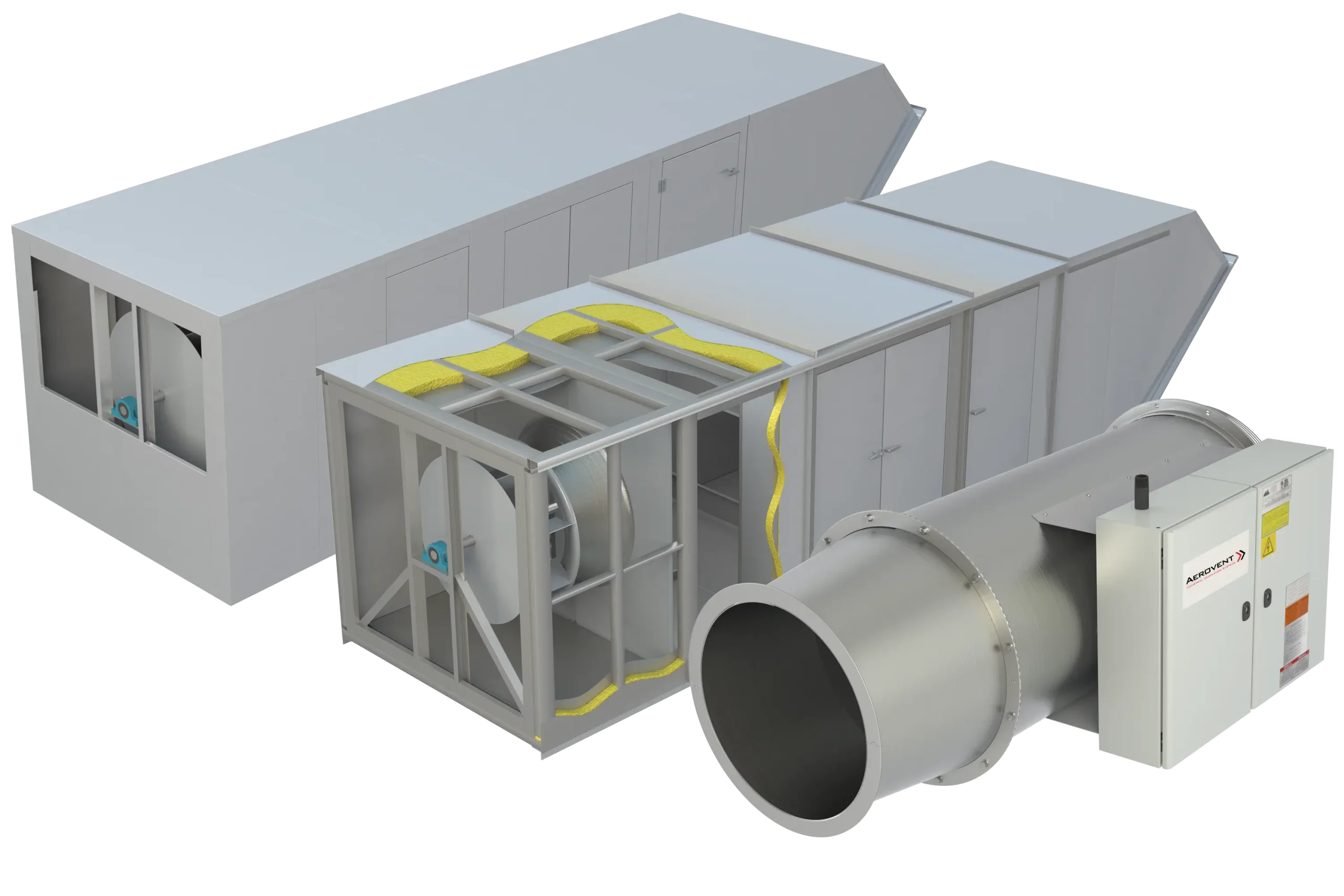



In any HVAC system, air does not simply appear in a room. It must be moved, directed, and balanced. The air duct system is the network that distributes conditioned air to occupied spaces and returns it back for reconditioning. When the ductwork is designed and installed correctly, a building can maintain comfortable temperature, airflow balance, and indoor air quality with stable energy consumption. When the duct system is poorly designed, even a high-efficiency air handling unit may perform below expectations, resulting in uneven airflow, noise issues, and excessive energy loss.
An HVAC air duct system is a controlled air distribution network that transports supply air from the air handling equipment to different spaces and returns air back to the system. In commercial and industrial buildings, this network typically includes
main air ducts and branch ducting, along with exhaust and fresh air pathways. The ducts work in coordination with fans, diffusers, grilles, and dampers to create an integrated ventilation environment.
Although layouts vary by building type, the main functional components are consistent:
| Component | Function | Common Materials |
|---|---|---|
| Rectangular Supply and Return Ducts | Deliver and collect airflow across large building zones | Galvanized steel or stainless steel |
| Spiral Ducting | Provides efficient air movement with reduced pressure drop | Galvanized steel or aluminum |
| Flat Oval Ducts | Used where ceiling height is limited while maintaining airflow | Sheet metal / aluminum |
| Diffusers & Grilles | Deliver and collect air within occupied space | Aluminum louvers and ceiling diffusers |
| Fire & Smoke Dampers | Maintain fire and smoke zoning integrity | Steel constructions with actuation |
| Insulated and Double-Wall Ducts | Control heat loss, prevent condensation, reduce noise | Inner and outer sheet metal + insulation core |
Where special fabrication or non-standard sizing is required, custom production can be managed through
metal duct fabrication services.
The airflow inside a duct system follows the principles of pressure differential. The fan provides the required pressure to move air through ducts. The size and shape of ducts determine air velocity, which affects noise levels and energy consumption. Every fitting—such as elbows and branch takeoffs—introduces pressure loss, influencing how the system must be sized and balanced.
A main duct distributes air to multiple branch ducts. This layout is common in commercial buildings, offices, and retail spaces.
Air is distributed from a central plenum through equal-length ducts to different rooms. This is more common in smaller facilities.
Used in large open spaces where stable airflow is needed, such as logistics warehouses and industrial production halls.
Underground garages, kitchens, and large public areas require dedicated fresh air and exhaust paths to maintain safe environmental conditions.
When a building requires special geometry or installation constraints,
custom sheet metal fabrication becomes essential.
Q1: What is the difference between supply and return ducts?
Supply ducts deliver conditioned air, while return ducts bring air back for reconditioning.
Q2: When should insulated or double-wall ducts be used?
Where temperature difference, noise control, or condensation risk must be managed.
Q3: Are spiral ducts more efficient?
In many applications, spiral ducts reduce pressure loss and improve airflow, but layout conditions determine the best choice.
Send your project drawings, duct schedules, or airflow requirements. Our engineering team can assist with product matching and fabrication planning.


