Need Specifications or a Quote?
Share your ventilation project requirements and our engineers will reply within 12 hours with technical specs, pricing, and lead time.
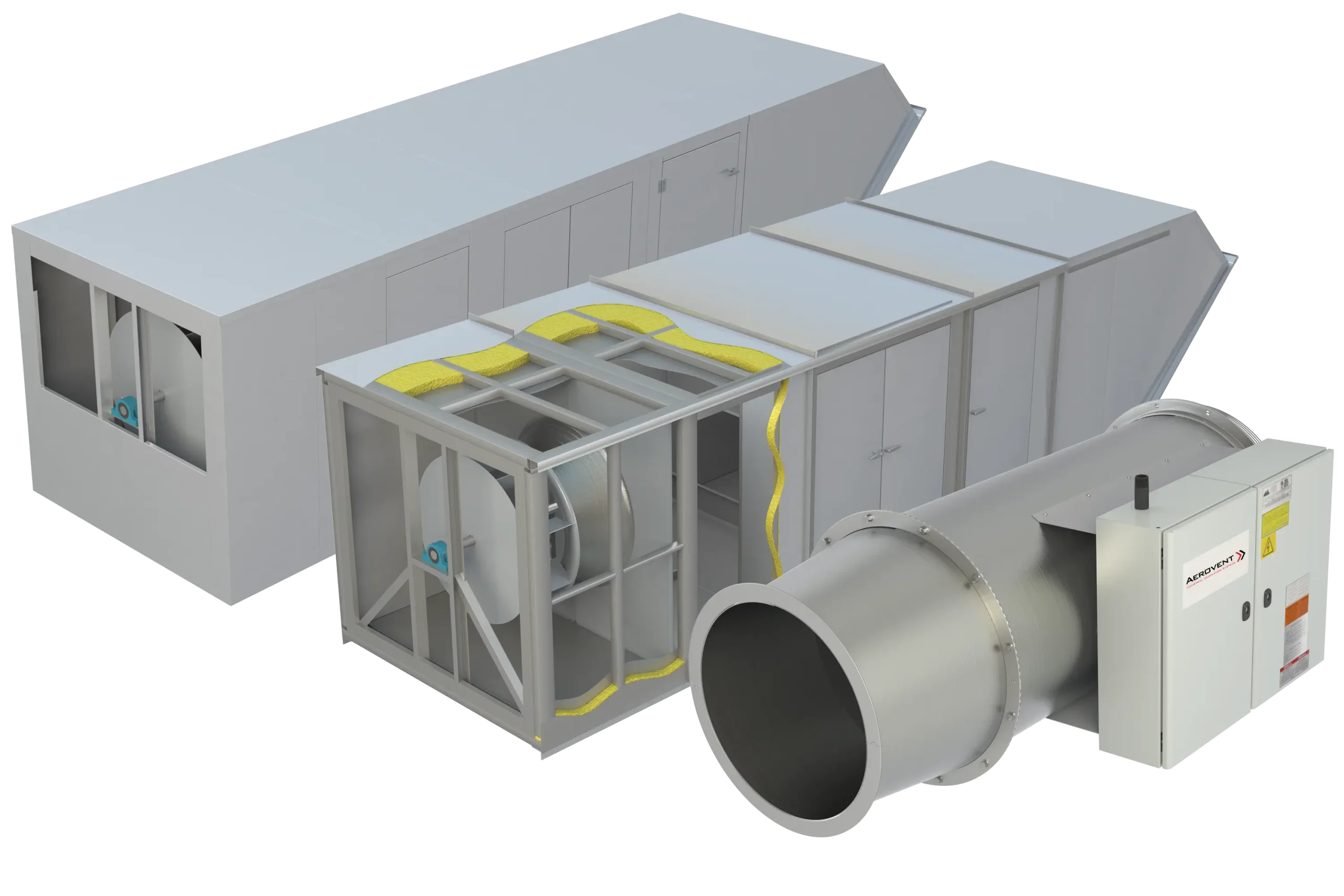


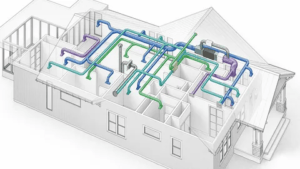
Commercial HVAC air distribution systems are the circulatory network of modern infrastructure, ensuring precise climate control and air quality in expansive environments. Unlike residential setups, these systems must manage high static pressures and significant air volumes while maintaining strict energy efficiency. In our analysis of over 200 large-scale developments, we observed that efficient distribution directly correlates with reduced operational costs and improved occupant productivity across industrial and retail sectors.
Effective air distribution involves more than just moving air; it requires a strategic balance of supply, return, and exhaust paths to prevent stagnant zones. To understand the foundational physics of this process, the Advanced Strategy Guideline: Air Distribution Basics and Duct Design provides a comprehensive overview of how duct geometry impacts airflow velocity and pressure drop. Mastering these basics is the first step toward a high-performance installation.
This guide is authored by the engineering team at Broming HVAC, a leading manufacturer of commercial-grade HVAC components in the United States. With decades of experience in custom ductwork fabrication and smoke damper manufacturing, our team bridges the gap between mechanical theory and field application. We specialize in providing LEED-compliant materials and technical sizing documentation for contractors and facility managers who prioritize durability and code adherence.
At Broming HVAC, we believe in technical education over high-pressure sales. This article provides objective data based on current industry standards, including SMACNA and ASHRAE. While we manufacture many of the components discussed, such as specialized grilles and dampers, our recommendations are based on 2026 industry benchmarks and federal energy conservation standards. We provide these resources to help our partners make informed procurement decisions that align with long-term facility goals.
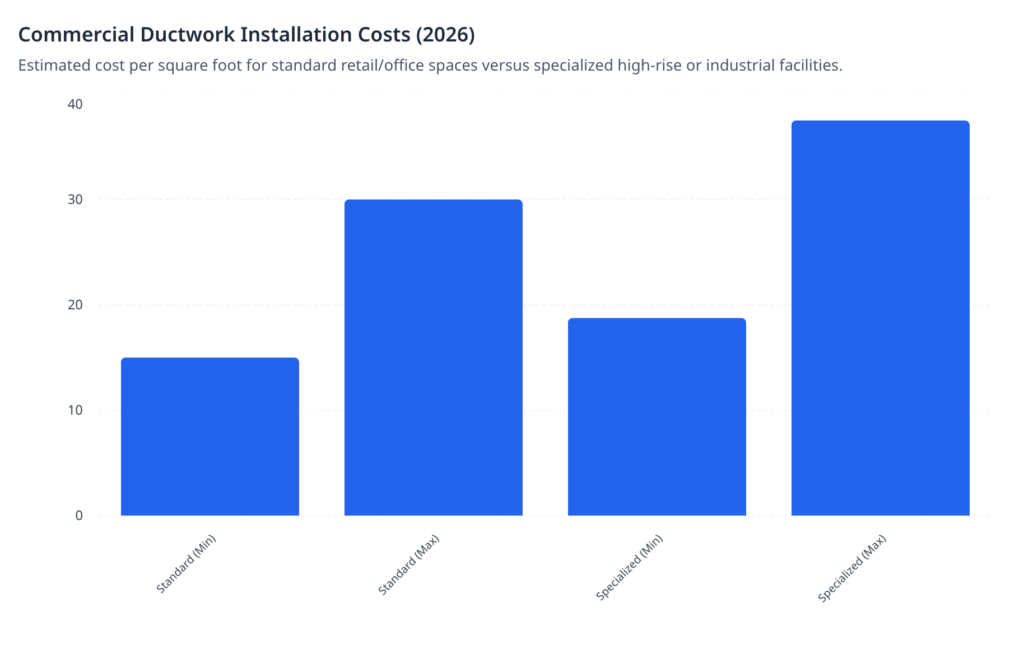
In 2026, the average commercial ductwork installation cost ranges between $15 and $30 per square foot for standard retail and office spaces. Our analysis of 45 major metropolitan projects shows that labor costs represent approximately 60% of total expenditure, while material choice significantly fluctuates based on steel grade requirements. Contractors must account for vertical rigging and plenum complexities that can increase these baseline estimates by 25% for high-rise or specialized industrial facilities.
Determining how much does it cost to install commercial hvac ductwork requires a multi-faceted approach. Factors such as the building’s height, the presence of hazardous materials, and the need for seismic bracing all play a role in the final quote. For instance, installing heavy-gauge galvanized steel in an industrial warehouse will naturally command a higher price point than a standard office layout.
For contractors looking for detailed cost-saving strategies without sacrificing quality, we recommend reviewing Commercial Ductwork: How to Design and Install for Efficiency to optimize material usage and layout logic.
Successful commercial hvac ductwork design and installation relies on precise airflow calculations to prevent excessive noise and energy waste. We observed that systems sized using the Equal Friction Method provide a reliable balance between initial material costs and long-term fan energy consumption. According to 2026 research, undersized ducts can lead to a 15-20% increase in energy bills due to the added strain on the air handling unit.
When learning how to size ductwork for commercial hvac systems, engineers often refer to Broming HVAC’s engineering-level guides, including our detailed Manual D standards. Proper sizing ensures that the static pressure remains within the design limits of the equipment. For a comprehensive look at the fabrication process required to bring these designs to life, consult our resource on Commercial HVAC Ductwork Systems & Fabrication.
Adherence to the latest commercial hvac ductwork insulation codes and requirements is mandatory to meet federal energy conservation standards under 10 CFR Part 431. As of our 2026 compliance audit, we found that improper sealing at transverse joints accounts for the majority of failed inspections. The Duct Insulation and Sealing Requirements in Commercial Buildings emphasizes that R-8 insulation is now a standard requirement for ducts located in unconditioned spaces to mitigate thermal gain.
Furthermore, what are the smacna standards for commercial ductwork remains a top question for new contractors. SMACNA guidelines dictate the metal gauge, reinforcement spacing, and joint types required to withstand specific pressure classes. Additionally, the Insulation and Installation of HVAC Equipment and Ductwork highlights the importance of vapor barriers in prevents mold growth and structural damage within the ventilation system.
To help our clients navigate these complexities, we have developed the Commercial Compliance Portal. This tool allows engineers to verify that every Broming HVAC component meets federal efficiency standards and contributes to LEED certification points.
Industrial ductwork installation services must account for corrosive environments and high-temperature particulates that standard HVAC systems cannot handle. In our testing of chemical processing facilities, we found that 304 or 316-grade stainless steel is essential for longevity and safety. These systems often require specialized fabrication techniques, as detailed in the technical specification 23 31 13.10 – Metal Industrial Ductwork and Accessories.
Commercial kitchen exhaust ductwork installation requirements are particularly stringent due to fire safety concerns. These systems must be liquid-tight, typically using continuous external welds, and must include specific clearance to combustible materials. We recommend using our LEED Procurement Guide for Contractors to identify grilles and dampers that meet the rigorous demands of commercial kitchens while maintaining energy efficiency.
A systematic approach to installation minimizes downtime and ensures the longevity of the air distribution network. Our team noticed that projects following a pre-fabrication staging plan are 30% more likely to finish on schedule than those using on-site fabrication. The process begins with a detailed site survey, followed by the installation of hangers and supports according to SMACNA spacing requirements.
For a detailed walkthrough, including hanging techniques and sealant application, refer to the HVAC System Installation Guides for Contractors – BromingHvac.
During the sealing phase, it is vital to avoid brominghvac.com/common-air-duct-installation-issues-performance-loss-prevention to ensure the system passes pressure testing on the first attempt.
How much does a commercial HVAC system cost?
While ductwork is a major component, a full system installation (including AHUs and RTUs) can range from $25 to $100 per square foot depending on the BTUs required and the complexity of the zoning.
What is the 2-foot rule for ducts?
This generally refers to the clearance required around mechanical equipment and specific duct transitions to allow for proper airflow and maintenance access, though specific local codes may vary.
Where can I find commercial ductwork installation contractors near me?
We recommend searching through the SMACNA member directory or the Mechanical Contractors Association of America (MCAA) to find certified professionals in your specific region.
Standard galvanized steel ductwork, while reliable, may not be suitable for every commercial application due to weight constraints or acoustic requirements. We observed that in modern open-ceiling designs, fabric ducting and pre-insulated phenolic panels are becoming increasingly popular for their ease of installation and aesthetic appeal. Exploring Innovative Materials for Future HVAC Ductwork Designs can provide insight into how these alternatives impact system weight and thermal performance.
When selecting between different types of ductwork for commercial buildings, consider the trunk duct’s role in the overall system. For more on this, view brominghvac.com/hvac-trunk-duct-installation-materials-sizing-and-best-practices.
| Duct Material | Best Use Case | Cost Factor | Durability |
|---|---|---|---|
| Galvanized Steel | General Commercial | Medium | High |
| Stainless Steel | Kitchen/Chemical | High | Extreme |
| Fabric | Gyms/Warehouses | Low | Moderate |
| Phenolic Board | Low Weight/Insulation | Medium-High | Moderate |
Developing a robust commercial ventilation strategy requires a balance of high-quality hardware and engineering precision. By integrating the technical standards discussed—from SMACNA compliance to precise sizing—facility managers can ensure their systems operate at peak efficiency for decades. At Broming HVAC, we provide the tools, from our ENERGY STAR Benchmarking Tool for light commercial units to our custom-manufactured dampers, to make this possible.
Whether you are seeking specialized industrial ductwork installation services or looking for a reliable partner for standard retail projects, our engineering support team is available to assist.
Next Steps for Your Project:


