Need Specifications or a Quote?
Share your ventilation project requirements and our engineers will reply within 12 hours with technical specs, pricing, and lead time.
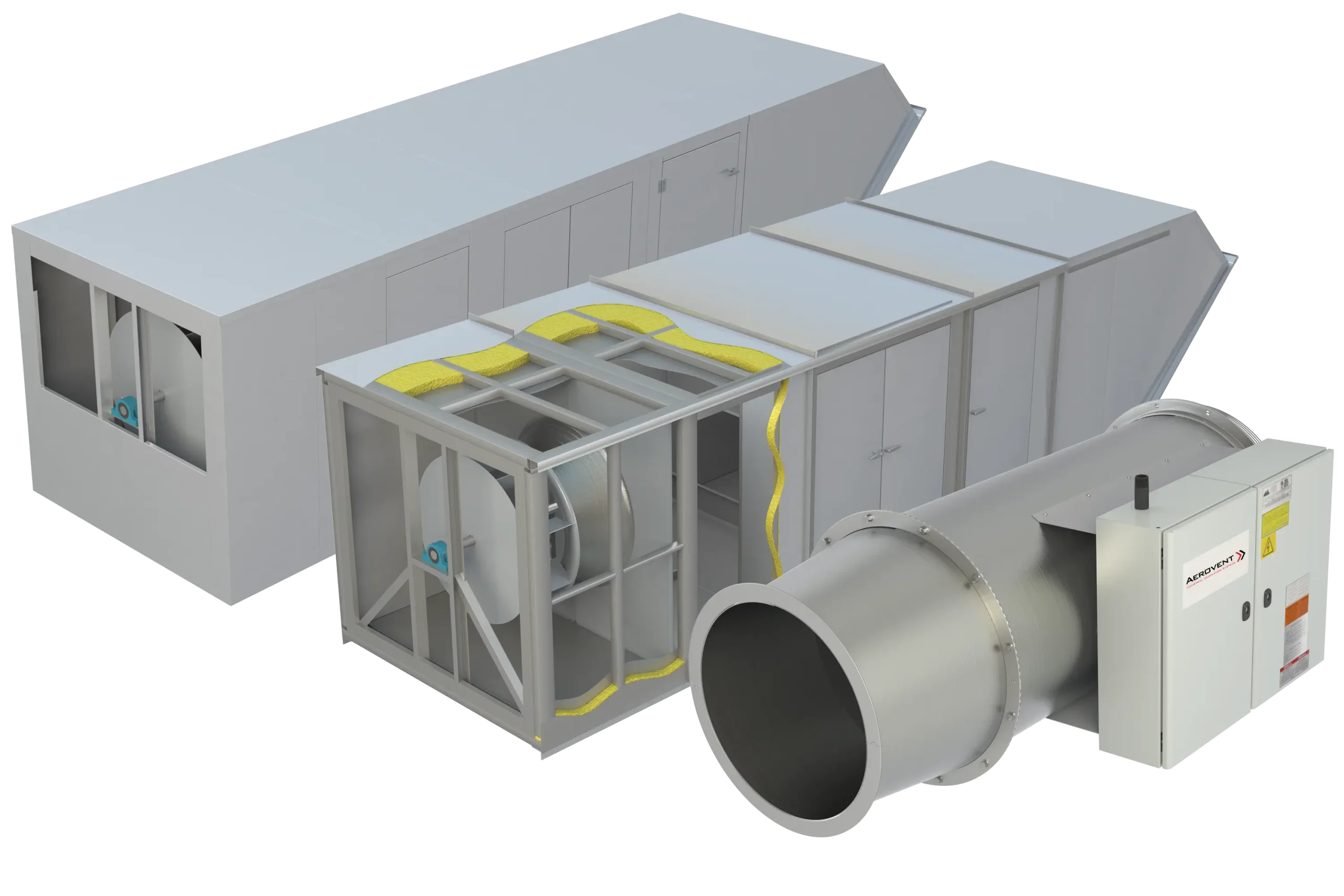



Before diving into calculations, it’s crucial to understand the ‘why’ behind Manual D. This isn’t just about choosing duct sizes arbitrarily; it’s a systematic engineering process designed to guarantee performance and comfort.
ACCA Manual D is the ANSI-recognized industry standard for residential HVAC duct system design. Its primary purpose is to ensure that the right amount of conditioned air (measured in cubic feet per minute, or CFM) reaches every room, overcoming the system’s static pressure losses quietly and efficiently. The core Manual D principles revolve around balancing the blower’s capacity with the resistance created by ducts, fittings, dampers, and diffusers. The importance of Manual D cannot be overstated—it is the blueprint for occupant comfort, energy efficiency, and acoustic performance.
The ACCA Manual D standard is the definitive, ANSI-recognized document for residential duct design procedures. It provides the engineering data and methodologies required to account for every component in the system. Adhering to these residential duct design standards ensures that the system specified by Manual S (equipment selection) and required by Manual J (load calculation) is actually delivered to the living space. Without Manual D, the entire HVAC design is based on guesswork.
Executing a Manual D calculation is a detailed process. Here, we break it down into manageable steps to guide you from start to finish.
Following a Manual D step-by-step process is essential for accuracy. The goal is to determine the total pressure drop the system can handle and then size each duct run accordingly.
1. Gather Information: You’ll need the room-by-room CFM requirements from your Manual J load calculation and the available static pressure (ASP) from your Manual S equipment selection.
2. Calculate Total Effective Length (TEL): This is the most critical and often misunderstood step. The TEL is the length of the longest duct run plus the equivalent length of all its fittings (elbows, takeoffs, boots). As per ACCA Manual D, each fitting adds resistance equivalent to a certain length of straight duct, which can be found in its reference tables.
3. Determine the Friction Rate (FR): The friction rate is the allowable pressure loss per 100 feet of duct. The formula is: `FR = (Available Static Pressure x 100) / Total Effective Length`. A proper friction rate calculation is the foundation for sizing the entire system.
4. Size the Trunk and Branch Ducts: Using your calculated FR and the required CFM for each duct run, you can now size the ducts. This is where a Ductulator is used.
Effective Ductulator use is a core skill for HVAC design. A Ductulator is a slide rule that relates four key variables: CFM, friction rate, duct size, and air velocity.
To use it:
* Set your calculated Friction Rate.
* Align the required CFM for a specific duct run.
* The Ductulator will then show you the required round duct diameter or the equivalent rectangular dimensions.
For example, if your FR is 0.08 in. w.c. and a branch needs to deliver 120 CFM, the Ductulator will indicate the precise round duct size (e.g., 6 inches) needed to maintain that pressure drop.
The fundamental duct sizing procedures involve starting from the furthest duct run (the one with the highest TEL) to set the system’s friction rate. Then, you work your way back toward the air handler, sizing each trunk line and branch based on the cumulative CFM it needs to carry. These duct system design procedures ensure that pressure is balanced across all branches, preventing rooms from being starved of air or getting too much. For professionals tackling larger projects, understanding how to design and install commercial ductwork for efficiency is a critical next step that builds on these same principles of airflow management.
While manual calculations are foundational, modern tools can streamline the process. However, they don’t eliminate the need for understanding the principles, as common errors can still compromise a design.
Numerous Manual D software solutions exist that can automate the complex calculations. Popular options like Wrightsoft and Elite Software allow you to draw the duct layout, input CFM values, and automatically calculate TEL and size the ducts. These Manual D calculation tools significantly reduce the chance of mathematical errors and save time, but they still require accurate inputs from the designer.
Even with software, duct sizing errors are frequent. The most common Manual D mistakes include:
* Ignoring Equivalent Length: Properly accounting for equivalent lengths of duct fittings is crucial for accurate system design and airflow distribution, as neglecting them can lead to undersized ducts and inefficient systems.
* Using Incorrect Available Static Pressure: Designers must use the ASP value from the manufacturer’s data for the selected equipment, not a generic number.
* Failing to Design for Both Heating and Cooling: The CFM requirements can differ between seasons. The duct system must be sized for the higher of the two airflows.
Avoiding these Manual D errors to avoid is critical for a functional system.
It’s impossible to discuss Manual D in isolation. These three ACCA manuals form the foundation of proper HVAC design, each serving a distinct but interconnected purpose:
Understanding concepts like duct velocity requirements and static pressure calculation is what connects these three pillars of proper HVAC design.
A Manual D calculation is the ACCA-approved engineering method for designing and sizing residential HVAC ductwork. It ensures the correct amount of air (CFM) is delivered to each room by properly sizing ducts based on the system’s available static pressure and the total resistance of the duct runs.
Manual D is critical because it connects the HVAC equipment to the rooms. Without it, even the most efficient equipment will perform poorly, leading to uncomfortable rooms, high energy bills, and excessive noise. It is the only way to guarantee the system delivers the performance it was designed for.
They are a three-part process for HVAC design. Manual J calculates the heating/cooling load of the house. Manual S selects the right equipment to meet that load. Manual D designs the duct system to deliver the air from that equipment to the individual rooms.
While the principles can be learned, performing an accurate Manual D calculation requires a deep understanding of airflow dynamics, access to ACCA technical data, and specialized tools like a Ductulator or software. For guaranteed accuracy and performance, it is highly recommended to have it performed by a trained HVAC professional.


