Need Specifications or a Quote?
Share your ventilation project requirements and our engineers will reply within 12 hours with technical specs, pricing, and lead time.


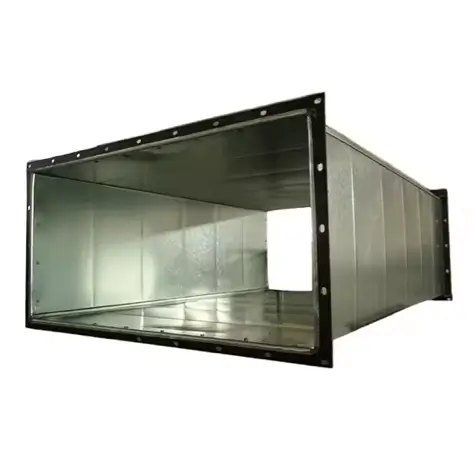
The Rectangular Duct is a core component in modern HVAC systems, designed to deliver efficient and balanced airflow for ventilation, heating, and cooling applications.
Made from high-quality galvanized steel, it offers excellent rigidity, corrosion resistance, and low air leakage, ensuring reliable long-term performance in both commercial and industrial environments.
Rectangular ducts are ideal for projects that require large airflow capacity and precise space utilization, such as office buildings, factories, hospitals, and underground parking systems.
Key Specifications
Material: Galvanized Steel (G90 / DX51D+Z)
Thickness: 0.5–1.2 mm (customizable)
Shape: Rectangular / Square
Standard: SMACNA / DW144 / ISO 9001
Connection: TDC / TDF / Flange / Slip Joint
| Material | Galvanized Steel (G90 / DX51D+Z) |
|---|---|
| Thickness | 0.5–1.2 mm |
| Shape | Rectangular / Square |
| Length | 1000–1500 mm per section |
| Connection Type | TDC / TDF / Flange / Slip Joint |
| Surface Finish | Zinc Coated / Painted / Powder Coated |
| Standard | SMACNA / DW144 / ISO 9001 |
| Application | Air Conditioning, Ventilation, Smoke Exhaust |
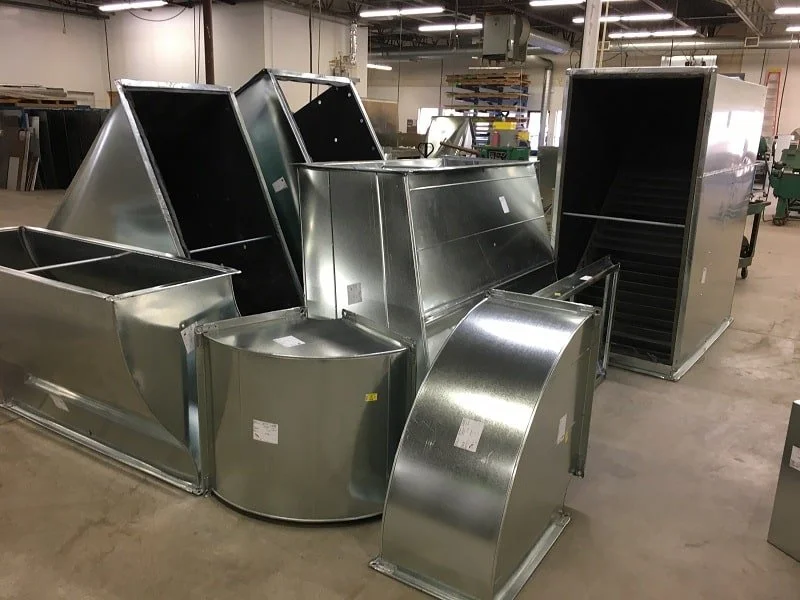
Rectangular duct systems play a vital role in modern HVAC installations, especially in commercial buildings, factories, and large industrial facilities. Known for their space-efficient layout and structural adaptability, these ducts are a preferred choice where ceiling heights or wall dimensions require precise air distribution. Understanding the structure and fittings of rectangular ducts is key to achieving efficient airflow and long-term system reliability.
A rectangular duct consists of flat sheet metal panels formed into a box-like shape that carries conditioned air throughout the system. Compared with circular ducts, they can fit into tight spaces and align neatly along walls or ceilings. The aspect ratio (width-to-height) of the duct directly influences airflow velocity, friction losses, and system noise levels.
Common materials include galvanized steel, stainless steel, and aluminum—each selected based on the environment and corrosion resistance required. For a detailed comparison of materials and their performance in different HVAC settings, visit our Air Duct Material Selection Guide.
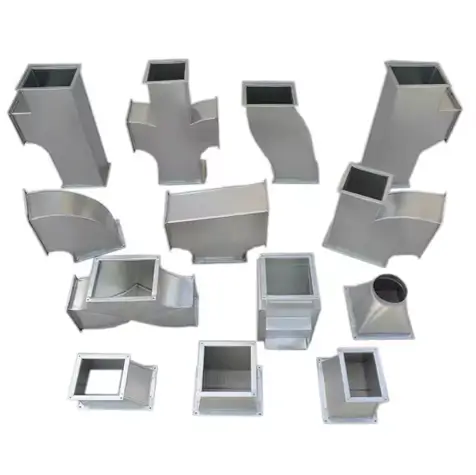
Rectangular duct systems rely on various fittings to maintain airflow direction and ensure structural integrity. Key fittings include:
Properly engineered fittings ensure the system maintains consistent pressure and efficient airflow. For an overview of different duct configurations and layout considerations, see HVAC Air Duct System Basics.
Rectangular ducts offer unique advantages for complex architectural environments:
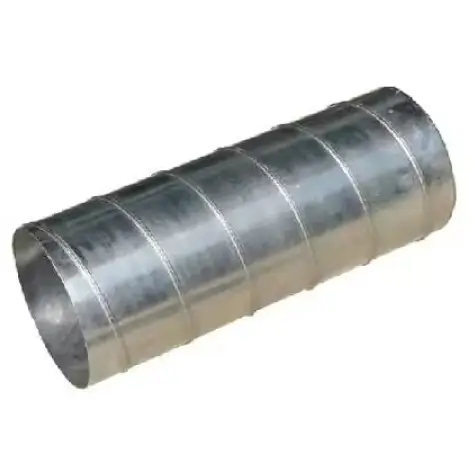
Compared to spiral ducts, rectangular ducts may have slightly higher friction losses, but they compensate through structural flexibility. Learn more about system selection in Rectangular vs Spiral Ducts.
These ducts are widely used in environments requiring high airflow volumes and precise control, including:
In harsh or humid industrial settings, anti-corrosion coatings and sealants are essential to prevent rust and maintain efficiency. You can explore more on sealing methods in Air Duct Leakage Classes & Sealing.
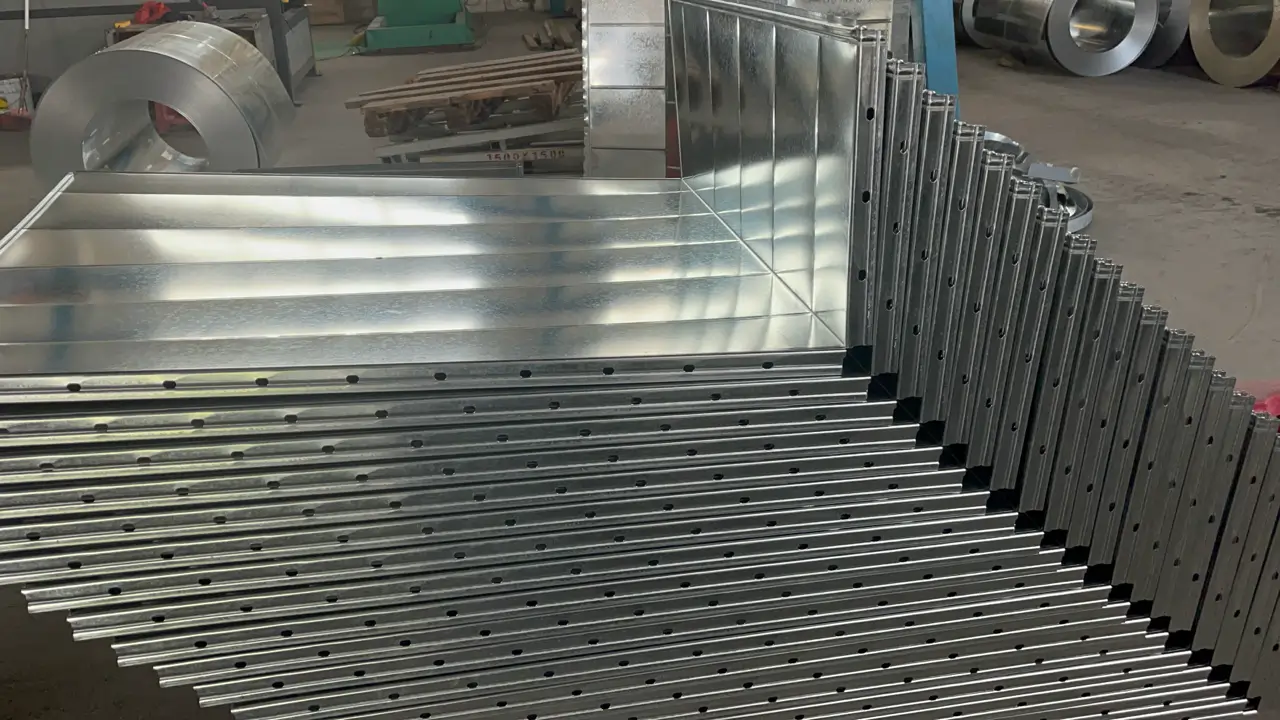
The fabrication process involves several key steps: precision cutting, bending, welding, sealing, and inspection. Each stage ensures dimensional accuracy and structural durability. Surface treatments such as galvanizing or epoxy coatings help resist corrosion. To understand this process in detail, visit our guide on Sheet Metal Duct Fabrication Process.
Routine inspection and cleaning extend the system’s lifespan. Technicians should check for loose flanges, damaged sealants, or dust buildup. A properly maintained rectangular duct can sustain optimal airflow while minimizing energy losses over years of operation.
Rectangular ducts and fittings remain indispensable in HVAC system design for industrial and commercial environments. Their adaptability, strength, and ease of fabrication make them a go-to choice for engineers seeking balance between efficiency and practicality. For tailored solutions or project consultations, contact our engineering team to discuss your system requirements.