Need Specifications or a Quote?
Share your ventilation project requirements and our engineers will reply within 12 hours with technical specs, pricing, and lead time.
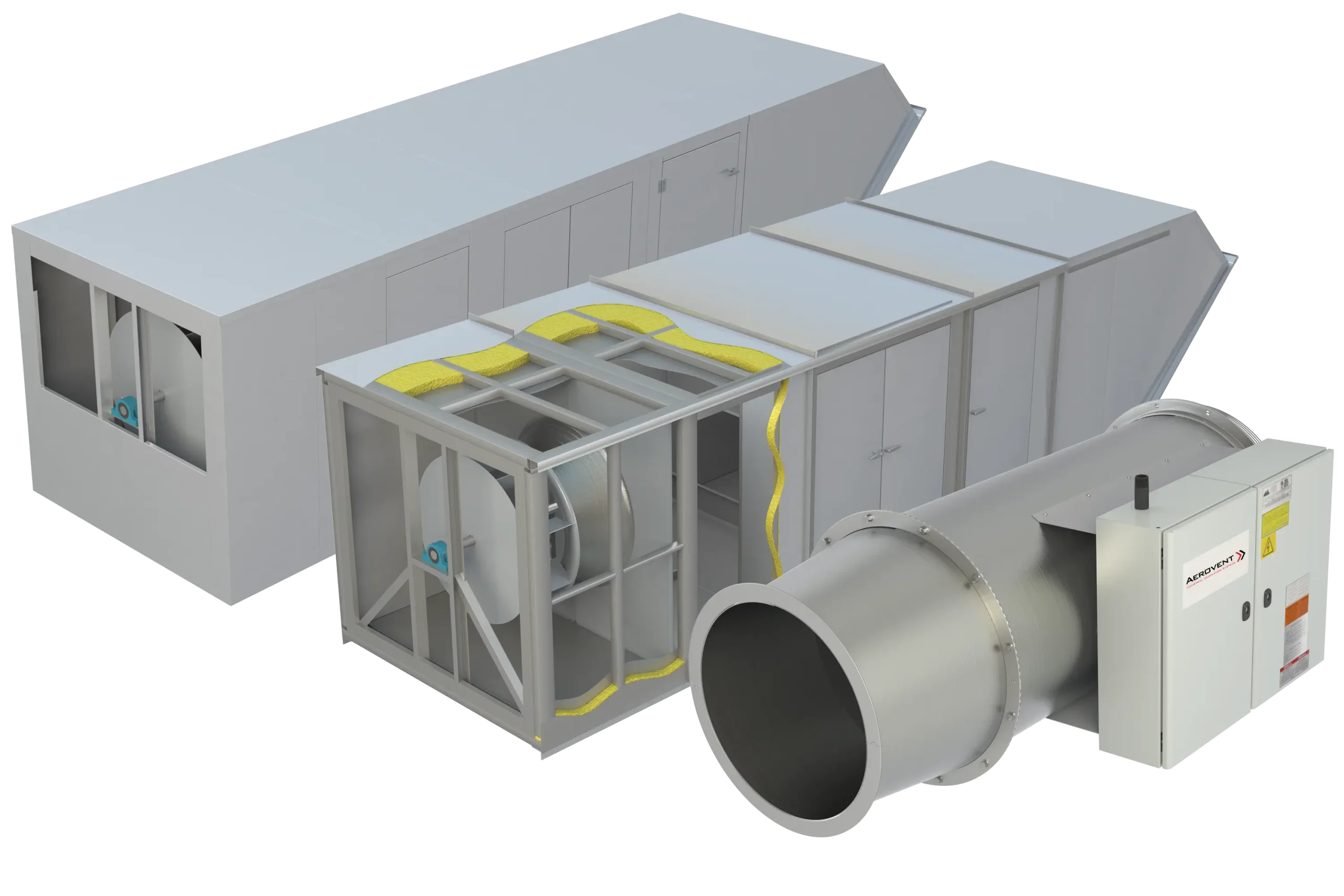


Your HVAC design is complete, but a critical question remains: can it be built to perform as specified without costly failures? The gap between design theory and fabrication reality is where most projects fail. An impeccably calculated system on paper can quickly become an inefficient, noisy, and non-compliant liability if construction standards are overlooked. This guide bridges that gap. We will go beyond basic sizing formulas to provide a definitive, engineer-focused translation of SMACNA construction standards, ensuring your rectangular ductwork is efficient, code-compliant, and cost-effective from blueprint to installation. This is the key to mastering industrial rectangular duct construction standards and delivering systems that perform as intended.
Before diving into the structural requirements of ductwork, it’s essential to grasp the fundamental principles of airflow that dictate its size. These core metrics establish the “why” behind the strict construction standards that follow. Properly sizing a duct is the first step; building it to withstand the forces it will endure is the critical second step.
The sizing of any duct system is a balancing act between three core metrics:
These three elements are intrinsically linked. For a given CFM, a smaller duct forces the air to move at a higher velocity, which drastically increases friction loss. An engineer’s goal is to select a duct size that delivers the required CFM at an acceptable velocity and a manageable friction loss rate to ensure efficiency and occupant comfort.
For decades, the industry has relied on standardized methods to ensure these calculations are performed correctly. The most widely recognized authority for residential applications is the Air Conditioning Contractors of America (ACCA). Their framework, detailed in ACCA’s Manual D – Residential Duct Systems, provides a comprehensive, room-by-room methodology for designing a complete duct system. It ensures that each part of the system is sized to handle the specific heating and cooling loads, establishing a baseline of professional knowledge for duct design.
Getting the size wrong has immediate and costly real-world consequences.
Once the duct is correctly sized, the focus shifts from airflow performance to structural integrity. This is where the Sheet Metal and Air Conditioning Contractors’ National Association (SMACNA) becomes the indispensable authority. SMACNA standards dictate how a duct must be built to safely handle the pressures within it.
Engineers frequently encounter both SMACNA and ASHRAE, and it’s crucial to understand their distinct roles. The debate of smacna vs ashrae duct standards is less a conflict and more a division of labor:
In short: ASHRAE is the science of design; SMACNA is the code of construction.
The first step in applying SMACNA standards is selecting the correct pressure class. The hvac ductwork pressure class ratings define the maximum positive or negative static pressure the ductwork is designed to withstand. These are measured in inches of water gauge (” w.g. or in. wg.), which is a simple way to describe pressure. Imagine a U-shaped tube with water in it; the pressure from the duct pushes the water up one side, and the height difference in inches is the “w.g.” rating.
SMACNA defines standard classes such as +/- ½”, 1”, 2”, 3”, 4”, 6”, and 10” w.g. Selecting a pressure class that is too low for the system’s fan will lead to duct walls bulging, collapsing, or seams bursting. Conversely, over-specifying a higher pressure class results in unnecessary material costs and weight.
With the pressure class determined, the next step is selecting the appropriate sheet metal thickness, or gauge. A lower gauge number indicates thicker, stronger metal (e.g., 18 gauge is thicker than 24 gauge). SMACNA provides detailed tables to guide this selection based on the duct’s longest dimension and its pressure class. Knowing how to calculate duct gauge thickness is less about calculation and more about correctly referencing these established standards.
Below is a simplified rectangular duct gauge chart by pressure class based on SMACNA guidelines for quick reference.
| Longest Duct Side | 2″ w.g. Pressure Class | 4″ w.g. Pressure Class | 6″ w.g. Pressure Class |
|---|---|---|---|
| Up to 12″ | 26 Gauge | 24 Gauge | 22 Gauge |
| 13″ to 30″ | 24 Gauge | 22 Gauge | 20 Gauge |
| 31″ to 42″ | 22 Gauge | 20 Gauge | 18 Gauge |
| 43″ to 60″ | 20 Gauge | 18 Gauge | 18 Gauge |
| 61″ to 84″ | 18 Gauge | 18 Gauge | 16 Gauge |
| 85″ to 96″ | 18 Gauge | 16 Gauge | 16 Gauge |
Note: This is a simplified reference. Always consult the latest SMACNA HVAC Duct Construction Standards manual for official project specifications.
Large, flat panels of sheet metal are prone to vibrating under pressure, a phenomenon known as “oil canning.” This creates low-frequency noise and can lead to metal fatigue and failure over time. To prevent this, smacna duct reinforcement standards mandate specific reinforcement requirements for larger ducts.
Reinforcement serves to stiffen the duct walls, ensuring they remain flat and silent during operation. Common types include:
The requirement for reinforcement depends on the duct’s size, gauge, and pressure class. For example, a 48-inch duct at 2″ w.g. might require angle iron reinforcement every 4 feet, while the same duct at 6″ w.g. would need a more robust reinforcement schedule. When designing systems with large rectangular ductwork, adhering to these reinforcement standards is non-negotiable for system longevity and performance.
A truly optimized HVAC system is designed not just for airflow but also for manufacturability and long-term efficiency. The choices an engineer makes on the blueprint directly impact material costs, fabrication complexity, and the system’s lifetime energy consumption.
Aspect ratio is the ratio of the long side to the short side of a rectangular duct. A duct that is nearly square (e.g., 18″x16″) has a low aspect ratio (1.125:1), while a flat, wide duct (e.g., 24″x12″) has a higher aspect ratio (2:1).
While both ducts in this example have the same cross-sectional area (288 sq. in.), their performance and cost are vastly different. Air flows most efficiently through shapes with the least perimeter for a given area.
The higher aspect ratio duct requires more sheet metal to fabricate and has more surface area for friction to act upon, reducing efficiency. Striving for an aspect ratio as close to 1:1 as possible (ideally below 4:1) will always result in a more efficient and cost-effective system.
From a pure performance standpoint, round spiral duct is superior. It has the lowest perimeter for its area, resulting in the least friction loss and requiring the least material. However, in the real world of construction, space is a premium.
Rectangular ductwork is often a practical necessity because its flat profile allows it to fit neatly within wall cavities, above ceilings, and in tight mechanical chases where a round duct simply would not. The engineer’s job is to balance the efficiency gains of round duct with the spatial realities of the building structure.
Design choices have a direct impact on the shop floor. Complex fittings, non-standard transitions, and tight-radius elbows can be challenging and costly to produce. Partnering with a skilled fabricator is essential to ensure that what is designed can be built accurately and to code. A quality fabricator specializing in custom rectangular duct fabrication will not only produce the components but also act as a crucial quality control checkpoint, flagging design elements that may conflict with SMACNA standards. With over 15 years of engineering experience, we have fabricated precise, standards-compliant components for global contractors, understanding that adherence to these standards is the bedrock of a successful project.
A duct system is more than just straight sections of metal. Its performance and safety depend on specialized components and strict adherence to fire and material codes. Overlooking these details can compromise the entire system and create significant safety hazards.
HVAC ductwork can act as a dangerous conduit for fire and smoke, allowing them to spread rapidly between rooms and floors. A fire damper for rectangular ductwork is a life-safety device installed where a duct penetrates a fire-rated wall or floor. It consists of a metal curtain or blades held open by a fusible link. When the ambient temperature exceeds a certain threshold (typically 165°F), the link melts, causing the damper to slam shut and seal the opening, containing the fire.
The installation of these devices is governed by the NFPA 90A standard, which provides strict guidelines for air-conditioning systems. Specifying and correctly installing certified fire dampers is a non-negotiable aspect of code compliance and building safety.
The integrity of a duct system also depends on the materials used for its construction and sealing. Underwriters Laboratories (UL) provides a critical safety certification: UL 181, the Standard for Factory-Made Air Ducts and Air Connectors. Specifying a ul 181 rated rectangular duct system means that the ductwork, connectors, tapes, and mastics have all been tested as a system for flame resistance, smoke generation, strength, and durability.
Using non-rated tapes or sealants can lead to leaks over time as the adhesive fails, compromising system efficiency and potentially violating building codes. Always ensure that all sealing components specified on a project carry the UL 181 rating.
While the principles of SMACNA apply broadly, industrial environments present unique challenges that demand more robust solutions. Standard commercial ductwork is not designed to handle the abrasive materials, corrosive fumes, or higher pressures common in manufacturing plants, processing facilities, or workshops.
The industrial rectangular duct construction standards require a more rigorous approach. This often includes:
For demanding industrial HVAC applications, simply meeting minimum commercial standards is insufficient and unsafe.
Designing a high-performance HVAC system goes far beyond airflow calculations. True engineering success lies in mastering and applying SMACNA construction standards to ensure the system is built to last, perform efficiently, and comply with all safety codes. The gap between a good design and a great installation is bridged by a deep understanding of pressure classes, material gauges, and reinforcement requirements.
Using the right gauge, reinforcement, and code-compliant components is not optional—it’s essential for protecting project budgets, timelines, and professional reputations. By translating design intent into fabrication reality through these proven standards, you ensure that your system delivers on its promise of performance and safety for years to come.