Need Specifications or a Quote?
Share your ventilation project requirements and our engineers will reply within 12 hours with technical specs, pricing, and lead time.
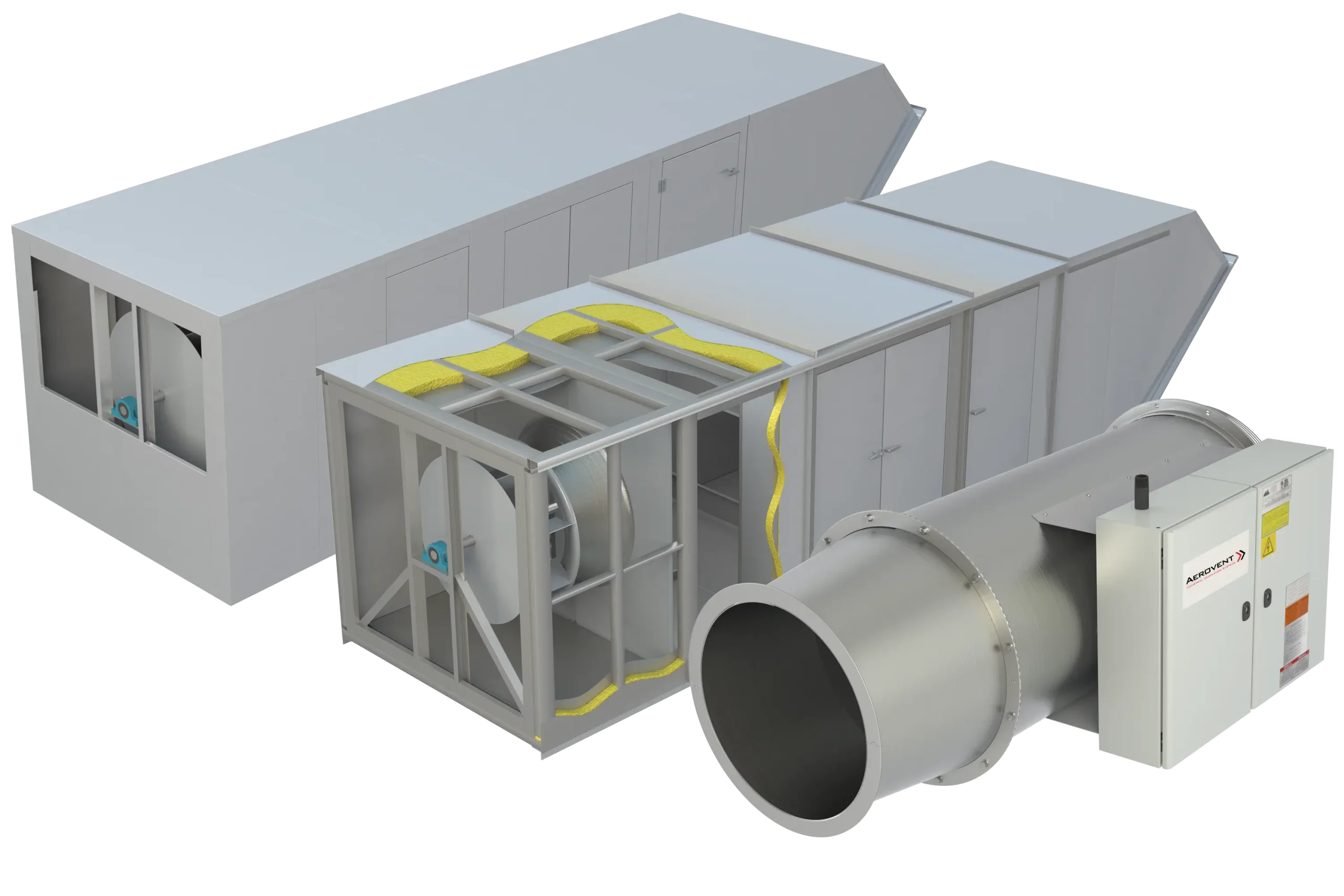



Air duct system performance is often evaluated based on design specifications, equipment selection, and airflow calculations. However, many HVAC systems do not perform as intended after installation, even when the design documents are technically correct. The discrepancy typically arises during the installation phase, where field conditions, coordination challenges, and shortcuts can introduce airflow instability, leakage, noise, or inefficiencies that persist throughout the system’s operational life.
As outlined in HVAC Air Duct System Basics, stable airflow depends on pressure control, duct geometry, and consistent sealing. When installation does not follow these principles, system imbalance becomes difficult to correct—even with damper adjustments or commissioning efforts. This is why installation quality must be treated as a system performance variable, not a finishing detail.
One of the most common performance issues occurs when duct sizes are modified on-site due to space constraints or coordination conflicts. Installers may reduce duct width, alter transitions, or change elbow geometry to make the duct “fit” around beams, conduits, or cable trays. While the change may appear minor, the aerodynamic effects are substantial.
Correct duct sizing must follow the airflow principles discussed in How to Size Air Ducts: CFM, Velocity, and Pressure Drop Explained. Any modification to duct dimensions must be recalculated—not adjusted by approximation.
Duct leakage is one of the primary causes of energy waste in ventilation systems. Even small gaps, misaligned flanges, or improperly compressed gaskets can result in significant conditioned-air loss over years of operation. As leakage increases, the fan must work harder to maintain required airflow.
The importance of sealing standards and leakage classes is explained in Air Duct Leakage Classes & Sealing Performance. Preventing leakage requires clear QA inspection steps during installation—not post-commissioning troubleshooting.
Duct support spacing and hanger placement determine whether the duct maintains its shape and slope. When supports are spaced too far apart, ducts may sag, causing internal low points where moisture can accumulate. Vibration can also propagate through poorly placed supports, producing audible noise.
Correct support spacing depends on duct material and geometry. For large-diameter spiral ducts, support alignment ensures structural stability during long horizontal runs.
Branch takeoffs significantly influence how air is distributed across different zones. A perpendicular tee may cause uneven airflow division, with the main duct receiving significantly more volume than the branch. Conversely, angled wye fittings promote smoother flow distribution.
Incorrect branch geometry often leads to persistent system imbalance, where some spaces receive too much airflow and others too little. Attempts to correct this through damper adjustments rarely achieve stable long-term performance.
Branch fitting selection logic and airflow behavior are detailed in Duct Fittings Selection & Function Guide.
When space is limited, installers may choose tight-radius elbows instead of long-radius elbows. While this shortcut saves space, it dramatically increases airflow turbulence and pressure loss. Turbulence produces noise and reduces airflow stability.
However, turning vanes must be aligned properly. Misaligned vanes can worsen separation and noise rather than improve flow.
Every air distribution system requires ongoing maintenance—filter replacement, damper calibration, fire damper inspection, and cleaning access. When ducts are installed without sufficient clearance, maintenance becomes difficult, expensive, or completely neglected.
Lack of access is often discovered only during inspection or when operational problems arise.
Incorrect insulation sealing allows moist air to enter beneath the insulation layer, where it condenses on the duct surface. Over time, this leads to internal corrosion, mold growth, and material degradation. The system may appear clean externally while structural failure progresses underneath.
Preventing condensation-related damage requires proper vapor barrier sealing, drainage slope maintenance, and awareness of corrosion environment conditions as outlined in Anti-Corrosion Coatings for Air Ducts in Industrial Environments.
Many air duct systems are never properly balanced. Installers and facility teams often rely on subjective evaluation such as “the airflow feels strong” instead of measured airflow data. This results in unstable zone comfort, increased fan load, and unpredictable air distribution behavior.
Without documented balancing, any future system adjustments are guesswork, leading to increasing performance instability over time.
Correcting installation problems after system activation is significantly more expensive and disruptive than preventing them during installation. The goal of design and installation coordination is not to eliminate field changes entirely—but to minimize reactive corrections that alter system behavior.
The most reliable systems are those where materials, fittings, installation quality, and commissioning are aligned under a performance-based approach.
Air duct system performance depends not only on design intent, but also on installation discipline. Proper coordination, fitting selection, sealing, support, insulation workmanship, and commissioning ensure the system performs consistently throughout its service life. When installation quality is controlled and documented, the system becomes more efficient, quieter, cleaner, and easier to maintain.
If you have installation quality concerns or require ductwork inspection, our engineering team can assist in diagnosing airflow performance issues.


