Need Specifications or a Quote?
Share your ventilation project requirements and our engineers will reply within 12 hours with technical specs, pricing, and lead time.



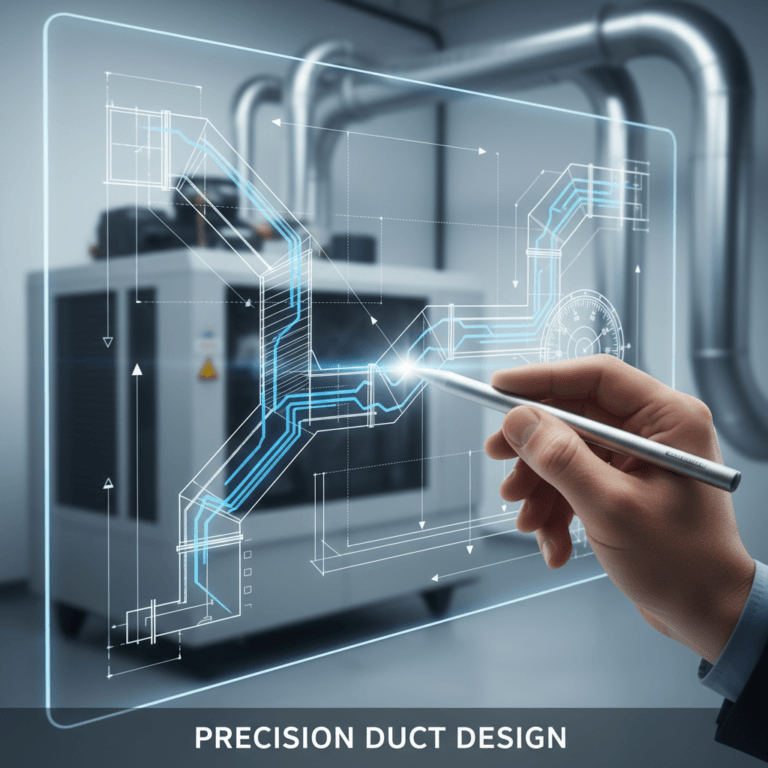
Modern commercial and industrial facilities operate as complex ecosystems where the invisible management of air determines the safety, comfort, and productivity of occupants. While often simplified to mere temperature control, the true function of building mechanics is far more sophisticated. At the core of this infrastructure lies the answer to a fundamental engineering question: What is an HVAC ventilation system? It is not simply a heater or an air conditioner; it is a comprehensive respiratory mechanism designed to orchestrate precise airflow, regulate humidity, and filter pollutants to maintain a stable indoor environment.
In the domain of building engineering, an HVAC ventilation system represents the synthesis of fluid dynamics and mechanical precision. It functions by manipulating pressure differentials to move air through a calculated network of air ducts and filtration units. This process is critical for diluting airborne contaminants, such as volatile organic compounds (VOCs) and particulate matter, which can accumulate in tightly sealed modern structures. Without this active circulation, buildings risk “Sick Building Syndrome,” a condition where stagnant air compromises human health and structural integrity. The system’s efficacy relies heavily on the quality of its primary movers, such as high-performance axial fans and Tubeaxial Commercial Fan Belt Driven units, which generate the necessary static pressure to overcome resistance within the ductwork.
The operational logic of ventilation is defined by the seamless interaction of its components. Air must be transported efficiently to minimize energy loss, a requirement that demands meticulously engineered pathways. Utilizing Spiral Duct and Fittings or traditional Rectangular Duct and Fittings ensures that airflow remains laminar and unobstructed as it travels from the handling unit to the occupied zones. However, transport is only half the equation; distribution determines comfort. The strategic placement of a Supply Grille Single Double Deflection allows engineers to direct air velocity and throw patterns, ensuring that fresh air reaches every corner of a room without creating drafts.
Equally important is the removal of stale air, which is managed through dedicated return grilles and exhaust pathways. This cycle of supply and return maintains the building’s pressure balance, preventing the infiltration of unconditioned outdoor air. Furthermore, safety remains a paramount concern in ventilation design. Advanced systems integrate critical safeguards like fire smoke dampers, which automatically seal off duct sections in the event of an emergency, preventing the spread of smoke and toxic gases through the grilles and registers.
As energy standards tighten and the demand for superior indoor air quality rises, understanding these systems is no longer optional for facility managers and engineers. It requires a holistic view of how components sourced from specialists like BromingHVac integrate to form a cohesive whole. The following sections will provide a technical deep dive into the specific mechanical architectures, filtration technologies, and smart control strategies that define modern HVAC ventilation.
An HVAC ventilation system serves as the central respiratory mechanism for modern infrastructure, orchestrating precise airflow, temperature regulation, and pollutant filtration. By dissecting its core components and operational logic, building managers and homeowners can maximize energy efficiency while ensuring superior indoor environmental quality. Below are the essential concepts defining these complex systems.
Understanding the intricate architecture of HVAC ventilation is the first step toward optimizing building performance and occupant well-being. The following sections provide a deep dive into the specific mechanical components, filtration technologies, and smart control strategies that power these essential systems.
The fundamental operation of any mechanical ventilation infrastructure is rooted in fluid dynamics, specifically the manipulation of air pressure to induce movement. To understand how does HVAC ventilation work in buildings, one must first deconstruct the relationship between static pressure, velocity pressure, and total pressure. Air, behaving as a fluid, flows from areas of high pressure to areas of low pressure. The mechanical components of an HVAC system—fans, blowers, and compressors—are essentially pressure generators designed to overcome the resistance (or static pressure loss) created by filters, coils, and ductwork friction.
At its core, what is an HVAC ventilation system? It is an engineered assembly of mechanical and digital components designed to control the temperature, humidity, purity, and distribution of air within an enclosed space by manipulating fluid dynamics. The efficacy of this system is often measured using specific formulas. For instance, the volumetric flow rate is critical for sizing equipment and is expressed in Cubic Feet per Minute (CFM). This is calculated using the continuity equation:
CFM = Area (sq ft) × Velocity (FPM)
Engineers must also calculate the Air Changes per Hour (ACH), a metric defined by ASHRAE standards to ensure adequate ventilation for occupant health. This metric dictates how many times the entire volume of air in a room is replaced or recirculated within sixty minutes. Achieving the correct ACH requires precise calculations of the building’s volume against the fan’s capacity, ensuring that the system creates sufficient electromotive force to push air through the resistance of the distribution network. Without adequate pressure generation, the system suffers from “system effect,” where turbulence at the fan inlet or outlet drastically reduces performance and energy efficiency.
Furthermore, the system must balance supply and exhaust airstreams to maintain building pressurization. A building operating under slight positive pressure prevents the infiltration of unconditioned, untreated outdoor air and moisture, which is a critical aspect of indoor climate control. Conversely, negative pressure is utilized in containment strategies, ensuring contaminants do not escape specific zones.
Once air is in motion, the HVAC system functions as a thermal engine. The air circulation system operates on the laws of thermodynamics, specifically the transfer of heat energy. In a cooling cycle, the ventilation system moves warm indoor air across a heat exchanger (evaporator coil) containing a refrigerant. The phase change of the refrigerant from liquid to gas absorbs latent and sensible heat from the air, lowering its temperature. In a heating cycle, this process is reversed or supplemented by hydronic coils or electric resistance elements.
However, the thermal exchange is futile without a sealed and efficient transport loop. The conditioned air must be delivered to the occupied zones without gaining or losing significant thermal energy. This is where the integrity of air ducts becomes the linchpin of system efficiency. Leaking ducts can result in a loss of up to 30% of conditioned air, altering the pressure dynamics and forcing the prime movers to work harder to maintain the setpoint temperature. This continuous loop—return air collection, filtration, thermal conditioning, and supply distribution—relies on the conservation of mass. The mass of air leaving the supply outlets must eventually equal the mass of air returning to the unit, minus any exhaust and plus any fresh air intake. Disruptions in this cycle leads to stratification, where pockets of stagnant air create hot or cold spots, undermining the entire purpose of the ventilation design.
The “heart” of the ventilation system is the fan assembly. Selecting the correct fan requires an analysis of the system curve versus the fan curve. Two primary technologies dominate the market: centrifugal fans (often called blowers) and axial fans. Centrifugal fans use a rotating impeller to increase the speed of the air stream, converting kinetic energy into pressure. They are ideal for high-pressure applications where air must be pushed through complex ductwork, filters, and dampers.
In contrast, axial fans move air parallel to the shaft around which the blades rotate. These are typically used for high-volume, low-pressure applications, or general exhaust. However, advancements in engineering have produced high-performance variants like the Tubeaxial Commercial Fan Belt Driven units. These heavy-duty fans are housed in a cylindrical tube and are designed to handle medium static pressures, bridging the gap between standard propeller fans and centrifugal blowers. They are particularly effective in industrial, commercial, and institutional duct systems where space is at a premium but significant airflow is required.
To assist technical buyers in selection, the following table compares these prime mover technologies:
| Feature | Axial Fans (Tubeaxial) | Centrifugal Fans |
|---|---|---|
| Airflow Direction | Parallel to the shaft (Through-flow) | Perpendicular (Radial output) |
| Static Pressure | Low to Medium (Up to 4″ w.g.) | High (Up to 20″+ w.g.) |
| Volume (CFM) | High Volume | Variable (Low to High) |
| Efficiency | High aerodynamic efficiency at design point | High mechanical efficiency across curve |
| Typical Application | Industrial exhaust, garage ventilation, return air | AHUs, high-filtration systems, rooftop units |
| Noise Level | Higher frequency noise | Lower frequency, easier to attenuate |
The distribution network channels the airflow generated by the fans to the designated zones. The design of these conduits significantly impacts the Total Equivalent Length (TEL) and friction loss of the system. HVAC system components in this category are generally fabricated from galvanized steel, aluminum, or fiberglass board. The geometric profile of the duct plays a massive role in aerodynamic efficiency.
Rectangular Duct and Fittings are the industry standard for low-clearance spaces. Their flat surfaces allow them to fit snugly above suspended ceilings or inside wall cavities (plenums). However, rectangular ducts are structurally less rigid than round ducts and are more prone to “drumming” noise if not cross-broken or stiffened. Furthermore, the sharp corners in rectangular transitions can create eddy currents, increasing static pressure loss.
Conversely, Spiral Duct and Fittings offer superior aerodynamics. The round cross-section provides the least surface area for friction per unit of volume flowing through it. The spiral lock-seam construction adds immense structural rigidity, allowing for lighter gauge metal usage without compromising strength. Spiral ductwork limits leakage (measured in CFM/100 sq ft surface area) more effectively than rectangular equivalents, making it the preferred choice for exposed architectural applications and high-velocity systems where energy conservation is paramount.
The final component in the mechanical chain is the terminal unit, which dictates how air enters the occupied space. This is not merely a hole in the wall; it is a precision instrument designed to control “throw” (the distance air travels) and “spread” (the width of the airflow pattern). Improper selection here can lead to drafting or stagnation.
The Supply Grille Single Double Deflection is a versatile component in this regard. Double deflection grilles feature two sets of adjustable blades—vertical and horizontal. This allows facility managers to fine-tune the air pattern in four directions, directing conditioned air away from occupants or towards heat loads (like computer servers or sun-drenched windows). This adjustability is essential for maintaining thermal comfort without creating high-velocity drafts.
Equally important are return grilles. While supply outlets control distribution, return intakes control the removal of air. If return grilles are undersized, they increase velocity noise (NC levels) and starve the HVAC unit of air, leading to coil freezing or furnace overheating. Strategic placement of returns is vital to ensure that the air sweeps across the room, effectively picking up heat and contaminants before re-entering the system.
Modern ventilation is as much about air quality control as it is about temperature. As air cycles through the building, it accumulates particulate matter (PM), allergens, biological growth, and atmospheric dust. The HVAC air filtration process relies on mechanical interception, inertial impaction, and diffusion to trap these contaminants. Filtration efficiency is rated by the Minimum Efficiency Reporting Value (MERV), typically ranging from 1 to 16 for commercial applications.
For standard commercial buildings, filters rated MERV 8 to MERV 13 are common, trapping particles between 3.0 and 10.0 microns. Critical environments, such as cleanrooms or surgical suites, utilize High-Efficiency Particulate Air (HEPA) filters, which capture 99.97% of particles at 0.3 microns. These filter banks are usually placed upstream of the coils to keep the heat exchangers clean, maintaining thermal transfer efficiency. However, as filter efficiency increases, so does the pressure drop. Engineers must calculate the “dirty filter” static pressure to ensure the fans can still deliver the required CFM as the filter loads with debris.
Beyond particulate matter, ventilation technology serves as the primary defense against Sick Building Syndrome (SBS), a condition where occupants experience acute health effects linked to time spent in a building. The primary culprit is often the accumulation of Carbon Dioxide (CO2) and Volatile Organic Compounds (VOCs) off-gassing from furniture, paints, and cleaning agents.
Effective ventilation dilutes these contaminants by introducing calculated amounts of outdoor air. ASHRAE Standard 62.1 dictates the minimum ventilation rates required for acceptable indoor air quality. By constantly purging a percentage of the indoor air and replacing it with filtered, conditioned outdoor air, the concentration of gaseous pollutants is kept below hazardous thresholds. This dilution process is critical for cognitive function; high CO2 levels (above 1000 ppm) have been statistically proven to reduce decision-making performance in office environments.
Humidity management is a complex thermodynamic challenge governed by psychrometrics—the study of moist air properties. An HVAC system must control not just the sensible heat (temperature) but also the latent heat (moisture content). High humidity promotes mold growth, dust mite proliferation, and the corrosion of building materials. Low humidity leads to static electricity buildup and respiratory irritation.
The ventilation system manages this by manipulating the dew point. During the cooling process, if the temperature of the evaporator coil is below the dew point of the air passing over it, moisture condenses out of the air stream. In humid climates, engineers may employ “reheat” strategies, where air is over-cooled to remove moisture and then slightly heated back up to a comfortable supply temperature. This ensures that the Relative Humidity (RH) remains between the optimal 40% and 60% range, protecting both the building structure and the occupants.
Conditioning outdoor air to replace stale indoor air is energy-intensive. To mitigate this, modern designs utilize Energy Recovery Ventilation (ERV) or Heat Recovery Ventilation (HRV) systems. These components act as thermal bridges between the outgoing exhaust air and the incoming fresh air. In an HRV, a heat exchanger transfers sensible heat from the warmer air stream to the cooler one without mixing the air. For example, in winter, the warm exhaust air pre-heats the cold fresh air, significantly reducing the load on the heating plant.
ERVs take this a step further by transferring both sensible heat and latent heat (moisture). An ERV core allows water vapor to pass through a semi-permeable membrane. In summer, this means the ERV can pre-cool and dehumidify incoming air by transferring heat and moisture to the exhaust stream. This technology allows for high ventilation rates necessary for air quality without the punitive energy costs traditionally associated with conditioning 100% fresh air.
HVAC systems traverse the fire barriers of a building—floors, walls, and partitions. Without proper safeguards, ductwork can act as a chimney, rapidly transporting fire and toxic smoke throughout a structure. To prevent this, life-safety components are integrated directly into the ventilation architecture.
CRITICAL WARNING: The integration of fire safety systems is mandatory under NFPA codes. Fusible links and actuator-driven dampers must be inspected regularly. Failure of these components during an emergency can lead to rapid smoke migration, which is often more lethal than the fire itself.
The primary defense mechanism is the installation of fire smoke dampers. These specialized units are installed where ducts penetrate fire-rated barriers. Upon detection of heat (via a fusible link usually set to 165°F) or smoke (via a signal from the fire alarm system), the damper blades slam shut, effectively sealing the duct. This compartmentalizes the building, preventing the spread of the hazard. While the dampers seal the ducts, the visible endpoints, specifically grilles and registers, remain passive, but the cessation of airflow through them prevents the injection of oxygen into a fire zone or the extraction of smoke into a clean zone.
Advanced indoor climate control extends to precise pressure zoning. In facilities like hospitals, laboratories, or manufacturing plants dealing with hazardous materials, the direction of airflow is a safety protocol. Isolation rooms for infectious diseases are kept at negative pressure relative to the corridor. This ensures that when a door opens, air flows into the room, preventing airborne pathogens from escaping.
Conversely, protective environments (such as operating theaters or clean manufacturing) are kept at positive pressure. This ensures that any air leakage is outward, pushing dust and contaminants away from the sterile field. This balancing act requires variable frequency drives (VFDs) on fans and modulating dampers that adjust in real-time to changes in filter resistance or door openings, maintaining the pressure differential within fractions of an inch of water column.
The most significant evolution in ventilation technology is the shift from static, schedule-based operation to dynamic, sensor-driven adaptability. The integration of the Internet of Things (IoT) allows the HVAC system to “see” and “feel” the building environment in real-time. This is realized through Demand Control Ventilation (DCV).
In a legacy system, ventilation runs at a design capacity assuming full occupancy, which wastes massive amounts of energy during partial occupancy. IoT-enabled systems utilize networked CO2 sensors and occupancy counters to modulate airflow based on actual need. When a conference room fills up, CO2 levels rise. The smart sensor detects this spike and communicates with the Zone Controller. The controller commands the damper actuators to open wider and signals the Variable Air Volume (VAV) box to increase CFM. Simultaneously, the central fan speed increases via its VFD to accommodate the pressure drop. This feedback loop happens continuously, ensuring optimal air quality while minimizing energy consumption.
Smart technology also revolutionizes how facility managers approach equipment lifecycle management. IoT sensors placed on HVAC system components—such as bearings, fan belts, and motors—monitor vibration signatures, temperature anomalies, and power consumption profiles. Instead of waiting for a catastrophic failure, the system analyzes these data points to predict when a part is degrading.
For example, a slight increase in the vibration frequency of a blower might indicate a misalignment or a failing bearing weeks before it seizes. The system alerts maintenance personnel to the specific fault, allowing for scheduled repairs rather than emergency downtime. This proactive approach ensures the longevity of high-quality equipment sourced from suppliers like BromingHvac, maximizing the return on investment and ensuring continuous, reliable operation of the building’s respiratory system.
Understanding the intricacies of HVAC ventilation requires looking beyond the thermostat and appreciating the complex interplay of fluid dynamics, thermodynamics, and mechanical engineering. As we have explored, a ventilation system is not merely a method for temperature control; it is the respiratory system of a building, essential for maintaining structural integrity, occupant health, and operational efficiency. By deconstructing the physics of pressure and the mechanics of airflow, facility managers and engineers can transform a standard building into a high-performance environment.
The efficiency of any ventilation strategy hinges on the correct selection of prime movers and distribution networks. The choice between centrifugal blowers and axial fans is not arbitrary; it dictates the system’s ability to overcome static pressure and deliver the necessary air volume. For industrial and commercial applications requiring high-volume movement with moderate pressure capabilities, investing in robust equipment like the Tubeaxial Commercial Fan Belt Driven unit ensures that the system operates within its peak efficiency curve. This careful selection process prevents energy waste and reduces the mechanical stress that leads to premature equipment failure.
Furthermore, the “vascular network” of the building—the ductwork—must be designed with aerodynamics in mind. While Rectangular Duct and Fittings offer solutions for tight architectural plenums, understanding the superior friction loss characteristics of spiral designs allows for systems that require less horsepower to move the same amount of air. The goal is to minimize the resistance the fans must overcome, thereby lowering the long-term operational costs of the facility.
Delivering air to the occupied zone requires more than just pushing it through a pipe; it requires precision diffusion to prevent stratification and drafts. The strategic use of terminal units, such as the Supply Grille Single Double Deflection, grants operators the ability to sculpt airflow patterns, ensuring that conditioned air reaches heat loads effectively. This level of control is vital for maintaining occupant comfort and ensuring that ventilation rates meet ASHRAE standards.
Equally critical is the removal of stale air. Undersized or poorly placed return grilles can starve the system, leading to pressure imbalances and increased noise levels. By balancing the supply and return sides of the loop, you ensure that the filtration systems can effectively trap particulate matter and pathogens, safeguarding the indoor environmental quality against Sick Building Syndrome.
Beyond comfort and efficiency, the ventilation system serves as a frontline defense during emergencies. The integration of life-safety components is non-negotiable. Properly installed and maintained fire smoke dampers are essential for compartmentalizing a building during a fire event, preventing the ductwork from becoming a conduit for toxic smoke. These safety protocols, combined with pressure zoning strategies, ensure that the HVAC infrastructure protects both the property and the lives of its occupants.
As we look toward the future, the convergence of mechanical ventilation with IoT technology is redefining what is possible. The shift from static schedules to sensor-driven Demand Control Ventilation represents a massive leap forward in sustainability. By utilizing data to predict maintenance needs and adjust airflow in real-time, modern systems reduce their carbon footprint while extending the lifespan of components.
Ultimately, a successful HVAC design is the result of balancing physics, safety, and innovation. Whether you are upgrading air ducts for better airflow or implementing advanced filtration for superior air quality, every component plays a pivotal role in the system’s total performance. By partnering with industry experts like BromingHvac and selecting high-quality, engineered components, you ensure that your building remains comfortable, safe, and energy-efficient for years to come. Treat your ventilation system as a long-term investment in the health of your building, and it will deliver returns in energy savings and occupant productivity.