Need Specifications or a Quote?
Share your ventilation project requirements and our engineers will reply within 12 hours with technical specs, pricing, and lead time.
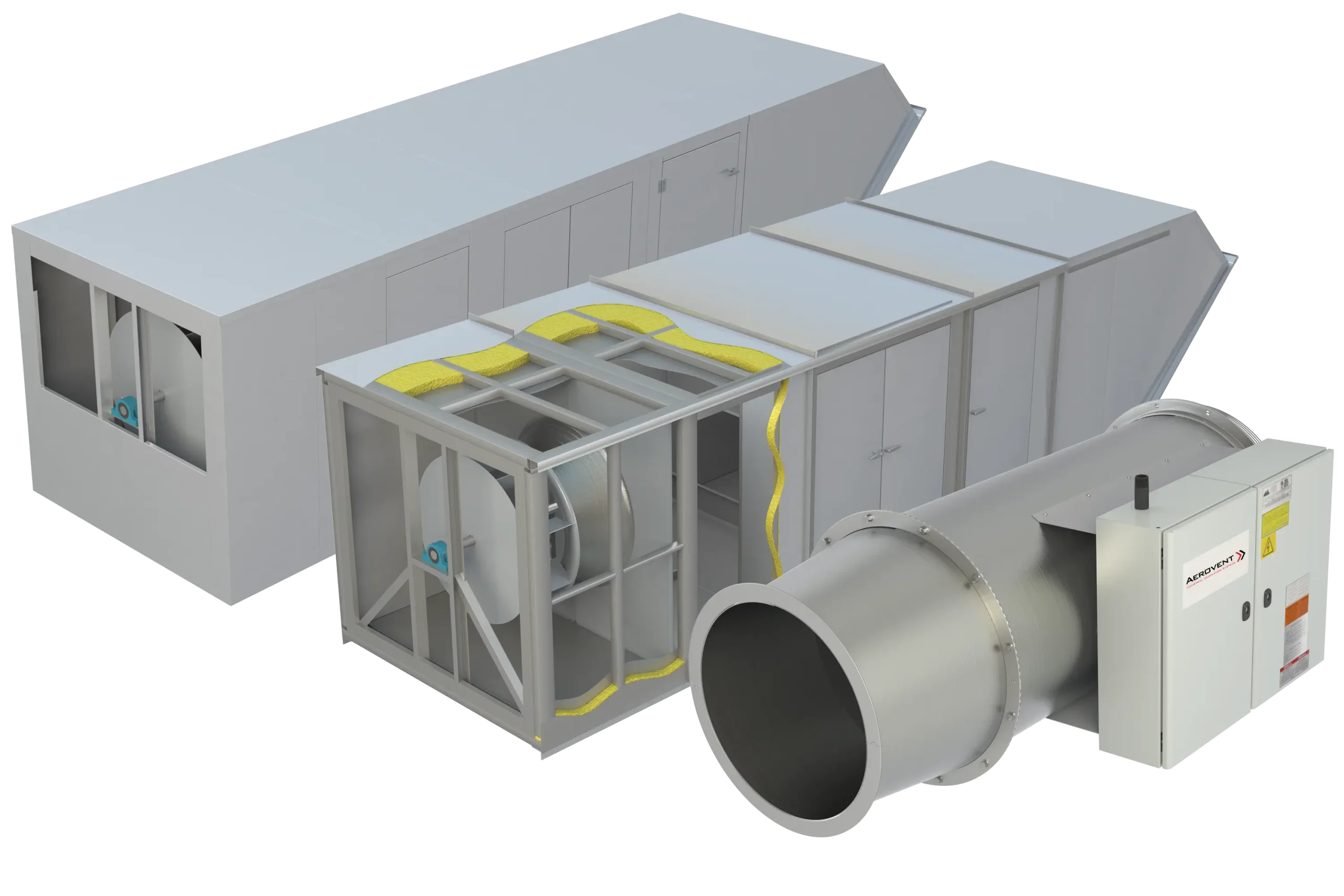


A high-capacity air handling unit is mathematically useless if the distribution network fails to maintain static pressure, velocity, or thermal integrity. In professional mechanical engineering, the efficiency of an environmental control system is rarely defined solely by the SEER rating of the central plant; rather, it is dictated by the aerodynamic and thermal performance of the hvac ventilation duct infrastructure. Designing a functional air distribution system requires a rigorous calculation of friction losses, turbulence, and heat transfer coefficients to ensure that the conditioned air leaving the mechanical room actually reaches the occupied zones with its intended properties intact.
The selection of air duct systems is not merely a matter of geometry; it is a study in material science and durability. Engineers must evaluate how specific substrates react to environmental stressors, particularly temperature variances that can range from -20°F to +180°F. Whether utilizing rigid spiral duct and fittings for high-velocity exposed applications or rectangular duct and fittings for concealed, space-constrained plenums, the physical rigidity of the conduit determines its ability to resist vibration and maintain airtight seals. Improper material selection often leads to structural hysteresis, where the ductwork degrades prematurely due to thermal expansion and contraction cycles.
Achieving optimal airflow requires minimizing resistance against the prime mover. When a tubeaxial commercial fan belt driven unit operates against excessive static pressure caused by poor layout or inadequate HVAC duct fittings, energy consumption spikes while air volume drops. Furthermore, a comprehensive system integrates safety and flow management components, such as rectangular smoke dampers and precision grilles and registers, to regulate distribution. This guide explores the technical specifications required to balance these competing forces, ensuring that every component—from the main trunk to the terminal diffuser—contributes to a unified, energy-efficient ventilation strategy.
Designing an efficient air distribution network requires a deep understanding of hvac ventilation duct classifications, material science, and thermodynamic properties. This guide provides a technical analysis of system components, ensuring that engineering decisions align with performance requirements and environmental conditions.
Optimizing a ventilation system goes beyond simple layout planning; it requires a rigorous assessment of how temperature variances and material properties interact under load. The following sections detail the technical specifications of various duct types and the critical factors influencing long-term system efficiency.
The architecture of a ventilation network dictates its hydrodynamic performance, acoustic signature, and long-term energy efficiency. When engineering commercial or industrial air distribution systems, the selection between rigid and flexible ductwork—or a hybrid approach—is rarely a matter of preference but rather a calculation of static pressure capabilities, space constraints, and lifecycle durability. The structural integrity of the hvac ventilation duct defines the system’s ability to maintain setpoint velocities without succumbing to leakage or deformation under load.
The aerodynamic profiles of rigid and flexible ducts differ fundamentally in how they manage airflow resistance. Rigid ductwork, typically constructed from galvanized steel or aluminum, offers a smooth interior surface with a low roughness factor, significantly minimizing friction losses per linear foot. This structural rigidity allows the system to handle higher static pressures (often exceeding 4 in. w.g. in high-velocity systems) without expanding or contracting, a phenomenon known as “breathing” that can fatigue materials over time.
Conversely, air duct systems utilizing flexible composite materials introduce a different set of variables. Flexible ducts are constructed with a wire helix encapsulated in a polymer or metallized polyester film. While they offer unparalleled versatility for final branch connections in tight plenum spaces, the internal corrugation of the wire helix creates a significantly higher friction coefficient. If not fully extended, the compression of the duct wall creates turbulence, dramatically reducing the effective airflow and increasing the work required by the blower.
In modern commercial design, a hybrid approach is often the engineering standard. This methodology utilizes rigid metal trunks for the primary high-velocity transport of air, ensuring minimal pressure drop over long distances. Flexible ducting is then reserved exclusively for the final 5 to 6 feet of the run (the “drop”) to connect the branch duct to the terminal unit. This configuration accommodates minor misalignments between the rigid duct and ceiling grid without compromising the overall system efficiency.
| Parameter | Rigid Metal Ductwork | Flexible Composite Duct |
|---|---|---|
| Friction Loss | Low (Smooth internal surface promotes laminar flow). | High (Corrugated interior induces turbulence). |
| Static Pressure Capability | High (Suitable for main trunk lines and high-velocity systems). | Low to Medium (Risk of ballooning or collapse under high pressure). |
| Acoustics | Reflective (Can transmit fan noise; requires liners). | Absorptive (Naturally dampens some high-frequency noise). |
| Durability | Excellent (Resistant to puncture and crushing). | Moderate (Susceptible to tearing and compression damage). |
| Installation Cost | Higher (Labor-intensive fabrication and sealing). | Lower (Rapid deployment and connection). |
Within the category of rigid metal ductwork, the geometric configuration plays a pivotal role in space utilization and structural mechanics. Spiral duct and fittings have become the gold standard for exposed ductwork applications. The manufacturing process involves winding a strip of metal into a helical tube, secured by a lockseam. This helical rib acts as a continuous stiffener, giving spiral ducts superior strength-to-weight ratios compared to longitudinal seam pipes. Because the duct is round, it naturally equalizes internal pressure, requiring no additional reinforcement to prevent booming or panting.
Furthermore, the circular cross-section is the most efficient shape for transporting air, offering the least amount of surface area for a given volume. This results in lower friction loss, reduced thermal transfer, and less insulation material required. However, commercial buildings with limited ceiling plenum height often necessitate the use of rectangular duct and fittings. Rectangular ducts can be fabricated with specific aspect ratios to fit between structural beams and ceiling grids.
The engineering challenge with rectangular configurations lies in the “flat span” of the sheet metal. Without reinforcement, large flat surfaces are prone to vibration and noise generation. To mitigate this, engineers employ “cross-breaking” or “beading”—diagonal creases stamped into the metal to increase rigidity. Additionally, the aspect ratio (width-to-height) must be carefully controlled. As the aspect ratio exceeds 1:1, the friction loss per linear foot increases, and the material costs rise significantly relative to the volume of air delivered. An aspect ratio greater than 4:1 should generally be avoided to maintain system efficiency.
The longevity of a ventilation system is inextricably linked to the material science governing its components. While airflow and pressure are the primary design calculations, the thermal environment defines the material limits. An hvac ventilation duct is not a static object; it is a thermal vessel subjected to constant expansion and contraction cycles.
One of the most overlooked aspects of duct specification is the operational temperature range. Commercial systems often transport conditioned air at 55°F, but in heating modes or industrial exhaust applications, temperatures can spike significantly. Furthermore, ducts running through unconditioned spaces (like attics or rooftops) are exposed to extreme ambient differentials.
CRITICAL ENGINEERING INSIGHT: The integrity of an hvac ventilation duct is strictly dependent on its ability to withstand temperature variances between -20°F and +180°F. Ignoring this variance is a primary failure point. Materials that cannot maintain elasticity at -20°F become brittle and crack under vibration, while adhesives and sealants that soften above 180°F will lead to catastrophic joint failure and air leakage.
Engineers must calculate the coefficient of thermal expansion for the duct material to prevent stress fractures at rigid connection points. For long runs of metal ductwork, expansion loops or flexible connectors are necessary to absorb the linear growth of the steel or aluminum as it heats. In terms of safety, all materials used must adhere to strict fire resistance standards. Codes such as `UL 181` for factory-made air ducts and `ASTM E84` for surface burning characteristics dictate that materials must possess a low flame spread index and low smoke development, ensuring they do not become conduits for fire propagation.
The installation environment imposes specific chemical and physical stressors on the ductwork. Standard galvanized steel (typically G-60 or G-90 coating) relies on a zinc layer to act as a sacrificial anode, preventing rust. However, in environments with high humidity, saline atmospheres (coastal regions), or chemical vapors, standard galvanization may be insufficient. In these scenarios, aluminum or stainless steel (304 or 316 grade) becomes the requisite material due to superior corrosion resistance.
For flexible ducts and externally insulated systems, UV stability is a critical parameter. The polymer jackets encasing insulation can degrade rapidly under ultraviolet radiation if exposed near skylights or on rooftops without proper shielding. This degradation leads to embrittlement and eventual disintegration of the vapor barrier. Furthermore, puncture and tear resistance are vital during the installation phase. Multi-layer construction employing metalized polyester and fiberglass reinforcement grids provides the necessary tensile strength to resist tearing on sharp trusses or ceiling grid wires during rough-ins.
Achieving energy efficiency in HVAC systems requires a rigorous reduction of aerodynamic drag. The energy consumed by the fan is directly proportional to the total pressure drop of the system. Therefore, flow management is not just about directing air; it is about minimizing the energy cost of transport.
Friction losses in ductwork are governed by the Darcy-Weisbach equation, where the roughness of the duct wall plays a significant role. As the Reynolds number increases (indicating higher velocity and turbulence), the impact of surface roughness becomes more pronounced. Smooth metal ducts minimize this friction, whereas fouling or liner detachment can drastically increase the roughness factor over time.
However, the most significant pressure losses occur not in straight runs, but at dynamic fittings. The geometry of elbows, transitions, and take-offs dictates the formation of eddies and separation zones. Properly engineered HVAC duct fittings are designed with specific radius-to-diameter ratios (R/D) to maintain laminar flow. For example, a standard 90-degree elbow with a sharp throat creates a massive pressure drop compared to a radius elbow with turning vanes. Turning vanes are aerodynamic profiles inserted into the elbow to guide the air and prevent the separation of the boundary layer, thereby conserving static pressure.
Velocity profiles also impact noise criteria (NC). While high velocity reduces duct size and material cost, it increases turbulence-generated noise. Engineers must balance volume delivery against the maximum allowable velocity for the specific application (e.g., 1,500 FPM for main trunks, 800 FPM for branch lines) to ensure the space remains acoustically comfortable.
The “heart” of the ventilation system is the prime mover—the fan. Selecting the correct fan requires superimposing the system resistance curve (calculated via `Manual D` or ASHRAE fundamentals) onto the fan performance curve. The intersection point determines the actual operating airflow.
For large commercial systems requiring high static pressure capabilities to overcome extensive duct runs and filtration banks, a tubeaxial commercial fan belt driven unit is often the optimal choice. These fans are designed to move large volumes of air against moderate-to-high resistance. The belt-drive configuration allows for field balancing; technicians can adjust the RPM by changing sheave sizes to dial in the exact airflow required, compensating for “system effect”—the unpredictable pressure losses caused by poor inlet or outlet duct conditions.
Effective system pressurization also requires the isolation of mechanical vibration. If the fan is hard-mounted to the ductwork, the vibration is transmitted as structure-borne noise throughout the building. Flexible canvas connectors decouple the fan from the ductwork, preventing this transmission and protecting the rigid duct from fatigue caused by oscillation.
Regardless of aerodynamic efficiency, a system is failing if it loses thermal energy through the duct walls. Thermodynamics dictates that heat moves from warmer to cooler zones, meaning cold supply air gains heat from a hot plenum, and hot supply air loses heat to a cold attic. Insulation is the barrier against this entropy.
Thermal insulation for ductwork is specified by its R-value (Thermal Resistance). Building codes vary by climate zone, but typically require R-6 or R-8 for ducts in unconditioned spaces. The goal is to minimize conductive heat transfer. This calculation involves determining the thermal conductivity ($k$) of the insulation material and its thickness.
In rigid duct systems, insulation is often applied externally as a wrap or internally as a liner. Internal liners offer the dual benefit of thermal insulation and acoustic absorption, but they increase friction and can harbor microbial growth if they get wet. For flexible ducts, the insulation is pre-integrated. It is critical to ensure that the insulation is not compressed during installation. Compressing fiberglass insulation squeezes out the air pockets that provide the thermal resistance, effectively destroying its R-value and leading to significant energy hysteresis.
Beyond energy conservation, insulation is the primary defense against condensation. When the surface temperature of a duct carrying cold air drops below the dew point of the surrounding ambient air, moisture condenses on the duct exterior. This phenomenon, known as “sweating,” can lead to water damage on ceiling tiles and structural corrosion.
To prevent this, a vapor barrier is mandatory. This is a continuous, impermeable outer layer (usually foil-scrim-kraft or vinyl) that prevents ambient humidity from migrating through the insulation to the cold metal surface. Engineers must calculate the minimum insulation thickness required to keep the outer surface temperature above the ambient dew point. Any breach in the vapor barrier renders the insulation useless, as the fiberglass becomes waterlogged, losing its insulating properties and becoming a breeding ground for mold and bacteria, thereby compromising Indoor Air Quality (IAQ).
A duct system is more than pipes; it is a network of control devices that regulate volume, direction, and safety. These components transform a passive set of tubes into a responsive air distribution machine.
The termination of the duct run is where the system interfaces with the occupant space. The selection of grilles and registers determines how the air mixes with the room air. Characteristics such as “throw” (the distance air travels) and “spread” (the width of the air pattern) must be matched to the room dimensions. Improper selection leads to drafts or stagnant zones (stratification).
Upstream of the diffusers, volume control dampers (VCDs) are essential for balancing the system. They introduce artificial resistance to specific branches to ensure design airflow reaches the furthest terminals. In advanced Variable Air Volume (VAV) systems, this regulation is automated. HVAC ventilation controllers modulate motorized dampers based on real-time data from thermostats and pressure sensors. This dynamic adjustment reduces fan speed and energy consumption when load requirements decrease.
In the event of a fire, the ventilation system must shift from climate control to life safety. Ductwork can act as a chimney, rapidly spreading smoke and flames through fire barriers. To prevent this, specific safety components are mandated by code.
A rectangular smoke damper is equipped with a leakage-rated actuator that closes upon detection of smoke, sealing the barrier. These dampers often feature aerodynamic blades to minimize pressure drop during normal operation. Fire dampers, distinct from smoke dampers, are heat-activated. They typically use a fusible link that melts at a specific temperature (e.g., 165°F), causing a curtain of steel blades to slam shut via gravity or spring tension.
Crucially, installation standards require access for maintenance. Fire smoke dampers must be accessible for periodic testing and resetting. Failure to provide access doors at these locations renders the safety system unverifiable and non-compliant with fire codes.
Even the most precisely engineered hvac ventilation duct design can fail if the installation execution is poor. Leakage is the silent killer of efficiency, with studies showing that typical commercial systems leak 10% to 30% of their air before it reaches the occupied space.
The mechanical connection of duct segments (screws, flanges) is structurally sound but rarely airtight. Sealing is a separate, mandatory step. The industry standard has shifted away from cloth “duct tape,” which dries out and fails, toward fibered mastic sealants and `UL-181` listed foil tapes. Mastic, a paste-like compound, cures to form a flexible, durable seal that accommodates the expansion and contraction of the metal.
Leakage classes (Class 3, 6, 12, etc.) defined by SMACNA determine the allowable leakage based on system surface area and pressure. For high-performance buildings, duct blasting (pressurization testing) is performed to quantify leakage. The system is sealed, pressurized with a calibrated fan, and the leakage rate is measured to verify it falls within the engineering specifications.
A professional installation accounts for the physical support of the system. Ducts must be suspended using hangers and straps spaced according to `SMACNA` standards (typically every 4 to 10 feet, depending on duct size) to prevent sagging. Sagging not only looks unprofessional but creates pockets where condensation can pool in flexible ducts, or where airflow is restricted.
Finally, the layout must be adaptable. Installing access doors at critical junctions—such as near fire dampers, turning vanes, and coils—allows for cleaning and inspection. Future-proofing trunk lines by sizing them slightly larger than currently needed, or capping off strategic take-offs, allows facility managers to expand the system later without major demolition.
The transition from a theoretical design to a functional reality relies on strict adherence to these installation protocols, ensuring the ventilation system operates as a cohesive, efficient, and safe entity.
The architecture of a functional ventilation network is far more complex than simply connecting pipes. As we have explored, the engineering behind an hvac ventilation duct system involves a rigorous balance of hydrodynamics, material science, and thermal management. The efficiency of your facility depends not only on the equipment selected but on how effectively that equipment allows air to travel through the building infrastructure. By prioritizing structural integrity and aerodynamic precision, facility managers and engineers can ensure long-term performance, reduced energy consumption, and superior indoor air quality.
The debate between rigid and flexible ductwork is best resolved through a hybrid design strategy. While air duct systems utilizing flexible composites offer necessary adaptability for final connections, the structural stability of rigid metal is non-negotiable for main transport lines. Utilizing spiral duct and fittings provides the optimal geometric shape for pressure equalization and friction reduction, making it the gold standard for exposed applications. In spaces where ceiling height is a constraint, rectangular duct and fittings offer a solution that maximizes volume within tight clearances, provided that aspect ratios are carefully calculated to prevent noise and vibration.
A ventilation system is a thermal vessel that must withstand significant stress. Understanding the operational environment is critical to preventing premature failure. Materials must be selected based on their ability to handle temperature extremes ranging from sub-freezing to high heat without losing elasticity or structural coherence. Furthermore, the role of insulation cannot be overstated. Beyond energy conservation, proper thermal barriers and vapor retarders are the primary defense against condensation, which protects the building structure from water damage and microbial growth. Whether using galvanized steel or corrosion-resistant aluminum, the material choice dictates the lifespan of the installation.
Minimizing aerodynamic drag is the key to energy efficiency. Every fitting, elbow, and transition introduces turbulence that the system must overcome. By utilizing engineered HVAC duct fittings with proper turning vanes and radius geometries, engineers can maintain laminar flow and reduce the static pressure load on the fan. This allows for the selection of a tubeaxial commercial fan belt driven unit that operates within its peak efficiency curve, reducing electrical consumption and mechanical wear over time. Additionally, integrating modern HVAC ventilation controllers allows the system to adapt dynamically to changing load requirements, further optimizing energy usage.
Beyond climate control, the duct network plays a vital role in life safety. The integration of safety components ensures that the system can respond instantly to emergencies. Devices such as a rectangular smoke damper or specifically rated fire smoke dampers transform the ventilation shafts from potential hazard conduits into containment barriers. Finally, the interface with the occupant space requires careful selection of grilles and registers to ensure proper throw and diffusion, eliminating drafts and stratification.
Ultimately, the performance of an HVAC system is defined by the weakest link in its distribution network. From the initial selection of rigid or flexible materials to the final sealing of joints with mastic, every detail contributes to the system’s total efficiency. A well-engineered hvac ventilation duct system is an investment in the building’s future, delivering consistent comfort, safety, and operational savings. By adhering to strict installation standards and utilizing high-quality components, you ensure that your ventilation infrastructure remains a reliable asset rather than a maintenance liability.


