The Strategic Importance of HVAC Ventilation Modes
For many facility managers and homeowners, an HVAC system is viewed primarily as a temperature regulator, designed solely to heat or cool a space. However, this perspective overlooks the system’s capacity as a comprehensive environmental control unit. The specific hvac ventilation mode utilized plays a critical role in balancing thermal comfort with operational efficiency. By decoupling air circulation from active temperature conditioning, operators can achieve significant improvements in Indoor Air Quality (IAQ) and system longevity.
Optimizing Energy Efficiency and Component Lifespan
One of the most immediate benefits of understanding ventilation settings is the potential for energy conservation. When a system runs in a standard cooling or heating cycle, the compressor consumes a substantial amount of electricity to alter the air temperature. In contrast, engaging a dedicated ventilation mode allows the system to bypass the compressor entirely. This process circulates air through air ducts using only the blower motor, which drastically lowers the energy load.
This approach is particularly effective during mild weather or for mitigating air stratification in high-ceiling environments. By utilizing robust air movers, such as a tubeaxial commercial fan direct drive or standard axial fans, the system can redistribute heat or cool air that has settled in specific zones without engaging the main heating or cooling plant. Furthermore, alternating between full conditioning cycles and fan-only ventilation reduces the duty cycle of critical mechanical components, extending the operational life of the heat exchanger and compressor.
Enhancing Indoor Air Quality Through Air Exchange
Beyond energy metrics, the proper application of ventilation modes is essential for maintaining a healthy indoor environment. Stagnant air allows for the accumulation of Carbon Dioxide (CO2), Volatile Organic Compounds (VOCs), and airborne particulates. Effective ventilation settings facilitate the intake of fresh outdoor air to dilute these contaminants. For a deeper understanding of how these configurations vary, reviewing a guide to 4 main types of ventilation systems explained offers valuable insight into system selection.
The success of this air exchange relies on the precise integration of terminal units. High-quality grilles and registers ensure that fresh air is not just introduced but effectively mixed throughout the occupied zone. Whether utilizing a supply grille single double deflection for directional control or an aluminum or steel return grille for efficient extraction, the physical components of the system dictate the efficacy of the chosen ventilation mode.
Designing for Performance and Safety
Modern HVAC ventilation design essential components and optimization strategies also account for safety and pressure balance. In commercial settings, this involves the integration of fire smoke dampers to prevent the spread of hazards through the ventilation network. Mastering these operational modes transforms a basic HVAC unit into a sophisticated tool for environmental management. The following sections provide a technical analysis of specific ventilation configurations, detailing how to select the appropriate setting for your facility’s unique requirements.
Understanding the nuances of HVAC ventilation modes is essential for maximizing indoor air quality and optimizing system efficiency. Beyond simple air movement, these settings provide precise control over air exchange rates and system integration, allowing users to balance comfort with energy conservation. The following key takeaways outline the technical benefits and strategic applications of various ventilation settings.
Vent mode prioritizes circulation over thermal regulation: This setting bypasses the compressor to circulate air through the system’s filtration unit, improving air quality without the energy expenditure associated with active heating or cooling.
Strategic usage significantly reduces energy load: Utilizing ventilation mode during mild weather conditions or for air stratification reduces reliance on energy-intensive compressors, resulting in lower operational costs and improved Energy Efficiency Ratios (EER).
Synergy with auxiliary components optimizes total performance: Integrating ventilation modes with Energy Recovery Ventilators (ERVs) or dehumidifiers ensures that fresh air intake does not compromise indoor humidity levels or thermal comfort.
Fresh air intake actively dilutes indoor contaminants: specific ventilation settings facilitate the exchange of stale indoor air with outdoor air, effectively lowering concentrations of CO2, Volatile Organic Compounds (VOCs), and airborne particulates.
Adaptive application prevents latent load spikes: Correctly timing the use of ventilation modes avoids introducing excess humidity during high-dew-point conditions, preventing the HVAC system from overworking to remove moisture.
Reduced mechanical stress extends equipment lifespan: Alternating between full conditioning cycles and fan-only ventilation reduces the duty cycle of the compressor and heat exchanger, mitigating wear on critical mechanical components.
Mastering these operational modes transforms an HVAC unit from a basic temperature regulator into a comprehensive environmental control system. The subsequent sections offer a deep dive into specific ventilation configurations, their impact on system mechanics, and technical guidelines for selecting the appropriate mode for your facility or home.
Understanding the Mechanics of HVAC Ventilation Modes
To fully leverage an HVAC system, one must distinguish between active thermal conditioning and aerodynamic ventilation. This section establishes the technical foundation of how hvac ventilation mode settings operate independently of heating or cooling cycles, focusing on fluid dynamics and control logic. In commercial and industrial applications, the ventilation mode is not merely a passive setting; it is an active engineering strategy designed to manage air mass transfer, pressurization, and contaminant dilution without engaging the energy-intensive refrigeration circuit.
At its core, the ventilation mode isolates the air handling unit’s (AHU) blower operation from the condensing unit or furnace burner. By decoupling these systems, facility managers can manipulate the building’s envelope pressure and internal air velocity. This separation allows for the fine-tuning of the indoor environment based on psychrometric data rather than just dry-bulb temperature, providing a mechanism to control indoor air quality (IAQ) through mechanical air displacement.
Defining Ventilation Versus Conditioning
Decoupling thermal load from airflow: In standard cooling operations, airflow is a medium for heat exchange. However, in a dedicated ventilation mode, airflow becomes the primary utility. This mode bypasses the refrigeration cycle—keeping compressors and condensers offline—and prevents furnace ignition. The system control logic energizes the G-terminal (fan relay) while leaving the Y-terminal (cooling) and W-terminal (heating) open. This allows the system to focus solely on the movement of air mass, redistribution of existing thermal energy, and filtration. It transforms the HVAC unit from a thermal exchanger into a sophisticated air pump, critical for maintaining equilibrium in static pressure and air composition.
The role of the blower motor: The indoor blower is the heart of the ventilation operation. Unlike older Permanent Split Capacitor (PSC) motors that run at fixed speeds, modern Electronically Commutated Motors (ECMs) or Variable Frequency Drives (VFDs) allow for precise modulation. The blower must generate sufficient torque to overcome the total external static pressure (TESP) within the air ducts without engaging energy-intensive components. When in ventilation mode, the motor often operates at a lower RPM than during peak cooling, designed specifically to maintain positive duct pressure and filtration velocity while minimizing electrical consumption (measured in wattage).
Air exchange rate dynamics: Ventilation modes directly influence the Air Changes Per Hour (ACH), a critical metric in facility management. ACH is calculated by the volumetric flow rate of the HVAC system (measured in Cubic Feet Per Minute, or CFM) relative to the volume of the conditioned space. By adjusting the ventilation mode, operators can alter the rate at which indoor air is replaced or recirculated. High-occupancy zones or spaces handling volatile materials require higher ACH values, which can be achieved by running the system in continuous ventilation mode to maximize the number of passes air makes through the filtration media.
The Physics of Air Stratification and Circulation
Combating thermal layering: In high-ceiling facilities such as warehouses, atriums, or industrial plants, thermal stratification naturally occurs. Warmer, less dense air rises to the ceiling, while cooler, denser air settles at the floor level. This gradient can cause the HVAC system to read false temperatures at the thermostat level and overwork. Continuous ventilation breaks up these heat pockets utilizing equipment like axial fans to homogenize temperature gradients. By mechanically forcing the mixing of air layers (destratification), the system equalizes the ambient temperature, reducing the load on the heating plant during winter and improving occupant comfort without adding thermal energy.
Static pressure considerations: Analyzing how ventilation system operation affects duct pressure and flow velocity is essential for system longevity. During full-load conditioning cycles, the air density changes as it passes over a rapidly cooling coil, affecting pressure drops. In ventilation-only modes, the air density remains relatively constant (isothermal flow). Engineers must verify that the ductwork design can handle continuous airflow without creating excessive noise or velocity pressure that could rattle dampers. Furthermore, proper static pressure management ensures that supply air reaches the furthest diffusers in the branch line, preventing “dead zones” where air stagnation occurs.
Engineering Insight: Running a system with high static pressure (above 0.8 inches water column for residential/light commercial) in continuous ventilation mode can reduce the lifespan of the blower motor if the ductwork is undersized. Always verify TESP before committing to a 24/7 ventilation strategy.
Core Types of HVAC Ventilation Settings Explained
Modern systems offer granular control over how air is handled. This section provides a deep dive into the specific configurations available on commercial and residential thermostats, addressing the secondary keyword vent mode in air conditioner usage and its technical implications. Understanding the distinction between these modes is vital for balancing energy efficiency with environmental health.
Fan-Only Mode (Recirculation)
Mechanism of action: The “Fan On” setting forces the system to continuously circulate indoor air through the return plenum, across the filter media, and back out through the supply registers, regardless of the thermostat’s temperature setpoint. Unlike “Auto” mode, which stops the fan once the thermal demand is met, this mode ensures the blower runs 100% of the time. This creates a constant loop of air movement, maintaining a uniform pressure throughout the building envelope. It is a closed-loop aerodynamic cycle that does not inherently introduce outdoor air unless an economizer or fresh air intake is mechanically linked to the blower operation.
Filtration benefits: Continuous circulation maximizes the efficiency of particulate capture. In intermittent operation, dust, allergens, and suspended particulates settle on surfaces when the fan stops. By keeping the air in motion, these contaminants remain suspended in the airstream long enough to be captured by the return filters. This is particularly effective when using high-MERV (Minimum Efficiency Reporting Value) filters. The hvac ventilation mode essentially turns the entire central system into a whole-home or whole-building air purifier, significantly reducing airborne particulate counts without altering the dry-bulb temperature.
Energy profile: While removing the thermal load saves significant energy, the blower motor itself consumes electricity. An analysis of the electrical consumption reveals that running a standard PSC fan continuously can add noticeable cost to the utility bill. However, modern ECMs are highly efficient at low speeds. The trade-off is often justified: the cost of running the fan is frequently lower than the cost of the compressor cycling on and off to correct temperature imbalances caused by stratification. Furthermore, keeping the air mixed can prevent the thermostat from triggering a cooling cycle prematurely.
Fresh Air Intake Mode (Dilution Ventilation)
Mechanical integration: This mode moves beyond recirculation to active replacement. Through the building automation system (BAS), motorized dampers open to draw outdoor air into the return plenum, mixing it with conditioned air before it reaches the supply bus. This process is governed by the principle of dilution. The ratio of fresh air to return air is critical; admitting too much unconditioned outdoor air can overwhelm the cooling coil’s latent capacity, leading to humidity issues. Proper integration requires a precise balance of damper actuator positions.
Pollutant mitigation: Indoor environments accumulate bio-effluents (CO2 from occupants) and Volatile Organic Compounds (VOCs) from furniture, cleaners, and building materials. Recirculation alone cannot remove these gases; they must be diluted. By displacing stale indoor air with fresh outdoor air, the concentration of these contaminants is reduced to safe levels (parts per million or PPM). This is the primary mechanism for meeting ASHRAE Standard 62.1 requirements for ventilation for acceptable indoor air quality.
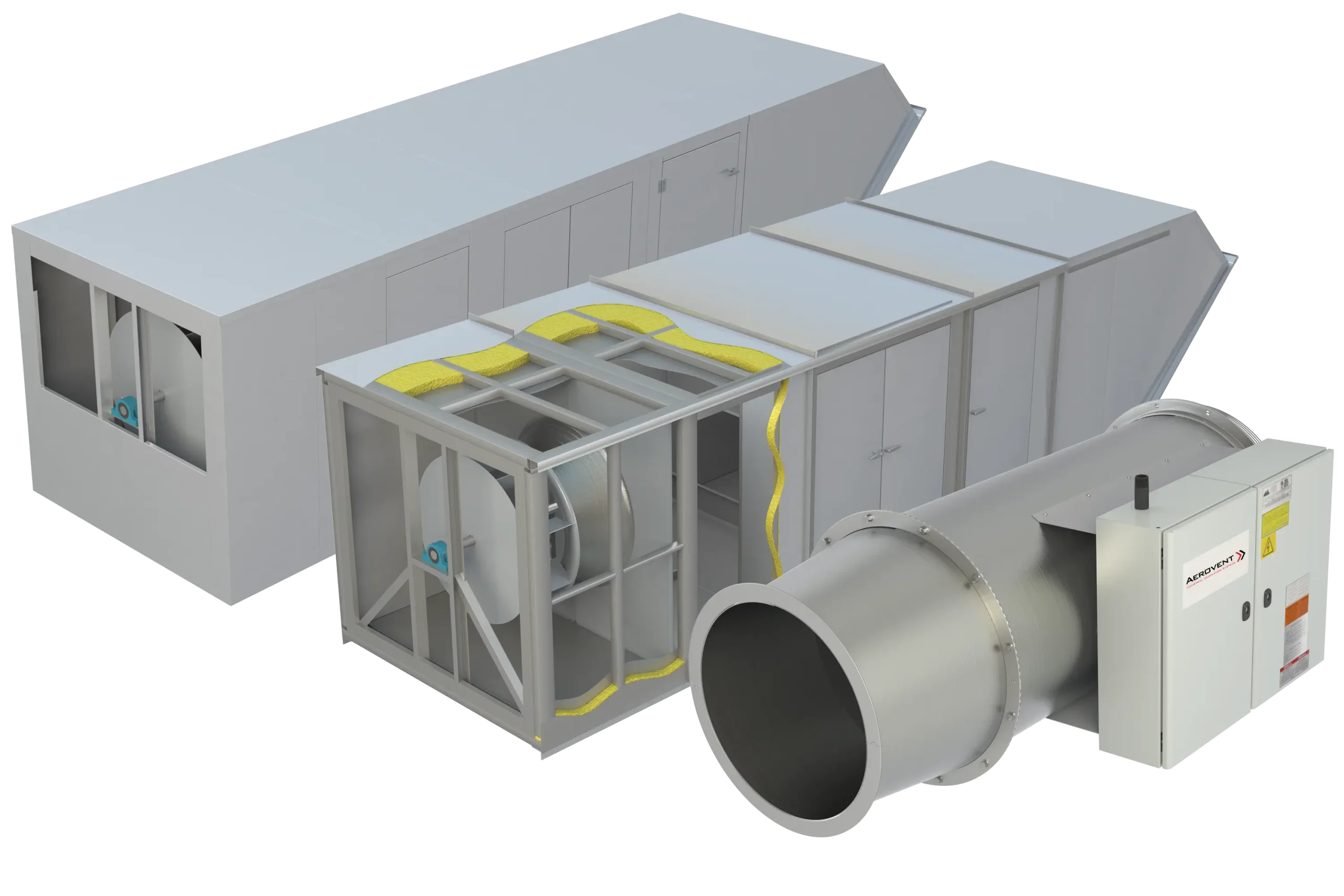
System requirements: Implementing a fresh air mode requires more than just opening a window. It necessitates properly sized intakes equipped with bird screens and filters. In larger industrial fresh air applications where high volumes of air are required to flush out heat or fumes, standard blowers may be insufficient. In these scenarios, engineers deploy specialized tubeaxial commercial fan direct drive units. These heavy-duty fans are designed to move massive volumes of air against moderate static pressure, ensuring that the fresh air intake rate matches the exhaust rate to maintain neutral building pressurization.
Demand-Controlled Ventilation (DCV)
Sensor-driven operation: DCV represents the apex of ventilation efficiency. Instead of a fixed ventilation rate, DCV utilizes CO2 sensors and occupancy counters to modulate ventilation rates in real-time. If a conference room is empty, CO2 levels drop, and the system reduces the outdoor air intake to a minimum background setting. As people enter and CO2 levels rise, the damper actuators modulate open to increase the introduction of fresh air. This dynamic response ensures that ventilation is provided exactly when and where it is needed.
Optimization logic: The algorithm used in DCV balances energy savings with mandatory fresh air requirements. Heating or cooling outdoor air is energy-intensive. By reducing the intake of outdoor air during periods of low occupancy, the system minimizes the thermal load on the coils. The controller logic continuously calculates the differential between indoor and outdoor conditions, ensuring compliance with ASHRAE standards while preventing energy waste. This makes DCV one of the most effective strategies for reducing HVAC operational costs in variable-occupancy buildings.
Ventilation Mode
Primary Function
Energy Impact
Filtration Efficiency
Fresh Air Introduction
Fan-Only (Recirculate)
Thermal Destratification
Low (Blower only)
High (Continuous passes)
None (Unless mixed)
Fresh Air Intake
Contaminant Dilution
Medium (Latent load impact)
Medium
High (Fixed rate)
DCV (Demand Controlled)
Optimized Air Quality
Variable (Highly Efficient)
Variable
Modulated by CO2 levels
Impact on Indoor Air Quality and Environmental Safety
The primary non-thermal function of an HVAC system is the maintenance of breathable, safe air. This section explores how selecting the correct hvac ventilation settings actively improves the indoor environment, referencing the guide to 4 main types of ventilation systems explained for broader context regarding exhaust, supply, balanced, and energy recovery systems.
Diluting Airborne Contaminants
CO2 and VOC reduction: Carbon dioxide is a proxy for indoor air quality. High levels (above 1,000 ppm) indicate poor ventilation and can lead to cognitive decline and fatigue (Sick Building Syndrome). Technical data confirms that fresh air circulation is the only method to lower concentration levels of carbon dioxide and off-gassed chemicals from carpets, paints, and plastics. By setting the system to introduce a calculated percentage of outdoor air (e.g., 15-20 CFM per person), facility managers can maintain an atmosphere conducive to health and productivity.
Particulate management: Filtration efficacy depends on two variables: the quality of the filter media (MERV rating) and the volume of air passing through it. A high-end HEPA filter is useless if the air handler is off. By utilizing continuous ventilation modes, the system increases the number of passes air makes through the filtration media. This effectively “scrubs” the air, progressively lowering the particle count of dust, pollen, and mold spores with each cycle. For critical environments like cleanrooms or clinics, continuous flow is mandatory to maintain ISO cleanliness standards.
Safety Integration and Smoke Control
Emergency ventilation protocols: In the event of a fire, the HVAC system’s role shifts from comfort to life safety. Ventilation modes must interact immediately with the fire alarm control panel. Upon detection of smoke, the system may shut down to prevent feeding oxygen to the fire, or it may enter a smoke purge mode. Crucial to this operation is the integration of fire smoke dampers. These specialized components automatically close to seal off duct penetrations through firewalls, isolating zones to prevent the migration of toxic smoke and heat to egress routes.
Pressurization strategies: Ventilation is the primary tool for pressure zoning. By manipulating the supply and return air volumes, engineers can create positive or negative pressure environments. Positive pressure is used in office spaces to prevent the infiltration of unconditioned, humid, or dirty outdoor air. Negative pressure is essential in isolation wards, chemical storage rooms, or restrooms to contain contaminants and ensure they are exhausted directly outside rather than leaking into adjacent spaces.
Energy Efficiency and Load Management Strategies
Strategic use of ventilation modes is a powerful tool for reducing operational costs. This section analyzes the energy implications of ventilation system operation and how to use these modes to lower the cooling load and extend equipment life.
Improving Energy Efficiency Ratios (EER)
Free cooling techniques: One of the most effective energy strategies is the use of an economizer cycle. When outdoor air is cooler and drier than indoor air (typically during mornings or shoulder seasons), the system opens the outdoor dampers fully and shuts off the compressor. This utilizes the “free” outdoor air to cool the building. This mode significantly improves the system’s seasonal energy efficiency ratio (SEER) by bypassing the high-amperage draw of the refrigeration circuit.
Reducing compressor duty cycles: Compressors draw the most power during startup (Locked Rotor Amps). Frequent cycling shortens compressor life and spikes demand charges. By prioritizing air movement over active cooling, the system can maintain occupant comfort through the “wind chill” effect of moving air. This allows for higher thermostat setpoints without a perceived loss of comfort, thereby reducing mechanical stress and electrical draw.
Latent load management: While fresh air is beneficial, it carries a latent heat load (moisture). Introducing humid outdoor air requires the AC to work harder to dehumidify the space (phase change of water vapor). It is critical to avoid excessive fresh air circulation during high-humidity periods. Advanced controllers monitor the outdoor dew point and lock out ventilation modes if the moisture content is too high, preventing the AC from overworking to dehumidify the space.
Extending Component Lifespan
Reducing thermal shock: Heat exchangers in furnaces undergo significant stress as they heat up and cool down. Continuous ventilation helps dissipate residual heat from the exchanger after the burner cycle ends. This constant airflow maintains a stable temperature at the heat exchanger, preventing rapid expansion and contraction cycles (thermal shock) that can lead to metal fatigue and cracking over time.
Motor longevity: While running a motor continuously adds operating hours, it eliminates the stress of frequent start-ups. The inrush current during a motor start generates heat and mechanical torque stress. ECMs are designed for continuous duty and often run cooler and last longer when allowed to operate at a steady, low-speed ventilation state rather than cycling on and off dozens of times per day.
Optimizing Air Distribution with Terminal Units
The effectiveness of any ventilation mode relies heavily on how air is delivered to the occupied zone. A system might generate perfect airflow at the blower, but if the terminal units are restrictive or poorly placed, the ventilation is wasted. This section details the hardware required—specifically HVAC ventilation design essential components—to ensure that the chosen hvac ventilation mode actually reaches the occupants efficiently.
Selecting the Right Grilles and Registers
Throw and spread mechanics: The “throw” is the distance an air stream travels from the outlet before its velocity drops to a terminal level (usually 50 feet per minute). The “spread” is the width of the stream. The design of grilles and registers directly influences air mixing. If the throw is too short, the air stratifies; if it is too long, it causes drafts. Selecting the correct blade spacing and angle is aerodynamic engineering, not just aesthetics, ensuring that fresh air is distributed evenly throughout the volumetric space.
Directional control: In zones with challenging geometries, standard stamped-face registers are insufficient. Utilizing a supply grille single double deflection allows for the precise targeting of airflow. These units feature adjustable vertical and horizontal blades, allowing technicians to direct the ventilation specifically where it is needed most—away from occupants to avoid drafts, or toward heat loads (like server racks) to improve convective cooling.
Efficient Air Extraction
Balancing supply and return: Ventilation is a push-pull system. For every cubic foot of air supplied, a cubic foot must be returned or exhausted. If the return path is undersized, the supply fan will cavitate or suffer from high static pressure, reducing airflow. The critical importance of return air sizing cannot be overstated; it must be large enough to maintain a low face velocity to prevent noise and ensure neutral building pressure.
Material considerations: The choice of material impacts performance and safety. When specifying an aluminum or steel return grille, engineers consider the environment. Steel is preferred for its strength and fire resistance in commercial hallways, while aluminum is chosen for high-humidity areas (like locker rooms or coastal regions) due to its resistance to oxidation. Furthermore, the rigidity of the material affects the acoustics; flimsy grilles can vibrate and resonate with the airflow, creating noise pollution.
Strategic Application: When to Use Which Mode
Knowing the technical specifications is only half the battle; knowing when to apply them is key. This section provides a decision matrix for facility managers and homeowners on how to choose the right ventilation mode for hvac based on environmental variables, occupancy loads, and hygroscopic conditions.
Seasonal and Weather-Dependent Adjustments
The psychrometric factor: Before engaging fresh air modes, one must consult the psychrometric chart. Guidelines suggest checking dew points before engaging fresh air modes to avoid introducing excess moisture. If the outdoor dew point is above 55°F, introducing fresh air will increase the latent load, potentially causing the indoor relative humidity to spike above 60%, which encourages mold growth. Conversely, in winter, introducing very dry air can cause static electricity issues and occupant discomfort.
Shoulder season strategies: The “shoulder seasons” (spring and autumn) offer the best opportunity for ventilation-based cooling. During these months, the outdoor temperature often aligns with the desired indoor setpoint. Leveraging ventilation during spring and autumn minimizes reliance on heating and cooling plants, allowing the system to operate almost exclusively in “Fan-Only” or “Economizer” modes, yielding the highest possible energy savings.
Occupancy-Based Ventilation Schedules
High-density scenarios: In spaces like conference rooms, classrooms, or event halls, human respiration rapidly depletes oxygen and spikes CO2. In these high-density scenarios, the hvac ventilation settings must be adjusted to “Continuous” or DCV mode to account for rapid CO2 buildup. Relying on “Auto” mode here is dangerous, as the temperature might remain stable while the air quality deteriorates to unsafe levels.
Unoccupied setbacks: Conversely, when the building is empty, running high-rate ventilation is wasteful. Protocols for reducing ventilation rates during nights and weekends—known as setbacks—conserve energy. However, it is vital to program a “purge” cycle one hour before occupancy begins to flush out any VOCs that accumulated while the system was idle, preventing the “stale air” sensation for the first arriving occupants.
Final system audit: Implementing these strategies requires hardware capable of handling variable flows and advanced logic. Recommended steps include verifying VFD capabilities, checking damper actuator torque, and consulting with BromingHvac experts to ensure your system’s hardware is compatible with advanced ventilation strategies. A professional audit can reveal whether your current ductwork and fans can support the static pressures required for aggressive ventilation protocols.
Mastering Airflow: The Strategic Advantage of Ventilation
Having explored the technical intricacies of HVAC mechanics, it becomes evident that ventilation is not merely a passive background function but an active engineering strategy. By decoupling the thermal conditioning from the movement of air, facility managers and homeowners unlock a new tier of control over their environments. The transition from simple temperature control to sophisticated aerodynamic management allows for a building that is not only comfortable but also healthier and more energy-efficient.
The Engineering of Indoor Air Quality
The distinction between conditioning and ventilation is the cornerstone of modern environmental safety. As detailed in our guide to 4 main types of ventilation systems explained, the method used to introduce and circulate air has a direct impact on occupant health. Whether utilizing Demand-Controlled Ventilation (DCV) to modulate CO2 levels or employing continuous Fan-Only modes to scrub particulates via filtration, the goal remains the same: dilution and displacement. This proactive approach to Indoor Air Quality (IAQ) ensures that contaminants are managed effectively, reducing the risks of Sick Building Syndrome.
Furthermore, the integration of safety protocols elevates the HVAC system from a comfort device to a life-safety asset. The strategic implementation of fire smoke dampers within the ventilation infrastructure ensures that, in the event of an emergency, the same system designed for breathability does not become a conduit for danger. This dual-purpose functionality highlights the importance of rigorous system design and maintenance.
Optimizing for Energy and Equipment Longevity
Beyond health, the strategic application of ventilation modes offers significant economic benefits. By leveraging “free cooling” through economizer cycles and reducing the start-stop frequency of compressors, operators can drastically lower electrical consumption. This approach mitigates thermal shock on heat exchangers and reduces mechanical stress on motors.
However, achieving these efficiencies requires the correct infrastructure. High-volume applications, for instance, necessitate robust equipment like the tubeaxial commercial fan direct drive to handle the static pressure requirements of aggressive fresh air intake strategies. Ensuring that the axial fans and blowers are matched to the ductwork capability is essential to prevent energy waste and noise pollution.
Precision in Distribution and Control
Even the most advanced central plant is ineffective without precise air distribution. The science of “throw and spread” dictates that the terminal units must be selected based on the specific geometry of the room. Utilizing a supply grille single double deflection allows for the granular targeting of airflow, ensuring that fresh air reaches the breathing zone rather than bypassing it.
Equally important is the material composition of these components. Selecting the appropriate aluminum or steel return grille ensures that the system can withstand environmental factors like humidity and oxidation while maintaining acoustic performance. For a deeper understanding of how these elements work together, reviewing the HVAC ventilation design essential components is highly recommended for anyone looking to upgrade their system layout.
Conclusion
Ultimately, the HVAC ventilation mode is the pulse of a building’s respiratory system. It represents the critical balance between energy conservation, occupant health, and mechanical longevity. By understanding the physics of air stratification, the chemistry of contaminant dilution, and the mechanics of static pressure, you can transform a standard HVAC unit into a precision instrument for environmental control.
Do not let your system run on default settings. assess your air ducts, upgrade your terminal units, and implement a ventilation strategy that responds to the dynamic needs of your space. As building standards evolve, staying ahead requires a commitment to active air management and high-quality components. For expert guidance on equipping your facility with top-tier ventilation solutions, visit BromingHvac and take the next step toward a smarter, safer, and more efficient environment.