Need Specifications or a Quote?
Share your ventilation project requirements and our engineers will reply within 12 hours with technical specs, pricing, and lead time.
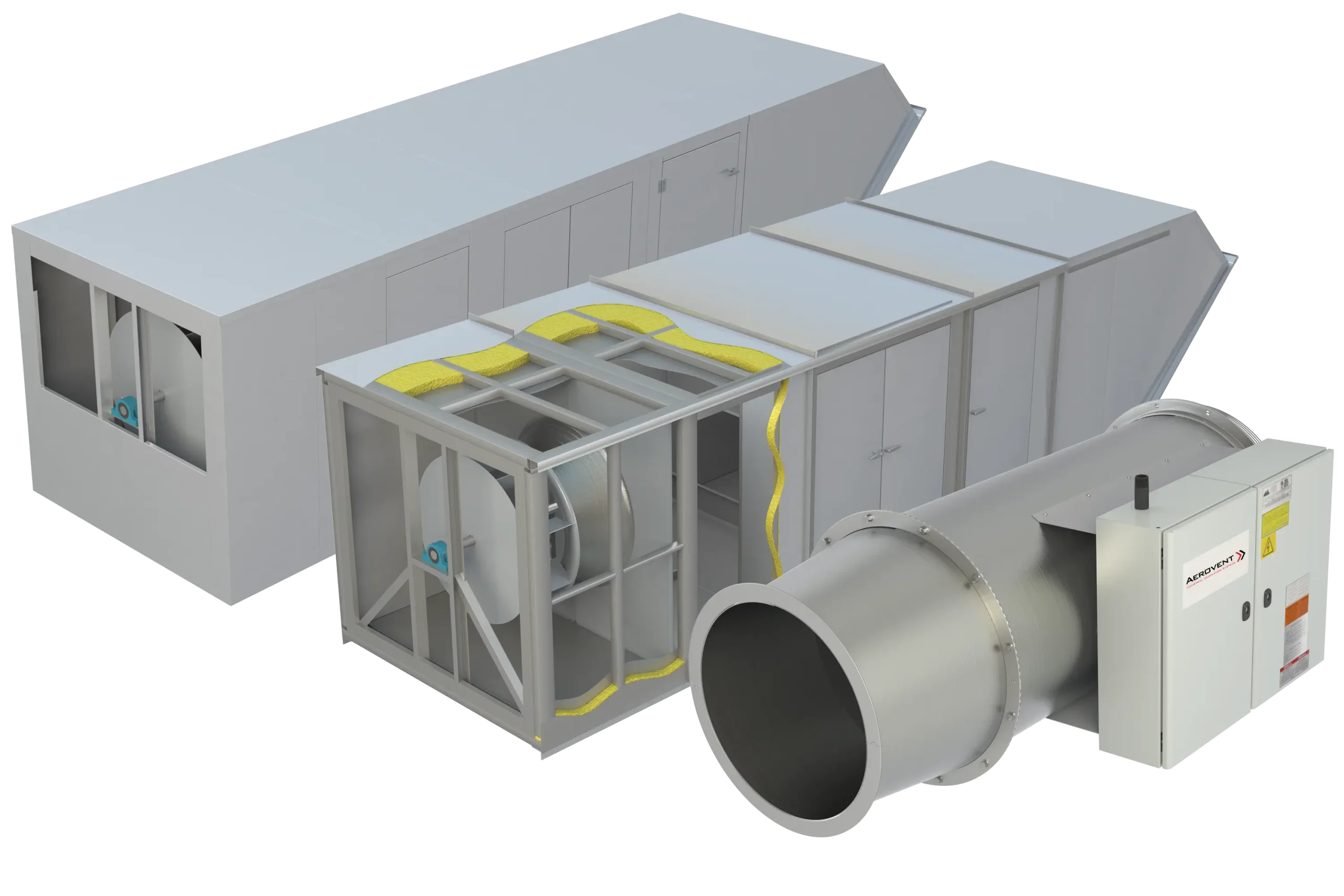



A crucial but often overlooked component in HVAC systems, register boxes play a pivotal role in maintaining consistent airflow and ensuring the system’s efficiency. Selecting the wrong size can result in uneven heating or cooling, unnecessary strain on your system, and even reduced energy efficiency. That’s why understanding HVAC register box sizes is essential for both residential and commercial setups.
Standard register sizes like 6×6 or 8×10 inches are designed to fit most duct configurations, but these measurements are only part of the equation. Factors like room-specific airflow requirements, duct compatibility, and installation location significantly influence your decision-making. Matching the right dimensions to your space ensures seamless airflow distribution and prevents common issues like pressure imbalances or restricted ventilation.
In this guide, you’ll learn how to select the right HVAC register sizes, evaluate materials for durability and insulation, and achieve precise installation that maximizes system performance. Let’s dive into the details to help you make informed decisions for your HVAC system’s success.
Understanding HVAC register box sizes is essential for efficient airflow distribution and overall system performance. While standard dimensions are widely discussed, it’s equally important to consider factors like room-specific airflow requirements and compatibility with ductwork. Below are the key takeaways to help you make informed decisions.
Choosing the right HVAC register box size requires careful analysis of room requirements, duct compatibility, and material considerations. In the sections ahead, we’ll discuss how to calculate necessary dimensions, evaluate material options, and achieve seamless installation for efficient HVAC operation.
The starting point for choosing correct hvac register box sizes is understanding the relationship between box dimensions, duct airflow, and the room’s heating and cooling load. A register box is more than a simple transition between duct and grille; it is a small plenum that sets the velocity, noise level, and distribution pattern for the air entering the space.
Every room has a required airflow, expressed in cubic feet per minute (CFM). That CFM must be delivered through a register box that is properly matched to both the duct size feeding it and the face size of the grille or register mounted to it. When hvac register dimensions are incorrect, you get excessive velocity, noise, drafts, or starved rooms with insufficient air.
At a basic level, the relationship between airflow, area, and velocity can be expressed as:
CFM = Area (ft²) × Velocity (ft/min)
This means that for a target CFM, increasing the effective area of the register box and grille reduces air velocity and typically noise, while decreasing area increases velocity and static pressure drop. As you transition from the main trunk line, through fittings, to the outlet, every piece – especially the register box – must maintain a balanced pressure and velocity profile.
To make informed choices, it is helpful to pair this airflow understanding with the broader duct design principles explained in the HVAC duct comprehensive guide to types, sizes, and installation, then apply them locally at each outlet.
With the fundamentals in mind, the next step is to explore what “standard” actually means when people refer to standard register sizes and how those relate to real-world register box measurements.
Standardization in register and grille face sizes simplifies design and sourcing. However, many installers assume that standard grille sizes automatically define correct hvac register box sizes, which is not always true. Face size, duct connection size, and box depth may all differ depending on performance needs.
In residential and light commercial projects, the most common rectangular register face sizes (width × length of the opening) include:
4 × 10, 4 × 12, 4 × 14 in. — Very common for floor outlets in bedrooms and small rooms. Typical design CFM range is 40–90 CFM per outlet when properly sized and placed.
6 × 10, 6 × 12 in. — Used for higher loads or where fewer outlets are desired, often handling 80–150 CFM each depending on static pressure and throw requirements.
8 × 8, 8 × 10, 8 × 12 in. — Often used for larger rooms, open areas, or ceiling applications requiring higher CFM or particular throw patterns.
Behind these face sizes, the register box might connect to round or rectangular ductwork of smaller cross-sectional area. For instance, a 6 in. round duct may feed a 4 × 10 register. The box acts as a duct transition, expanding from the 6 in. round to the rectangular opening while managing air velocity and minimizing turbulence.
To align with common hardware, designers often start from the registers and grilles they plan to use, such as those in the Grilles and registers collection, then back-calculate required box and duct sizes to achieve the target CFM at acceptable pressure drops.
Ceiling-specific ceiling boxes are often deeper and designed to interface with joist spaces, while sidewall boxes may be shallower and oriented for easier drywall integration. Typical depth ranges from 4 to 12 in., and this depth directly affects how smoothly air transitions from duct to register.
For example, a 4 × 10 sidewall register might be mounted on a box 4 in. deep for a basic retrofit, but for low-noise, high-efficiency systems, an 8 in. deep box may provide significantly smoother airflow and lower turbulence, especially if the duct enters at an angle or from the side.
One common oversight is the assumption that any 4 × 10 or 4 × 12 box is interchangeable. In reality, performance varies by:
Neck size (connection to duct): A 6 in. round neck on a 4 × 10 box behaves very differently from a 4 in. round neck on the same face size.
Box depth and shape: Shallow, flat boxes cause higher turbulence and potential whistling when velocities are high.
Internal transitions: Smooth transitions versus abrupt, squared corners have a measurable impact on pressure loss.
Understanding these nuances sets the stage for doing actual calculations instead of relying purely on rule-of-thumb “standard sizes.” Next, we will detail how to answer the question many homeowners ask: “what size register box do I need for my HVAC?”
The most ignored but critical factor in sizing register boxes is the room-specific CFM requirement. Box size, duct size, and grille size must all flow from a calculated load, not from guesswork or habit.
For precise work, contractors use load-calculation standards like ACCA Manual J for residential or Manual N/ASHRAE methods for commercial applications. For illustrative purposes, consider a simplified example:
A 150 ft² bedroom in a mixed climate might require approximately 6–8 BTU/h per square foot, giving a load of about 900–1200 BTU/h.
If the system is designed for a 20°F temperature difference and supplies air at about 400 CFM per ton (12,000 BTU/h), then:
Required CFM ≈ (Room load / 12,000 BTU/h) × 400 CFM
For a 1,000 BTU/h room load:
Required CFM ≈ (1,000 / 12,000) × 400 ≈ 33 CFM
In practice, this small room might be assigned 40–60 CFM to ensure comfort and flexibility. That airflow, in turn, dictates the appropriate register, grille, and box sizing.
Comfort and noise control considerations usually target outlet face velocities around 400–700 ft/min (fpm) for residential systems and up to 900–1200 fpm for certain commercial diffusers. For a 4 × 10 register:
Area = (4 in × 10 in) / 144 = 40 / 144 ≈ 0.28 ft²
If you supply 60 CFM through that register:
Velocity = 60 CFM / 0.28 ft² ≈ 214 fpm
This is a relatively low, quiet velocity. If, however, you try to push 140 CFM through the same opening:
Velocity = 140 / 0.28 ≈ 500 fpm
Performance might still be acceptable, but you are approaching higher throw and potentially more noise, especially if upstream duct velocities are also high.
Correctly sized register boxes support these target velocities by ensuring that duct entry and internal volume do not create bottlenecks that drive velocity well beyond design values.
In a 2,400 ft² two-story home, a contractor reused existing 4 × 10 registers and shallow boxes on the second floor after upgrading to a higher-efficiency furnace and air conditioner. The new system delivered 1,200 CFM total, with about 650 CFM allocated to the second floor. Although duct trunk sizes were upgraded, the register boxes were not.
Measurements showed that several bedrooms receiving 120 CFM each had outlet velocities over 650 fpm and noticeable noise. More importantly, due to the restrictive shallow boxes and small neck connections, static pressure at the air handler ran 0.25 in. w.c. higher than designed. This increased blower energy consumption by approximately 18% and caused uneven room temperatures.
After replacing the undersized boxes with deeper, larger-neck ceiling boxes that matched the redesigned ducts, the contractor documented:
A static pressure reduction of 0.15 in. w.c.
A 12% reduction in blower energy usage, translating to about $120 per year in fan energy savings for the homeowner.
Temperature differences between rooms on the second floor reduced from 4–5°F to less than 2°F.
This example emphasizes how room-level CFM and box sizing interact, which leads into practical guidelines on answering “how to choose the right register box size” for actual projects.
Begin with the calculated room CFM, then determine the number of outlets per room. For high comfort and flexibility, using two outlets in larger rooms rather than a single oversized register can improve mixing and reduce drafts.
For each outlet, target a CFM range that produces acceptable velocity at the grille face. Use simple calculations or manufacturer performance data for the specific grille selected from product lines like Grilles and registers.
Choose a grille size that maintains a face velocity within your design range. As an example:
| Register Face Size (in.) | Area (ft²) | CFM at 400 fpm | CFM at 700 fpm |
|---|---|---|---|
| 4 × 10 | 0.28 | ≈ 110 | ≈ 196 |
| 4 × 12 | 0.33 | ≈ 132 | ≈ 231 |
| 6 × 10 | 0.42 | ≈ 168 | ≈ 294 |
| 6 × 12 | 0.50 | ≈ 200 | ≈ 350 |
Once you identify an appropriate grille, that face size becomes the fixed dimension for your register box opening.
The neck connection of the register box must match or sensibly transition from the branch duct. For round ducts, common diameters are 4, 5, 6, 7, and 8 in. The HVAC duct fittings, elbows, reducers, tees, flanges guide provides guidance on how to manage these transitions with minimal pressure loss.
For example, an outlet requiring 120 CFM might be fed by a 6 in. round duct. At 120 CFM, velocity in a 6 in. duct is around 610 fpm, which is acceptable in many residential systems. The register box neck should either be 6 in. round or have a smooth, gradual transition from 6 in. round to a slightly larger rectangular neck that feeds the face opening.
Box depth is often dictated by framing constraints, but it should still be large enough to allow air to expand and redirect smoothly from duct to register. A common rule is that box depth should be at least equal to the duct diameter, and preferably 1.5–2 times the diameter when space allows.
For a 6 in. round duct to a 4 × 10 register, an 8–10 in. deep box will produce much smoother flow than a 3–4 in. deep “pancake” box. Deeper boxes reduce velocity gradients and turbulence, which lowers noise and improves effective CFM delivery.
Expert note: Extremely shallow boxes are a frequent cause of whistling registers and underperforming rooms. When in doubt, increase depth within framing limits rather than shrinking it to save material or labor time.
With selection principles in place, we can now distinguish standard configurations from non-standard and custom register box measurements that are often needed in complex layouts.
Manufacturers typically stock a core range of sizes that align with common registers and duct diameters. Typical combinations include:
4 × 10 face with 4, 5, or 6 in. round necks
4 × 12 face with 6 in. round neck
6 × 10 face with 6 or 7 in. round neck
8 × 8 or 8 × 10 face with 8 in. round or small rectangular neck
These standard register sizes simplify stocking and replacement, especially when paired with commonly available air ducts and standard trunk layouts.
Non-standard register box measurements are often necessary in the following situations:
Architectural constraints: Narrow soffits, beam obstructions, or shallow ceiling spaces where typical box depths are not feasible.
High-performance systems: Low-static, low-noise systems that use oversized registers and deeper boxes for quiet operation.
Retrofits: Existing openings require custom transitions to new ductwork layouts, including complex drop ceilings and historic structures.
In such cases, coordinating custom register boxes with compatible ductwork such as rectangular duct and fittings or spiral duct and fittings allows designers to maintain good airflow performance even when geometries are unusual.
Once you know whether a standard or custom box is required, the next dimensioning step is ensuring compatibility with the broader duct system.
Register boxes do not exist in isolation. Their sizing has to be coordinated with the upstream duct network, including main trunks, branch ducts, and fittings. Poorly executed duct transitions into register boxes are a major cause of performance problems.
In many installations, rectangular mains are used with round branches, or vice versa. Matching these to register boxes requires attention to equivalent areas and velocities. Guidance on rectangular duct sizing is thoroughly discussed in rectangular ductwork explained, and this should be cross-referenced when selecting box neck dimensions.
For example, a 6 × 8 rectangular neck (48 in²) has an area similar to an 8 in. round duct (about 50 in²). If a register box with a 6 × 8 neck is fed by an 8 in. round branch, velocities and static pressure can be closely matched, minimizing losses at the transition.
Register boxes that are too small or have abrupt transitions increase local static pressure. In a multi-branch system, these localized losses add up, causing:
Higher external static pressure at the blower, potentially exceeding manufacturer limits.
Unbalanced airflow distribution, where closer or less-restricted branches steal CFM from more distant or highly restricted ones.
Increased blower power consumption and reduced equipment life.
Contractors can use balancing dampers and careful duct routing to mitigate issues, but correctly sized and smoothly transitioned register boxes dramatically reduce the need for intensive balancing in the field.
Implementation tip: When designing or troubleshooting systems, treat each register box as a minor loss element. Use pressure-loss tables or design software and verify that cumulative loss remains within the static pressure capability of the selected air handler or fan.
With duct compatibility considerations addressed, the next area of impact is materials, insulation, and their effect on performance, noise, and durability.
Most high-quality register boxes are fabricated from galvanized sheet metal, typically 26–30 gauge for residential and 22–24 gauge for commercial applications. Galvanized steel provides:
Corrosion resistance in normal indoor environments.
Structural rigidity that maintains shape under duct pressures.
Compatibility with standard double-wall rectangular duct and other duct systems.
Fabrication quality – including hemmed edges, sealed seams, and proper collar connections – significantly affects air leakage and long-term durability.
Insulated register boxes are essential in unconditioned spaces such as attics, crawlspaces, and unheated basements. Without insulation, the metal box becomes a point of significant heat gain or loss and a condensation risk.
Typical insulation configurations include:
Externally insulated single-wall boxes: Fiberglass or foam boards applied to the outside of galvanized boxes. These are common in residential retrofits and are straightforward to tape and seal.
Double-wall insulated boxes: Similar in concept to double-wall ductwork, with inner and outer metal shells and insulation between them. These are often used in commercial systems or where higher R-values and reduced noise transmission are desired.
Correctly insulated boxes help maintain delivery air temperature, prevent condensation that can damage building materials, and reduce breakout noise from high-velocity air inside the box.
Beyond thermal performance, material selection influences sound. Thinner metal can “oil can” or vibrate, while double-wall and internally lined register boxes can significantly reduce transmitted noise. When projects use higher static pressures or high-speed fans like certain axial fans, acoustic control at outlets becomes far more critical.
Having explored core materials and insulation, we can now focus on ceiling applications specifically, where geometric constraints and occupant comfort raise unique sizing and design issues.
Ceiling outlets are popular for both heated and cooled air distribution, especially in systems using overhead ductwork. Ceiling boxes must be carefully sized and positioned to control throw, spread, and draft patterns.
Because ceiling outlets supply air downward into occupied zones, face velocity and diffuser pattern are critical. Deep boxes allow for smoother diffusion and better utilization of adjustable blades in ceiling registers or diffusers.
Consider a living room requiring 300 CFM delivered through two 6 × 12 ceiling registers (150 CFM each). Using the earlier area calculation, each register has about 0.50 ft² of area, so:
Velocity = 150 CFM / 0.50 ft² = 300 fpm
With a box depth of 10–12 in. and a properly sized round neck (such as 7 in. or 8 in. diameter feeding each box), this setup can deliver quiet, well-distributed air. A shallow 4 in. deep box, however, would cause more turbulence, higher effective exit velocity, and greater noise.
Framing often limits depth to the joist height (e.g., nominal 2 × 10 or 2 × 12). Designers must work within these boundaries while maintaining adequate box volume. In tight conditions, oversized face sizes with lower velocities can partly compensate for limited depth, but trade-offs must be evaluated case by case.
For more advanced planning and examples of ceiling integrations, it is useful to reference resources such as the air duct box guide types installation materials, which discusses how different box types interact with structural assemblies.
Ceiling installations naturally lead into detailed installation best practices, where correct tools, sealing methods, and support strategies are vital for long-term performance.
Accurate installation of register boxes requires more than basic hand tools. A typical toolkit includes:
Sheet metal screws, self-drilling screws, and appropriate anchors for framing or masonry.
Foil-backed duct tape, mastic, or sealant for airtight joints.
Measuring tape, laser level, and framing square for precise alignment.
Hole saws or snips for cutting duct connections and transitions.
Insulation materials and tape for insulating boxes in unconditioned spaces.
Although specific installation details vary by product, the general sequence includes:
Layout and marking: Confirm register locations based on the mechanical plan and room layout. Avoid placing outlets too close to corners, beams, or obstructions that disrupt airflow.
Framing integration: Secure the box to framing members or supplemental supports. Ensure that the face opening will be flush with the finished drywall or ceiling material.
Duct connection: Attach branch duct to the box neck using appropriate screws and clamps. Seal all connections with mastic or UL 181-listed tape to minimize leakage.
Insulation and air sealing: Apply or restore insulation around the box, especially in attics. Seal any penetrations through air/vapor barriers to prevent moisture migration and energy loss.
Verification: After system startup, measure airflow and noise at outlets. Adjust dampers and, if necessary, consider swapping grilles or modifying box configurations to achieve design performance.
Caution: Do not rely solely on register dampers to correct major sizing or layout errors. Excessive damper throttling increases noise and pressure, which can damage equipment and reduce efficiency.
Quality installation not only requires correct sizing but also avoidance of common mistakes and misconceptions that can undermine even well-designed systems.
One of the most frequent errors is choosing boxes and registers solely by habit or based on what “looks right” without doing the underlying load and CFM calculations. This leads to oversized or undersized outlets, poor mixing, and chronic comfort complaints.
Connecting a 4 in. duct to a box intended for 6 in. duct without a proper reducer causes abrupt velocity changes and turbulence. Over time, such mismatches contribute to dirt accumulation at grilles, noise, and customer dissatisfaction.
In unconditioned spaces, uninsulated boxes become condensation points and lead to staining, mold growth, and structural damage around registers. Neglecting insulated register boxes when they are needed can erode system efficiency and trigger costly repairs.
Very shallow boxes are widely available and easy to install in tight spaces, but they are rarely appropriate for outlets handling moderate to high CFM. This shortcut often causes whistling and complaints, especially in renovated homes where higher-capacity equipment has replaced older systems.
A thorough understanding of major pitfalls prepares technicians to consider more advanced scenarios, such as mixing different register sizes in the same system and designing for complex floor plans.
Yes, and in properly engineered systems you almost always should. Different rooms have different loads and geometries, so a one-size-fits-all approach is rarely optimal. However, the use of varied sizes must be coordinated with the total system design to maintain balance.
For example, an open-concept living area may use two large 8 × 10 ceiling registers with larger, deeper boxes and 8 in. ducts, while smaller bedrooms may use 4 × 10 sidewall registers fed by 5 in. ducts. As long as overall system static pressure and airflow are within design parameters, mixing sizes is not only acceptable but often beneficial.
A small office building with 10 zones underwent a ductwork and outlet upgrade. The original system used a uniform 6 × 10 register with shallow boxes throughout. After a detailed review based on methods from the Air Duct Box Guide, the contractor:
Increased register and box sizes in high-load conference rooms and open office areas to 8 × 12 with deeper boxes.
Reduced some register sizes in small offices, rebalancing CFMs according to actual loads.
Replaced numerous shallow boxes with deeper, insulated versions in ceiling plenums.
Post-upgrade testing showed a 20% reduction in fan energy usage and improved temperature uniformity, with occupant comfort complaints reduced by over 70%. Over three years, energy savings exceeded $5,000, easily justifying the retrofit costs.
Optimal outcomes occur when register box sizing is integrated into duct design from the start rather than treated as an afterthought. Leveraging guides like the HVAC duct comprehensive guide to types, sizes, and installation and coordinating with compatible products such as air ducts and double-wall rectangular duct ensures that each component, from air handler to register box, contributes to a balanced, efficient system.
With these advanced strategies in mind, professionals and informed homeowners can move beyond generic “standard” assumptions about hvac register box sizes and instead design and install systems that deliver consistent comfort, low noise, and long-term energy performance.
Having explored the vast intricacies of HVAC register box sizing, its critical role in airflow management, and the practical methods for selecting the right box dimensions, we can conclude with a deeper appreciation for the impact these unseen components have on system performance, energy efficiency, and occupant comfort. From understanding air velocity and room-specific CFM to selecting the correct duct transitions and box depth, the interconnected concepts shape how effectively conditioned air is distributed throughout spaces.
Register boxes are not mere accessories; they serve as pivotal links in HVAC systems. Boxes that are mismatched to duct sizes or overly shallow create bottlenecks, turbulence, noise, and uneven temperature distribution. Proper sizing ensures air velocity and static pressure are maintained within ideal ranges, enabling systems to perform as designed while keeping energy consumption low.
The foundation of register box selection lies in calculating room-specific loads and required airflow. Using methods such as ACCA Manual J or ASHRAE standards allows professionals to determine the necessary cubic feet per minute (CFM) for each room. This information flows into decisions about register face size, box dimensions, and duct transitions that align with performance goals, supporting consistent comfort across varying loads.
While standard sizes like 4 × 10 or 6 × 12 offer convenience, adaptability is key when dealing with unique layouts, high-performance requirements, or architectural constraints. Custom-sized boxes and thoughtfully adjusted designs are often necessary to maintain system balance and minimize pressure losses in both residential and commercial spaces.
The durability and acoustic performance of materials, particularly galvanized sheet metal and insulated configurations, play a significant role in reducing noise and thermal loss. Considerations such as double-wall construction and sealed connections enhance energy efficiency, prevent condensation, and optimize long-term reliability.
For ceiling applications, adequate box depth is essential to smooth airflow and quiet operation. Properly scaled outlets, aligned with duct transitions and framing constraints, enhance draft patterns and occupant comfort. Resources such as the air duct box guide detail solutions for unique challenges in ceiling and structural integrations.
The concepts of register box sizing extend beyond just selecting dimensions. They underscore the importance of holistic system design, where components—from air ducts to diffusers—work cohesively to maintain performance under varying conditions. Uneven sizing or poor installation practices cause inefficiencies and added energy costs, which can accumulate significantly over time.
As HVAC technology advances, from smart controls to high-efficiency equipment, the precision in airflow design will only grow in importance. Mastering box sizing and integration with systems like rectangular ductwork, spiral ducts, and axial fans ensures optimal balance and long-term savings. Contractors, designers, and informed homeowners alike have the tools and knowledge to move beyond automatic choices and empirical rules, designing systems that reflect the nuanced needs of each space.
When planning your next HVAC project, keep key factors like room-specific load calculations, material choices, and duct transitions in focus. Explore BromingHvac’s innovative product collections, including Grilles and Registers, Air Ducts, and other resources to ensure your system remains balanced, efficient, and comfortable for years to come.
The science and artistry behind correctly sizing register boxes and their integration within HVAC systems set the stage for healthier, quieter, and more energy-efficient spaces. Remember, the unseen details in ductwork design are what create the visible comfort and satisfaction in every room.