Need Specifications or a Quote?
Share your ventilation project requirements and our engineers will reply within 12 hours with technical specs, pricing, and lead time.
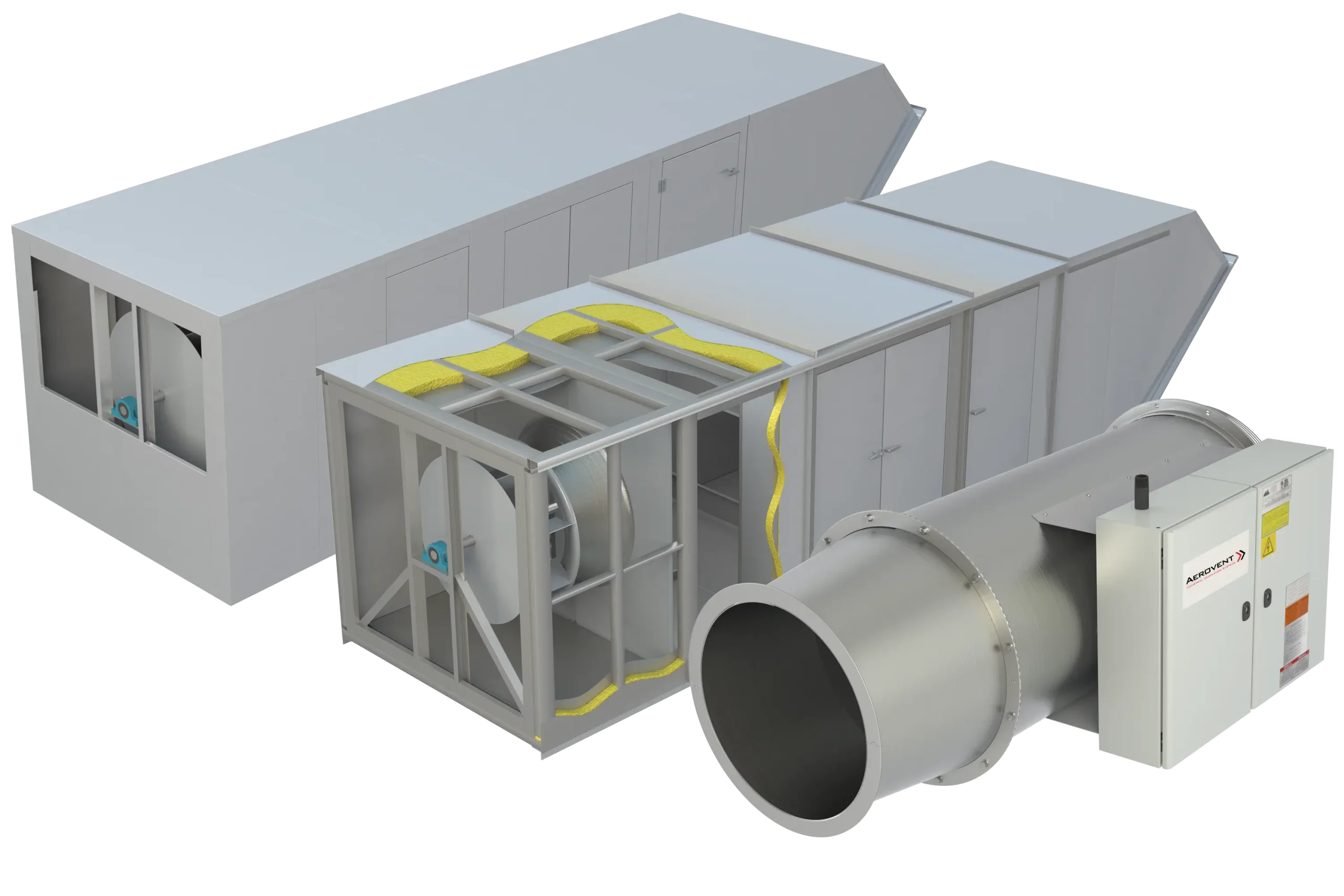



Did you know that proper air duct box sizing and installation can drastically improve your HVAC system’s performance, reduce energy waste, and optimize indoor comfort? Often overlooked, the air duct box plays a vital role in shaping the efficiency and reliability of your air distribution system. Selecting the right type, material, and size of duct boxes is a critical step that directly impacts airflow, energy consumption, and long-term system durability.
Understanding air duct boxes goes beyond the basics—they are a cornerstone in HVAC system design. From choosing between spiral ducts and rectangular duct boxes to calculating airflow requirements for optimal performance, every detail matters. Improper sizing can lead to uneven heating or cooling, energy inefficiency, and increased operating costs. On the other hand, strategic placement and high-quality materials can elevate your system’s performance across residential and commercial settings.
This guide dives into everything you need to know about air duct boxes, covering key types, installation practices, sizing requirements, and expert strategies for building an energy-efficient HVAC system. Whether you’re a contractor addressing technical designs or a homeowner improving indoor air distribution, this resource will help you make informed decisions about your ductwork setup.
The air duct box is a crucial component of any HVAC system, playing a key role in air distribution, system efficiency, and overall performance. Proper selection, sizing, and installation ensure optimal functioning and significant long-term benefits, including better energy efficiency and reduced costs. Below are the essential takeaways covering everything you need to know about air duct boxes.
Air duct boxes are more than just structural components; they significantly influence HVAC performance, energy efficiency, and indoor comfort. In the upcoming sections, we’ll explore the detailed types of air duct boxes, key installation practices, and expert tips for achieving a well-balanced air distribution system.
An air duct box is a transition and distribution component within an HVAC ductwork system that connects the main trunk line to one or more outlets, such as supply registers, grilles, or diffusers. It is sometimes referred to as a register box, boot, or plenum box depending on geometry and application. Its primary roles are to collect or distribute airflow, equalize pressure, and provide a stable interface between ductwork and architectural finishes (walls, floors, ceilings).
In a typical forced-air system, conditioned air is transported through main ducts and then transitions into smaller branches. The air duct box is the final or intermediate junction where airflow is redirected, slowed, or redistributed. When correctly designed and installed, HVAC duct boxes reduce turbulence, limit pressure drops, and provide uniform air delivery across occupied zones, which directly impacts comfort and energy use.
The geometry of an air duct box—its length, cross-sectional area, and inlet/outlet arrangement—affects airflow characteristics such as velocity, static pressure, and noise. An undersized or poorly shaped box can create bottlenecks, generate whistling or rumbling noise, and drive the blower to work harder, resulting in higher fan energy consumption and reduced equipment life. Conversely, a smooth, correctly sized box with gradual transitions limits dynamic losses and allows the system to achieve design airflow with lower fan power.
Material selection also plays a critical role in performance and longevity. Options range from standard galvanized steel to insulated double-wall designs and specialized composite boxes. For example, pairing a well-designed air duct box with high-performance air ducts can maintain supply air temperature over long runs and lower heating and cooling loads.
From an energy efficiency perspective, the air duct box is a key leakage and thermal transfer point. Joints between ducts and boxes, seams in the box itself, and the connection to the register or grille are frequent sources of air leakage. Industry studies show that duct leakage can account for 20–30% of total system losses in poorly installed systems. Tight duct box installation with proper gasketing and sealing can substantially reduce these losses and improve system Seasonal Energy Efficiency Ratio (SEER) performance.
Because of this, modern best practice treats the air duct box as a small but critical engineered component rather than a generic fitting. Its design must be coordinated with overall duct sizing, system static pressure limits, and envelope insulation strategy. This systems-level view becomes even more important as designers transition between formats such as rectangular duct boxes and spiral or flat oval configurations in pursuit of both space efficiency and low energy consumption, forming the foundation for more detailed discussion of types and materials.
The term “air duct box” covers a range of components, from simple register boxes at branch terminations to larger mixing plenums. Each type has distinct performance, space, and installation characteristics that must be matched to the project.
While naming conventions vary by region, most HVAC systems employ some combination of the following:
Branch distribution box: A mid-line box fed from a main trunk that splits airflow into multiple smaller ducts. These are common in residential forced-air systems where one run of trunk duct feeds several rooms.
Plenum box: A larger volume box designed to equalize pressure and distribute air more evenly across multiple outlets or diffusers. These are prevalent in commercial ceiling systems serving multiple linear diffusers or perforated ceiling panels.
When comparing an air duct box vs register boot differences, the key distinction lies in complexity and function. A simple register boot is often just a tapered fitting to adapt round duct to a rectangular grille. An air duct box, in the broader engineering sense, usually has sufficient internal volume to allow air to decelerate and redistribute, and may serve multiple outlets or incorporate acoustic lining, balancing dampers, or filters.
Material selection for air duct boxes influences strength, noise characteristics, leakage rates, and thermal performance. The most common materials include galvanized steel, stainless steel, aluminum, and insulated or composite constructions. The table below summarizes typical performance attributes relevant to HVAC professionals.
| Material | Typical Gauge / Thickness | Durability & Corrosion Resistance | Thermal Performance | Relative Cost | Typical Applications |
|---|---|---|---|---|---|
| Galvanized steel | 26–20 ga (residential), 24–16 ga (commercial) | Good; zinc coating protects against rust in normal indoor conditions | Requires external or internal insulation for high efficiency | Low–moderate | Standard supply and return boxes, boots, plenums |
| Double-wall galvanized steel | Inner and outer shells with insulation layer | Very good; protected insulation and robust structure | High; built-in insulation reduces heat gain/loss and condensation risk | Moderate–high | High-performance systems, exposed ducts, noise-sensitive areas |
| Aluminum | Typically lighter gauges than steel for same stiffness | Excellent corrosion resistance | Similar to uninsulated steel; often combined with external insulation | Higher than galvanized steel | Coastal or corrosive environments, lightweight installations |
| Stainless steel | 20–16 ga for most boxes | Outstanding; suitable for high humidity or chemical exposure | Requires insulation for high thermal performance | High | Hospitals, industrial process areas, high-hygiene environments |
| Insulated composite / fiberglass | Varies by manufacturer | Moderate; may be susceptible to mechanical damage | Good; integral insulation and acoustic absorption | Variable | Noise control, specific residential or light commercial applications |
Galvanized steel ducting remains the default choice for many projects due to its balance of cost, strength, and availability. Systems using rectangular duct and fittings often integrate matching steel air duct boxes for straightforward fabrication and connection. For applications requiring improved thermal and acoustic performance, double-wall rectangular duct assemblies allow the creation of insulated air duct boxes and plenums that reduce energy loss and operational noise.
Where architects prioritize aesthetics and space efficiency, flat oval duct and fittings or spiral duct and fittings can be paired with compatible boxes and plenums to deliver streamlined runs. As discussed in comparative resources like rectangular vs spiral ducts, spiral-based systems often have lower leakage and improved aerodynamic performance, which should be matched by equally airtight and smooth internal air duct boxes.
From an energy standpoint, the air duct box is a point of concentrated surface area relative to airflow volume. This means that uninsulated or poorly insulated boxes can be significant sources of heat gain or loss, especially where they penetrate unconditioned spaces (attics, crawlspaces, unconditioned basements). When selecting materials and insulation strategies, consider:
Location in the building: Boxes located entirely within the thermal envelope may operate acceptably with bare galvanized steel. Those exposed to outdoor or unconditioned zones benefit from insulated or double-wall constructions to limit conductive and radiant heat transfer.
System temperature differential: High ΔT between supply air and ambient (for example, hot attics in cooling-dominant climates) magnifies the energy impact of uninsulated boxes. Double-wall or externally insulated boxes are recommended in these conditions.
Condensation risk: Cold supply air running through warm, humid spaces can cause condensation on metal surfaces, leading to corrosion, staining, or microbial growth. Insulated boxes help maintain surface temperature above dew point.
Noise control: Internal liners or double-wall designs with acoustic insulation can attenuate fan and turbulence noise, particularly important near bedroom registers or open-plan offices.
By choosing materials that balance durability, insulation, acoustics, and cost, designers can ensure that the air duct box supports the overall efficiency of advanced duct systems including spiral duct energy efficiency performance strategies, setting the stage for effective installation practices.
Proper duct box installation is as critical as selecting appropriate materials. Even a perfectly designed air duct box will underperform if connections are misaligned, seams are poorly sealed, or transitions are abrupt. Installation quality directly affects airflow, leakage, and noise, with measurable consequences for energy consumption.
Before installation, review duct layouts, register locations, and structural constraints. Coordinate box dimensions with framing openings, ceiling grids, and finishes. Consult design duct sizing resources such as how to size air ducts: CFM, velocity, pressure drop to confirm that branch and trunk sizes feeding each box deliver the required airflow at acceptable velocities and static pressures.
Key planning considerations include:
Access for sealing and inspection: Ensure enough clearance around the air duct box to apply sealant, tape, and insulation and to inspect joints later. Avoid burying boxes deep within inaccessible cavities.
Alignment with registers and grilles: Position boxes so that their outlet flanges align squarely with grille openings, minimizing offsets that can create turbulence and increase pressure drop.
Support and vibration isolation: Plan secure support from structure (joists, trusses, slabs) with appropriate hangers or brackets, ensuring that vibration from fans or axial fans is not transmitted into occupied spaces.
Below is a generic procedure for installing a metal register box in a residential or light commercial system. Always adapt to local codes and manufacturer recommendations.
Step 1: Confirm Opening Dimensions
Verify that the framed opening or ceiling cutout matches the box outlet dimensions plus allowance for flanges. For a 4 in × 10 in register, the box outlet is typically slightly smaller to accept the register collar while still covering the rough opening.
Step 2: Place and Secure the Box
Insert the air duct box into the opening, ensuring that the outlet face is flush with the finished surface plane. Mechanically fasten the box to framing using screws or brackets. Avoid relying solely on sheet metal to structural fasteners without additional support in larger boxes.
Step 3: Connect to Rigid Duct
For rigid ducts such as rectangular duct and fittings or spiral pipe, use appropriately sized takeoffs or transitions. Maintain smooth internal transitions, avoiding sudden area changes greater than about 15 degrees of divergence to minimize turbulence.
Step 4: Connect to Flexible Duct
Where a flexible duct connection is used, slide the inner core over the box’s round or oval collar, secure with a drawband or clamp, and seal with mastic or approved duct sealant. Extend the outer insulation jacket over the connection and tape or strap to maintain the vapor barrier.
Step 5: Seal All Joints
Apply water-based mastic or UL 181–listed tape to all seams between the box and connecting duct. Seal screw penetrations if they penetrate pressure boundaries. This is essential for minimizing leakage and aligning with best practices found in resources like common air duct installation issues and performance loss prevention.
Step 6: Insulate as Required
If the box is in an unconditioned or semi-conditioned space, wrap with duct insulation or use a pre-insulated box to control heat transfer and condensation. Tape all insulation seams and maintain continuity with duct insulation.
Step 7: Install the Register or Grille
Once wallboard or ceiling finishes are complete, mount the register, grille, or diffuser to the box outlet with appropriate fasteners. Confirm that the damper operation (if any) is unobstructed.
Technical compatibility between air duct boxes and duct type is critical. With rigid duct systems (rectangular, round, spiral), boxes often incorporate flanged connections, slip-and-drive joints, or round collars designed to match the duct system. This permits factory-fabricated airtight joints and streamlined assembly on site.
In systems relying heavily on flexible ducts, the box is usually the rigid anchor point. Best practice is to keep flexible duct runs as short and straight as possible and to avoid compressing or sharply bending the flex at the connection. Compressed flexible duct can reduce effective diameter and increase friction by 50% or more, substantially increasing fan energy requirements. The box should be placed to allow a gentle, extended arc in the flexible duct path, preserving design cross-sectional area.
To further enhance performance, many installers combine flexible branches with smooth trunk lines using spiral duct energy efficiency concepts, where low-leakage spiral mains feed into carefully sealed air duct boxes. These then serve short, well-supported flexible drops to registers, balancing ease of installation with efficiency.
Proper installation not only ensures performance today but also facilitates inspection and maintenance, which becomes crucial for long-term functionality discussed in later sections on sizing, placement, and upkeep.
Determining what size duct box for residential HVAC or commercial systems requires evaluating airflow (CFM), velocity, and allowable pressure drop. The air duct box must be large enough to avoid unacceptable velocity and noise while fitting within architectural and structural constraints.
Designers typically begin with required airflow to each register or diffuser, expressed in cubic feet per minute (CFM). Using acceptable velocity ranges, the cross-sectional area of the box outlet can be estimated:
Area (ft²) ≈ CFM ÷ Desired Velocity (fpm)
Typical guideline velocities at register boxes are:
Residential supply registers: 500–700 feet per minute (fpm) at the grille, lower for bedroom or quiet zones.
Residential return grilles: 300–500 fpm to control noise and drafts.
Light commercial diffusers: 700–900 fpm depending on diffuser type and acoustic requirements.
For example, if a living room supply register requires 120 CFM at a target velocity of 600 fpm, the required outlet area is 120 ÷ 600 ≈ 0.2 ft². This corresponds roughly to a 4 in × 8 in outlet (0.222 ft²), which is close to many standard register sizes. The air duct box behind this register should be sized so that internal velocity remains similar or slightly lower, allowing smooth flow without excessive turbulence.
For multi-outlet plenums, additional factors include equalization of pressure among outlets and avoidance of short-circuiting between supply and return. The plenum volume should be sufficient to permit pressure equalization and uniform distribution.
Undersized boxes increase local velocity and turbulence, driving up static pressure and forcing the fan to operate at higher power. Even a 0.1 in w.g. additional pressure drop per box, when multiplied across dozens of boxes in a large system, can significantly raise fan energy consumption. In fan power terms:
Fan Power (hp) ≈ (CFM × Total Pressure (in w.g.)) ÷ (6356 × Fan Efficiency)
Consider a 20,000 CFM commercial system where cumulative undersized boxes add 0.2 in w.g. of unnecessary pressure drop. At 60% fan efficiency:
Extra Power ≈ (20,000 × 0.2) ÷ (6356 × 0.6) ≈ 1.05 hp
Running 3,000 hours per year, that is roughly 2,300 kWh per year. At $0.15/kWh, the annual energy penalty exceeds $340, and over a 15-year life, approaches $5,000 in additional costs—solely due to poor box sizing.
Proper sizing informed by duct design tools such as how to size air ducts: CFM, velocity, pressure drop can therefore yield substantive lifecycle savings, particularly when combined with low-loss duct types like spiral duct and fittings.
The placement of an air duct box influences how conditioned air enters the occupied zone, mixing patterns, and occupant comfort. Key guidelines include:
Throw distance and pattern: Supply boxes should be paired with registers or diffusers whose throw matches room dimensions and load distribution. For perimeter heating loads, boxes feeding ceiling diffusers may be placed near the exterior wall to wash the envelope with conditioned air.
Avoiding short-circuiting: Return air boxes should not be placed so close to supply outlets that air flows directly from supply to return without mixing. Maintain horizontal and vertical separation to ensure room air induction.
Penetration of building envelope: When boxes penetrate exterior walls or ceilings, additional consideration is required for air sealing and insulation to avoid infiltration and condensation. Here, insulated or double-wall boxes, such as those built using double-wall rectangular duct fabrication, help maintain performance.
Structural and architectural constraints: Coordination with joists, beams, and ceiling heights is essential to prevent field modifications that shrink or distort boxes, negatively affecting airflow. Using standardized components from lines like top HVAC ductwork supplies can reduce the need for improvisation on site.
Consider a 2,400 ft² single-family home with a central air handler and trunk/branch duct layout. Each bedroom requires approximately 80–100 CFM. A design using small 3 in × 10 in register boxes at high velocities may appear space-efficient but leads to excessive noise and higher fan energy. Upsizing to 4 in × 10 in boxes or employing larger wall cavities for deeper boxes can reduce outlet velocity and noise levels while permitting lower blower speeds.
In one documented retrofit case, a contractor replaced undersized bedroom register boxes and associated branches with appropriately sized components and optimized placement toward exterior walls. Combined with sealing and minor duct resizing, measured fan power dropped by approximately 18%, and several previously under-conditioned rooms achieved design temperatures without upsizing the HVAC unit. This illustrates how correct sizing and placement at the box level can generate system-level performance gains and sets the stage for deeper discussion of energy efficiency practices.
The air duct box is both a potential energy leakage point and an opportunity to significantly improve overall system performance. Key efficiency levers include reducing air leakage, improving thermal insulation, optimizing airflow patterns, and integrating with high-performance duct systems such as spiral or flat oval.
Air leakage at duct boxes often occurs at three primary interfaces:
Duct-to-box joints: Connections between main or branch ducts and the air duct box collars or flanges.
Box seams: Folded, welded, or Pittsburgh seams in the box fabrication itself.
Box-to-building interfaces: Gaps between the box and framing or gypsum board, and between the box and register or grille.
Best practices for minimizing leakage include:
Using UL 181–listed mastic or foil-backed tape at all pressure boundaries.
Specifying airtight fabrication standards for boxes, matching the leakage class of associated ducts such as spiral duct and fittings.
Foam sealing or gasketing around openings where boxes penetrate building assemblies.
Ensuring register frames seat tightly against box flanges, with no visible gaps.
Field testing using duct blasters often reveals that leaky boots and boxes account for a disproportionate share of system leakage. Sealing these points can reduce total leakage by 20–50%. In one small commercial office retrofit, focused sealing of air duct box connections and register interfaces reduced measured duct leakage from 18% to 7% of fan flow, improving delivered airflow at terminal diffusers and decreasing run times. Utility bills recorded approximately 12% annual HVAC energy savings post-upgrade.
Where air duct boxes are exposed to unconditioned conditions, insulating them is as important as insulating duct runs. Heat transfer through an uninsulated box can be modeled using standard conduction equations, with the heat gain or loss proportional to exposed area, temperature difference, and thermal resistance. Because boxes often have complex shapes and large exposed surfaces relative to the cross-sectional area of airflow, they can become localized “thermal bridges.”
Insulated constructions, such as those based on double-wall rectangular duct, embed insulation between inner and outer shells, protecting it from mechanical damage while providing consistent thermal resistance (often R-4 to R-8 or higher, depending on thickness and material). This design also moderates surface temperatures, reducing condensation risk in cooling applications and improving occupant comfort by eliminating cold spots around registers.
Integrating well-insulated air duct boxes into a system designed per high-efficiency guidelines, such as those outlined in spiral duct energy efficiency performance, can yield measurable gains. For example, a big-box retail store upgrade that replaced uninsulated sheet-metal plenums in a hot rooftop cavity with insulated double-wall plenums saw supply air temperatures at diffusers rise by approximately 2–3°F in cooling mode, reducing compressor runtime and resulting in an estimated 8–10% reduction in cooling energy usage.
Beyond leakage and conduction, air duct box design influences fan energy by shaping airflow patterns. Aerodynamically favorable designs include:
Gradual transitions between duct and box to limit dynamic losses.
Internal baffles or turning vanes where sharp direction changes are unavoidable, reducing separation and recirculation zones.
Uniform outlet distribution in plenum boxes to ensure balanced flows without excessive throttling at individual dampers.
Paired with smooth, low-leakage trunk lines like those described in rectangular vs spiral ducts, optimized boxes promote lower static pressures. When static pressure requirements drop, variable-speed fans can operate at lower speeds, where power consumption falls roughly with the cube of speed. For instance, reducing fan speed by 20% can reduce power by nearly 50%, assuming the fan is controlled to adjust speed with load.
One logistics warehouse project transitioned from improvised, field-fabricated sheet metal plenums to standardized, engineered boxes from a vendor similar to top HVAC ductwork supplies. Combined with improved duct routing and sealing, the total external static of the distribution system fell from 2.0 in w.g. to 1.2 in w.g. Fan speed was reduced accordingly, yielding measured annual fan energy savings of roughly 25%, translating to more than $15,000 per year in electricity cost reductions.
These examples highlight how investing in appropriately designed and installed air duct boxes can act as a multiplier for other efficiency measures, providing a natural bridge to ongoing maintenance and strategic upgrades.
While air duct boxes are passive components with no moving parts (except when integrated with dampers), their condition directly influences system performance throughout the HVAC lifecycle. Dust accumulation, corrosion, mechanical damage, and sealant degradation can gradually degrade functionality. Proactive maintenance and timely upgrades secure the energy savings otherwise achieved through good design and installation.
As part of broader duct system maintenance procedures such as those described in the air duct maintenance guide, the following tasks should be incorporated into periodic inspections:
Visual inspection for leaks: Look for loose tape, cracked mastic, rust streaks, or dust patterns indicating leakage at seams or joints. Pay particular attention to register box connections where movement of registers or building settlement can open gaps.
Check for corrosion or physical damage: In humid or corrosive environments, inspect galvanized or aluminum boxes for pitting or rust, especially near condensation-prone areas.
Confirm secure support: Ensure that hangers, brackets, and fasteners are intact, and that no sagging or misalignment has occurred that could stress ducts or boxes.
Inspect insulation integrity: For insulated boxes, verify that insulation is continuous, dry, and free of tears or compression. Repair vapor barrier breaches to prevent condensation.
Check cleanliness and microbial growth: In return boxes or areas with high humidity, inspect for mold or biological growth. If present, follow appropriate remediation protocols and investigate underlying moisture issues.
Integrating these tasks into annual or biannual service visits offers a relatively low-cost way to sustain air delivery performance and prevent small issues from producing large efficiency penalties.
When occupants report draftiness, uneven temperatures, or noise, the air duct box is a logical inspection target. Drawing on problem categories outlined in common air duct installation issues and performance loss prevention, common failure modes include:
Insufficient airflow at a register: Often caused by a crushed flexible duct near the box, a box that is undersized or partially blocked by construction debris, or leakage upstream. Corrective actions might include resizing the box, replacing flex sections, or resealing fittings.
Whistling or high noise levels: Typically associated with high velocity through a small box, poorly fitted registers, or sharp internal transitions. Mitigation can involve upsizing the box, changing grille type, or adding internal baffles or acoustic lining where feasible.
Condensation on or around the box: Indicating insufficient insulation, air leakage allowing humid air contact with cold surfaces, or both. Solutions include upgrading to insulated or double-wall boxes and improving air sealing.
Dust streaking at joints: A strong signal of air leakage. Re-apply mastic or upgrade sealing method, particularly at flex-to-box connections and around register frames.
In some cases, the root cause lies not only in local box conditions but in broader system design, including improper duct sizing, excessive static pressure, or unbalanced distribution. Addressing these requires a holistic review of the duct network, possibly using guidance from air ducts selection and design resources.
Beyond repairs, deliberate upgrades can unlock additional efficiency, comfort, and longevity. Scenarios where upgrading air duct boxes is particularly beneficial include:
Retrofits in older buildings with leaky or uninsulated sheet-metal boxes installed in attics or crawlspaces. Replacing these with insulated, airtight boxes can significantly cut thermal losses and infiltration.
System downsizing or high-efficiency equipment replacements (e.g., variable-speed furnaces, high-SEER heat pumps). To take full advantage of modulating equipment, distribution system losses—including through air duct boxes—must be minimized.
Noise-sensitive environments such as bedrooms, studios, or conference rooms, where upgrading to larger, acoustically lined boxes paired with carefully selected diffusers can dramatically reduce sound levels.
Commercial systems with reconfigured layouts, where tenant improvements or space-use changes shift loads and distribution patterns. New or re-sized plenums and branch boxes may be necessary to maintain proper balance and efficiency.
High-performance boxes can be fabricated from robust rectangular or spiral components, such as products drawn from collections like rectangular duct and fittings or spiral duct and fittings. These are often available with options for double-wall construction, factory-installed insulation, and integrated accessories (balancing dampers, access doors, sound attenuation).
In a multi-family residential complex upgrade, for example, a contractor replaced original sheet-metal register boxes—which were undersized, uninsulated, and leaky—with insulated, right-sized boxes connected to optimized duct runs. System testing revealed a reduction in average static pressure of roughly 0.25 in w.g. and a drop in duct leakage from around 22% to under 8% across sampled units. Over the first year, energy monitoring indicated HVAC energy savings of about 15%, and tenant complaints regarding noise and temperature imbalance dropped substantially.
Effective maintenance and upgrades of air duct boxes should integrate with broader HVAC asset management and performance optimization plans. Coupling box inspections with periodic fan performance checks, duct cleaning (where appropriate), and thermostat or controls optimization ensures that improvements at the component level are reflected in whole-system results.
For facility managers and homeowners, referencing structured resources such as the air duct maintenance guide and product-oriented collections at BromingHVAC provides a roadmap for prioritizing investments. By viewing the air duct box as an integral, engineered part of the HVAC distribution system—rather than a minor fitting—stakeholders can unlock meaningful, durable improvements in comfort, energy efficiency, and system reliability, building upon the design and installation principles discussed in the preceding sections.“`markdown
Air duct boxes may seem like small components within an HVAC system, but their performance and design play a crucial role in ensuring optimal energy efficiency, comfort, and system longevity. From their fundamental purpose of facilitating smooth airflow distribution to the nuanced considerations of material selection, sizing, and placement, air duct boxes are integral to a well-functioning HVAC system. Understanding and improving these components enhances every aspect of your home’s or building’s air distribution system.
An essential function of any air duct box is its impact on airflow and energy efficiency. Properly designed and installed air duct boxes reduce turbulence, minimize pressure loss, and improve thermal insulation. At the same time, features like aerodynamic shapes and insulated materials, whether from rectangular duct and fittings or innovative products like double-wall rectangular duct, help maintain system performance while reducing operational costs.
Material choice also contributes to the durability and functionality of air duct boxes. Options such as galvanized steel, aluminum, and double-wall constructions offer varying advantages in thermal resistance, noise control, and mechanical resilience, allowing designers to tailor solutions to specific project needs. For example, pairing insulated air duct boxes with high-performance ducts such as spiral duct and fittings ensures improved thermal and airflow efficiency across the system.
Besides design, the installation process is pivotal. Misaligned joints, poor sealing, or improper connections can account for substantial system leakage, reducing efficiency and increasing utility costs. Following guidelines such as those detailed in the common air duct installation issues guide will ensure a seamless setup, maximizing the potential of these systems.
Energy savings and comfort are directly tied to the efficiency of air duct boxes. By mitigating air leakage, optimizing airflow, and reducing thermal energy loss, air duct boxes contribute to reducing long-term operational costs. Whether you’re working with insulated designs built into commercial projects or residential retrofits, these components are essential for optimizing fan energy use and maintaining a balanced system environment.
Furthermore, sizing and placement of air duct boxes significantly influence overall system performance. Choosing the correct size reduces static pressure and fan workload while avoiding problems like whistling, noise, or uneven air distribution. The principles outlined in resources such as air duct sizing guidelines demonstrate that increased attention to these considerations can yield both measurable cost savings and improved occupant satisfaction.
Sustaining the benefits of air duct boxes requires proactive maintenance, such as sealing leaks, inspecting for damage, and ensuring insulation integrity in unconditioned spaces. Referencing the air duct maintenance guide will equip homeowners and professionals alike with the tools needed to keep air duct boxes functioning effectively over the system’s lifespan.
When upgrading systems, modern enhancements in air duct box materials and design can deliver meaningful improvements. For instance, upgrading leaky fittings with advanced, energy-efficient options available through Broming HVAC ductwork supplies ensures reduced operational complexity and energy consumption. Whether addressing challenges in older systems or optimizing performance in modern builds, well-selected air duct boxes unlock system-wide efficiencies.
To achieve an HVAC system that is energy-efficient, comfortable, and reliable, each component must be evaluated and optimized as one interconnected system—and air duct boxes are no exception. Their role in controlling airflow, maintaining energy efficiency, and supporting thermal comfort places them at the intersection of engineering finesse and practical application. By understanding their impact and emphasizing high-quality selection, precise sizing, and skilled installation, air duct boxes can become a cornerstone of HVAC performance. Explore the wide range of advanced air duct solutions at Broming HVAC and prioritize expertly designed components that streamline airflow and energy optimization alike. Your investment in this often-overlooked component will pay for itself in service life, efficiency, and occupant comfort for years to come.


