Need Specifications or a Quote?
Share your ventilation project requirements and our engineers will reply within 12 hours with technical specs, pricing, and lead time.
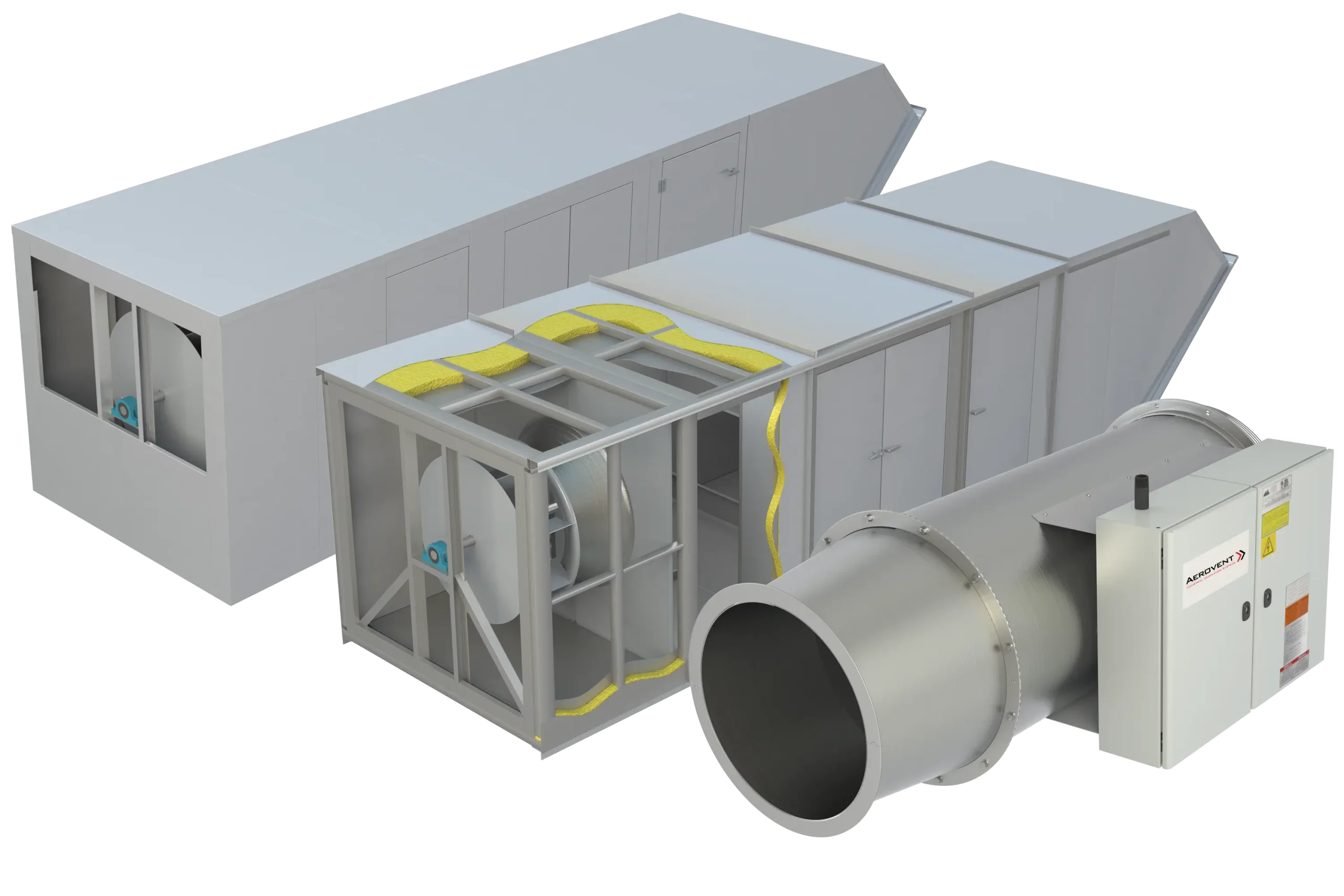



When designing or evaluating an HVAC ventilation system, the duct shape plays a crucial role in airflow efficiency, installation feasibility, energy performance, and overall system cost. Among the most common duct configurations, rectangular ducts and spiral ducts are widely used in commercial, industrial, and infrastructure projects. While both perform the same basic function—transporting air—each has different structural characteristics, manufacturing advantages, and performance outcomes.
Choosing between rectangular and spiral ducts is not merely a matter of project preference. It involves evaluating spatial constraints, pressure drop, leakage control, noise level, manufacturing capabilities, and installation logistics. This article compares rectangular and spiral duct systems in detail to help contractors, designers, and procurement teams make informed decisions for real project environments.
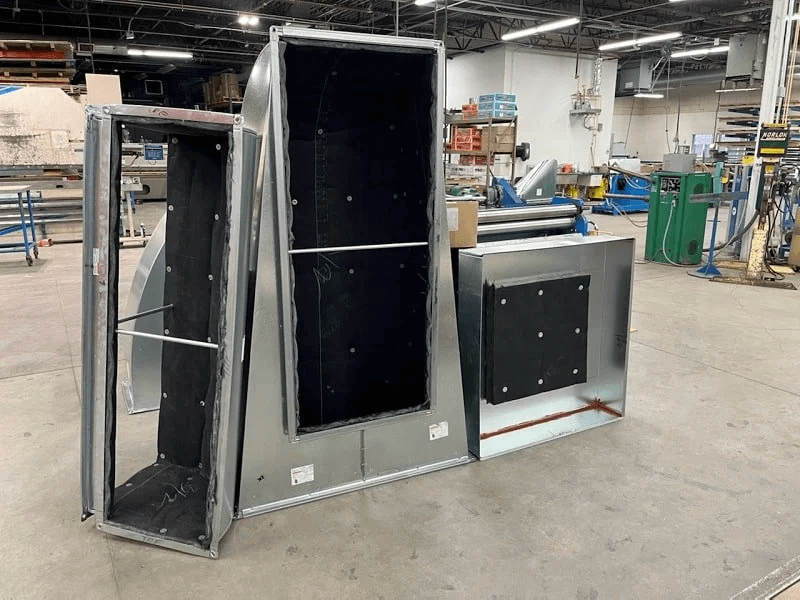
Rectangular ducts are fabricated from sheet metal into a four-sided profile and are commonly used in commercial buildings where ducts must be installed close to ceilings, walls, or structural beams. Their flat geometry allows easy stacking and routing through narrow ceiling cavities.
Learn more: Rectangular Duct and Fittings
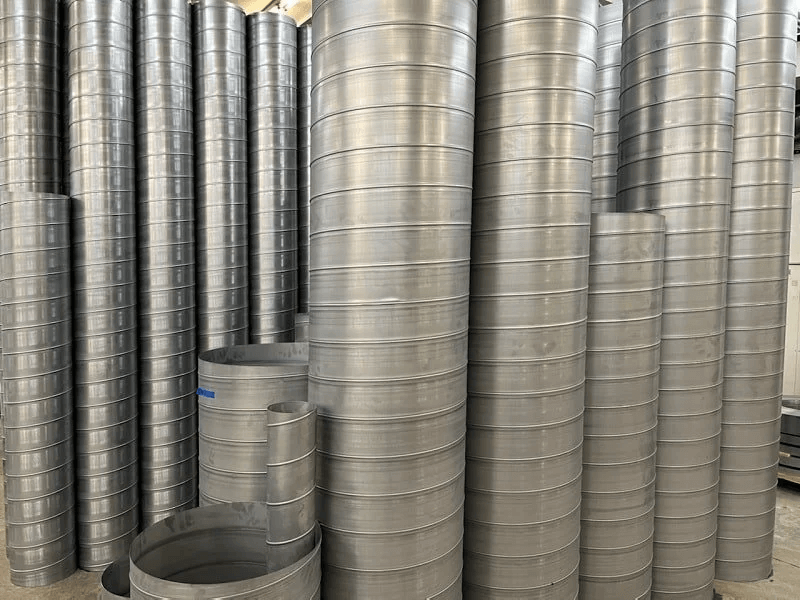
Spiral ducts are manufactured as round cylindrical sections formed by spiral-wound sheet metal. Their continuous shape provides structural rigidity, smoother airflow, and lower leakage rates. Spiral ducts are often used in open ceilings, warehouses, industrial plants, and areas where airflow efficiency is prioritized.
Learn more: Spiral Duct and Fittings
Airflow resistance (pressure drop) is a key consideration when selecting duct shape. The internal geometry of the duct affects turbulence, friction, and required fan power.
Because spiral ducts reduce pressure drop, they often allow smaller fan power requirements and lower operating energy consumption, especially in large-volume ventilation systems.
This does not mean rectangular ducts are inferior—only that they must be appropriately sized and installed to maintain performance.
Rectangular ducts are often chosen because they fit into architectural constraints:
They can be dimensioned to match available space, which makes them flexible for renovation projects.
Spiral ducts require ceiling depth to maintain circular geometry. However, when exposed, they provide:
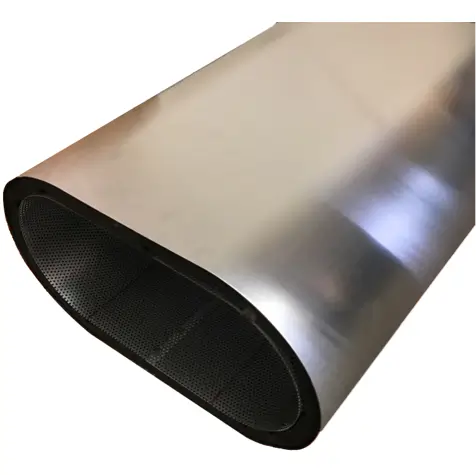
When airflow efficiency of round ducting is needed but height clearance is limited, flat oval ducts are an effective compromise. They maintain many aerodynamic advantages of spiral ducts while fitting into shallow ceiling areas.
Learn more: Flat Oval Duct and Fittings
Air leakage is a major contributor to HVAC system inefficiency. Leakage occurs at joints, seams, and flanges.
Airflow turbulence and duct vibration contribute to noise levels.
The circular profile creates more stable airflow, producing less turbulence noise. Additionally, spiral ducts can be fitted with internal liners for acoustic control.
Because of turbulence at corners and flat wall resonance, rectangular ducts often require external insulation or internal lining to achieve similar acoustic performance.
Manufacturing capabilities also influence duct selection.
For custom geometries, see: Custom Metal Fabrication
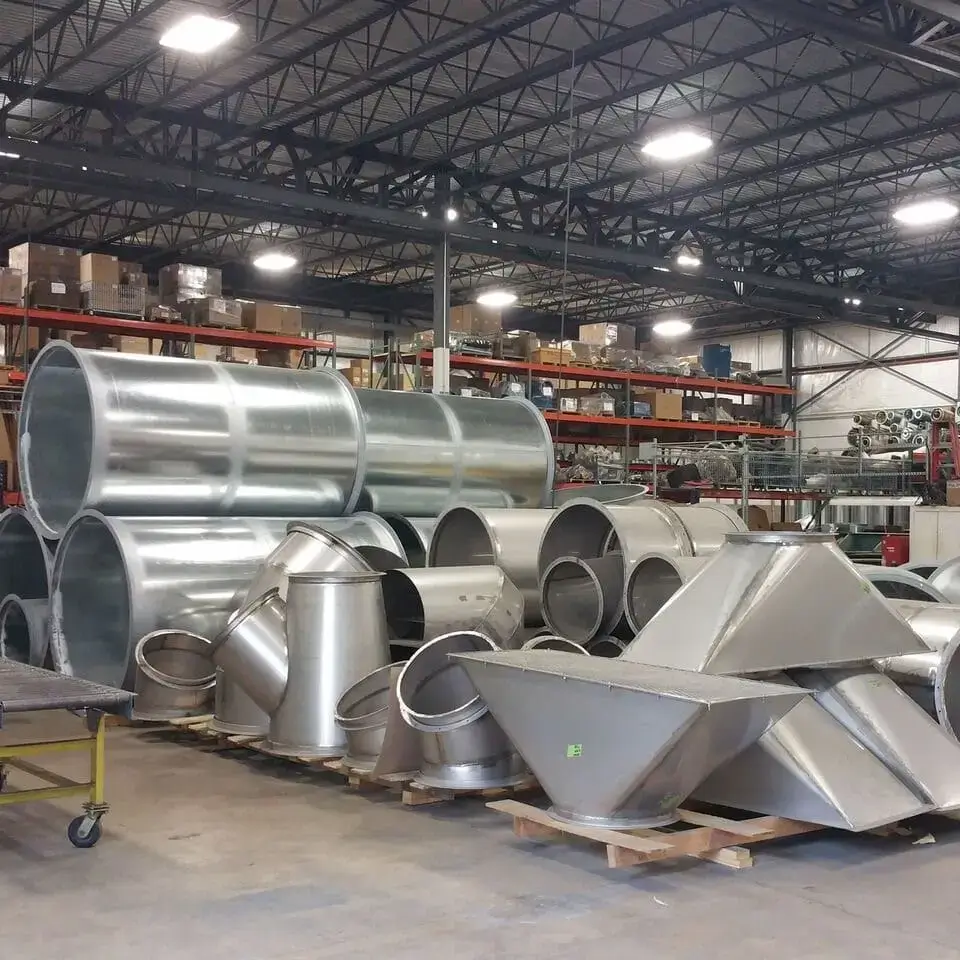
Costs vary depending on material, size, labor rate, shipping distance, and insulation requirements.
| Factor | Rectangular Duct | Spiral Duct |
|---|---|---|
| Material Efficiency | Less efficient sheet usage | More efficient material utilization |
| Fabrication Labor | Higher due to flange and seam assembly | Lower due to continuous forming |
| Installation Time | Slower, more parts | Faster, fewer joints |
| Insulation | Usually external | Can use double wall acoustic lining or internal liner |
Both rectangular and spiral ducts are effective HVAC air distribution solutions when applied correctly. The choice depends on building geometry, airflow efficiency requirements, installation environment, and long-term operating cost considerations. Understanding the performance and construction characteristics of each duct type allows better planning and system optimization.
If you have project drawings or duct specifications, our engineering team can assist with product matching and fabrication planning.


