Need Specifications or a Quote?
Share your ventilation project requirements and our engineers will reply within 12 hours with technical specs, pricing, and lead time.


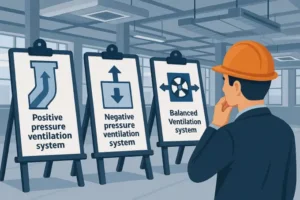
An HVAC system is only as effective as the force that drives its airflow. While chillers and boilers regulate temperature, the hvac ventilation fan serves as the critical engine that ensures conditioned air reaches its destination. In commercial and industrial settings, selecting the wrong fan configuration does not merely result in poor air circulation; it leads to catastrophic energy waste, accelerated equipment degradation, and compromised indoor air quality. For facility managers and engineers, the procurement process involves far more than comparing horsepower ratings—it requires a precise calculation of aerodynamic performance against system resistance.
The core challenge in fan selection lies in overcoming the resistance inherent in the building’s infrastructure. Every bend, filter, and damper in your air ducts creates static pressure that the fan must push against. If a fan is selected solely based on Cubic Feet per Minute (CFM) without accounting for this static pressure, the system will fail to deliver the required air exchange rates. This balance is particularly vital when integrating axial fans, which are designed to move high volumes of air but must be carefully matched to the pressure profile of the facility. Understanding how to select the best axial exhaust fan requires analyzing the fan curve to ensure it operates within its peak efficiency range, avoiding the instability of the stall region.
Beyond aerodynamic performance, the mechanical configuration of the fan dictates its maintenance schedule and operational flexibility. The choice between belt-driven and direct-drive units is often a trade-off between adjustability and efficiency. For example, a Tubeaxial Commercial Fan Belt Driven unit offers the flexibility to adjust RPM via sheave changes, allowing for airflow modifications as building usage evolves. Conversely, a direct-drive unit, such as the Axipal Tubeaxial Fan Direct Drive, eliminates transmission losses and belt maintenance, providing a more robust solution for inaccessible areas. For heavier industrial needs, specialized units like the Type P Tubeaxial Fan Belt Driven model offer rugged durability required for continuous, high-demand operations.
Ultimately, the goal is to reduce the Total Cost of Ownership (TCO) while ensuring environmental compliance. This involves evaluating sone ratings for noise-sensitive commercial spaces and specifying corrosion-resistant materials for harsh industrial exhausts. A comprehensive guide to axial fans reveals that material integrity is just as important as motor efficiency. Whether you are retrofitting an existing warehouse or designing a new ventilation scheme, understanding these technical variables is non-negotiable. The following analysis provides a detailed technical breakdown of these criteria to facilitate an informed, data-driven procurement strategy.
Selecting the correct HVAC ventilation fan is a critical engineering decision that impacts air quality, system longevity, and operational costs. This guide provides a technical analysis of fan specifications to ensure optimal selection for commercial and industrial applications.
Proper selection of an HVAC ventilation fan requires balancing aerodynamic performance with structural compatibility and energy consumption. The following sections provide a detailed technical breakdown of these criteria to facilitate an informed procurement strategy.
Selecting the correct hvac ventilation fan is not merely a matter of moving air; it is an exercise in fluid dynamics and aerodynamic optimization. For commercial and industrial engineers, the fundamental distinction lies between the volume of air required (CFM) and the resistance that air encounters (Static Pressure). Misunderstanding the relationship between these two variables is the primary cause of underperforming systems and inflated operational expenditures. When specifying equipment, one must look beyond the manufacturer’s peak performance curve and analyze the fan’s behavior under load.
The architecture of the fan blade and housing dictates how energy is converted into air movement. In commercial applications, the goal is often to balance acoustic comfort with moderate pressure capabilities. However, in industrial settings, the priority shifts toward overcoming significant resistance caused by filters, coils, and extensive ductwork runs. The choice between axial and centrifugal designs is the first critical decision in the procurement process, setting the trajectory for the system’s total energy consumption and maintenance profile.
The aerodynamic properties of fan blades determine their suitability for specific applications. Axial fans operate on the principle of aerodynamic lift, similar to an airplane wing. Air passes through the fan parallel to the shaft, making these units ideal for high-volume, low-static pressure applications. They are most effective when moving large masses of air against minimal resistance, such as in general factory ventilation or warehouse cooling. However, engineers must be wary of the “stall region”—a point on the fan curve where the angle of attack becomes too steep relative to the airflow, causing flow separation, increased noise, and a precipitous drop in efficiency.
Conversely, centrifugal fans use a rotating impeller to increase the pressure of the air stream. The air enters axially but is discharged radially, changing direction by 90 degrees. This design generates significantly higher potential static pressure, making it suitable for ducted systems where resistance is high. The “selection zone” for a centrifugal fan is broader regarding pressure capabilities, but it often comes with a larger physical footprint and higher initial capital expenditure. Understanding the distinct aerodynamic profiles of these fans ensures that the selected equipment operates at its Peak Efficiency Point (BEP), rather than struggling in a region of instability.
Hidden Insight: Selecting a fan that operates too far left on its performance curve (near the surge line) not only degrades performance but causes aerodynamic vibration that can destroy bearings and motor mounts. Correct selection reduces mechanical stress, directly correlating to lower long-term maintenance costs and extended asset lifecycles.
Total Static Pressure (TSP) is the measure of the resistance the fan must overcome to move air through the system. It is the sum of the external static pressure (ducts, dampers, louvers) and the internal static pressure (filters, coils, internal baffles). In complex commercial and industrial environments, neglecting to accurately calculate TSP is a fatal engineering error. When air moves through air ducts, friction against the duct walls and turbulence caused by elbows and transitions create pressure drops that the fan must overcome.
Free-air delivery metrics, often touted in marketing materials, are virtually useless in ducted applications. A fan rated for 10,000 CFM at zero static pressure may only deliver 4,000 CFM at 1.5 inches of water gauge (wg). If the system resistance curve intersects the fan performance curve at a point below the required airflow, the facility will suffer from poor air quality and inadequate thermal control. Engineers must calculate friction losses using the Darcy-Weisbach equation or standard ASHRAE friction charts to ensure the specified hvac ventilation fan can deliver the required volume against the calculated resistance.
This physical reality necessitates a rigorous evaluation of the ductwork design before fan selection. By minimizing system effect—turbulence caused by poor inlet and outlet conditions—engineers can reduce the static pressure requirement, allowing for the selection of a smaller, more energy-efficient motor. This holistic approach to system resistance is the foundation of a high-performance ventilation strategy.
Once the system resistance is understood, the focus shifts to volumetric efficiency. This refers to the ratio of the actual volume of air delivered to the theoretical volume the fan could displace. In commercial ventilation systems, precision is paramount. Oversizing a fan leads to excessive energy consumption and potential draft complaints from occupants, while undersizing results in a failure to meet ventilation codes and inadequate contaminant removal. The calculation of the required airflow is derived from specific environmental variables including facility volume, thermal load, and contaminant generation rates.
To determine the necessary cfm rating, engineers must first establish the Air Changes Per Hour (ACH) required for the specific application. The formula for calculating the required CFM based on ACH is straightforward but critical:CFM = (Volume of Room in Cubic Feet × ACH) / 60
However, simply plugging in a standard ACH number is insufficient for high-performance engineering. One must also consider the sensible heat load equation if the primary goal is cooling:CFM = q_s / (1.08 × ΔT)
Where q_s is the sensible heat load in BTU/hr and ΔT is the desired temperature difference between the indoor air and the supply air. This calculation ensures that the fan is sized not just for air movement, but for thermal management. In industrial environments, where machinery generates significant heat, the heat load calculation often dictates a higher CFM requirement than the standard ACH guidelines.
Preventing energy waste begins here. If a facility requires 15,000 CFM to manage heat load but is outfitted with a 25,000 CFM system “just to be safe,” the electrical consumption rises disproportionately. The fan laws dictate that power consumption increases by the cube of the speed; thus, moving more air than necessary is exponentially expensive. Accurate calculation of the airflow capacity is the single most effective method of controlling operational costs (OpEx) at the design stage.
For spaces defined by human occupancy, such as office buildings or assembly halls, the ASHRAE Standard 62.1 serves as the governing code. This standard utilizes the Ventilation Rate Procedure, which calculates the breathing zone outdoor airflow based on both the floor area and the number of people.
The formula combines these two factors:V_bz = (R_p × P_z) + (R_a × A_z)
Here, R_p is the outdoor airflow rate per person, P_z is the zone population, R_a is the outdoor airflow rate per unit area, and A_z is the zone floor area. By rigorously applying this standard, engineers ensure that the commercial ventilation systems provide adequate fresh air to dilute human bio-effluents and building material off-gassing, without ventilating unoccupied space unnecessarily.
In industrial settings, occupancy density is lower, but the toxicity of the environment is higher. Here, the calculation shifts to “capture velocity”—the air speed required to capture contaminants at their source and draw them into an exhaust hood. This requires a granular analysis of the workspace square footage relative to the placement of pollutant-generating equipment. Matching airflow capacity to these specific spatial and occupancy parameters ensures regulatory compliance and occupant safety.
Having established the required air volume and pressure, the next engineering challenge is selecting the mechanism that drives the fan.
The transmission of power from the motor to the fan impeller is a decisive factor in system reliability, maintenance frequency, and energy efficiency. The two primary configurations—belt drive and direct drive—offer distinct advantages depending on the application’s operational profile. While belt drives have historically been favored for their adjustability, modern advancements in motor control are shifting the landscape toward direct-drive solutions for many applications.
Belt-driven fans utilize a motor mounted independently of the fan shaft, connected via sheaves (pulleys) and belts. The primary engineering advantage of this configuration is flexibility. By altering the pitch diameter of the sheaves, facility managers can adjust the fan’s RPM, and consequently its airflow and pressure characteristics, without replacing the motor. This is particularly valuable in systems where the final static pressure is difficult to predict or is expected to change due to facility expansion or retrofitting.
For example, the Tubeaxial Commercial Fan Belt Driven allows for precise tuning of performance in the field. If a system is found to be under-performing during commissioning, a simple sheave adjustment can increase the RPM to meet the required setpoint. Furthermore, belt drives isolate the motor from vibration and shock loads transmitted through the impeller, which can be beneficial in high-temperature applications where the motor needs to be kept out of the hot airstream.
However, this flexibility comes at a cost. Belt drives inherently suffer from transmission losses due to friction and belt slippage, typically reducing efficiency by 3% to 5%. They also introduce additional maintenance requirements: belts must be tensioned and replaced, and bearings on both the motor and fan shaft require regular lubrication.
Direct-drive systems couple the fan impeller directly to the motor shaft. This eliminates transmission losses entirely, resulting in higher mechanical efficiency. There are no belts to slip, break, or generate dust, and no bearings to maintain other than those sealed within the motor itself. This configuration significantly reduces the maintenance burden, making it the preferred choice for facilities with limited maintenance staff or for fans installed in difficult-to-access locations.
Products like the Axipal Tubeaxial Fan Direct Drive exemplify the efficiency of this design. Because there are no intermediate components to absorb energy, virtually all the motor’s power is converted into aerodynamic work. The trade-off has historically been a lack of flexibility; once the fan is built, the speed is fixed by the motor’s pole count and line frequency. However, the integration of Variable Frequency Drives (VFDs) has largely negated this disadvantage, allowing direct-drive fans to offer variable speed control that exceeds the adjustability of belt-driven units.
In terms of OpEx, direct-drive fans typically offer a faster ROI due to the elimination of belt replacement costs and the reduction in parasitic energy losses. This efficiency focus naturally leads to a broader discussion on the total cost of ownership.
In the lifecycle of an industrial fan, the initial purchase price represents a fraction—often less than 10%—of the total cost. Energy consumption dominates the Total Cost of Ownership (TCO). Therefore, prioritizing energy efficient HVAC fan systems is not merely an environmental choice; it is a financial imperative. Engineers must evaluate the wire-to-air efficiency, which accounts for the combined losses of the VFD, motor, drive mechanism, and fan aerodynamics.
The motor is the heart of the ventilation system. Upgrading from a standard efficiency motor to a NEMA Premium Efficiency motor can yield substantial savings, particularly for fans that run continuously. NEMA Premium motors utilize higher-quality lamination steel, more copper in the windings, and tighter manufacturing tolerances to reduce electrical and mechanical losses.
The selection of an industrial or commercial fan extends far beyond simple air movement; it is a complex engineering decision that impacts operational safety, energy consumption, and the longevity of your facility’s infrastructure. By understanding the intrinsic relationship between static pressure and airflow volume, engineers can avoid the common pitfalls of under-ventilated spaces or energy-wasting, oversized units. The transition from theoretical free-air delivery to the reality of resistance-heavy ductwork requires a holistic approach to system design, ensuring that every component—from the intake louvers to the hvac ventilation fan—works in aerodynamic harmony.
As we have explored, relying on generic rules of thumb for airflow is a recipe for inefficiency. True optimization requires a rigorous adherence to mathematical models, including the calculation of Air Changes Per Hour (ACH) and sensible heat loads. Whether you are adhering to ASHRAE Standard 62.1 for office occupancy or calculating capture velocities for industrial contaminants, precision is your greatest ally. Accurately sizing your system ensures compliance with environmental codes while preventing the exponential rise in electrical costs associated with moving unnecessary air volumes.
The debate between drive mechanisms is not about which technology is superior, but rather which is most appropriate for the specific application. For facilities undergoing expansion or those with variable pressure requirements, the Tubeaxial Commercial Fan Belt Driven remains a stalwart solution, offering the mechanical flexibility to adjust RPMs and fine-tune performance on-site. This adaptability allows facility managers to respond to unforeseen system effects without costly motor replacements.
Conversely, for applications where the duty cycle is constant and maintenance access is limited, the Axipal Tubeaxial Fan Direct Drive represents the pinnacle of efficiency. By eliminating belt transmission losses and reducing the number of moving parts, direct-drive systems maximize the conversion of electrical energy into aerodynamic work. When paired with modern Variable Frequency Drives (VFDs), these units offer the best of both worlds: high efficiency and precise speed control.
It is crucial to remember that a fan does not operate in a vacuum. Its performance is inextricably linked to the design of the air ducts and the overall system resistance. A high-performance fan connected to poorly designed ductwork will inevitably suffer from surge, vibration, and reduced lifespan. Therefore, the engineering focus must encompass the entire ventilation ecosystem. Minimizing the “system effect” through proper inlet and outlet conditions allows your chosen Axial fans to operate within their optimal efficiency curves, reducing mechanical stress on bearings and motor mounts.
Ultimately, the procurement of ventilation equipment should be viewed through the lens of Total Cost of Ownership (TCO). While initial capital expenditure is a factor, it pales in comparison to the long-term costs of energy and maintenance. Investing in NEMA Premium Efficiency motors and optimizing system aerodynamics can yield a return on investment that outpaces almost any other facility upgrade.
Engineers and facility managers who prioritize wire-to-air efficiency are not just cutting costs; they are future-proofing their operations against rising energy prices and stricter environmental regulations. By selecting the right equipment and maintaining it correctly, you ensure a safe, comfortable, and productive environment for years to come.
Designing a ventilation system is a balance of physics, economics, and practical application. Whether you require the high-volume capabilities of axial designs or the pressure-handling strength of centrifugal units, the key lies in informed selection based on data rather than assumptions. By matching the specific aerodynamic profile of the fan to the unique resistance curve of your facility, you create a system that delivers reliable performance at the lowest possible operational cost. Approach your HVAC design with precision, prioritize efficiency, and view your ventilation infrastructure as a strategic asset that drives the success of your commercial or industrial enterprise.