Need Specifications or a Quote?
Share your ventilation project requirements and our engineers will reply within 12 hours with technical specs, pricing, and lead time.
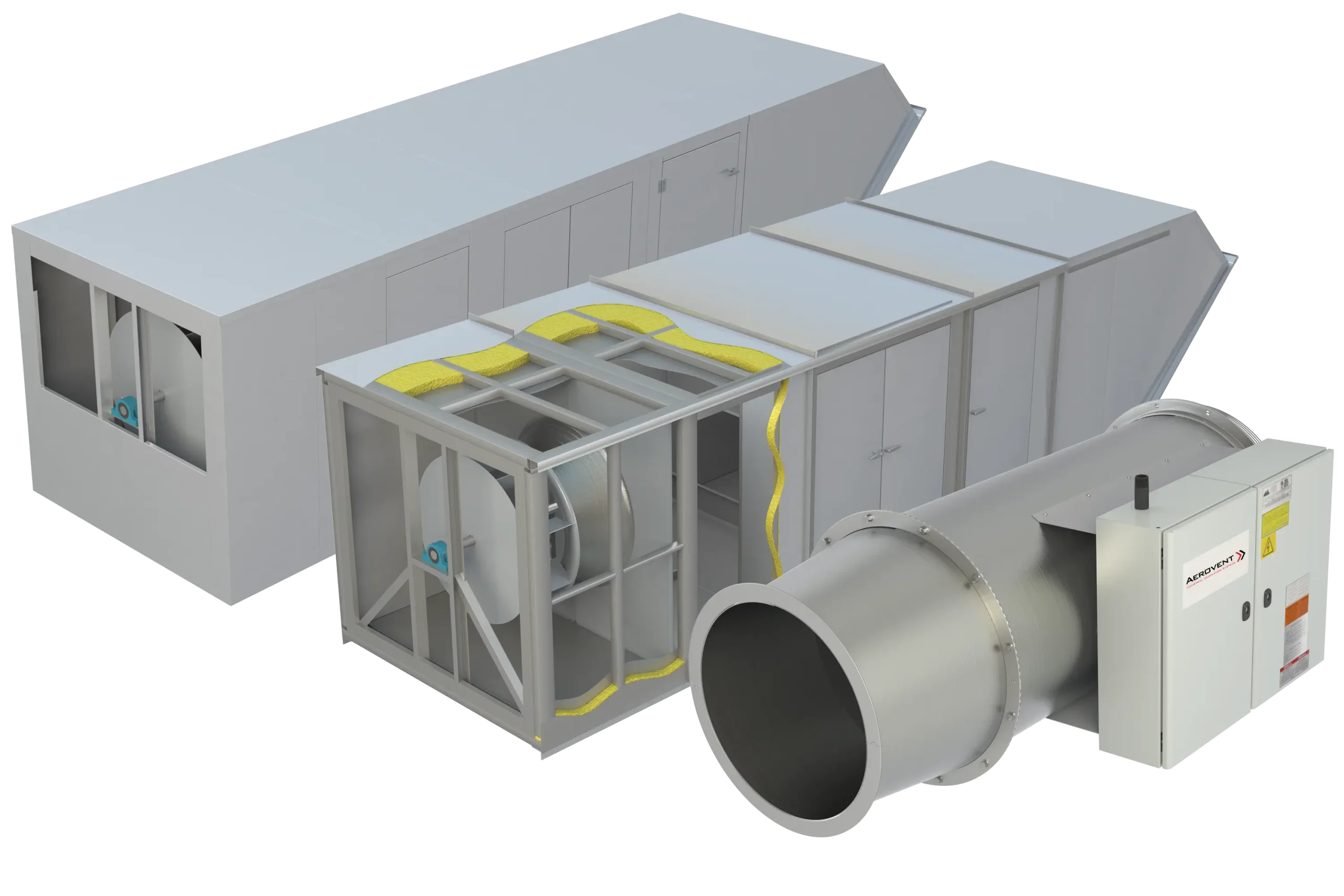



In the world of thermal management and large-scale ventilation, the axial fan stands as a fundamental component engineered for one primary purpose: moving massive volumes of air with unparalleled efficiency. Unlike other fan types designed for high-pressure scenarios, an axial fan operates on a simple yet powerful principle—creating airflow parallel to its central axis. This design makes it the workhorse for applications where maintaining consistent air circulation, cooling, or extraction is critical to operational success.
From cooling mission-critical data centers to ensuring air quality in vast manufacturing facilities, the performance of these systems hinges on selecting the right air-moving device. The choice between a standard AC fan for constant operation and an intelligent DC industrial axial fan that adjusts to thermal loads can dramatically impact energy consumption, noise levels, and overall system reliability. Understanding the core benefits and design principles is not just a technical exercise; it is essential for engineering efficient and durable HVAC and cooling solutions.
This guide provides a comprehensive look into the design, applications, and key advantages of the axial ventilation fan. We will explore the aerodynamic principles of blade design, compare axial and centrifugal fan performance, and detail how to select the ideal model—like the direct-drive Axipal Tubeaxial Fan—for your specific system requirements. Let’s examine how this vital technology powers modern industry.
Axial fans are fundamental components in a vast range of thermal management and ventilation systems, engineered to move large volumes of air efficiently. Their design and application are critical for everything from industrial process cooling to maintaining optimal conditions in commercial buildings. The following key takeaways distill the essential principles, benefits, and advanced capabilities of these vital devices.
These principles provide a foundational understanding of the capabilities and advantages of axial flow fans. In the sections that follow, we will delve deeper into the technical specifications, compare axial and centrifugal designs in detail, explore specific industrial applications, and offer guidance on selecting the ideal fan to meet your system’s unique requirements.
At its core, an axial fan operates on a straightforward aerodynamic principle derived from the concept of lift, similar to an airplane wing or a ship’s propeller. Understanding this mechanism is the first step to appreciating its indispensable role in modern HVAC, industrial ventilation, and electronic cooling systems. The primary function of an axial flow fan is to create a pressure differential that propels a large volume of air or gas in a direction parallel to its rotational axis. This section breaks down how these fans create airflow and why their specific design is uniquely suited for high-volume, low-pressure environments, making them a cornerstone technology for efficient air movement.
The operational query, “how do axial fans work in HVAC systems,” can be answered by examining its core components and their interaction with air. An axial fan utilizes an impeller, which consists of several blades mounted on a central hub that spins on an axis. As the motor drives the impeller to rotate, each blade functions as a rotating airfoil. The curved shape and angle of the blades cause the air passing over them to accelerate, creating a lower pressure zone on the forward-facing side of the blade and a higher pressure zone on the rear-facing side. This pressure differential generates a “lift” force that pushes the air forward, away from the fan. Consequently, air is continuously drawn into the fan from the low-pressure inlet side and discharged at a higher velocity from the outlet side, all along a path parallel to the fan’s shaft. This linear airflow path is what defines the fan as “axial.” In HVAC applications, this mechanism is perfect for moving substantial air volumes through open spaces or systems with minimal resistance, such as circulating conditioned air in a large warehouse, exhausting heat from a data center’s hot aisle, or providing ventilation in a factory.
The defining performance characteristic of an axial ventilation fan is its exceptional ability to move a significant quantity of air, a metric measured in cubic feet per minute (CFM) or cubic meters per hour (m³/h). However, this high-volume output is achieved against very low static pressure, which is the resistance to airflow caused by obstructions like ducts, filters, and dampers. The design of an axial fan’s blades is optimized for high flow rates in relatively unobstructed conditions. This makes it fundamentally different from a centrifugal fan, which is engineered to generate high static pressure. Centrifugal fans draw air in axially but discharge it radially (at a 90-degree angle), using centrifugal force to build up pressure. This allows them to effectively push air through highly restrictive systems, such as long, complex air ducts or dense filter banks. An axial fan’s performance, by contrast, diminishes rapidly as system resistance increases. Therefore, the choice between the two fan types hinges on the system’s impedance: for high-volume circulation with low resistance, the axial design is superior in efficiency and cost-effectiveness.
Having established the basic working principles, the next logical step is to examine how the physical design and construction of an axial fan’s components contribute to its overall performance and suitability for specific tasks.
The performance, efficiency, noise profile, and durability of an axial fan are not accidental; they are the direct result of deliberate engineering choices in its physical design. Every component, from the intricate geometry of the blades to the type of motor and the shape of the housing, is meticulously engineered to meet specific operational demands. A well-designed axial flow fan minimizes turbulence and energy consumption while maximizing effective air movement, creating a balance between power, performance, and acoustics. This section delves into the critical components that define an axial fan’s function and capabilities.
The blades are the heart and soul of an axial fan, acting as the primary interface for energy transfer to the air. Their aerodynamic properties are the most critical factor in controlling airflow, pressure generation, and overall airflow efficiency. Key elements of fan blade design include:
dBA). Many advanced industrial axial fans feature adjustable-pitch blades to allow for fine-tuning performance on-site.Beyond the blades, several other structural and mechanical components are essential to the fan’s operation, defining its classification and suitability for different applications. A holistic understanding requires examining the complete assembly.
With a clear picture of the components, it becomes easier to compare the axial fan against its main alternative, the centrifugal fan, to determine the right choice for a specific system.
Choosing between an axial and a centrifugal fan is one of the most fundamental and critical decisions in the design of effective ventilation systems. While both are air-moving devices, they are engineered based on different physical principles for vastly different purposes. Selecting the wrong type can lead to a cascade of negative consequences, including inadequate performance, excessively high energy costs, unacceptable noise levels, and premature system failure. The “axial fan vs centrifugal fan comparison” is a frequent and important query for engineers, system designers, and facility managers who need to ensure optimal performance and efficiency.
The most telling difference between these two fan types is revealed in their performance curves, which plot airflow (CFM) against static pressure (measured in inches of water gauge, or Inches WG).
An axial flow fan is fundamentally a high-volume, low-pressure device. Its performance curve typically shows that it moves the maximum volume of air when static pressure is at or near zero (a condition known as “free air delivery”). As system resistance (static pressure) increases, an axial fan’s airflow capability drops off sharply. This steep curve indicates its sensitivity to backpressure.
In stark contrast, a centrifugal fan is a high-pressure, lower-volume device. Its performance curve is much flatter. It is designed to maintain a more consistent airflow volume even as the static pressure from ductwork, filters, dampers, and other components increases significantly. The centrifugal force it generates allows it to overcome high system impedance far more effectively than an axial fan.
Expert Recommendation: Always analyze the system impedance curve alongside the fan performance curve. The ideal operating point is the intersection of these two curves. Selecting a fan that operates at its Best Efficiency Point (BEP) at this intersection is crucial for minimizing energy consumption and maximizing fan lifespan.
Based on their inherent performance characteristics, the applications for axial and centrifugal fans rarely overlap. The decision is generally clear-cut once the system’s requirements are defined.
You should select an axial fan for applications such as:
You should select a centrifugal fan for applications such as:
Beyond the type of fan, the motor that drives it is another critical element influencing its efficiency and control capabilities.
The motor technology that drives the impeller is a critical determinant of an axial fan‘s overall performance profile, influencing everything from energy efficiency and controllability to acoustic output and operational lifespan. While traditional AC-powered fans have been the industry standard for decades, modern electronically commutated (EC) DC fans offer a host of compelling advantages, particularly for intelligent, energy-conscious systems where precision and efficiency are paramount. The choice between AC and DC power is a strategic decision that impacts both initial investment and long-term operating costs.
AC (Alternating Current) fans are powered directly from a standard mains electrical supply (e.g., 120V or 230V AC). They are characterized by their simple construction, proven durability, and relatively lower initial purchase cost. AC induction motors are workhorses, known for their ability to operate reliably for long periods in a wide range of conditions. They typically operate at a fixed speed, or a limited number of speeds, determined by the line frequency (50/60 Hz) and the motor’s pole count. This makes them a straightforward and suitable choice for applications requiring constant, unchanging airflow where variable control is not a priority and ultimate energy efficiency is not the primary driver.
DC (Direct Current) fans, more accurately described as brushless DC (BLDC) or electronically commutated (EC) fans, represent a significant technological leap. These fans incorporate an onboard electronic circuit that converts incoming AC power to DC and then precisely controls the power delivered to the motor’s windings. This sophisticated design unlocks several significant benefits:
The following table provides a clear comparison of these two motor technologies:
| Parameter | AC Axial Fans | DC (EC) Axial Fans |
|---|---|---|
| Energy Efficiency | Standard efficiency (typically 20-50%) | High efficiency (often >80%) |
| Speed Control | Fixed speed or limited via complex controllers | Fully variable via PWM or 0-10V signal |
| Operating Noise | Higher, especially at fixed full speed | Significantly lower, especially at reduced speeds |
| Lifespan | Good, reliable service life | Excellent, often longer due to brushless design and cooler operation |
| Initial Cost | Lower | Higher |
| Operational Cost | Higher due to lower efficiency | Lower due to significant energy savings |
The true revolutionary potential of DC technology is realized in smart, or intelligent, industrial axial fans. This is a rapidly growing trend where the fan is no longer a “dumb” component but an active part of a responsive thermal management system. These fans integrate onboard microprocessors and can be directly connected to thermistors or other temperature sensors. The fan’s firmware contains a control loop that automatically adjusts its speed in direct response to the measured thermal load. When temperatures rise, the fan ramps up to provide maximum cooling capacity; when the load is low and conditions are stable, the fan slows down to a quiet, energy-sipping state. This “intelligent cooling” or “cooling on demand” approach ensures that energy is only consumed when genuinely needed. The benefits are transformative, especially in modern data centers, telecom enclosures, and high-end industrial electronics, where this technology can slash energy bills, dramatically reduce the overall acoustic footprint, and extend the life of both the fans and the electronics they protect.
Understanding these different fan technologies prepares us to explore the vast array of real-world scenarios where they are deployed.
The versatility, cost-effectiveness, and efficiency of the axial fan make it a cornerstone technology in a vast number of industrial, commercial, and even residential applications. From ensuring human comfort in large buildings to enabling the operation of high-density electronics, the ability of these fans to move large volumes of air is indispensable. The benefits of axial fans for industrial ventilation and cooling are particularly evident across a wide spectrum of industries where reliable, high-volume air movement is a non-negotiable requirement for safety, productivity, and process stability.
In large commercial structures such as warehouses, manufacturing plants, distribution centers, and retail stores, axial fans are essential for general ventilation. Large-diameter wall-mounted or roof-mounted fans are used to exhaust stale, heated, or contaminated indoor air and introduce fresh outdoor air, ensuring compliance with air quality standards and maintaining a comfortable environment for occupants. This process is fundamental to understanding what is ventilation in HVAC. Furthermore, axial fans are the default choice for the outdoor condenser units of virtually all split-system air conditioning and heat pump systems. In this role, they pull large volumes of ambient air across the condenser coil to dissipate the heat absorbed from the building, a critical step in the refrigeration cycle.
Modern data centers are colossal power consumers, with a significant portion of that energy being converted into waste heat by servers, storage arrays, and networking equipment. Effective thermal management is paramount to prevent component failure and ensure uptime. Large, high-efficiency axial fans are the workhorses in Computer Room Air Handler (CRAH) and Computer Room Air Conditioning (CRAC) units, where they circulate massive volumes of chilled air throughout the facility. On a smaller scale, high-static-pressure, compact axial fans are embedded directly within individual servers, power supplies, and network switches to provide targeted, high-velocity airflow over heat sinks and critical components. The exceptional cooling capacity and controllability of smart DC axial fans have made them the standard for this demanding application.
Many manufacturing processes—such as welding, casting, chemical mixing, and power generation—generate significant amounts of heat, smoke, fumes, or volatile organic compounds (VOCs) that must be safely removed from the work environment. Heavy-duty industrial axial fans are installed in walls or roofs to provide powerful exhaust ventilation, protecting worker health and preventing the buildup of hazardous atmospheres. They are also integral to process cooling equipment. For example, large axial fans are the primary air movers in industrial cooling towers, which cool process water for manufacturing plants and power stations, and in large radiators (fin-fan coolers) used to cool engine jacket water, lubricating oil, and other industrial fluids.
In modern agricultural operations, environmental control is key to productivity and animal welfare. In livestock barns and poultry houses, powerful axial fans provide continuous air circulation to mitigate heat stress during hot weather, reduce humidity, and exhaust harmful gases like ammonia and carbon dioxide. This constant air exchange is critical for maintaining animal health and maximizing growth rates. Similarly, in commercial greenhouses, axial fans are used for Horizontal Air Flow (HAF) circulation. This gentle, continuous air movement ensures even temperature and humidity distribution throughout the structure, prevents air stratification, and strengthens plant stems. It also helps to dry foliage, reducing the incidence of fungal diseases that thrive in stagnant, moist conditions.
With such a broad range of uses, the process of selecting the right fan for a specific job becomes a critical engineering task that directly impacts system success.
Selecting the correct axial fan is a technical discipline that extends far beyond simply matching a diameter or flow rate from a catalog. It requires a thorough engineering evaluation to ensure the fan operates at or near its peak efficiency point for a given system’s unique characteristics. An improperly chosen fan is a recipe for inefficiency; it will not only fail to deliver the required performance but will also consume excess energy, generate more noise, and be subjected to increased mechanical stress, leading to a shorter operational lifespan. The ultimate goal is always to improve airflow efficiency, which begins with proper fan selection.
Every air-moving system, whether it’s a simple exhaust duct or a complex data center cooling loop, presents a unique resistance to airflow. This “system impedance” is caused by the sum of all frictional and dynamic pressure losses from components like filters, grilles, duct elbows, heat exchangers, and internal equipment. This resistance can be calculated and plotted on a graph as a “system curve,” which shows how much static pressure is required to push a given volume of air (CFM) through that specific system. The actual operating point of a fan in a system is found where the fan’s performance curve intersects the system’s impedance curve. The most critical goal of fan selection is to ensure this intersection occurs at or very close to the fan’s Best Efficiency Point (BEP), which is the point on its curve where it converts the most electrical power into useful airflow.
Important Note: Operating a fan far from its BEP is highly detrimental. To the right of the BEP (in the “overload” region), the motor may draw excessive current. To the left of the BEP (in the “stall” region), the fan becomes unstable and noisy, with air recirculating around the blades. Both conditions result in wasted energy, poor performance, and premature failure.
When specifying an axial fan for a project, whether from a comprehensive supplier like BromingHvac or another manufacturer, a systematic approach is necessary. Engineers and designers must consider the following critical factors to ensure a successful installation:
Inches WG or Pascals): This is the total resistance of the system that the fan must overcome. It must be carefully calculated by summing the pressure drops of all components in the airflow path. Underestimating static pressure is a common cause of system underperformance.dBA): The fan’s noise output is a critical consideration for any application in or near occupied spaces, such as offices, residential areas, or hospitals. Fan data sheets provide sound level data, which should be reviewed against the project’s acoustic requirements.Navigating the complexities of air movement technology reveals that the humble axial fan is far more than a simple set of spinning blades. It is a cornerstone of modern industrial, commercial, and electronic systems, a precisely engineered device whose performance is dictated by a deep understanding of aerodynamics, material science, and electrical engineering. As we have explored, its core function—moving high volumes of air against low pressure—is a principle that underpins everything from general HVAC ventilation to the critical thermal management of data centers. Moving beyond this foundational knowledge, the true mastery of this technology lies in the application of detailed design principles and a strategic approach to selection, ensuring that every fan installed is not just a component, but a solution optimized for efficiency, reliability, and long-term value.
The journey to an effective ventilation or cooling system begins with a pivotal decision: the choice between an axial and a centrifugal fan. This article has underscored that this is not a choice of preference but a determination dictated by physics. The performance curve, which starkly contrasts the axial fan’s high-volume, low-pressure capabilities with the centrifugal fan’s high-pressure prowess, is the ultimate arbiter. Understanding your system’s impedance—the total resistance created by components like air ducts, filters, and coils—is non-negotiable. Selecting an axial ventilation fan for a high-resistance system is a formula for failure, resulting in stalled airflow, wasted energy, and excessive noise. Conversely, using a power-hungry centrifugal fan where a simple axial fan would suffice is a significant economic misstep. This fundamental understanding is the first and most crucial step toward engineering a successful air-moving system.
Furthermore, we’ve established that not all axial fans are created equal. The intricate details of fan blade design, the specific shape of the housing, and the choice of drive mechanism—whether a compact Tubeaxial Fan Direct Drive or a versatile belt-driven model like the Tubeaxial Commercial Fan—collectively define a fan’s performance profile. These are not trivial specifications; they are critical engineering choices that directly influence efficiency, acoustic footprint, and durability in demanding environments.
Perhaps the most transformative development discussed is the technological shift from traditional AC motors to advanced DC (EC) power. This evolution marks a turning point in how we approach air movement, moving from a brute-force, one-speed-fits-all mentality to an era of intelligent, demand-based control. The superior energy efficiency, precise speed modulation, and whisper-quiet operation of smart DC industrial axial fans represent more than just incremental improvements; they offer a complete paradigm shift. For applications in data centers, telecommunications, and high-end electronics, “cooling on demand” is no longer a futuristic concept but a present-day reality that drastically cuts operational costs and enhances system reliability.
Ultimately, all these principles converge on the singular, critical task of proper fan selection. The goal to improve airflow efficiency is achieved not in a catalog, but on a graph where the fan’s performance curve intersects with the system’s impedance curve. Ensuring this operating point aligns with the fan’s Best Efficiency Point (BEP) is the hallmark of expert system design. It is this meticulous process that separates an optimally performing system from one that is destined to be inefficient, noisy, and unreliable. Your choice of fan is an investment, and the dividends are paid in energy savings, operational stability, and system longevity. As technology continues to advance, the responsibility falls on engineers and designers to leverage this knowledge, making strategic decisions that shape a more sustainable and efficient future, one well-chosen fan at a time.