Need Specifications or a Quote?
Share your ventilation project requirements and our engineers will reply within 12 hours with technical specs, pricing, and lead time.


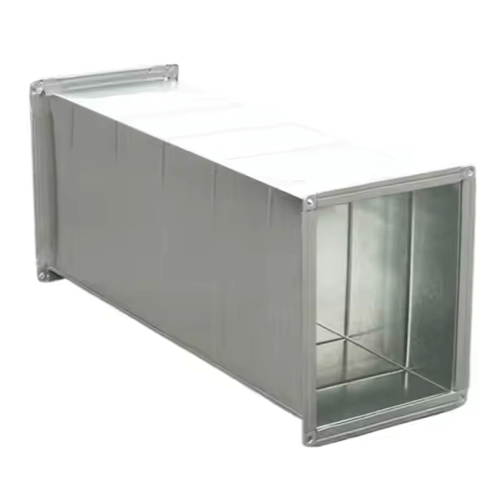
Residential HVAC systems use standardized rectangular duct sizes that balance airflow with the space limits of typical homes. The most common sizes are 8×16, 10×20, 12×24, 14×28, and 16×32 inches. These dimensions come from decades of industry experience, ensuring materials are available, prices are consistent, and installation works predictably.
Standard sizing matters beyond convenience. When your ductwork matches industry norms, you get materials easily, proven fittings, and tested installation methods. Standardization cuts material costs by 15–20% compared to custom options and speeds up projects since contractors use existing design templates and installation guides. Technicians recognize 10×20-inch supply trunks or 8×16-inch branches instantly, making repairs faster.
Standardization alone doesn’t guarantee efficiency. Real efficiency comes from understanding that these common sizes fit within a design flexibility framework. While standards provide the foundation, your actual duct selection depends on your specific system’s airflow needs, available space, and pressure dynamics. Many designers pick standard sizes without calculating whether those dimensions match the cubic feet per minute (CFM) your HVAC system requires. This shortcut often leads to undersized systems struggling to maintain comfort or oversized ducts wasting material and energy.
Beyond imperial measurements, metric standards are essential for global commercial projects and international construction. Common metric rectangular duct dimensions range from 200x250mm to 1200x1200mm, matching imperial sizes while aligning with ISO and European standards. A 250x400mm metric duct roughly equals a 10×16-inch imperial duct, though direct conversion requires precision to maintain airflow equivalency.
Metric systems work well for commercial installations and cross-border projects. Engineers in Europe, Asia, and other regions naturally work in millimeters, making metric specifications clearer and reducing specification errors. When a multinational facility orders ductwork, metric dimensions eliminate conversion confusion. Many industrial HVAC manufacturers have optimized their equipment for metric tooling, sometimes offering better pricing or faster delivery on metric-dimensioned ducts than on imperial-converted alternatives.
Comparing imperial and metric sizing reveals both systems serve the same goal: standardization reduces waste, improves material flow, and enables interchangeability. Neither system is better. Your choice depends on your location, project stakeholders, and whether your suppliers favor one standard. Understanding both systems expands your flexibility as a designer or specification authority.
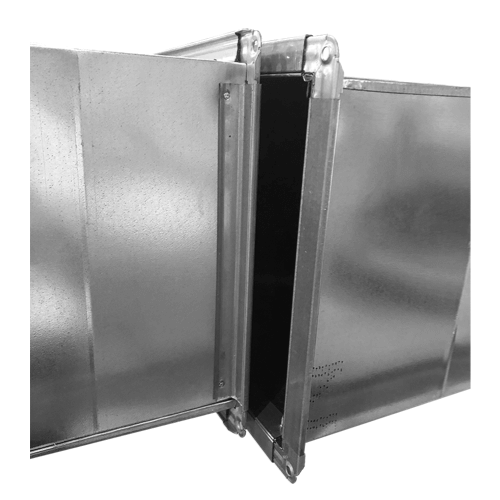
Aspect ratio is the relationship between a duct’s width and height. A 12×24-inch duct has a 2:1 aspect ratio, while an 8×32-inch duct has a 4:1 ratio despite similar cross-sectional area. This distinction creates real-world consequences: maintaining aspect ratios below 4:1 reduces material waste by up to 32% while improving airflow consistency and reducing pressure drop.
Aspect ratio matters because high-ratio ducts create uneven airflow patterns where air velocity varies across the duct’s profile. Wide sections experience lower resistance, causing air to concentrate near the walls rather than flowing uniformly through the center. This forces systems to work harder, increasing pressure drop and energy consumption. Low-ratio designs closer to square cross-sections promote even velocity distribution, reducing localized pressure spikes and friction losses.
From a fabrication perspective, aspect ratio directly impacts sheet metal utilization. Standard metal coils come in 36-inch to 72-inch widths. A 14×42-inch duct (3:1 ratio) cuts efficiently from a 48-inch coil with minimal scrap. The same CFM capacity using an 8×74-inch duct (9.25:1 ratio) forces ordering custom-width coils or accepting substantial material waste. The real insight is that design flexibility—choosing dimensions that fit your coil widths while maintaining acceptable aspect ratios—creates cost savings exceeding theoretical CFM optimization alone.
Converting between round and rectangular duct formats requires precision to maintain airflow equivalency. An 18-inch round duct approximately equals a 26×11-inch rectangular duct in terms of cross-sectional area and airflow capacity. This conversion accounts for friction characteristics and velocity profiles that differ between round and rectangular formats.
The equivalent diameter formula allows designers to compare performance across duct shapes:
Equivalent Diameter = 1.3 × (Width × Height)^0.625 / (Width + Height)^0.25. This calculation shows why shape matters. Round ducts naturally minimize friction because the shape prevents corners where turbulence develops. Rectangular ducts with right angles and transitions create slightly higher friction. When converting a round duct to rectangular format, designers often must increase total area to compensate for this friction penalty. A 16-inch round duct might require 22×10 inches rectangular, not a simple area-equivalent 17×15 inches.
System compatibility becomes critical when retrofitting or expanding. If your residential system currently uses 16-inch round main trunk and you’re adding rectangular branch ducts, your calculations must ensure the rectangular sections don’t create pressure imbalances that starve certain zones or create excessive velocity noise in others. This flexibility in format selection—choosing round for main runs and rectangular for branches where space is limited—lets designers optimize both performance and installation reality.
Real-world ductwork rarely follows textbook dimensions because homes and commercial spaces impose physical limits. Ceiling joists typically span 16 or 24 inches on center, mechanical chases often accommodate 12–16 inches of depth, and existing walls constrain width to 10 inches or less. Proper planning requires understanding these constraints before finalizing duct specifications.
Sheet metal coil widths (36, 48, 60, or 72 inches) fundamentally limit what dimensions you fabricate without custom orders or excessive scrap. A 10×20-inch duct fits efficiently from a 48-inch coil. A 10×36-inch rectangular duct matches a 48-inch coil width exactly. Understanding these practical limits prevents discovering after fabrication that your specified 11×24-inch dimension doesn’t align with standard coil widths, forcing expensive re-fabrication or material waste.
Pre-installation measurement verification separates successful projects from costly revisions. Before submitting final duct specifications, physically verify every chase, clearance, and fitting location. Measure joist depth, account for insulation and vapor barriers, confirm structural support locations, and document any transitions or offsets required. This meticulous planning costs a few hours upfront but prevents expensive site modifications, material waste, and schedule delays. Your responsibility extends beyond calculating CFM and sizing charts—it includes ensuring those calculations translate to physically installable reality.
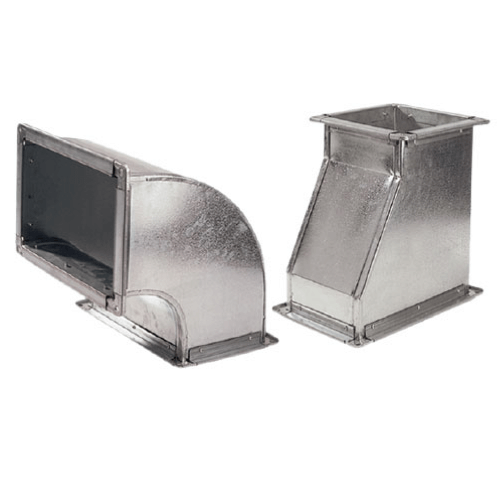
Cubic feet per minute (CFM) represents your HVAC system’s airflow capacity—the volume of conditioned air it delivers per minute. CFM-based sizing eliminates guesswork by creating a direct relationship between system output and duct dimensions. A residential system might require 1,200 CFM total airflow. Calculating the proper rectangular duct size means matching that 1,200 CFM to appropriate dimensions using industry friction rate standards.
The calculation process begins with determining your total system CFM. For a 3-ton air conditioning unit, expect approximately 900–1,200 CFM total output. For heating, the calculation shifts based on equipment specifications. Once you know total CFM, you apply friction rate standards—typically 0.10 inches of water gauge per 100 feet of ductwork for residential systems. This friction rate represents an acceptable balance between duct size and system efficiency. Choosing higher friction rates allows smaller ducts but strains the blower motor and increases energy consumption. Lower friction rates require larger ducts and more material.
Using ASHRAE sizing charts or online calculators, input your total CFM and friction rate, then cross-reference against rectangular duct dimensions. A 1,200 CFM residential system with 0.10″ w.g. per 100 feet friction rate typically requires a main trunk of 12×24 inches or equivalent. This methodology removes opinion from the equation. The sizing chart delivers the answer based on engineering principles, not designer preference. This precision prevents the common error of installing undersized ducts (which restrict airflow and create noise) or oversized ducts (which waste material and reduce air velocity to feel stagnant).
Friction rate—measured in inches of water gauge per 100 feet of ductwork—serves as the control mechanism in duct sizing calculations. Residential systems typically operate at 0.10″ w.g. per 100 feet, a standard that emerged from cost-benefit analysis balancing duct material expenses against blower motor strain and energy consumption. This rate represents a practical compromise: aggressive enough to minimize ductwork size and cost, yet conservative enough to prevent excessive system burden.
Flexible ductwork allows lower friction rates—often 0.05″ w.g. per 100 feet—because the flexible interior reduces turbulence compared to rigid metal. However, flexible ducts present their own penalties: installation inefficiency (loose connections, kinks, and stretching reduce actual CFM delivery), higher material costs, and potential durability concerns. Commercial installations employ variable friction rates depending on system complexity. A high-efficiency data center requiring precise temperature control might specify 0.08″ w.g. for tighter velocity control. A warehouse with less stringent requirements might accept 0.12″ w.g. to reduce material costs.
Understanding friction rate as a tuning parameter enables intelligent design decisions. A building retrofit with severe space constraints might accept 0.15″ w.g.—smaller ducts fitting into limited space—accepting the energy penalty because installation feasibility matters more than efficiency. Conversely, a new construction project prioritizing long-term operating costs might specify 0.08″ w.g., accepting larger ductwork because the energy savings compound over 20+ years.
Pressure drop—the resistance air encounters traveling through ductwork—directly impacts system performance. Undersized ducts create excessive pressure drop, forcing blower motors to work harder, consuming more electricity, and potentially failing to deliver adequate airflow to remote zones. Oversized ducts minimize pressure drop but waste material and energy conditioning unnecessary volume.
Optimal air velocity ranges vary by ductwork type. In residential supply ducts, velocities of 600–800 feet per minute represent the sweet spot. Air moves fast enough to deliver airflow effectively and slow enough to prevent noise and turbulence. Return ducts typically operate at 400–600 feet per minute since comfort noise perception is higher in return paths. Calculating velocity requires dividing CFM by the duct’s cross-sectional area in square feet. A 12×24-inch duct (2 square feet) carrying 1,200 CFM produces 600 feet-per-minute velocity—perfectly positioned within residential comfort standards.
Preventing noise and performance issues through proper sizing requires balancing these competing factors. A 10×20-inch duct handling 1,200 CFM produces 1,200 feet-per-minute velocity—likely creating audible rushing noise and pressure imbalances. Upsizing to 12×24 inches cuts velocity in half while maintaining CFM delivery. This seemingly simple adjustment transforms system performance, noise characteristics, and occupant comfort. The design exercise isn’t merely selecting a duct dimension from a chart. It’s orchestrating CFM, friction rate, velocity, pressure drop, and physical space into a coherent system.
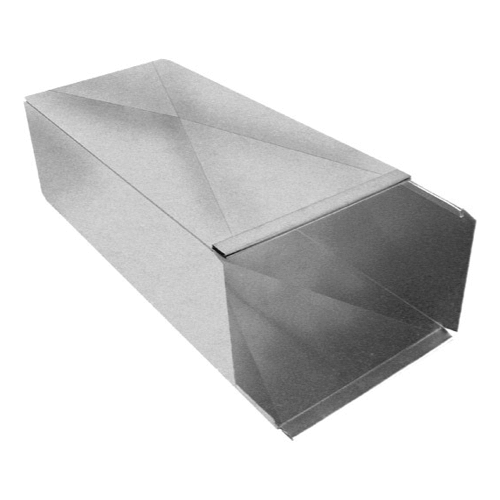
Residential ductwork follows predictable patterns that simplify sizing decisions. Main supply trunks—the primary ducts carrying conditioned air from the furnace or air handler—typically run 12×24 or 14×28 inches for systems delivering 1,000–1,400 CFM. Secondary branch ducts splitting toward individual rooms or zones typically measure 8×16, 8×20, or 10×16 inches, handling 200–400 CFM per branch. Return ducts, which must accommodate the entire system’s return airflow, often match or exceed supply trunk dimensions—12×24 or 14×28 inches—since air expands when it cools, requiring larger space at lower velocity.
This dimensional progression reflects an important principle: sizing isn’t one-size-fits-all. Each segment connects to its specific CFM requirement. The main trunk carries total system airflow. Branches carry partial flows to individual zones. Supply ducts shrink as they branch downward. Return ducts remain large and direct to accommodate lower-velocity return air.
Understanding supply versus return differences prevents a common design error. Contractors sometimes assume supply and return can mirror each other, but return air requires larger dimensions because cooling causes air to expand. An undersized return forces air through a restrictive pathway, creating negative pressure in the space, pulling in outside air through leaks, and reducing system efficiency. Proper design ensures return ducts handle system CFM at comfortable, quiet velocities.
Single-floor home with primary trunk and branch layout: A 2,000-square-foot ranch with 3-ton HVAC system requires 1,100 CFM total. Main trunk runs 150 feet from furnace to farthest outlet. Selecting 0.10″ w.g. per 100 feet, sizing charts recommend a 12×24-inch main trunk (1.5:1 aspect ratio, efficient). At the first zone split, reduce to 10×20 inches serving 400 CFM to the north wing. At the second split, run 8×16 inches for 350 CFM to the south wing. Return air paths consolidate back to a 12×24-inch return trunk. This design maintains consistent velocity (600–800 fpm) across all segments while fitting standard dimensions within typical residential framing.
Multi-story residence with vertical chase considerations: A 3-story colonial with 4-ton system (1,400 CFM) uses a vertical chase in the center of the home. Main trunk runs horizontally 80 feet on the first floor at 14×28 inches. A vertical chase reduces to 10×20 inches (fitting within framing), then expands back to 12×24 inches on the second floor. This transition requires engineering calculation to manage pressure effects. Friction rate remains 0.10″ w.g. per 100 feet, but the transition fitting adds dynamic loss. Return air draws from all three floors into the vertical chase, requiring a return trunk sized for total CFM (typically 14×28 inches). The design prioritizes fitting the physical space while maintaining engineering principles.
Retrofit installation in existing construction with space limitations: A 1950s home with 8-inch ceiling cavities and 12-inch joist spacing presents severe constraints. Standard 12×24-inch ducts won’t fit. Designer specifies friction rate of 0.15″ w.g. per 100 feet, accepting higher resistance to downsize ducts to 8×16 inches that fit the available space. This trade-off reduces material waste, simplifies installation, and acknowledges that the energy penalty is acceptable given physical reality. The alternative—removing joists or relocating framing—costs far more than the modest efficiency loss.


