Need Specifications or a Quote?
Share your ventilation project requirements and our engineers will reply within 12 hours with technical specs, pricing, and lead time.
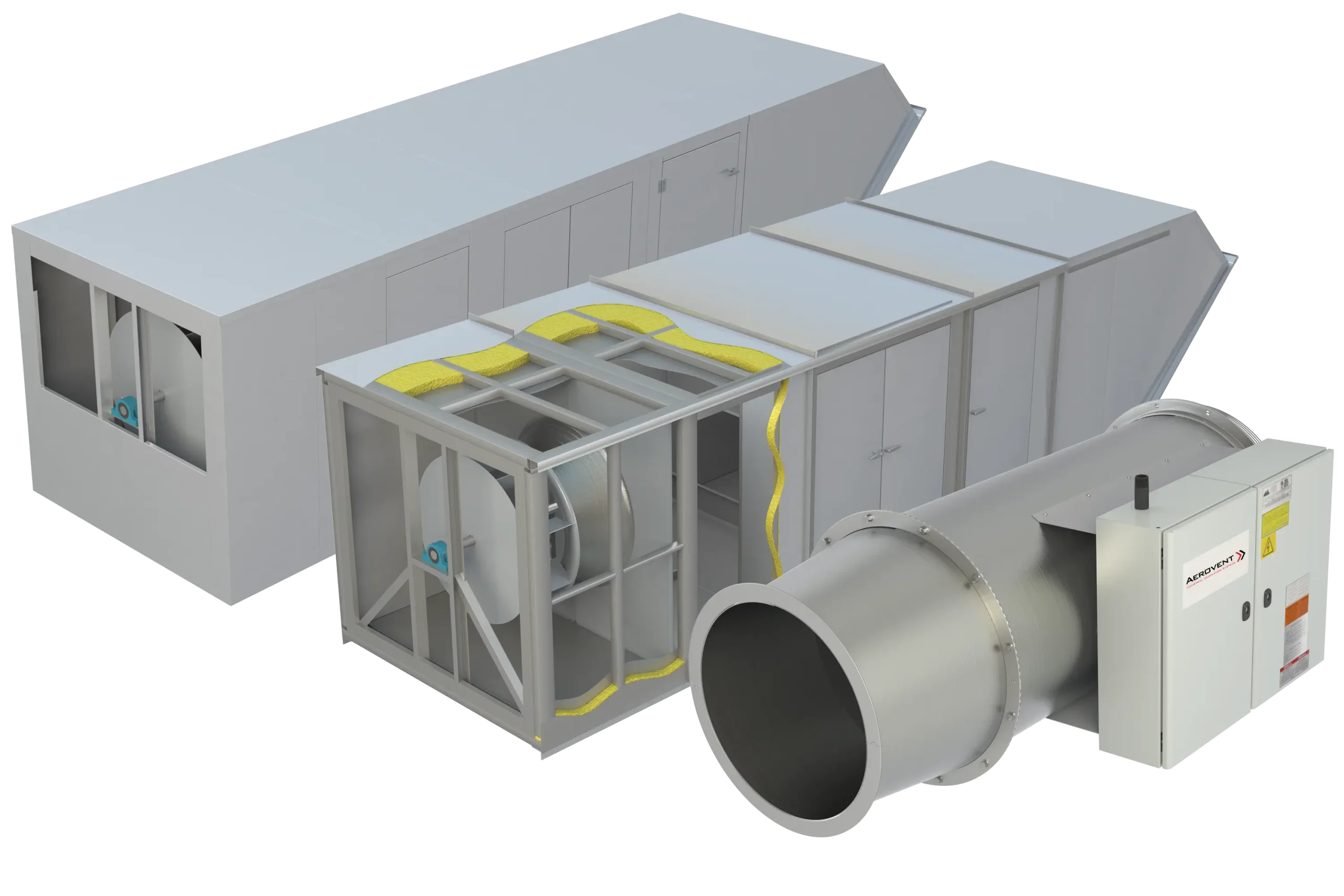



In HVAC air distribution systems, straight ducts carry air, but fittings determine how that air behaves. Elbows, reducers, tees, and flanges influence airflow direction, velocity changes, pressure loss, acoustic performance, and distribution balance. These components are not interchangeable accessories; they are core system performance drivers. A system designed with high-quality straight duct sections but poorly selected fittings will experience noise, uneven air distribution, energy inefficiency, or continual balancing problems.
Understanding how each type of fitting affects airflow allows engineers, contractors, and procurement teams to choose components that support quiet, stable, and efficient system operation. As demonstrated in HVAC Air Duct System Basics, even small variations in airflow behavior propagate through the entire system, shaping the occupant comfort experience and long-term operating cost.
Elbows are used to redirect airflow when the duct route changes. However, turning air too sharply increases turbulence. Turbulence leads to noise, higher static pressure, and reduced airflow efficiency. The key metric for evaluating elbows is the R/D ratio, which compares elbow radius (R) to duct diameter (D).
Short-radius elbows are compact and easier to install where space is restricted, but they disturb airflow significantly. The sudden directional change forces air to accelerate toward the outer elbow wall, causing separation and vortex formation. This turbulence increases pressure drop and noise.
Long-radius elbows allow airflow to change direction more gradually, reducing turbulence. They have lower pressure loss coefficients, making them preferable in systems where acoustic performance or fan energy is a priority. This aligns with the efficiency considerations discussed in Spiral Duct Energy Efficiency Performance.
Where ceiling space is limited, a compromise design—such as adding turning vanes inside rectangular elbows—can help stabilize flow. However, turning vanes must be aligned precisely; misaligned vanes can worsen turbulence rather than reduce it.
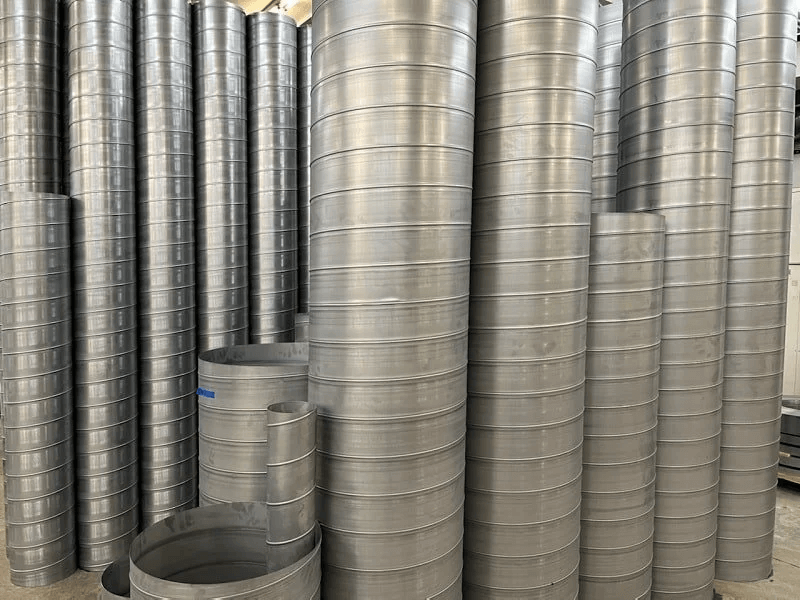
Reducers transition airflow between ducts of different sizes. The geometry of the reducer influences how velocity, pressure, and turbulence behave through the transition.
A sudden change in area causes energy loss and increased turbulence. Gradual tapers reduce these effects. In systems where humidity control is critical, as discussed in Air Duct Material Selection Guide, eccentric reducers are preferred to avoid moisture retention.
Tees distribute airflow to multiple branches. The geometry of the tee affects how airflow divides, influencing the ease (or difficulty) of system balancing.
A perpendicular tee forces air to split abruptly, leading to uneven flow distribution. The main duct path continues to receive the majority of airflow, while branch flow depends heavily on static pressure and damper settings.
Angled branch fittings guide airflow more smoothly, reducing turbulence and allowing more predictable flow division. In open ceiling environments, where Rectangular vs. Spiral Ducts design decisions often lean toward exposed spiral systems, angled takeoffs are preferred for consistent zone distribution.
Poor branch fitting selection is the most common cause of the field complaint: “Some diffusers blow too strong while others barely move air.” This is not a diffuser problem—it begins at the branch geometry.
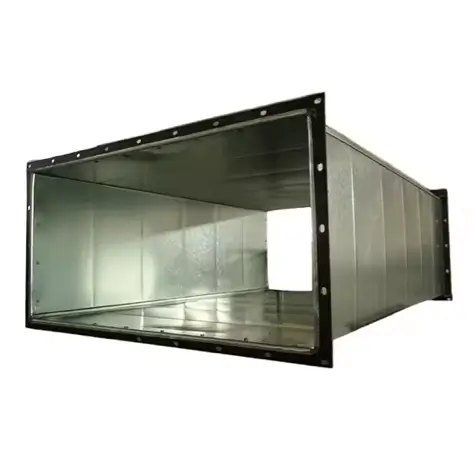
Flanges maintain duct alignment and create a sealed connection. Poor flange selection or insufficient gasket compression increases leakage, forcing fans to work harder. As shown in Air Duct Leakage Classes & Sealing, leakage correlates directly with lifetime fan energy cost.
Flange alignment also influences structural vibration and noise. Misalignment forces mechanical stress into hangers and can introduce low-frequency rumbling or audible rattling.
Fitting loss coefficients (K values) quantify how fittings influence pressure drop. While straight duct friction can be reduced by selecting round or smooth-walled ducts, fittings often contribute a larger portion of system energy loss.
For example:
This is why fitting selection must be integrated into system design rather than left as a procurement afterthought. As emphasized in How to Size Air Ducts, duct performance is a chain of interdependent decisions—not isolated calculations.
Even when fittings are correctly selected, poor installation can undermine performance.
Pre-installation layout planning and labeling during fabrication (as described in Sheet Metal Duct Fabrication Process) reduce field correction, shorten installation times, and improve airflow stability.
Likely Cause: High branch velocity + short takeoff or a tight-radius elbow near diffuser.
Likely Cause: Poor tee geometry causing unstable branch distribution.
Likely Cause: Fittings are adding unpredictable turbulence and pressure loss.
Duct fittings determine how efficiently, quietly, and reliably air moves through a building. Proper selection minimizes pressure drop, reduces noise, stabilizes airflow distribution, and lowers fan energy consumption. When fittings are chosen based on airflow dynamics rather than material cost alone, systems run more efficiently and require less corrective work during commissioning and operation.
If you have duct layout drawings or airflow balance concerns, our engineering team can review fitting selection and provide optimization recommendations.


