Need Specifications or a Quote?
Share your ventilation project requirements and our engineers will reply within 12 hours with technical specs, pricing, and lead time.
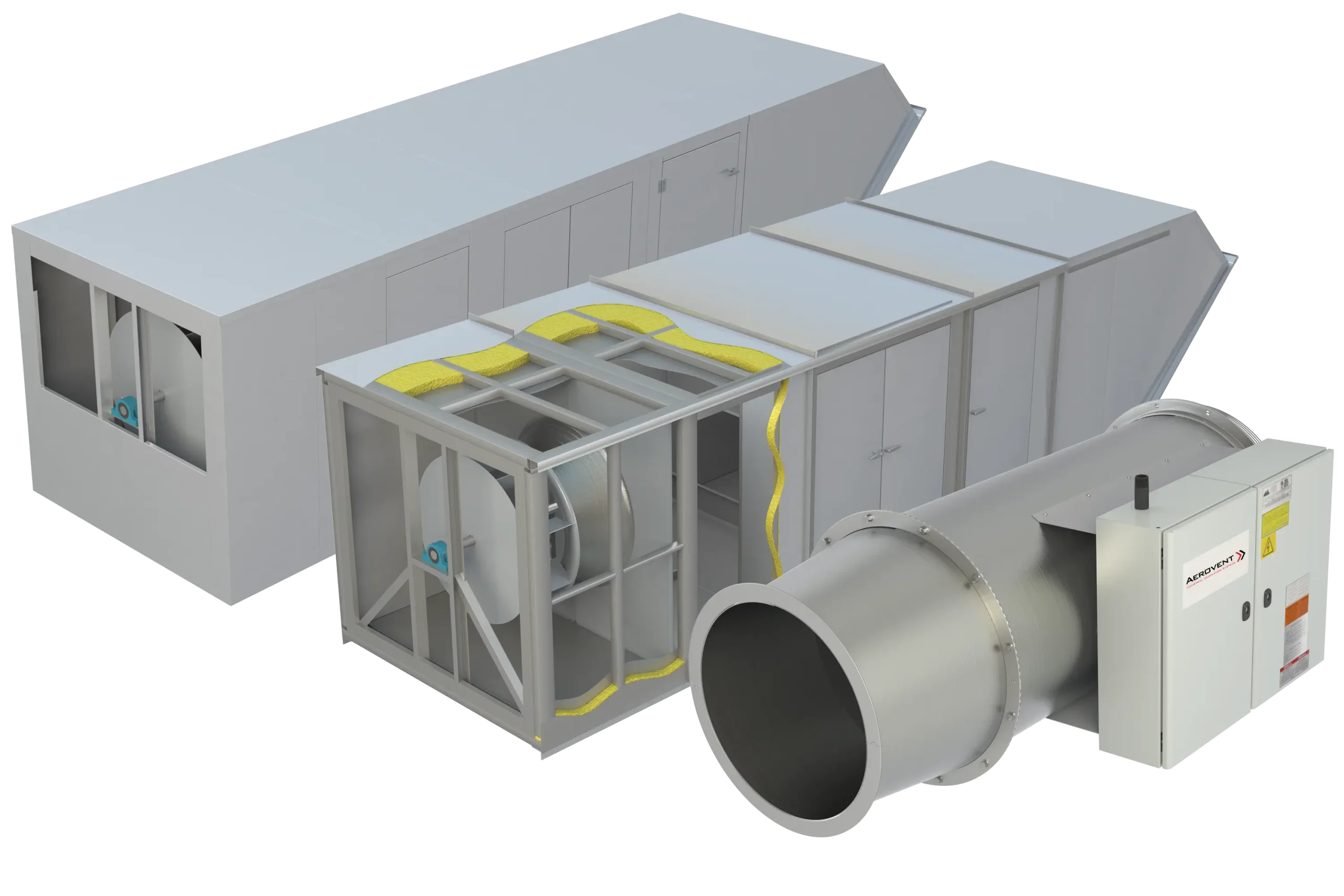



Did you know that the shape of your ductwork can significantly impact the efficiency of your HVAC system? Rectangular ductwork, a staple in commercial and residential applications, offers distinct advantages, from optimized airflow dynamics to space-saving adaptability. As HVAC professionals seek to balance performance with installation ease and durability, understanding the benefits, materials, and design principles behind rectangular ducts becomes crucial.
Rectangular duct systems are widely recognized for their versatility, making them a popular choice in complex air distribution networks. This blog will delve into the advantages that set rectangular ducts apart from other shapes, explore the materials commonly used, and provide essential tips for designing efficient systems. We’ll also cover installation best practices and maintenance strategies to ensure long-lasting performance while adhering to industry standards.
Whether you’re designing an HVAC project or aiming to improve system durability and operation efficiency, this guide will equip you with actionable insights. Join us as we uncover everything professionals need to know about rectangular ductwork.
Rectangular ductwork plays a pivotal role in HVAC systems, offering unique advantages in efficiency, customization, and sustainability. Here are the key insights to optimize its design and usage.
With these insights, professionals can fully harness the benefits of rectangular ductwork while ensuring efficient and sustainable HVAC system designs. Let’s explore the technical details to refine your next project.
Rectangular ductwork plays a central role in how air is distributed, balanced, and controlled within commercial and industrial HVAC systems. When the duct system is not engineered correctly, the result is measurable performance degradation: higher fan power, unstable room pressures, noise complaints, and difficulty maintaining design temperatures. These issues typically trace back to improper duct sizing, excessive pressure loss, poor leakage control, and unsuitable materials for the operating environment.
In many projects, architectural and structural constraints drive the use of rectangular duct systems rather than round ductwork. Rectangular ducts can be coordinated more easily with beams, ceilings, and service corridors, and they are frequently the default geometry in offices, retail, healthcare facilities, and industrial buildings. However, the change in duct geometry directly impacts friction losses, fitting performance, leakage, and rigidity, all of which must be accounted for in the design.
This article provides a technical overview of rectangular ductwork from an engineering standpoint. It focuses on airflow efficiency, pressure loss, leakage classes, material selection, and installation constraints, with reference to common industry standards and guidance documents such as SMACNA, ASHRAE, and ISO. The objective is to support HVAC engineers, mechanical designers, and facility managers in making well-founded decisions on when and how to apply rectangular duct systems in new builds, retrofits, and system upgrades.
Rectangular ductwork refers to air distribution ducts with a rectangular or square cross-section, fabricated typically from sheet metal or pre-insulated panels. These ducts convey supply air, return air, exhaust air, or relief air between air handling units (AHUs), rooftop units, terminal devices, diffusers, and grilles. They are integrated with accessories such as dampers, fire and smoke control devices, flexible connections, and acoustic components.
From a design perspective, the critical parameter for any duct section is its effective cross-sectional area, which determines the air velocity for a given volumetric flow rate (CFM or L/s). Rectangular ducts achieve this area through two orthogonal dimensions (width and height), which can be varied to suit spatial constraints. However, for a given area, the duct’s aspect ratio (width:height) influences pressure loss, surface area, and structural behavior.
Several fundamental parameters govern the performance and suitability of a rectangular duct section:
In practice, these parameters are interdependent. For example, reducing duct size to fit a constrained soffit may increase velocity and ΔP, raising fan energy demand and potentially noise levels. Rectangular duct design, therefore, is a series of trade-offs between geometry, performance, and constructability.
A complete rectangular duct system consists of multiple fabricated elements and accessories, each contributing to overall performance:
Materials for rectangular ductwork are selected based on corrosion resistance, structural strength, cost, and regulatory requirements. Typical options include:
The selection is informed by the air type (conditioned, exhaust, corrosive process air), temperature range, humidity, and exposure to chemicals. The air duct material selection guide provides useful reference criteria for matching materials to application conditions.
Rectangular duct specifications normally reference one or more industry standards. Key aspects include:
A typical product-level specification for rectangular ducts and fittings will define pressure class, gauge, joint system, sealant class, and allowable leakage, along with any project-specific corrosion or cleanliness requirements.
For the same cross-sectional area, a rectangular duct generally exhibits higher friction losses compared with a round duct. This is due to a higher perimeter-to-area ratio and often less favorable airflow patterns near flat surfaces. Additionally, many rectangular fittings (e.g., mitered elbows) introduce higher dynamic losses than their round equivalents.
Key hydraulic considerations include:
To maintain acceptable total pressure drops, designers often:
Rectangular ductwork is frequently the preferred geometry where ceiling plenums are shallow or heavily congested with other services. By adjusting width and height independently, designers can:
The trade-off is that this space efficiency can come at the cost of increased pressure drop, higher sheet metal utilization, and potentially greater leakage surface. These effects must be balanced during the layout and sizing process.
Rectangular ducts are more prone than round ducts to panel vibration, “oil-canning,” and radiated noise if not adequately reinforced. The flat panels between stiffeners can flex due to internal pressure fluctuations and fan pulsations, generating noise or perceived instability.
Typical mitigation measures include:
| Parameter | Rectangular Duct | Round Duct |
|---|---|---|
| Space coordination | High flexibility in width/height; favorable in shallow plenums | Less flexible; greater depth for equivalent area |
| Friction loss (for equal area) | Typically higher due to greater perimeter | Typically lower; more efficient hydraulically |
| Material usage | Higher surface area for same flow | Lower surface area; often less metal |
| Structural behavior | Requires reinforcement to control panel deflection | Inherently rigid; less reinforcement required |
| Noise and vibration | More susceptible to panel noise without proper design | Generally lower breakout noise for comparable construction |
Rectangular ductwork is standard in office buildings, retail centers, hotels, educational facilities, and healthcare projects where ceiling space is shared by lighting, sprinklers, piping, and cabling. Typical design considerations in these environments include:
In factories and warehouses, rectangular ducts often serve large-volume air distribution, general ventilation, or process exhaust. The ducts may be exposed rather than concealed, which influences both aesthetics and corrosion protection requirements. Considerations include:
Where ducts traverse outdoor spaces or serve high-humidity or corrosive environments, material choice and insulation details become critical:
For life safety systems such as smoke control, rectangular ducts are frequently combined with specialized dampers and control devices. Dedicated pages such as fire and smoke damper equipment describe these components and their integration into duct systems.
Duct sizing for rectangular systems follows the same fundamental fluid dynamics as for round ducts, with additional attention to aspect ratio. Typical practices include:
Equivalent diameter concepts are used when applying friction charts or software developed for round duct calculations, translating rectangular dimensions into a hydraulically equivalent round duct.
Effective rectangular duct layouts minimize turbulence, fittings, and conflicts with other trades:
Hangers and supports must be sized for duct weight, insulation, and any attached equipment, following allowable deflection limits:
Leakage control is a major contributor to system efficiency. Proper sealing and insulation help meet performance targets:
For projects incorporating pre-insulated systems, design must consider joint detailing, fire performance, and compatibility with accessories such as diffusers and grilles. Reference material on HVAC air duct system basics can help align these decisions with broader system requirements.
Improperly designed or installed rectangular ductwork can exhibit several recurring issues:
To identify and resolve these issues, systematic field checks and measurements are recommended:
Documented results can then be compared with design values to decide whether corrective actions such as rebalancing, reinforcement upgrades, or partial replacement are required.
In a mid-rise office building, a common pattern is a main supply and return riser connecting multiple floors. On each floor:
Return air ductwork often mirrors the supply path or uses a combination of ducted returns and ceiling plenums, depending on the fire and smoke strategy and acoustic requirements.
In a manufacturing facility, rectangular ductwork may be used for general exhaust and makeup air systems:
Noise and vibration control are important where ducts penetrate occupied office areas or pass near sensitive equipment, requiring careful placement of flexible connections and acoustic treatment.
For smoke control or pressurization systems, rectangular ducts are typically combined with rigorously tested dampers and controls:
Rectangular ductwork offers clear advantages in space-constrained and architecturally driven environments, enabling efficient coordination with structural and architectural elements. However, its hydraulic and structural characteristics require careful attention to maintain acceptable pressure losses, leakage rates, and acoustic performance. Selection of dimensions, aspect ratios, materials, and reinforcement must conform to recognized standards and be validated against project-specific loads and environmental conditions.
When deciding on rectangular ductwork for a project, engineers and facility managers should:
By following these steps and referencing established standards and product data, it is possible to design rectangular duct systems that balance spatial efficiency with reliable, long-term HVAC performance.
For projects where rectangular ductwork geometry, pressure class, or environmental conditions are complex, it is often beneficial to review the design with specialists familiar with duct construction, damper integration, and installation details. Sharing layout drawings, duct schedules, and equipment selections allows a more accurate assessment of risks related to pressure drop, leakage, structural deflection, and compliance with applicable standards.
Engineering teams are encouraged to compile their current:
These documents can then be used to obtain technical feedback on rectangular duct options, fitting configurations, and component selections tailored to the project’s operating conditions and performance targets.
Rectangular ductwork is a strategic choice for balancing spatial constraints, airflow efficiency, and architectural integration in diverse project settings. Critical engineering considerations include managing pressure losses, structural reinforcement, and leakage prevention, all tailored to specific environmental and operational requirements. Effective design hinges on understanding interdependencies between duct geometry, material selection, and installation practices. By adhering to industry standards and conducting thorough evaluations, engineers can optimize performance without compromising reliability or energy efficiency. For detailed assessments, collaboration with specialists ensures design alignment with project parameters and long-term operational success.


