Need Specifications or a Quote?
Share your ventilation project requirements and our engineers will reply within 12 hours with technical specs, pricing, and lead time.
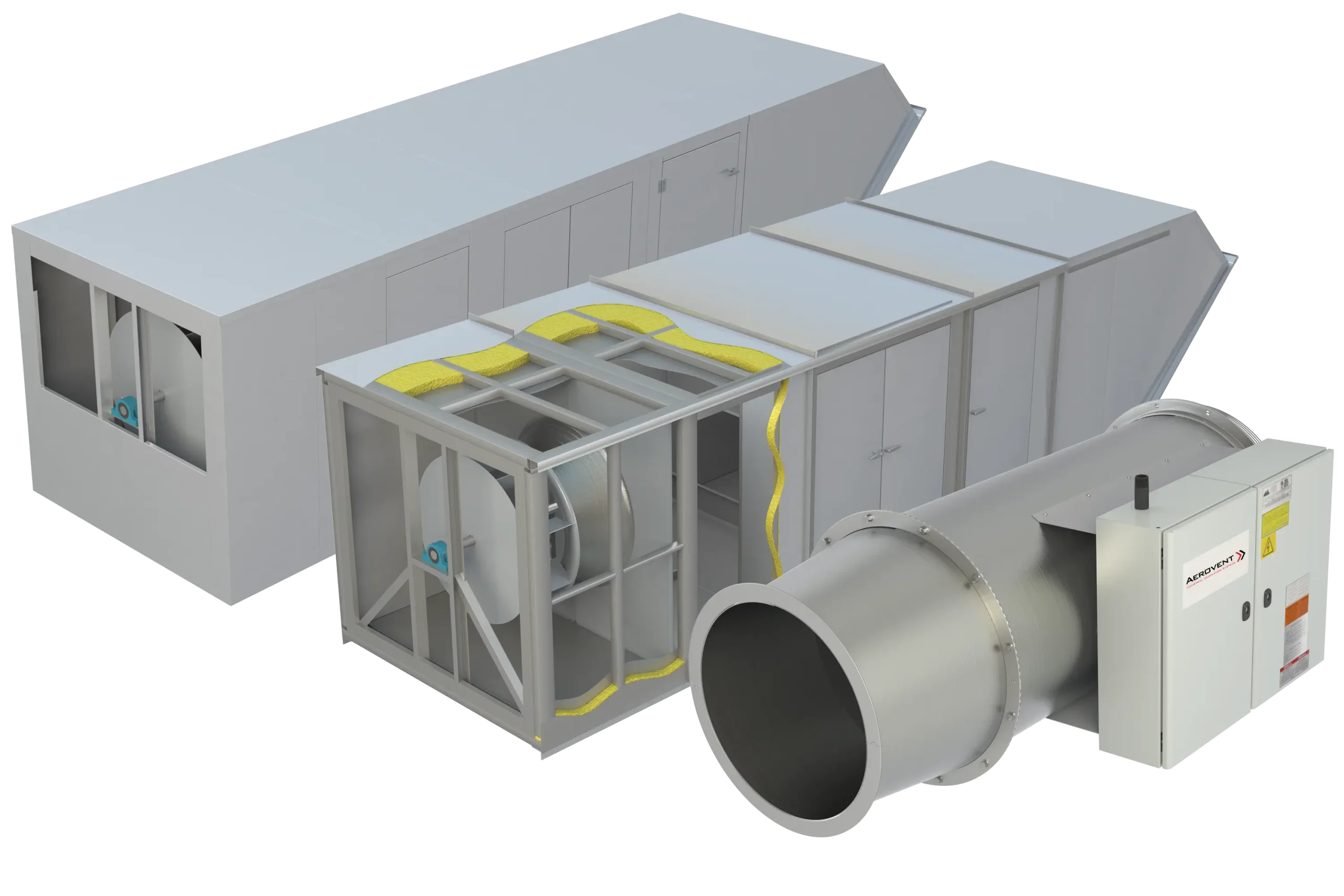


Did you know that the cost of a commercial HVAC ventilation system can vary dramatically, sometimes exceeding tens of thousands of dollars depending on the type, efficiency, and installation requirements? For business owners and facility managers, understanding these costs is not just a matter of budgeting—it’s a strategic decision that impacts long-term operational expenses and energy savings. Navigating HVAC ventilation system costs can feel overwhelming without access to accurate breakdowns and insights into key influencing factors.
This article dives into what drives pricing for commercial HVAC systems, including equipment types, installation complexity, energy efficiency ratings, and ongoing operational expenses. With a careful look at the cost ranges for different ventilation systems, from basic solutions to premium energy-efficient technologies, we’ll also explore how ductwork, fittings, and energy-saving designs shape your final investment. You’ll get valuable insights on the factors that matter most and learn how to estimate costs for projects of varying scales.
By the end of this guide, you’ll be equipped with a clear understanding of HVAC installation cost breakdowns, how to compare pricing across ventilation system types, and where to find savings opportunities through efficiency improvements. Whether you’re managing a large commercial property or designing a high-performance ventilation system for a new project, this comprehensive cost guide will help you plan smarter and invest confidently.
Understanding HVAC ventilation system costs is crucial for budgeting commercial projects effectively. This guide highlights key factors influencing pricing, long-term savings, and strategies to optimize costs, making it a valuable resource for project managers and business owners.
These insights offer a thorough guide to navigating HVAC ventilation system costs, focusing not only on installation expenses but also on long-term value. Dive deeper to explore practical solutions for smarter budgeting in commercial projects.
This guide examines HVAC ventilation system cost parameters from an engineering and procurement perspective. The objective is to frame cost drivers, quantify typical ranges, and connect design choices to long-term operational and maintenance outcomes. While system selection is often driven by performance criteria—airflow rate, temperature control, indoor air quality—budget feasibility and lifecycle ROI tend to decide whether a solution is viable for commercial users.
Real-world budgeting for large-scale HVAC projects involves aligning scope, performance targets, and financing constraints. A ventilation package that meets code but underperforms on efficiency can introduce higher HVAC operational expenses during peak seasons. Conversely, specifying advanced components without a commissioning plan can inflate capital spend with limited incremental value. Balancing duct materials, fan selections, filtration, and controls within a commercial HVAC system budget requires a fact-based comparison, disciplined design, and clear assumptions about usage hours, load variability, and facility standards. For readers seeking foundational context, see the Overview of HVAC ventilation principles.
Material choices for ducts, housings, and filtration directly influence first cost, durability, and energy efficiency. The cause-effect relationship is straightforward: heavier gauges and corrosion-resistant alloys cost more but reduce leakage, deformation, and maintenance frequency. Filters with higher capture efficiency improve air quality yet increase pressure drop, requiring larger fans or higher fan speed, thereby affecting energy use.
Duct materials vary in density, corrosion resistance, and fabrication complexity. Galvanized steel (common gauges 24–18) provides robustness for most commercial systems. Stainless steel becomes necessary in corrosive or sanitary applications. Aluminum and composite materials (PVC, FRP) reduce weight but may not match steel’s structural stiffness for long runs or high static pressures. For a deeper material-specific discussion, reference Air duct material selection.
Filter selection influences both capital cost and energy performance. MERV 8–11 filters are typical for standard offices. MERV 13–16 or HEPA elements may be required by health care or clean manufacturing. Higher MERV increases pressure drop; as resistance increases, fan brake horsepower rises, driving higher energy consumption. Specifying low-pressure-drop filters with adequate capture efficiency can reduce fan size and operating cost. Casing and insulation thickness also matter: more robust fan housings and duct insulation help maintain airflow and temperature control, but the added material and labor raise upfront cost.
Labor cost is dictated by site accessibility, duct routing complexity, and system scale. Longer duct runs, multiple risers, and dense coordination in ceilings drive complexity. Multi-zone systems include more dampers, sensors, and controls wiring, increasing installation time and commissioning steps. The effect is higher installed cost and longer schedule, with implications for general contractor coordination and facility downtime.
Labor rates vary regionally but typically range between $65–$120 per hour for mechanical installation teams. Complexity also affects commissioning requirements—airflow verification, leakage tests, controls integration—which add professional hours but reduce post-occupancy adjustments.
Customization yields better fit to the building’s load profile and space constraints, but cost increases with unique fabrication and one-off components. Modular systems, such as packaged ERV/HRV units or standardized fan-duct sections, reduce engineering and fabrication time. The implication is a trade-off: custom designs may optimize energy efficiency and acoustics in difficult layouts, while modular packages accelerate delivery and simplify maintenance.
In projects with repetitive zones or predictable loads (e.g., multi-tenant offices), modular ventilation with consistent assemblies shortens installation time and standardizes spares. In complex industrial settings with process exhaust and specialty filtration, customization is often unavoidable to meet performance requirements and compliance standards.
Ventilation equipment cost scales with size (CFM), static pressure capability, materials, and control features. Fans dominate capital cost in many ventilation-only systems; filters and heat recovery components add complexity and energy savings potential. For background on fan characteristics and sizing, see the axial fans guide for HVAC applications.
Installation cost includes duct fabrication and hanging, equipment rigging, electrical connections, controls integration, insulation, and testing and balancing (TAB). Auxiliary systems—VFDs, CO₂ sensors, actuated dampers—add both capital and commissioning hours. Accurate budgets factor the ratio of fittings to straight duct, typical in tight ceilings where every bend adds fabrication and leakage risk.
Ranges below are indicative for planning; actual project costs vary by region, market, and code requirements. The comparisons show how scope and performance expectations affect a commercial HVAC system budget.
| Category | Small-to-Medium Commercial (5,000–15,000 CFM) | Heavy Industrial (30,000–100,000+ CFM) |
|---|---|---|
| Axial Fans (equipment) | $800–$3,500 per fan (single-phase or small three-phase) | $4,000–$15,000 per fan (large diameter, high-static, belt/gear drive) |
| Fan Drives (VFD/EC upgrades) | $900–$3,000 per motor | $2,500–$8,000 per motor |
| Ductwork (installed, straight runs) | $20–$45 per linear foot (galvanized steel, common gauges) | $40–$85 per linear foot (heavier gauges, large diameters) |
| Fittings (elbows, tees, transitions) | $45–$180 per piece | $150–$500 per piece |
| Filters (per 24″x24″ cartridge) | MERV 8: $8–$25; MERV 13: $25–$65 | HEPA: $90–$300 (industrial frames) |
| Energy Recovery (ERV wheel or plate) | $3,000–$15,000 (packaged modules) | $20,000–$100,000+ (large cores or custom housings) |
| Controls and Sensors | $5,000–$25,000 | $30,000–$150,000 |
| Commissioning (TAB + controls) | $3,500–$15,000 | $15,000–$60,000+ |
Auxiliary systems such as fire and smoke dampers can increase costs significantly in dense multi-level buildings. CO₂-based demand-control strategies entail sensor networks and controls programming, adding commissioning but reducing operating costs. For duct fundamentals and assembly considerations, see HVAC duct system basics.
The common trade-off is between capital expenditure and reduced HVAC operational expenses. Low-efficiency fans with fixed-speed motors have lower first cost but higher energy draw, especially at partial load conditions common in commercial buildings. Specifying variable-speed drives (VFDs) or electronically commutated (EC) motors raises initial cost but can cut fan energy by 20–40% when load varies, improving payback profiles.
Energy recovery devices (enthalpy wheels, plate exchangers) provide sensible and latent heat transfer between exhaust and supply streams. The effect is reduced heating/cooling loads on the primary HVAC equipment, translating to lower energy consumption in climates with significant temperature and humidity differences. Systems integrating ERV/HRV increase capital cost but improve lifecycle ROI in buildings with long operating hours.
Efficiency assessment hinges on metrics. SEER (Seasonal Energy Efficiency Ratio) is a cooling efficiency metric used for packaged units and split systems. While ventilation fans are not rated by SEER, the overall system efficiency improves when the associated heating/cooling equipment has higher SEER or IEER. More ventilation typically increases the cooling and heating loads; higher SEER mitigates that increase.
Specific Fan Power (SFP), typically expressed in W/CFM or W/(L·s), captures how much power a fan requires per unit airflow. Lower SFP indicates better fan-system efficiency. Fan Efficiency Grade (FEG) and motor efficiency classes (IE3/IE4) are also relevant. Balancing duct layout to reduce pressure drop—shorter runs, larger radii, fewer transitions—lowers SFP and energy use.
| Parameter | Scenario A (Efficient) | Scenario B (Baseline) | Implication |
|---|---|---|---|
| SFP (W/CFM) | 0.8 | 1.2 | At 10,000 CFM: 8 kW vs. 12 kW fan power |
| Operating Hours/year | 3,000 | 3,000 | Annual kWh: 24,000 vs. 36,000 |
| Energy Cost ($/kWh) | $0.12 | $0.12 | Annual cost: $2,880 vs. $4,320 (savings $1,440) |
| Upgrade (VFD/EC) | $1,500 | $0 | Simple payback ≈ 1.0 year at these assumptions |
Airflow optimization includes setting correct minimum outside air volumes per ASHRAE 62.1, optimizing duct geometry to reduce static pressure, and employing demand-control ventilation in variable occupancy spaces. The implication is better energy performance without compromising ventilation requirements.
Eco-focused ventilation strategies integrate high-efficiency motors, ERV/HRV modules, and smart controls. Where local codes or certification programs (e.g., LEED) prioritize energy performance, these investments produce quantifiable reductions in HVAC operational expenses. However, they require tuned commissioning to realize the modeled savings. Controls that do not adjust to seasonal changes or occupancy patterns may underdeliver.
Higher-efficiency packaged units (higher SEER/IEER) paired with appropriate ventilation rates reduce energy use for facilities with long hours of operation. Projects should model payback considering utility tariffs, demand charges, and potential incentives for high-efficiency motors or controls. Fuel switching (e.g., heat pump integration) can alter both capital and operating cost profiles.
Maintenance intervals depend on system type and environmental factors. Filters in dusty or high-occupancy buildings require frequent replacement. Belt-driven fans need periodic tension checks and bearing lubrication. Duct cleaning intervals depend on particle load and filtration efficiency; higher-efficiency filters may extend cleaning intervals but increase filter replacement cost.
| Task (10,000 CFM system) | Frequency | Typical Annual Cost | Notes |
|---|---|---|---|
| Filter replacement (MERV 13) | Quarterly | $700–$2,200 | Depends on size and count; pressure drop impacts fan energy |
| Belt and bearing service | Quarterly | $400–$1,000 | Includes labor and parts; EC motors reduce belt needs |
| Controls calibration | Semiannual | $600–$2,000 | CO₂ sensors and airflow stations |
| Duct cleaning (as needed) | Every 3–5 years | $2,500–$8,000 | Frequency reduces with better filtration |
| TAB re-verification | Every 2–3 years | $1,000–$3,500 | Ensure airflow targets and energy sequences hold |
Operating hours and building load profiles dominate energy costs. A system operating 3,000–4,000 hours per year has materially different energy exposure than an intermittent-use facility. Static pressure increases from dirty filters or poorly adjusted dampers produce higher fan energy consumption. The implication is direct: maintenance quality and controls tuning influence annual operating cost as much as original equipment selection.
Seasonal changes affect how ventilation interacts with heating and cooling equipment. In winter, increased ventilation may elevate heating energy unless energy recovery is employed; in humid climates, ventilation adds latent load to cooling. Energy modeling should account for setpoint strategy, economizer use, and demand-control ventilation to limit unnecessary conditioning of outdoor air.
Lifecycle cost analysis (LCCA) aggregates capital, maintenance, energy, and replacement costs. Fans and motors typically have 10–15 year service lives in commercial duty, with mid-life bearing replacements. Controls hardware evolves faster, often requiring upgrades within 7–10 years to maintain reliability and integration with building management systems.
Phased upgrades help maintain budget discipline while improving energy performance. Prioritizing changes with fastest payback—VFDs, leakage reduction, sensor-based ventilation—prepares the system for deeper retrofits later (e.g., integration with higher-SEER cooling equipment). The 10–20 year horizon should include capital allocation for replacements and retrofits with a clear ROI model.
System alternatives can be categorized by control sophistication and integration level. Traditional constant-volume systems use fixed-speed fans and manual dampers. Modular systems bundle ventilation and energy recovery into packaged assemblies for ease of installation. High-efficiency designs combine variable-speed fans, demand-control ventilation, and energy recovery to improve performance across varying loads.
| Alternative | Key Features | Typical SFP Range | Advantages | Limitations | Best Use Cases |
|---|---|---|---|---|---|
| Traditional Constant Volume | Fixed-speed fans, manual dampers | 1.1–1.6 W/CFM | Lower first cost, simple operation | Higher energy at part load, less responsive | Warehouses with stable occupancy and schedules |
| Modular Packaged ERV/HRV | Pre-engineered energy recovery with controls | 0.9–1.3 W/CFM | Faster installation, improved energy recovery | Size constraints, packaged control limits | Offices, schools; balanced ventilation needs |
| High-Efficiency DCV | VFD/EC motors, CO₂ sensors, optimized duct design | 0.7–1.0 W/CFM | Lower energy, scalable to load variability | Higher capital, needs accurate commissioning | Multi-zone commercial with variable occupancy |
The trade-off is reliability versus cost versus efficiency across decades. Simple systems are easier to maintain but cost more to run. Advanced systems deliver better energy profiles but require disciplined tuning and periodic review. Facility engineers should align system type to expected occupancy variability, duct complexity, and long-term energy strategy.
For design fundamentals and assembly planning that reduce leakage and static pressure, see the reference on HVAC duct system basics.
Design decisions that reduce pressure drop and leakage yield immediate and sustained cost benefits. Duct planning should prefer efficient routing with minimized turns and transitions. Larger radius elbows, streamlined transitions, and adequate duct sizing help keep SFP low. Fixture standardization—using common damper sizes, filter frames, and fan models—reduces inventory complexity and maintenance time.
Predictable maintenance avoids energy penalties and unplanned downtime. Filter replacement schedules tied to differential pressure measurements, rather than fixed dates, balance energy and material spend. Airflow calibration and sensor checks ensure demand-control sequences operate correctly. Duct cleaning protocols should be based on contaminant load and visual inspections, not assumed intervals alone.
Compatibility across HVAC elements prevents inefficiencies. Oversized filters with high resistance need larger fans; instead, coordinate filter selection with fan curves. Heat recovery should be sized to avoid excessive pressure drop penalties that negate the energy savings. Controls must integrate with the building management system to avoid overlapping sequences (e.g., economizer active during heating).
Reducing hvac ventilation system cost over the lifecycle requires integrated specifications: duct sizing tied to acceptable static pressure, fan and motor efficiency grades, and controls designed for realistic operating schedules. Adherence to design standards and manufacturer guidance yields predictable performance and reduces corrective work orders.
These case patterns illustrate how scope and performance targets translate into budgets. They show typical component-level allocations and how energy-focused options affect totals. For general ventilation concepts, see the Overview of HVAC ventilation principles.
Small Office (20,000 ft², 5,000 CFM ventilation)
Industrial Warehouse (200,000 ft², 60,000 CFM ventilation)
In the warehouse case, energy recovery may not be specified if temperature control is minimal and infiltration is high. In climates with extreme temperatures, ERV inclusion has stronger ROI. For offices, higher MERV filtration supports IAQ goals but should be paired with efficient fans to limit pressure drop penalties.
Common challenges include underestimated fitting counts, inadequate ceiling coordination, and controls sequences that don’t reflect real occupancy. Cost-avoidance tactics focus on design simplification and commissioning discipline:
Preliminary budgeting can be expressed as functions of airflow and duct length. The calculations below provide a structure for rough-order-of-magnitude (ROM) estimates for hvac ventilation system cost. Actual costs should be refined with site-specific drawings and equipment schedules.
| Variable | ROM Value | Notes |
|---|---|---|
| Installed duct $/LF | $20–$85 | Lower for small commercial; higher for large industrial |
| Fittings $/piece | $45–$500 | Depends on size and gauge |
| Fan cost per CFM | $0.10–$0.40 | Higher for high-static, corrosion-resistant designs |
| Controls and sensors | $1.50–$6.00 per CFM | Broad range; DCV and BMS integration drive costs |
| Energy recovery | $0.50–$3.00 per CFM | Climate and effectiveness targets influence sizing |
As a cross-check, many commercial ventilation projects land between $8–$25 per CFM installed when including ductwork, fans, controls, and commissioning, with industrial systems trending higher due to scale and structural demands. The choice of materials, controls sophistication, and regional labor rates will move the actual outcome within this range.
HVAC ventilation system cost is a function of materials, installation complexity, and efficiency features that either raise capital cost or reduce energy and maintenance spend. For procurement managers, the decision framework should evaluate both first cost and lifecycle outcomes. If usage hours are high and occupancy varies, investments in variable-speed fans, demand-control ventilation, and energy recovery typically pay back within a reasonable horizon. If occupancy is stable and conditioning loads are minimal, simpler systems may be appropriate, with attention to duct integrity to limit energy waste.
Engineers and contractors should quantify specific fan power, model energy based on realistic schedules, and align filter selection with fan capability. Commissioning should verify airflow, leakage, and control sequences; otherwise, expected energy savings can erode, increasing HVAC operational expenses. A disciplined approach to materials—gauges, corrosion protection, insulation—and standardized fixtures will reduce field labor and future maintenance.
Ultimately, controlling hvac ventilation system cost relies on integrating design decisions with installation practices and maintenance planning. Leveraging modular components where appropriate, choosing filters that balance IAQ and pressure drop, and investing in controls that reflect occupancy patterns will align project budgets with long-term performance. For additional background on components and material choices, review HVAC duct system basics and Air duct material selection.
If you are planning a ventilation project, share your bill of quantities (BOQ) or specifications for a tailored cost breakdown aligned to your commercial HVAC system budget. We can review drawings, duct schedules, and controls requirements to provide a structured estimate and lifecycle ROI assessment.
For design inquiries or material suggestions to optimize long-term performance, send your questions about airflow targets, duct materials, filter strategies, and energy recovery integration. Coordinating these elements early in design is the most reliable way to control cost and improve operational outcomes over the system’s service life.