Need Specifications or a Quote?
Share your ventilation project requirements and our engineers will reply within 12 hours with technical specs, pricing, and lead time.
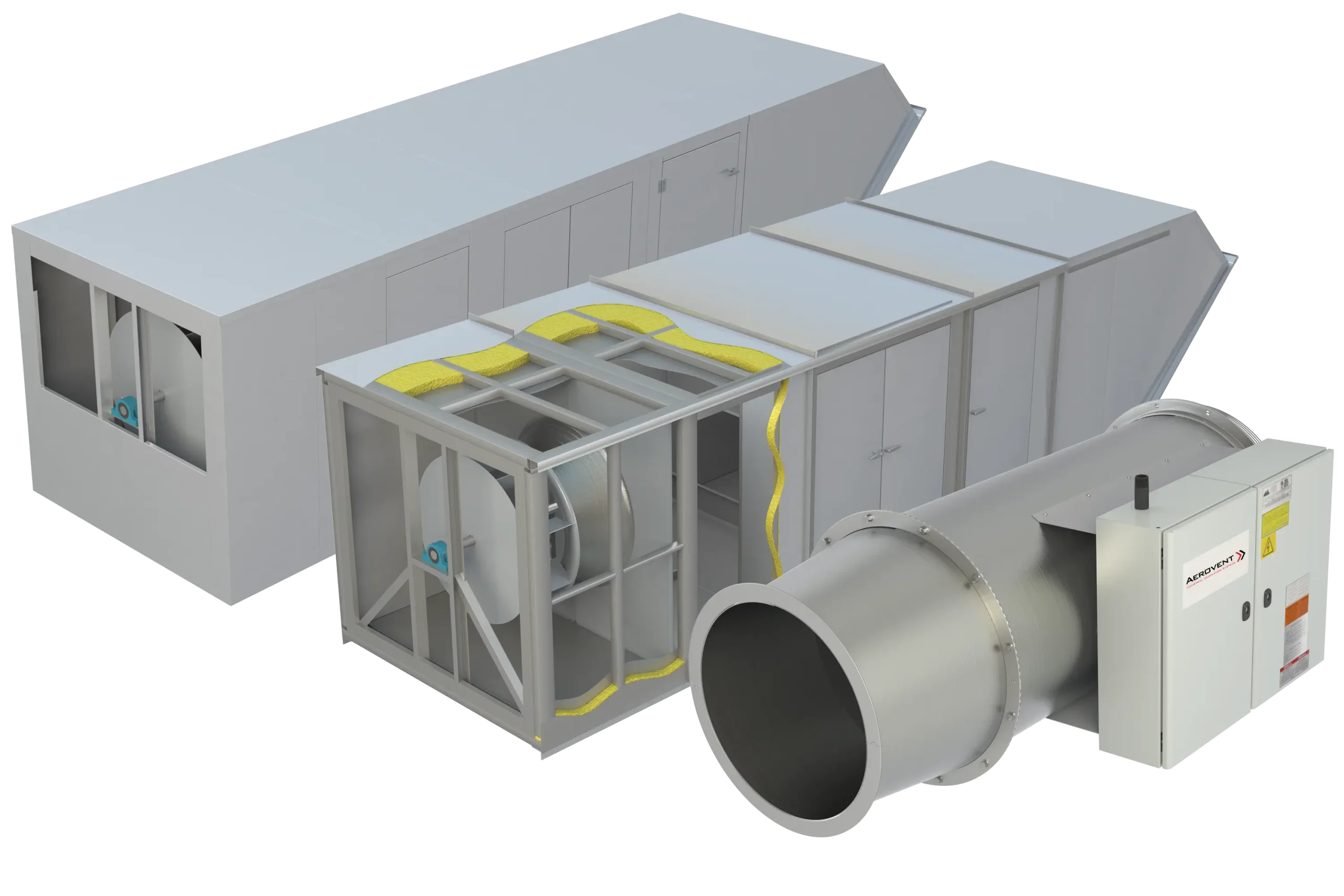



Precision in airflow management is the dividing line between a high-performance climate control system and one that suffers from chronic inefficiency. The register box, often viewed merely as a connector, serves as the critical transition point where conditioned air decelerates and expands before entering the occupied space. Selecting the correct hvac register box sizes is not simply a matter of structural fitment; it is a calculated engineering decision that governs static pressure, velocity control, and acoustic performance. When dimensions are mismatched, the system experiences unnecessary resistance, forcing air moving equipment, such as axial fans, to operate outside their optimal efficiency curves.
The geometry of the register box dictates how effectively air transitions from the branch duct to the terminal device. An undersized box creates a bottleneck, causing a spike in velocity that manifests as objectionable noise and turbulence. This disruption compromises the intent of high-quality grilles and registers, rendering even the most silent diffusers noisy due to upstream velocity pressure. Conversely, a box that is correctly dimensioned acts as a plenum, balancing the airflow and allowing for a smooth, even discharge. This balance is essential for maintaining consistent thermal comfort and ensuring that supply grilles deliver air with the intended throw and spread patterns without creating drafts or stagnant zones.
Navigating the physical limitations of a building requires a thorough understanding of dimensional standards. Ceiling assemblies and wall cavities impose strict depth and width constraints, requiring designers to select boxes that fit within framing while maintaining adequate free area for airflow. Furthermore, technical calculations must account for internal lining. Insulation is vital for thermal retention and sound damping, yet it reduces the internal volume of the box. Failing to account for this reduction when selecting air duct boxes can lead to choked flow and increased energy consumption. Proper sizing ensures that rectangular duct and fittings integrate seamlessly, preserving the integrity of the building envelope.
Adhering to industry-standard dimensions facilitates long-term system maintainability and component compatibility. Whether the application requires heavy-duty steel registers or lightweight aluminum ceiling grilles, using standardized box sizes ensures that future replacements or upgrades can be performed without invasive ductwork modification. It also guarantees a tight seal at the connection points, which is critical for minimizing air leakage. As designers connect the main trunk to the outlets using various HVAC duct fittings, the register box acts as the final anchor for system efficiency. The following guide provides the necessary dimensional data to match register boxes to your specific air ducts and application requirements, ensuring a balanced and professional installation.
Proper selection of HVAC register box sizes is a fundamental engineering requirement for achieving optimal air distribution and system efficiency. The following takeaways outline the critical parameters for dimensioning and selection to ensure balanced airflow and thermal comfort.
Understanding the technical relationship between register box dimensions and system performance is the first step toward a balanced HVAC design. The following sections provide detailed dimensional charts and installation protocols to guide your selection process.
The functionality of an HVAC system is defined not merely by the capacity of the heating or cooling plant, but by the efficiency of its air distribution network. At the terminus of this network lies the register box, often referred to as a boot or plenum. While frequently treated as a simple connector between the branch duct and the grille, the register box plays a critical role in fluid dynamics. It acts as a localized deceleration chamber where the high-velocity air stream from the ductwork is expanded, slowed, and prepared for diffusion into the occupied space. Understanding the physics governing hvac register box sizes is paramount for maintaining system equilibrium, ensuring thermal comfort, and minimizing acoustic disruption.
When air travels through a duct, it possesses both velocity pressure ($P_v$) and static pressure ($P_s$). According to Bernoulli’s principle, as the cross-sectional area of the conduit increases—as it should when transitioning from a round duct to a rectangular register box—the velocity of the air decreases, and a portion of that velocity pressure is converted back into static pressure. This conversion is essential. High velocity at the grille face is the primary antagonist of comfort, causing drafts and noise. The register box must have sufficient volume to allow this expansion to occur smoothly. If the box is undersized, the air does not have adequate dwell time to expand and decelerate. Consequently, the air strikes the vanes of the grilles and registers at near-duct velocity, creating excessive friction and turbulence.
The geometric volume of the register box dictates the aerodynamic profile of the exiting air. Engineers must view the register box as a static pressure regain device. In a properly dimensioned box, the air stream spreads to fill the entire face area of the register before passing through the vanes. This uniform distribution is vital for the effective performance of the diffuser.
Hidden Insight: The Acoustics of Volume
There is a direct, often overlooked relationship between register box dimensions and room acoustics. A register box does not just direct air; it acts as a sound attenuator. When a box is undersized, the air remains turbulent as it passes through the grille. This turbulence generates self-noise, measurable in Decibels (dB) and rated by Noise Criteria (NC). Furthermore, a larger box volume acts as a dissipative muffler for low-frequency fan noise traveling down the duct. By strictly minimizing the box size to save cost or space, installers inadvertently create a resonance chamber that amplifies high-frequency “hissing” caused by air shearing against the metal collar and grille fins.
Conversely, an oversized box can lead to velocity drops so severe that the air lacks the momentum to “throw” properly into the room, resulting in stratification where hot air stays at the ceiling or cold air dumps immediately to the floor. The balance lies in adhering to Manual T protocols, ensuring the face velocity remains within the design parameters for the specific throw required.
The resistance offered by the register box contributes to the Total External Static Pressure (TESP) of the system. While a single restrictive register box may seem negligible, the cumulative effect of undersized boxes across an entire residence or commercial zone can be catastrophic for the air handler. This is particularly true for modern systems utilizing axial fans or ECM (Electronically Commutated Motor) blowers. These variable-speed motors are designed to maintain constant airflow (CFM) regardless of pressure.
When register boxes are undersized, the static pressure at the supply outlet spikes. To overcome this restriction and deliver the requested CFM, the ECM blower ramps up its RPM. This results in significantly higher energy consumption and a shortened motor lifespan due to thermal stress. For standard PSC (Permanent Split Capacitor) motors, the result is simply a loss of airflow, leading to frozen evaporator coils or cracked heat exchangers. A properly designed register box system should impose a pressure drop of no more than 0.03" w.c. to 0.05" w.c.. Exceeding this threshold forces the system to operate outside its efficiency curve.
Standardization in register box sizing is driven by two factors: the physical constraints of structural framing and the standardized manufacturing of air terminal devices. However, “standard” does not imply “universal.” The selection of a box dimension must be an intentional engineering decision based on the CFM requirements of the specific zone, rather than merely fitting what is available on the truck.
Register boxes are generally classified by their “Nominal Face Size”—the dimensions of the opening where the grille attaches. It is crucial to distinguish this from the “Collar Size,” which is the diameter of the round connection point for the flexible or rigid duct. The industry has settled on several core dimensions to align with standard lumber framing intervals (16-inch or 24-inch on center).
Matching these sizes to the appropriate air ducts is a matter of calculating the cross-sectional area required to maintain velocity below noise thresholds. A 4×10 floor register, while common, is often pushed beyond its aerodynamic limits when paired with high-tonnage systems.
The transition from the round duct to the rectangular plenum is where the aspect ratio becomes critical. The aspect ratio is the relationship between the width and height of the duct. In rectangular duct and fittings, keeping the aspect ratio as close to 1:1 as possible is ideal for airflow efficiency. However, register boxes often force high aspect ratios (e.g., a 14×4 box has a 3.5:1 ratio). As the aspect ratio increases, friction losses increase because there is more surface area per unit of volume.
The collar size determines the volume of air delivered to the box. Standard collar sizes range from 4 inches to 12 inches. A common error is connecting a large collar (e.g., 8-inch, ~200 CFM) to a small face area box (e.g., 4×8), creating a “nozzle effect” that generates audible whistling. The table below outlines recommended pairings for different room types to maintain acoustic comfort.
| Room Application | Typical CFM Load | Recommended Collar Size | Recommended Box Face Size | Max Velocity (FPM) |
|---|---|---|---|---|
| Small Bathroom / Powder Room | 40 – 60 CFM | 5″ Round | 6″ x 6″ or 4″ x 8″ | 350 |
| Standard Bedroom (12×12) | 80 – 110 CFM | 7″ Round | 4″ x 12″ or 6″ x 10″ | 500 |
| Master Bedroom (15×18) | 140 – 180 CFM | 8″ Round | 6″ x 12″ or 8″ x 8″ | 600 |
| Living Room / Great Room | 200+ CFM (Multiple Vents) | 8″ or 9″ Round (per vent) | 6″ x 14″ or 10″ x 10″ | 650 |
| Commercial Corridor | 300+ CFM | 10″ – 12″ Round | 12″ x 12″ or 14″ x 14″ | 700 |
To scientifically size a register box, one cannot rely on the external dimensions alone. The crucial metric is the “Net Free Area” ($A_k$), which is the actual open area available for air passage after accounting for the metal frame, the grille louvers, and most importantly, internal insulation.
In many climate zones, and almost exclusively in commercial HVAC applications, register boxes are lined with acoustic or thermal insulation. This fiberglass or closed-cell foam liner is typically 0.5 to 1 inch thick. While necessary for preventing condensation and dampening noise, this lining significantly reduces the internal volume and cross-sectional area of the box.
Consider a standard 10×10 ceiling box. Externally, the area is 100 square inches. If lined with 1-inch insulation on all four sides, the internal dimension is reduced to 8×8.
Calculation: $8 \times 8 = 64$ square inches.
This represents a 36% reduction in available free area. If the HVAC designer calculates airflow based on the unlined dimensions, the velocity will increase proportionally to the area reduction, likely pushing the system significantly above the noise threshold. When selecting air duct boxes, engineers must specify whether dimensions are “inside” (clear ID) or “outside” (OD) to account for this liner loss.
Once the Net Free Area is established, the capacity of the box is determined by the maximum allowable face velocity. Manual D (Residential Duct Systems) and Manual T (Air Distribution) provide the governing physics here. For residential supply registers, the face velocity should generally be kept below 500 FPM (Feet Per Minute) to ensure the noise rating remains below NC-25.
Velocity also dictates “Throw”—the distance the air stream travels before its terminal velocity drops to 50 FPM. If the register box is too large for the volume of air supplied (e.g., 50 CFM into a 12×12 box), the velocity will be insufficient to mix the room air. This leads to “dumping,” where cool air simply falls out of the register. Conversely, high velocity caused by small boxes creates narrow, piercing air jets. To manage these variables, engineers utilize supply grilles (single/double deflection) which allow for the adjustment of spread and throw, compensating for minor sizing discrepancies, though they cannot correct severe fluid dynamic errors caused by grossly mis-sized boxes.
The theoretical sizing of a register box must eventually confront the reality of the building’s framing. Different installation locations—ceiling, wall, and floor—present unique structural challenges that influence box selection.
Ceiling installations are often the most flexible regarding size but are complicated by the direction of approach. In attic spaces, “ceiling boots” are available in straight-through, end-boot (90-degree), or angle-boot configurations. The challenge arises when ducts run perpendicular to the ceiling joists or truss chords. A 90-degree boot adds significant “equivalent length” (friction) to the duct run—often equivalent to adding 10 to 35 feet of straight pipe.
Furthermore, when installing heavy aluminum ceiling grilles or architectural linear diffusers, the register box must be securely fastened to framing members or auxiliary spanning bars (t-bars). A simple nail-up installation is often insufficient for heavier commercial-grade aluminum boxes, leading to sagging and air leakage around the drywall interface.
Sidewall registers are severely constrained by the depth of the wall cavity. In a 2×4 wall, the maximum depth of a stack head is roughly 3.25 inches. This creates a high-aspect-ratio rectangle that is aerodynamically inefficient. To deliver high CFM through a sidewall, the only option is to increase the height and width of the grille, often necessitating a transition boot that expands from the narrow wall stack to a wider grille face.
Floor registers face the additional requirement of structural rigidity. They are often placed in high-traffic areas. The register box (floor boot) must be secured to the subfloor with flanges to prevent it from being pushed down when stepped on. Additionally, because floor vents are susceptible to debris falling in, the transition from the boot to the ductwork should ideally include a slight offset or trap, though this is rarely feasible in tight crawlspaces.
Even a perfectly dimensioned register box will fail if installed incorrectly. The connection interface between the duct, the box, and the building envelope is a primary site for energy loss and system degradation.
The connection between the flexible or rigid duct and the register box collar must be airtight. Mechanical fasteners (screws/straps) provide physical support, but they do not seal air. The industry standard, pursuant to UL-181, requires the use of mastic sealant or approved foil tape. Fabric duct tape is strictly prohibited as it degrades over time due to thermal cycling.
Beyond sealing, the geometry of the approach is critical. Turbulent air entering a register box generates noise. To mitigate this, installers should utilize HVAC duct fittings properly and strive to maintain a minimum of one duct diameter’s length of straight duct before the air enters the box collar. This “straight run” allows the airflow to laminarize (straighten out) before it hits the expansion chamber of the box, significantly reducing the turbulence index and resulting decibel levels.
While much attention is given to supply registers, return air boxes perform a vital function in static pressure management. Return boxes generally require significantly larger dimensions than supply boxes. The goal for return air is to pull volume without creating suction noise or “singing” grilles. To achieve this, return velocity should be kept below 400 FPM.
Return boxes often house filter grilles. In these applications, the box depth must accommodate not only the duct transition but also the filter media and the grille mechanism. A shallow return box causes the filter to press against the duct opening, restricting airflow effectively to the size of the duct rather than the size of the grille. When selecting return grilles, the box size should be calculated to ensure the filter face velocity does not exceed the manufacturer’s rating (typically 300-400 FPM) to ensure efficient particulate capture and prevent filter bowing.
| Duct Diameter (Round) | Max CFM (Supply @ 0.08″ friction) | Max CFM (Return @ 0.05″ friction) | Typical Box Collar Application |
|---|---|---|---|
| 4 Inch | 40 CFM | 30 CFM | Small Bath / Toe Kick |
| 5 Inch | 65 CFM | 50 CFM | Bathroom / Walk-in Closet |
| 6 Inch | 100 CFM | 80 CFM | Standard Bedroom / Kitchen |
| 7 Inch | 150 CFM | 120 CFM | Master Bed / Dining |
| 8 Inch | 210 CFM | 170 CFM | Living Room / Large Master |
| 10 Inch | 380 CFM | 300 CFM | Central Return / Commercial Supply |
| 12 Inch | 600 CFM | 480 CFM | Main Return Air Drop |
Understanding the intricate physics of HVAC design reveals that the register box is far more than a simple metal connector. It is a sophisticated engineering component that dictates the transition from high-velocity transport to low-velocity diffusion. By mastering the dynamics of airflow and static pressure, homeowners and contractors can transform a standard heating and cooling system into a high-performance network that delivers consistent comfort. This conclusion summarizes the critical engineering principles discussed and reinforces the necessity of precision in selecting and installing these terminal devices.
The fundamental function of the register box is to act as a static pressure regain device. As we have explored, the transition from the duct to the room requires a controlled deceleration of air. If this expansion chamber is undersized, the physics of Bernoulli’s principle work against the system, maintaining high velocity that manifests as noise and drafts. Proper sizing allows velocity pressure to convert back into static pressure, ensuring that the air fills the face of the grilles and registers evenly. This equilibrium is the difference between a system that creates a gentle, invisible climate and one that intrudes on the living space with audible turbulence.
The implications of register box sizing extend backward through the ductwork to the heart of the system: the air handler. Modern systems equipped with variable-speed axial fans or ECM blowers are particularly sensitive to the high Total External Static Pressure (TESP) caused by restrictive terminals. When register boxes are treated as an afterthought, the cumulative restriction forces motors to operate near their limit, consuming excess energy and shortening their operational lifespan. Investing in properly calculated air duct boxes is effectively an insurance policy for your blower motor and heat exchanger, preventing premature failure due to thermal stress and airflow starvation.
A truly comfortable environment is defined as much by what you don’t hear as by what you feel. The acoustic profile of a room is directly tied to the geometry of the supply and return infrastructure. We have identified that undersized boxes create a “nozzle effect,” generating high-frequency noise that no amount of insulation can fully mask. By adhering to the recommended collar sizes and Net Free Area calculations—accounting for internal liners—designers can ensure that face velocities remain below the threshold of audibility. Whether utilizing standard stamped steel or architectural aluminum ceiling grilles, the goal is always to deliver air silently, maintaining the serene atmosphere of the occupied space.
Even the most accurately sized register box relies on flawless installation to function correctly. The connection between the rectangular duct and fittings and the boot collar must be airtight and mechanically sound. The use of mastic sealants and the implementation of straight duct runs prior to the collar are non-negotiable best practices for reducing turbulence and energy loss. Furthermore, the strategic sizing of return grilles and their associated boxes ensures that the system “breathes” as easily as it “exhales,” maintaining a balanced pressure throughout the building envelope.
As building codes become stricter and energy efficiency becomes a priority, the margin for error in HVAC design narrows. The days of “rule of thumb” sizing are over. Today’s high-efficiency systems demand a calculated approach where every component, from the HVAC duct fittings to the terminal boots, is selected based on precise load calculations and aerodynamic requirements.
The register box represents the final, critical mile in the journey of conditioned air. It is the interface where engineering meets human comfort. By prioritizing correct sizing, accounting for insulation loss, and respecting the physics of airflow, you ensure that your HVAC applications operate at peak efficiency. Do not underestimate the power of this component. A properly designed air distribution system minimizes noise, maximizes equipment life, and delivers the precise thermal comfort that modern living demands. Treat your register boxes with the engineering respect they deserve, and your HVAC system will reward you with years of reliable, silent performance.