Need Specifications or a Quote?
Share your ventilation project requirements and our engineers will reply within 12 hours with technical specs, pricing, and lead time.
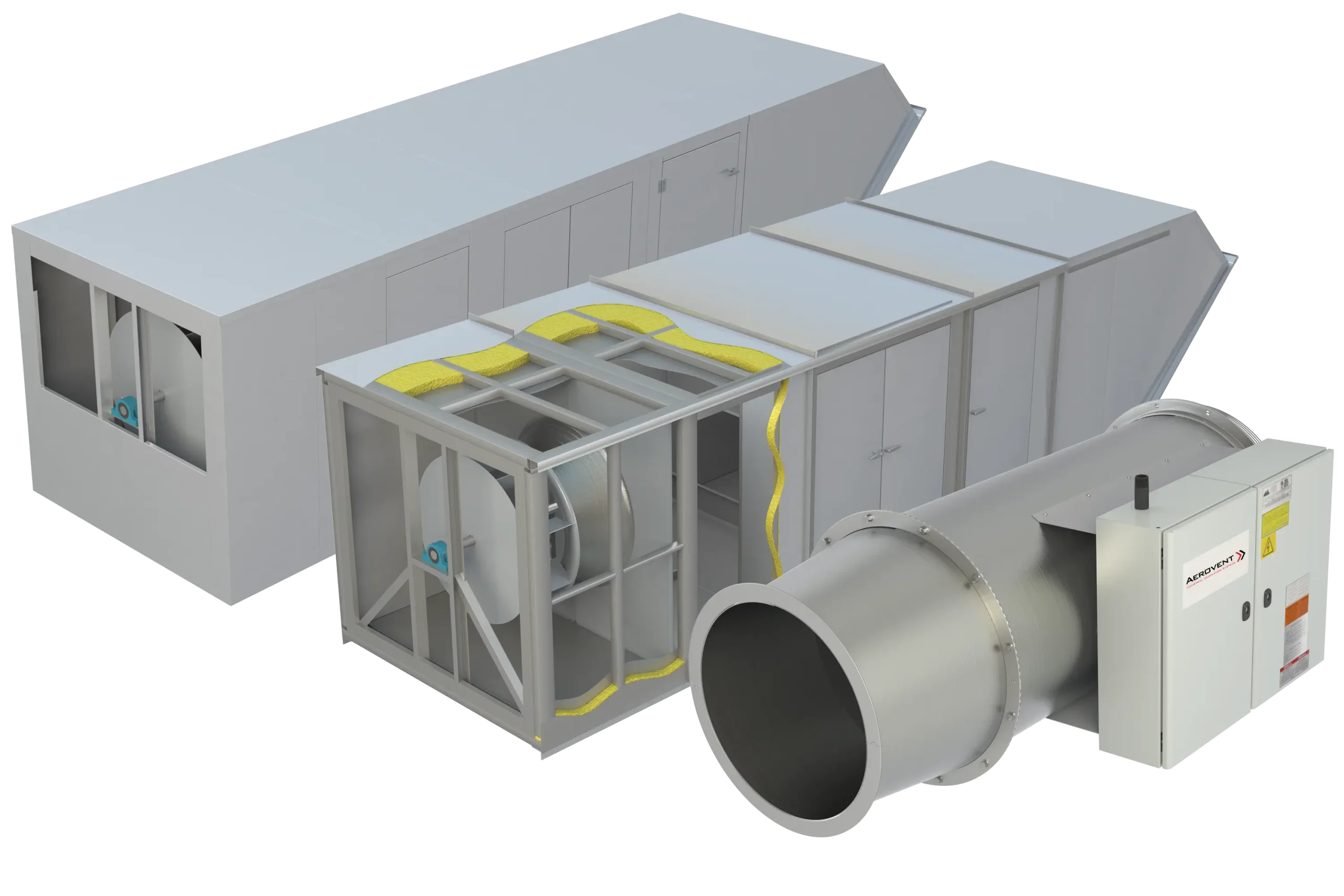



Air duct boxes might not be the first thing you think of when designing or upgrading an HVAC system, but their role is vital to achieving optimal air distribution, energy efficiency, and noise control. These seemingly simple components are the backbone of modern ductwork, ensuring that air flows seamlessly throughout your home or workplace while maintaining comfort and minimizing unwanted noise.
Choosing the right air duct box is critical to the overall performance of your system. From understanding the various types like register boxes and plenum boxes to selecting durable materials like galvanized steel or lightweight aluminum, each decision impacts efficiency and longevity. Beyond installation and sizing, addressing acoustic performance with quiet air duct box solutions can transform your spaces into tranquil, comfortable environments.
In this guide, we’ll explore the essential aspects of air duct boxes, from types and material considerations to installation tips and noise reduction strategies. With these insights, you’ll have the knowledge to upgrade or maintain an HVAC system that strikes the perfect balance between performance and comfort.
Air duct boxes are a crucial component of HVAC systems, ensuring proper air distribution, regulating noise, and enhancing system efficiency. This guide dives deep into their types, installation, material options, and noise reduction techniques to help you make informed decisions while maintaining optimal comfort in modern homes and buildings.
Understanding key aspects such as air duct box types, materials, and installation procedures helps optimize HVAC systems while addressing common concerns like noise reduction and durability. In the following sections, we’ll explore each area in depth, guiding you to achieve an ideal setup tailored to your needs.
An air duct box is a transition and distribution component that connects the main duct trunk to outlets such as supply registers, diffusers, or return grilles. In residential and commercial systems, these HVAC duct boxes are also referred to as register boxes, plenum boxes, or takeoff boxes. Their core function is to convert high-velocity, often turbulent air from the main duct into smoother, evenly distributed airflow at the room outlet.
Inside a typical air distribution system, air is conditioned in the air handler or rooftop unit and then pushed through main ducts, branch ducts, and finally to an air duct box feeding each room outlet. This last step is where many comfort and noise issues arise if the ductwork boxes are poorly sized or installed. A correctly designed box stabilizes pressure, reduces turbulence, and allows grille or diffuser blades to spread air evenly across the occupied zone.
In a simple residential example, a main trunk may run down a hallway ceiling with branch ducts tapping off to serve bedrooms. Each branch terminates at a metal register box installed between joists, into which a ceiling or wall register is screwed. In larger commercial systems, boxes may feed linear slot diffusers or high-capacity ceiling diffusers, sometimes integrating balancing dampers and acoustic lining.
Because the air duct box forms the interface between hidden ductwork and visible room outlets, it has a direct impact on comfort, air quality, noise levels, and even the visual appearance of the finished space. This makes it a critical component to address correctly during design, selection, and installation, which in turn must coordinate with the broader HVAC duct system basics such as pressure, velocity, and duct sizing.
With the function of the air duct box established, the next step is to examine why this component is so important for performance and reliability across residential and commercial HVAC systems.
The importance of properly designed HVAC duct boxes is often underestimated. Yet performance data and field experience show that poor box design or installation can reduce airflow by 10–30%, increase noise, and create uncomfortable temperature imbalances between rooms. Conversely, well-engineered ductwork boxes can significantly improve airflow efficiency, comfort, and energy savings.
From a system engineering standpoint, the air duct box serves three main performance roles: pressure management, airflow distribution, and noise control. First, the box provides a small reservoir of volume at the outlet, allowing static pressure to build slightly and create a stable flow pattern as air enters the grille or diffuser. Second, it helps redirect airflow from the branch duct alignment to the final outlet orientation (for example, side-fed boxes serving down-blowing ceiling registers) while minimizing turbulence and pressure drop. Third, the box can contain acoustic lining or be sized to reduce velocity and in turn noise, addressing one of the most common homeowner complaints about modern high-static equipment.
In a commercial case study, a 10,000 ft² office retrofit replaced undersized, shallow register boxes with deeper, properly sized galvanized steel ducting boxes and improved branching. The resulting pressure balance reduced fan energy consumption by 15%, and measured room-to-room temperature variation dropped from 4.5°F to 1.5°F. Over a year, this produced an estimated energy cost reduction of $8,000 while noticeably improving comfort complaints. Such examples demonstrate that relatively small components in the air distribution system can yield outsize benefits when designed properly.
Another key reason air duct boxes matter is their interaction with architectural constraints. Framing members, ceiling heights, and aesthetic requirements often dictate non-ideal duct runs. Thoughtful selection of box styles (straight, side-entry, end-entry, or offset) allows designers to navigate these constraints while preserving airflow efficiency. In tight joist bays, for instance, using a flat-oval branch combined with a carefully sized plenum box can reduce static loss compared to overly long, crushed flex duct runs. Products like flat oval duct and fittings or spiral duct and fittings pair particularly well with correctly matched box geometries.
Understanding these performance and design implications sets the stage for examining the different types of air duct boxes available and how each fits specific residential and commercial scenarios.
There are several primary categories of air duct boxes, each suited to specific duct configurations, ceiling types, and airflow objectives. Recognizing these types helps match the box to the architectural layout and performance requirements.
Supply register boxes are the most common type used in residential forced-air systems. They are typically rectangular or square boxes made from galvanized sheet metal with one or more side or top duct connections and an open face that accepts a register or diffuser. These HVAC duct boxes are installed in walls, floors, or ceilings and connected to branch ducts via round or oval takeoffs.
In residential installations, a typical supply air duct box may connect to a 6–8 inch round branch duct and serve a 4×10 inch or 6×12 inch register. In larger commercial systems, supply plenum boxes may serve multiple linear diffusers or larger face dimensions, with internal baffles or turning vanes to ensure even outlet distribution.
Where high performance and durability are required, pairing supply boxes with robust duct runs such as rectangular duct and fittings or double wall rectangular duct can help maintain consistent pressure and minimize leakage from equipment to register.
Return air duct boxes serve as collection points at the room or zone level. They generally have a larger face area relative to supply boxes to reduce air velocity and noise as air is drawn back into the system. Return boxes are commonly installed in ceilings or walls and fitted with return grilles.
A typical return installation may use a large, shallow box mounted between studs, feeding a return trunk via a top or side connection. When paired with quality grilles such as an aluminum or steel return grille, the box helps maintain a low face velocity, which reduces sound and prevents whistling. In high-end residential or open-plan office spaces, a properly sized return box can be the difference between a quiet background whoosh and an annoying, localized noise source.
Large central return boxes are also used to create a plenum effect in hallways or main rooms, especially where multiple return grilles tie into one return trunk. These ductwork boxes must be carefully sealed to prevent drawing in dust or unconditioned air from cavities, which can degrade indoor air quality and reduce system efficiency.
Commercial buildings often use plenum boxes to serve specialized diffusers, such as square ceiling diffusers, perforated diffusers, or linear slot diffusers. These plenum boxes may have multiple inlet connections and internal baffles to ensure a uniform distribution of air across the diffuser face.
For example, a high-end retail space with continuous linear diffuser slots may rely on a long, narrow plenum box running above the ceiling. The box must be designed to maintain low pressure loss while delivering uniform airflow along its length. Improper design can produce visible hot and cold streaks in the space and detectable drafts. Advanced plenum boxes sometimes incorporate internal acoustic lining to damp fan and duct noise before it reaches the occupied space.
Not all project constraints can be satisfied with standard catalog items. Custom HVAC duct boxes are frequently fabricated to address unusual framing, architectural features, or performance requirements. Custom metal fabrication allows for offset boxes, angled inlets, multiple outlet configurations, and integration of access doors or sound attenuators directly into the box body.
Complex projects might combine several functions, such as a custom transition box that converts from circular spiral duct to a rectangular slot diffuser plenum while also incorporating an internal balancing damper. Services such as custom metal fabrication enable engineers and contractors to optimize system layout without sacrificing airflow efficiency.
With the major types of air duct boxes defined, the next layer of performance comes from material selection, which impacts durability, leakage, noise, and overall lifecycle cost.
Material selection for an air duct box is a key design decision that affects structural integrity, corrosion resistance, acoustic performance, and compatibility with the rest of the duct system. The most common materials include galvanized steel, aluminum, and, in some light-duty cases, composite or fiberboard constructions. For high-performance commercial systems, steel-based galvanized steel ducting remains the dominant choice.
Galvanized steel is the standard material for commercial and many residential duct boxes due to its strength, durability, and compatibility with sheet metal duct systems. Galvanized coatings provide corrosion resistance, crucial in humid environments or where condensation may occur on cold duct surfaces.
Galvanized steel air duct boxes can be fabricated to high tolerances, easily integrate with spiral duct and fittings, rectangular runs, and transitions, and are suitable for both single-wall and double-wall constructions. When matched with a system using double wall rectangular duct, the box can also incorporate internal insulation to improve thermal and acoustic performance.
Aluminum boxes are sometimes used where weight is a primary concern, such as in certain suspended ceiling applications or retrofit projects with limited structural capacity. Aluminum offers good corrosion resistance and is easier to handle on-site, but it is usually more expensive than galvanized steel and may require additional stiffening to achieve the same rigidity in larger sizes.
In coastal environments or specialized applications such as pool dehumidification systems, aluminum or coated steels can offer improved longevity compared to standard galvanized finishes, especially when combined with strict condensate control and vapor barriers.
To improve both energy and acoustic performance, double-wall duct boxes incorporate an inner perforated metal liner, insulation layer, and outer metal shell. This design reduces breakout noise and heat loss or gain, which is especially beneficial in high-static commercial systems or noise-sensitive environments.
Double-wall construction is commonly specified for main trunks and plenums, but extending this approach to key air duct boxes (particularly those near noise-critical rooms) can yield noticeable improvements in perceived sound levels. When combined with double-wall duct runs like those provided in double wall rectangular duct, the system can maintain low noise while supporting high airflow rates.
| Material / Construction | Typical Use | Key Advantages | Considerations |
|---|---|---|---|
| Galvanized steel (single-wall) | Standard residential & commercial boxes | Strong, cost-effective, widely available | Requires external insulation where needed |
| Galvanized steel (double-wall) | High static, noise-sensitive spaces | Excellent acoustic & thermal performance | Higher cost and weight |
| Aluminum | Corrosive or weight-sensitive applications | Corrosion resistant, lightweight | Higher material cost, may need stiffening |
| Composite / fiberboard | Limited residential, low static | Low cost, some inherent insulation | Durability concerns, less suitable for commercial |
Selecting the optimal material and construction for each air duct box ensures compatibility with the broader duct system, which leads naturally into the question most homeowners and designers ask next: what size air duct box is required for a given room or outlet?
One of the most common technical questions is: “What size air duct box do I need for my room?” Sizing involves more than matching the box opening to the register. It requires understanding the required airflow in cubic feet per minute (CFM), acceptable velocity at the outlet, and the pressure capabilities of the system’s fan.
Airflow to a room is typically calculated based on heating and cooling load using standard HVAC design methods (e.g., ACCA Manual J/S for residences). Once the room’s load is known, the required CFM is derived by dividing the sensible capacity by the temperature difference and appropriate conversion factors. For simplified planning, designers may use rules of thumb, such as 1 CFM per square foot in many residential cooling applications, but accurate load calculations are strongly recommended for high-performance projects.
As an illustrative example, assume a 200 ft² bedroom requires 200 CFM of cooling airflow. The register and air duct box must be sized to deliver this volume at a comfortable noise level and with adequate throw to mix air across the occupied zone.
After establishing the target CFM, the next step is selecting an appropriate register size and corresponding box dimensions. Manufacturers provide performance data for registers and diffusers, including CFM ranges and static pressure at specific face velocities. Generally, lower face velocities (400–600 fpm) produce quieter operation than higher velocities (800+ fpm), especially in bedrooms or offices.
Continuing the previous example, delivering 200 CFM through a 4×10 inch register (0.28 ft²) yields a face velocity of about 714 fpm, which is acceptable in many living spaces but might be borderline for extremely quiet rooms. Upsizing to a 6×10 inch register (0.42 ft²) reduces face velocity to ~476 fpm, typically quieter and more comfortable. The air duct box behind the register should match this larger opening and provide enough depth (often 6–10 inches or more) to diffuse airflow from the round or oval branch connection.
Beyond face size, air duct box depth strongly influences airflow efficiency. Very shallow boxes can create uneven air distribution and higher static losses, especially when side connections are used. Deeper boxes allow the incoming jet of air to expand and redistribute before reaching the outlet, reducing turbulence and noise.
In practice, many designers target box depths equal to at least the diameter of the branch duct, and often 1.5–2 times that diameter for side-entry configurations. For a 6 inch round branch, this translates to a 6–12 inch deep box. Larger commercial plenums may be significantly deeper to support uniform diffuser performance.
| Room Type | Typical CFM Range | Common Register Size | Approximate Box Depth |
|---|---|---|---|
| Small bedroom (100–150 ft²) | 80–140 CFM | 4×10 or 4×12 | 6–8 in |
| Medium bedroom (150–250 ft²) | 140–250 CFM | 6×10 or 6×12 | 8–10 in |
| Living room (250–400 ft²) | 250–450 CFM per outlet | Two 6×10 or larger diffuser | 8–12 in |
| Office / conference room | 200–600 CFM per diffuser | Ceiling diffuser or slot diffuser | 10–16 in plenum depth |
These values are illustrative and must be adapted to specific system characteristics and manufacturer data. For deeper technical guidance on matching boxes to ducts and outlets, resources such as the Air Duct Box Guide: Types, Installation and Sizing and broader air distribution systems discussions provide context on duct design and sizing.
Correct sizing is a prerequisite, but field performance also depends heavily on how the air duct box is installed and integrated with duct routing and building structure.
Even a well-designed air duct box can underperform if installed incorrectly. Best practices cover physical placement, airtight sealing, structural support, and coordination with ceilings, walls, and finishes. Professional installers also pay attention to how boxes interact with branch ducts, transitions, and system balancing components.
Correct positioning begins with ensuring the box face aligns with the intended register or diffuser location and that the outlet orientation supports proper air throw into the room. Placing supply boxes too close to interior corners or obstructions can trap conditioned air and create dead zones or drafts.
For ceiling supplies, central locations or near-exterior-wall placements (depending on design strategy) typically yield more uniform air mixing. Return boxes are best placed away from doors where possible, to encourage circulation through the room rather than directly from door undercuts.
Air leakage at duct boxes is a frequent source of lost efficiency and comfort problems. Gaps around box edges, seams, and connections to branch ducts can leak conditioned air into ceiling or wall cavities. Over time, this may lead to higher utility bills and room imbalances.
Installers should use approved mastics, gaskets, and mechanical fasteners to secure and seal joints. External insulation should be continuous around the air duct box where it resides in unconditioned spaces, and transitions to insulated ducts (such as flat oval duct and fittings or spiral ducts) should not be left exposed. When ductwork is part of a highly efficient design, such as low-leakage commercial systems, these steps are essential to maintain specified performance.
Boxes must be securely fastened to framing members or suspension systems that can handle their weight, particularly for metal constructions and double-wall boxes. Loose or flex-supported boxes often lead to rattling noises and air leaks. Brackets, hangers, and framing should be designed to support the static load and minimize vibration transmission from fans and ducts.
In systems using high-performance fans, such as those served by axial fans, damping elements and flexible connections may be used upstream, but the box itself should remain rigidly mounted to building structure to avoid relative motion between box and finish materials.
Air duct box installation often intersects with electrical, plumbing, and architectural elements. Proper coordination avoids conflicts like recessed lighting cans occupying the same joist bay as supply boxes, or sprinkler piping interfering with plenum boxes for large diffusers.
On complex commercial projects, coordinated 3D models or detailed shop drawings ensure boxes and main duct runs (for example, those built from rectangular duct and fittings) fit within the ceiling plenum while maintaining service access. This integrated approach prevents last-minute field changes that could compromise airflow efficiency or noise performance.
With proper installation practices in place, the system can deliver its designed airflow and comfort. To preserve that performance over time, the air duct box also requires attention during routine maintenance.
While air duct boxes have no moving parts, they interact with airflows that carry dust, fibers, and moisture. Over years of operation, they can accumulate debris, develop leaks, or suffer corrosion, all of which reduce the effectiveness of the air distribution system.
For most residential systems, a visual inspection of accessible air duct boxes every 2–3 years is prudent, often in conjunction with broader duct inspections. Commercial systems with higher run times and filtration loads may warrant annual inspections, especially for return boxes and large plenums.
Key indicators include visible dust streaking around seams (signaling leakage), corrosion or rust spots on galvanized steel ducting, damaged insulation around or inside boxes, and loose or misaligned registers or grilles. When in doubt, a professional HVAC technician familiar with air duct maintenance best practices, such as those described in air duct maintenance tips, should evaluate the system.
Boxes serving returns are particularly prone to dust buildup, given they draw unfiltered room air. Excessive dust accumulation can restrict airflow or contribute to unpleasant odors. Cleaning typically involves removing the grille or register, vacuuming and wiping the interior surfaces, and verifying that no insulation or liner has deteriorated.
In supply boxes, debris is less common if filters are maintained, but renovation projects and construction can introduce dust and particles. Ensuring that supply registers are protected or removed during dusty work reduces the need for later cleaning. For sensitive applications like healthcare or clean manufacturing, periodic inspection of supply plenum cleanliness is crucial for air quality.
Small leaks at seams or connection points can be resealed with mastic or metal-backed tape. Where corrosion has penetrated the metal or compromised structural integrity, replacement of the affected air duct box is usually the most reliable solution.
In a commercial building case study, a 50,000 ft² facility experienced chronic negative pressure and poor return airflow. Investigation revealed that many older return boxes had rusted through at corners, drawing air from ceiling voids instead of from occupied spaces. Replacing these boxes with new galvanized steel units and sealing all joints restored return CFM, reduced fan energy use by 12%, and improved measured ventilation rates by 20%, directly supporting better indoor air quality.
Effective maintenance preserves the mechanical performance of air duct boxes, but increasingly, building owners are just as concerned about another dimension: acoustic comfort and the reduction of HVAC noise.
Noise from ductwork boxes and registers is one of the most frequent comfort complaints in homes and offices. Air rushing through undersized boxes, whistling at grilles, or transmitting fan noise can undermine the perceived quality of an otherwise well-performing HVAC system. Modern expectations for quiet indoor environments—especially in bedrooms, conference rooms, and media spaces—make acoustic treatment a central design consideration.
Noise associated with air duct boxes generally arises from three mechanisms: airflow turbulence, velocity-induced noise at the grille or diffuser, and breakout or transmitted mechanical noise from upstream equipment. Turbulence occurs when air changes direction abruptly, passes through constrictions, or encounters rough surfaces or misaligned joints. High velocities increase both turbulence and the sound pressure level at outlets, while mechanical noise rides along duct walls into boxes and radiates into rooms.
Undersized boxes, sharp transitions, and unbalanced systems exacerbate these problems. For instance, a side-entry box with a very shallow depth may direct a high-velocity jet directly at the register, producing audible hissing or roaring, especially when the system ramps up to full capacity.
Several proven strategies can significantly reduce noise from air duct boxes and improve overall acoustic comfort:
Consider a high-end residence where homeowners reported objectionable noise from ceiling registers in bedrooms, particularly at night. The existing system used small, shallow supply boxes serving undersized registers from a high-static variable-speed air handler. Measurements showed register face velocities near 900 fpm and dynamic pressure fluctuations as the system modulated.
The remediation involved three key changes: upsizing each register and corresponding air duct box, increasing box depth to at least 1.5 duct diameters, and adding short sections of internally lined duct near the air handler. After modifications, measured face velocities dropped to around 500 fpm, and sound levels in bedrooms decreased by 6–8 dBA. Subjectively, homeowners described the HVAC noise as “barely noticeable,” and the system could now operate at higher fan speeds without disturbing sleep.
Such results demonstrate how careful attention to airflow efficiency and acoustic treatment at the box level can transform occupant perception of the entire HVAC system. These improvements also align with broader trends toward high-efficiency, low-noise, and sustainable building solutions.
Beyond comfort and noise, air duct boxes influence the energy efficiency of the overall air distribution system. Every pressure drop through a box, elbow, or grille requires additional fan power to overcome. Over the life of a building, these incremental energy costs can be substantial.
Designers strive to minimize unnecessary pressure losses by using appropriately sized boxes, avoiding abrupt transitions, and coordinating with duct routing that favors smooth, short paths. For example, using a well-designed transition from a main rectangular duct to a box that serves a diffuser can save several tenths of an inch of static pressure compared to a crude, undersized connection. In high-volume systems, such differences can reduce fan horsepower requirements and enable smaller or more efficient fans.
Pairing efficiently laid-out duct systems—such as those using spiral duct and fittings—with correctly matched boxes and outlets contributes to a low-total-static design. This can lower fan energy by 10–20% compared to poorly configured systems, according to both modeling studies and field data from energy retrofits.
Balanced airflow through all air duct boxes is essential not only for comfort but also for efficient operation. Overcooling or overheating some rooms while others are starved forces longer runtimes and more frequent cycling of equipment. Strategically placed balancing dampers, often located in branch ducts near boxes, allow fine-tuning of airflow to each zone.
Properly sized and balanced boxes are particularly important in systems that use advanced controls, such as variable-speed fans or zoned thermostats. Incompatible box sizing or poor layout can interfere with pressure-dependent zoning strategies, causing unintended airflow shifts when some zones close. Ensuring that each ductwork box is compatible with these control schemes supports stable, efficient operation.
In a mid-rise office building retrofit, engineers observed that several perimeter zones were consistently under-conditioned despite the air handling unit operating at high fan speed. Field testing revealed significant pressure losses in poorly configured plenum boxes feeding long slot diffusers. By redesigning the boxes with improved geometry, increasing their volume, and revising branch duct transitions using new rectangular duct and fittings, the system static requirement was reduced by 0.3 in. w.g. This allowed the fan to operate at a lower speed while still meeting design airflow, cutting fan energy by approximately 18% and eliminating chronic hot/cold complaints along the perimeter.
With airflow efficiency, noise, and energy performance addressed, many designers now look ahead to long-term trends in materials, fabrication, and sustainability, ensuring that the next generation of air duct boxes supports greener, quieter, and healthier buildings.
The design and fabrication of air duct boxes is evolving alongside broader HVAC and building technology trends. Improvements in digital modeling, custom metalwork, and performance standards allow more precise tuning of boxes to specific applications, from net-zero energy homes to acoustically critical venues.
Building information modeling (BIM) and computational fluid dynamics (CFD) enable engineers to analyze airflow patterns, pressure drops, and noise propagation through duct systems, including detailed behavior inside plenum boxes and diffusers. Insights from these models allow for optimization of box shapes, inlet locations, and internal baffles long before fabrication.
On the fabrication side, automated cutting and forming technologies allow manufacturers to quickly produce customized air duct boxes with tight dimensional control. Contractors can coordinate closely with manufacturers or suppliers—leveraging resources like custom metal fabrication services—to obtain boxes that fit precise architectural and performance needs rather than forcing generic components into constrained spaces.
Sustainability considerations are also shaping air duct box design. Using highly durable galvanized steel ducting, right-sized to actual airflow requirements, reduces material usage and waste. Tight construction and low-leakage designs reduce fan energy and support building energy codes that increasingly target duct leakage and overall system efficiency.
Some projects pursue environmental certifications that reward improved indoor air quality and acoustic comfort, both directly influenced by air duct box design. Selecting boxes with low-emitting internal liners, ensuring their cleanliness, and maintaining performance over time align with these goals.
As occupants spend more time in indoor environments—whether working from home, collaborating in shared offices, or recovering in healthcare facilities—expectations around acoustic comfort and air quality are rising. Air duct boxes adapted with acoustic treatment, careful sizing, and integration with high-performance air distribution systems support these expectations by enabling quiet, consistent airflow.
Flexibility is another emerging theme. Spaces designed for change—co-working offices, adaptive reuse buildings, or modular homes—benefit from duct boxes that can be reconfigured or adapted to new layouts with minimal disruption. Using standardized connection dimensions, modular plenum configurations, and versatile products available through platforms like the BromingHVAC shop helps designers accommodate future changes in occupancy patterns.
By integrating these trends with foundational best practices—proper sizing, material selection, installation quality, maintenance, and acoustic control—homeowners, builders, and HVAC professionals can ensure that each air duct box contributes positively to comfort, efficiency, and long-term building performance. For comprehensive planning and component selection, exploring the full range of BromingHVAC resources and product offerings provides a practical path from design concepts to reliable, real-world installations.“`markdown
The journey through the intricacies of air duct boxes has illuminated their pivotal role in modern HVAC systems—both as critical air distribution components and as contributors to overall efficiency, comfort, and sustainability. From their fundamental purpose of transitioning air from ductwork to outlets to more nuanced factors like noise reduction, material selection, and advanced customization, air duct boxes are indispensable in ensuring optimal performance in both residential and commercial systems.
First and foremost, air duct boxes are essential for achieving consistent comfort by ensuring reliable airflow to each conditioned space. Properly designed boxes help stabilize pressure, reduce turbulence, and distribute air evenly across room outlets. These features not only enhance indoor air quality but also mitigate common problems like temperature imbalances and unwanted HVAC noise.
The material construction of duct boxes also impacts durability, energy efficiency, and acoustic comfort. High-performing options, such as galvanized steel and double-wall configurations, stand out for their longevity, resistance to corrosion, and ability to suppress system noise. Additionally, the integration of advanced features like insulating liners can further enhance thermal and acoustic efficiency.
Beyond design, the installation of air duct boxes plays a decisive role in achieving the intended performance. Proper positioning, airtight sealing, and structural support ensure that they contribute positively to airflow efficiency and long-term reliability. Neglect in any of these areas can lead to issues such as air leakage, heightened noise levels, and reduced system effectiveness.
An often-underrated impact of air duct boxes is their contribution to energy efficiency. Well-engineered solutions can lower pressure drops and improve airflow distribution, reducing the load on HVAC fans and consequently cutting energy consumption. Over time, these benefits translate into lower utility bills and a smaller carbon footprint, aligning HVAC systems with modern energy standards and sustainability goals.
Furthermore, the use of recyclable materials like galvanized steel and the shift toward modular, low-leakage box designs reflect growing trends in sustainable construction. Duct boxes optimized for energy efficiency and durability support certifications such as LEED by contributing to the overall energy performance and sustainability profile of the building.
Looking ahead, customization and innovation in air duct box design will play a crucial role in meeting the demands of evolving building environments. Tools like Building Information Modeling (BIM) and custom metal fabrication services allow for precise adaptation of duct boxes to architectural constraints and performance needs. In dynamic spaces such as co-working offices and adaptive reuse buildings, flexible configurations and modular ducting solutions ensure that systems remain functional and efficient, even as layouts change.
Moreover, insights from computational analysis are helping HVAC professionals create quieter, more efficient, and better-performing systems. By pairing advanced modeling with high-quality products like double-wall rectangular duct and acoustically optimized boxes, designers can deliver systems that blend seamlessly with occupant expectations for comfort and aesthetic harmony.
For both homeowners looking to improve comfort and efficiency and contractors managing complex commercial installations, the right air duct boxes are a game-changer. Balancing precise airflow calculations, noise mitigation strategies, and material selection can result in significant enhancements in comfort, system longevity, and energy savings.
Whether you’re pursuing a high-performance retrofit or planning a state-of-the-art HVAC design, leveraging resources like the Air Duct Box Guide and exploring quality offerings like those from the BromingHVAC shop can streamline the process. From custom metal fabrication to durable ducting solutions, BromingHVAC provides practical tools to bring innovations from the drawing board into real-world applications.
Air duct boxes may be small components within an HVAC system, but their impact can’t be overstated. By paying attention to their design, installation, and maintenance, professionals and homeowners can achieve the perfect balance of efficiency, comfort, and sustainability. As HVAC systems continue to evolve with new materials, advanced modeling tools, and energy-conscious designs, air duct boxes will remain central to creating healthier, quieter, and more efficient indoor environments.
Explore the possibilities with BromingHVAC’s comprehensive resources, and take the next step in optimizing air distribution systems for lasting performance and comfort.