Need Specifications or a Quote?
Share your ventilation project requirements and our engineers will reply within 12 hours with technical specs, pricing, and lead time.


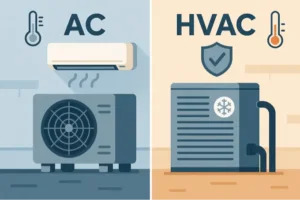
Did you know the choice between AC and HVAC systems can significantly impact your home’s comfort, efficiency, and overall cost? For homeowners seeking the best climate control solution, understanding the differences between air conditioning systems and HVAC systems isn’t just helpful—it’s essential.
Whether you’re debating which is better, AC or HVAC, or weighing the long-term benefits for year-round use, knowing the distinctions can save you money and ensure tailored comfort for your climate. From cooling-only setups to comprehensive heating and ventilation options, the right decision depends on your home’s needs.
This article explores the advantages of HVAC systems versus standalone AC units, including functionality, cost considerations, and energy efficiency. With clear insights, you’ll learn how these systems compare and which option aligns with your lifestyle and location.
Ready to uncover the ultimate home cooling and heating solution? Dive in as we analyze AC vs HVAC systems to help you make a confident, informed choice for your space.
Choosing between AC and HVAC systems depends on your home’s climate, energy needs, and budget. Here are the essential takeaways to guide your decision-making process:
By weighing these factors, you can determine the optimal system for your home’s specific needs and climate. Let’s delve deeper into the detailed comparison between AC and HVAC systems.
Choosing between a standalone air conditioning (AC) unit and a full HVAC (heating, ventilation, and air conditioning) system is a design decision that affects comfort, energy use, and long-term operating cost. Homeowners typically see this as an equipment purchase, but from an engineering perspective it is a question of load profiles, climate, duct strategy, and lifecycle cost.
This article examines AC vs HVAC using the same criteria HVAC engineers apply on residential and light commercial projects: capacity, efficiency metrics, installation constraints, maintenance, and expected service life. The aim is to provide enough technical clarity for you to answer a central question: which is better AC or HVAC? for your specific home and climate, rather than in the abstract.
We will reference common performance indicators such as SEER (Seasonal Energy Efficiency Ratio), EER (Energy Efficiency Ratio), AFUE (Annual Fuel Utilization Efficiency), BTU capacity, and typical failure modes. The goal is not to promote one technology, but to align each option with the situations where it performs best as a home cooling solution or a full climate control system.
A standalone air conditioner is designed primarily for cooling. It removes heat and moisture from indoor air and rejects that heat outdoors via a vapor-compression refrigeration cycle. Typical residential AC types include:
In all cases, the AC’s function is to lower indoor temperature and humidity. Any heating or ventilation is provided by separate systems, such as a gas furnace, electric resistance heaters, or natural ventilation through windows. From a control standpoint, AC delivers seasonal functionality: it is used during the cooling season and largely idle during winter in heating-dominated climates.
An HVAC system integrates three functions into one coordinated package:
Most residential HVAC systems are ducted central air systems. A single air handler moves conditioned air through supply ducts and returns it through grille and filter assemblies. Components such as rectangular duct systems for improved access and airflow and appropriately sized supply and return grilles enable multi-room distribution and balancing.
HVAC systems are designed for year-round operation: the same ductwork, blower, and controls provide both winter heating and summer cooling, with ventilation layered on top via outside air intakes or dedicated exhaust systems.
To compare AC vs HVAC, several technical parameters are common to both:
These fundamentals set the stage for more detailed comparisons in terms of components, performance metrics, trade-offs, and real-world applications.
Typical residential AC systems share the same core refrigeration components:
In ductless systems, the indoor unit combines the evaporator, blower, and air distribution into one enclosure. Window units integrate all components into a single box installed through an opening in the wall or window.
HVAC systems include all AC components plus additional assemblies for heating and ventilation:
Because an HVAC system is more integrated, failures in shared components (e.g., blower motor, control board) can affect both heating and cooling capability, whereas standalone AC failures usually only affect summer comfort.
Performance ratings are central to comparing AC vs HVAC. The main metrics include:
| Metric | Applies To | Typical Residential Range | Implication |
|---|---|---|---|
| SEER | AC, Heat Pumps (cooling) | 14–22+ | Higher SEER reduces kWh per BTU of cooling over the season. |
| EER | AC, Heat Pumps (cooling) | 10–14 | Indicates efficiency at peak load; relevant in hot climates. |
| AFUE | Furnaces | 80–98% | Higher AFUE means less fuel wasted as flue losses. |
| HSPF | Heat Pumps (heating) | 8–12+ | Higher HSPF lowers electric consumption in heating season. |
Energy STAR and many local building codes set minimum efficiency thresholds. When comparing equipment, it is practical to model annual energy consumption using SEER/AFUE and local degree-days to estimate operating cost differences between system options.
Standalone AC generally has a lower initial cost because it only addresses cooling. Typical scenarios include:
HVAC systems require higher capital expenditure because they incorporate multiple functions and, for new construction or major renovations, may involve full duct system installation. However, they provide centralized heating, cooling, and ventilation with a single control interface and often improved distribution.
The cost-benefit trade-off usually depends on whether you already have a reliable heating system and whether ventilation needs can be met without upgrading to a full HVAC solution.
Total cost of ownership includes more than just purchase price. It covers expected life, maintenance frequency, and replacement costs:
With quality components and proper maintenance, central AC and HVAC systems often have comparable life expectancy (typically 12–20 years for compressors and air handlers, 15–25 years for furnaces). The decision then turns on whether integrated controls and ductwork provide better long-term performance than multiple standalone units.
From an efficiency standpoint, central HVAC and central AC use similar technologies. The difference comes from how they are applied:
To evaluate “which is better AC or HVAC?” in your application, estimate:
This data can be used to compute approximate annual energy use in kWh and therms or gallons, then converted into operating cost. In many mixed climates, upgrading to an efficient HVAC heat pump system can reduce heating energy use enough to offset higher initial cost within a reasonable payback period.
Climate is often the dominant factor in deciding between AC and HVAC:
For example, in a coastal region with moderate temperatures, a ductless AC system may be adequate and more economical. In contrast, in a northern climate with long, cold winters and warm summers, the incremental cost of HVAC over standalone AC frequently pays back through reduced heating fuel or electric consumption.
Building geometry and layout also influence the choice of climate control systems:
For large homes, multiple smaller HVAC zones or multiple ductless systems may be used to avoid over-conditioning seldom-used areas. Poorly designed or leaking ducts, on the other hand, can erode the efficiency advantage of central HVAC, which leads into design and installation considerations.
Whether selecting AC or a full HVAC system, proper sizing is critical. Oversizing and undersizing both create problems:
Manual J load calculations account for factors such as envelope insulation, window area and orientation, internal loads, infiltration, and climate data. The outcome is peak sensible and latent loads in BTU/h. This load is then matched to equipment capacity with allowance for safety margins, duct losses, and system characteristics.
For homeowners, insisting on a load calculation rather than rule-of-thumb sizing (e.g., “X tons per square foot”) is one of the most effective ways to ensure the selected AC or HVAC system operates efficiently and reliably.
System configuration significantly affects both capital cost and performance:
Choice between ducted AC vs ducted HVAC is often influenced by existing infrastructure. If a furnace and duct system are already installed, upgrading to a central AC coil and condenser or a heat pump-based HVAC unit can be straightforward. In homes without ducts, the cost of adding them may tilt the decision toward ductless solutions.
Even efficient equipment underperforms when the supporting systems are neglected. Key practices to maintain performance include:
Engineered ventilation strategies, such as dedicated outdoor air intakes and properly sized smoke or fire dampers, also contribute to overall system performance and safety, though they raise initial design complexity.
Integrated HVAC systems introduce specific failure modes that homeowners and technicians should be aware of:
Because HVAC systems share components across heating and cooling functions, a blower or control board failure can take the entire system offline, which is different from a home with separate standalone heating and cooling units where redundancy is higher.
Standalone AC systems have their own typical failure patterns:
For small window and portable units, failures often stem from neglected filter cleaning, condenser coil fouling, and installation gaps that allow infiltration and reduce net cooling effect.
While homeowners usually rely on licensed technicians, understanding basic diagnostic steps is helpful for early detection:
When commissioning new equipment—whether AC or HVAC—proper testing, balancing, and verification against design parameters ensures the system will deliver the modeled performance, not just the rated nameplate numbers.
Both AC and HVAC systems operate within a framework of standards and regulations designed to ensure safety, efficiency, and interoperability.
Understanding these standards helps frame the AC vs HVAC decision not only around comfort but also around long-term compliance and property value. For instance, modern codes may effectively discourage very low-efficiency standalone AC units in new construction, making higher-efficiency HVAC systems more attractive in the design phase.
There is no universal answer to “which is better AC or HVAC?” The optimal solution is project-specific and depends on climate, existing systems, building configuration, and budget.
In these situations, a high-SEER AC or ductless mini-split can provide efficient cooling with manageable capital cost and relatively straightforward maintenance.
In these conditions, a properly designed HVAC system—potentially using a high-efficiency heat pump or high-AFUE furnace paired with efficient cooling—can provide better year-round performance, comfort, and energy cost control than a patchwork of standalone units.
By treating the choice of AC vs HVAC as an engineering trade-off problem rather than a one-time equipment purchase, homeowners can align system selection with long-term comfort and cost objectives.
Accurate selection, sizing, and installation of AC or HVAC equipment are critical to achieving the performance outlined above. Professional design support can help translate your home’s specific constraints into a clear system recommendation.
If you are planning a new installation or replacement, you can learn about HVAC solutions for your home and review technical options and components suited to your application. For contractors and project teams handling procurement or upgrades, you can also shop residential HVAC components that align with engineered designs and local code requirements.
Contact us today to discuss your home’s load profile, existing infrastructure, and comfort goals so we can help you determine whether a standalone AC configuration or a fully integrated HVAC system is the better long-term choice for your project.
The decision between a standalone AC unit and a full HVAC system depends on a detailed evaluation of your home’s unique requirements, including climate, existing infrastructure, building layout, and budget. While standalone AC may suffice for smaller spaces in warmer climates with minimal heating needs, an integrated HVAC system provides year-round comfort, efficient energy use, and enhanced air quality in more demanding environments. Accurate system sizing, duct evaluation, and a thorough cost-benefit analysis are critical to ensure optimal performance. Engaging with an HVAC professional can help tailor the ideal solution for your specific application.