Need Specifications or a Quote?
Share your ventilation project requirements and our engineers will reply within 12 hours with technical specs, pricing, and lead time.
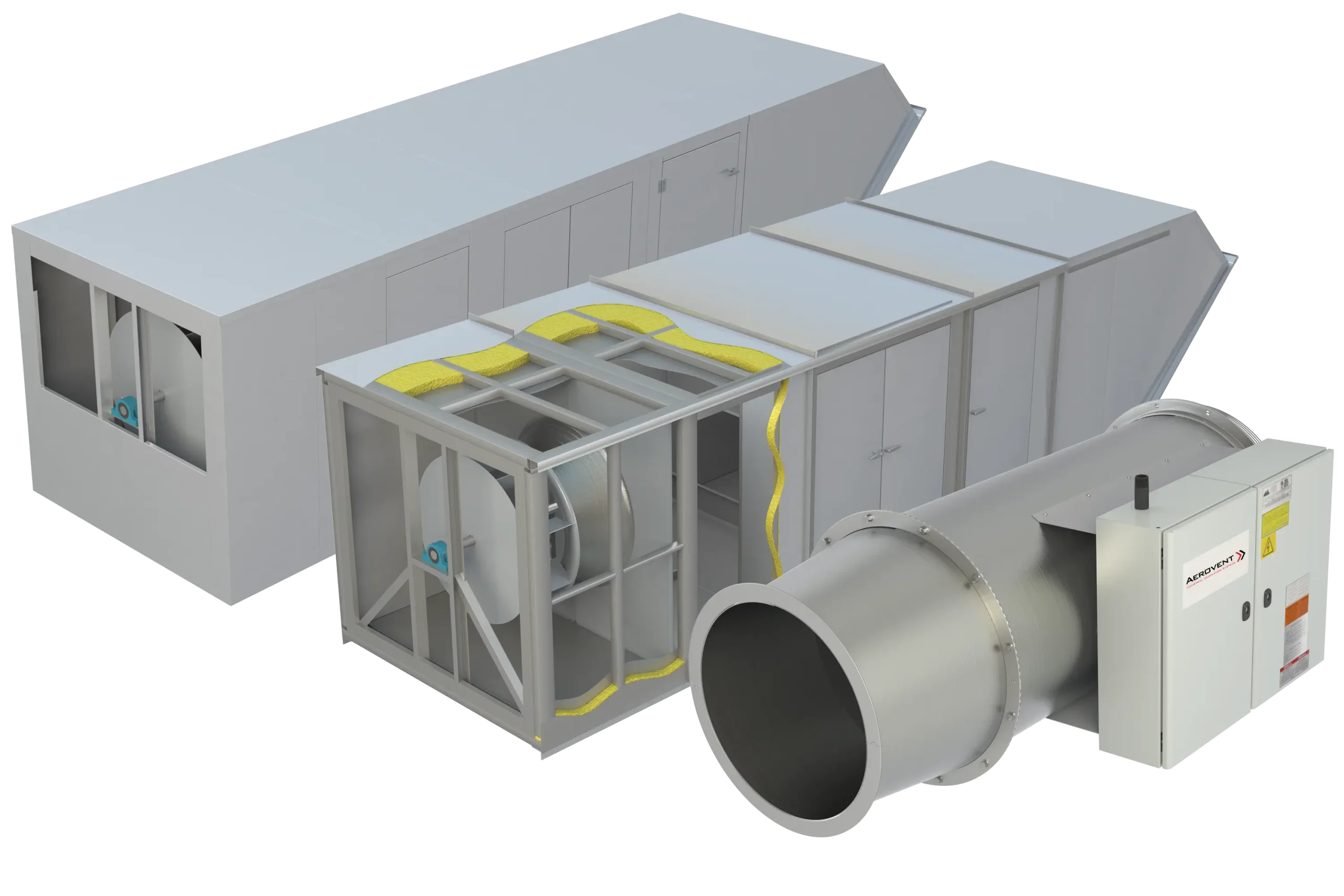



Rectangular ductwork is a cornerstone of modern HVAC systems, ensuring efficient air distribution in both residential and commercial spaces. Its unique design allows for precise customization, better space optimization, and cost-effective installation compared to alternative duct shapes. Understanding its benefits, design principles, and proper installation practices can significantly enhance system performance and longevity.
How can you make the most of this versatile duct option? Let’s delve into key insights and strategies, from sizing guidelines to installation tips, that will help you maximize your HVAC system’s efficiency.
Understanding **rectangular ductwork** is crucial for optimizing HVAC system design. These duct systems provide unique advantages such as space efficiency and easy maintenance, making them a preferred choice in commercial buildings. While many focus on specifications or basic installation, this article reveals hidden insights on cost-effectiveness and long-term performance benefits, ensuring informed decisions for HVAC projects.
Exploring the benefits and design principles of **rectangular ductwork** reveals its versatility and performance advantages for modern HVAC systems. In the upcoming sections, we delve deeper into **duct sizing guidelines**, installation methodologies, and comparisons with alternative duct shapes to help you make the best choices for your project.
Rectangular ductwork is a type of air distribution conduit with a four-sided, orthogonal cross-section, typically fabricated from sheet metal and used to convey supply, return, and exhaust air in commercial and institutional buildings. In most designs, rectangular ducts form the primary distribution network between central air-handling units and terminal devices, functioning as the backbone of modern HVAC supply systems.
Unlike round or oval ducts, which have circular or elliptical cross-sections, rectangular ducts are dimensioned by width and height. This geometry allows designers to vary one dimension independently to satisfy clearance and coordination constraints. For example, a duct may be flattened (increasing width, reducing height) to pass beneath a beam while maintaining the same cross-sectional area and airflow capacity. This flexibility is one of the core practical advantages of rectangular HVAC ducts in dense commercial environments.
In supply systems, rectangular ductwork commonly serves as the main trunk line from the air-handling unit, distributing air across a floor plate before transitioning to branches and terminals. On the return side, rectangular ducts are often used as large low-velocity trunks connected to ceiling plenums and return grilles. Exhaust systems for restrooms, kitchens, laboratories, and parking garages likewise rely on rectangular ducts where large volumes must be moved through constrained shafts or ceiling spaces.
Typical materials for rectangular HVAC ducts include galvanized steel (most common in commercial construction), stainless steel (for corrosive or hygienic applications such as hospitals and laboratories), and aluminum (for weight-sensitive or corrosion-prone environments). In some applications, especially where thermal performance is critical or condensation risk is high, contractors may use double-wall insulated panels or factory-insulated duct sections. Material selection is driven by a combination of code requirements, environmental conditions, cost, weight, and acoustic targets.
Compared with round and oval ducts, rectangular ductwork does exhibit a higher surface-to-area ratio for a given cross-sectional area, which can impact friction losses and heat transfer. However, in commercial buildings where ceiling plenums are congested with structure, sprinklers, lighting, and cable trays, rectangular ducts provide superior space utilization. The ability to align flat sides with ceilings and walls and to route ducts around beams and services frequently reduces the need for structural modifications or additional shaft space, which translates directly to project cost savings. This spatial efficiency naturally leads into an examination of the primary types and configurations used in rectangular duct systems.
Rectangular duct systems are typically organized into main trunks and branch ducts. The main trunk line is the primary distribution conduit, usually running along corridors or building cores. It handles higher airflows at carefully controlled velocities, often between 1200–2000 fpm (6–10 m/s) for supply. Branch ducts tap off the trunk and deliver air to specific zones or terminal units at lower flows and typically lower velocities, helping control noise and improving comfort.
From a construction standpoint, rectangular ductwork is commonly categorized into single-wall and double-wall configurations. Single-wall ducts consist of a single sheet-metal shell. Thermal and acoustic performance, when required, is provided by external insulation wraps. Single-wall ducts are widely used for general supply and return in conditioned interior spaces where noise and condensation risks are modest.
Double-wall rectangular ducts incorporate an outer metal shell, an inner perforated or solid liner, and insulation sandwiched between. These assemblies are selected when acoustic attenuation, condensation control, or protection of insulation from airflow is critical. They are prevalent near air-handling units, in mechanical rooms, or in high-humidity zones. Where noise control is a primary concern—such as conference rooms, theatres, and healthcare facilities—designers may specify internally lined ducts with acoustic insulation to reduce regenerated noise and breakout.
A complete rectangular duct system also depends heavily on the design and selection of duct fittings. Elbows, transitions, offsets, reducers, takeoffs, and boots determine how smoothly air can be redirected or redistributed. Poorly designed fittings with abrupt changes in direction or cross-section introduce turbulence, higher pressure drops, and noise. Conversely, well-designed fittings, such as radius elbows with turning vanes, tapered transitions, and aerodynamically shaped takeoffs, sustain lower friction losses and better air distribution.
Integrated product solutions such as rectangular duct and fittings enable consistent fabrication quality and predictable performance. When standardized fittings and ducts are combined with sound engineering methods, systems can achieve lower fan energy, improved balance, and reduced commissioning effort. These same configuration choices become particularly important when comparing rectangular ducts to other shapes in terms of system performance and lifecycle cost.
A technical rectangular vs round ductwork comparison must recognize that round ducts are inherently more aerodynamically efficient for a given cross-sectional area, due to lower perimeter-to-area ratios and smoother airflow patterns. However, that theoretical efficiency assumes unrestricted space and negligible coordination constraints—conditions that rarely exist in modern commercial buildings. In practice, rectangular ductwork delivers substantial advantages where space is limited or coordination complexity is high.
In congested ceiling plenums, the depth available for duct routing is frequently constrained by structural slab-to-slab heights, beams, fireproofing, and architectural ceiling elevations. Rectangular ducts can be dimensioned to a low profile by increasing width while decreasing height, preserving cross-sectional area and airflow. This capability is critical in office towers, mixed-use developments, and healthcare facilities, where mechanical, electrical, and plumbing trades must coexist in tight corridors and patient areas without increasing floor-to-floor heights.
Rectangular ductwork also aligns naturally with structural and architectural grids. Flat sides can be closely coordinated with beams, walls, and bulkheads, reducing unusable voids and allowing more ducts to be packed into a given shaft or plenum. Round ducts, by contrast, leave triangular void spaces around their circumference when placed against flat surfaces, leading to inefficient use of volume and potentially requiring additional shafts or dropped ceiling areas to accommodate equivalent airflow capacity.
In multi-trade coordination, rectangular ducts provide more predictable and planar envelope boundaries for clash detection and routing. For example, a 24 in x 10 in rectangular trunk can be routed above a corridor with sprinklers and lighting coordinated below, while cable trays may occupy space beside it. Adjusting height by a few inches can often avoid structural conflicts without re-sizing the entire system. With round ducts, a similar adjustment may require a complete re-evaluation of diameters and support systems, and still fail to meet clearance requirements.
From a cost perspective, while round ducts may offer a small reduction in metal weight and friction for equivalent capacity, rectangular ductwork often reduces structural and architectural modifications. Avoiding additional beams, dropped ceilings, or larger shafts can significantly lower construction cost. In dense commercial environments, these coordination-driven savings frequently outweigh the theoretical efficiency advantage of round ducts, leading to a lower total installed and lifecycle cost. This long-term cost-effectiveness is further reinforced by improved accessibility for maintenance, as discussed in later sections.
When properly designed, rectangular ductwork delivers strong performance benefits in HVAC systems, particularly in terms of controllable air distribution and system zoning. The orthogonal geometry lends itself to straightforward branching along corridors and open-floor layouts, enabling even distribution across large zones. Trunk lines can be laid out with consistent cross-sections and regularly spaced takeoffs, resulting in predictable static pressure profiles that simplify balancing.
Rectangular ducts also support flexible zoning strategies. Because branches can easily tap off any side of the trunk, designers can serve multiple orientations and room groupings from a single main. This is especially advantageous in office floors where interior and perimeter zones have different loads. Straight, continuous trunks with well-designed takeoffs help maintain stable static pressure, reducing the need for excessive balancing damper adjustments and minimizing noise from throttled terminals.
Concerns about higher friction losses and noise in rectangular ducts typically arise when aspect ratios exceed recommended limits (commonly above 4:1). High aspect ratios can promote non-uniform velocity profiles, increased turbulence, and panel vibration. These risks are mitigated by observing conservative aspect ratios, using adequate sheet-metal gauges and stiffeners, and employing smooth-radius elbows or turning vanes. The result is a rectangular system that operates with acceptable pressure drops and sound levels, while still delivering the coordination advantages previously described.
Downstream components such as return grilles and heavy-duty grilles play a crucial role in translating duct performance into occupant comfort. Strategically placed supply and return devices, correctly matched to duct sizes and velocities, maintain uniform temperatures and minimize drafts. For instance, aligning return grilles along major rectangular trunks helps promote consistent return paths and reduce short-circuiting between supply and return. Heavy-duty grilles are particularly suitable for high-traffic or vandal-prone areas, protecting the system while maintaining design airflow and pressure.
Energy efficiency is closely tied to how well rectangular duct systems are sized, sealed, and balanced. Well-executed rectangular ductwork with tight joints and properly designed fittings can achieve low leakage classes, reducing fan energy consumption and preventing uncontrolled losses into ceiling plenums or shafts. By controlling both friction losses and leakage, designers can often reduce required fan static pressure, yielding measurable energy savings over the building’s life.
A case study from a mid-rise office building illustrates these performance dynamics. By replacing an initial round-duct concept with optimized rectangular trunk lines and efficient rectangular duct and fittings, the design team improved space utilization enough to avoid adding a supplemental mechanical shaft. With careful attention to friction rates and leakage control, the final system achieved a 12% reduction in fan brake horsepower compared to the preliminary model and saved approximately $80,000 in construction costs associated with structural and architectural changes. These benefits are only realized when design guidelines are rigorously applied.
Accurate sizing of rectangular ductwork is fundamental to achieving target airflows, acceptable velocities, manageable pressure drops, and low noise. For supply systems, designers typically select velocity ranges for main trunks between 1200–2000 fpm (6–10 m/s), with lower velocities in branches and terminal runs to control noise and reduce dynamic losses. Return and exhaust ducts often operate at slightly lower velocities, especially when acoustics or particulate accumulation are concerns.
Effective rectangular duct sizing guidelines follow a structured process:
In practice, engineers often use digital tools or manufacturer-provided charts to convert airflow and friction criteria into width and height combinations. Because rectangular ducts allow multiple width/height pairs for the same area, designers must also consider maximum allowable duct height in the plenum, aspect ratio limits, and standard fabrication dimensions. Consulting resources from established HVAC supply systems providers helps ensure that selected dimensions align with commonly available sheet-metal standards and fittings.
Poorly sized rectangular ducts have tangible consequences. Undersized ducts lead to elevated velocities, excessive pressure drops, increased fan energy, and noise complaints. Oversized ducts consume valuable space, complicate coordination, and may cause low velocities that impair air mixing, leading to comfort issues and potential particulate settlement. Overly large return trunks, for example, can experience dust accumulation in low-velocity regions, driving up maintenance frequency.
From a lifecycle standpoint, correct sizing is closely linked to operating cost. A rectangular duct system designed with slightly lower friction rates and minimal leakage may require higher initial material quantities, but can reduce fan energy consumption by 10–20% over a 20-year horizon. These energy savings, combined with more stable comfort and fewer noise complaints, contribute to the long-term cost-effectiveness of rectangular ductwork in commercial buildings.
Beyond sizing, several interrelated factors influence overall rectangular duct design quality: trunk line layout, duct fittings, air velocities, installation constraints, and access provisions. Each determines how effectively the system will perform and how easily it can be installed and maintained.
Trunk lines should be routed along predictable, centralized paths, such as corridors, building cores, or structural bays, to minimize duct lengths and avoid unnecessary offsets. Long straight runs facilitate uniform pressure distribution and simplify support design. Where direction changes are required, radius elbows or elbows with properly designed turning vanes should be used to reduce turbulence. Tapping branches from the sides of trunks with conical or 45-degree takeoffs enhances flow uniformity and minimizes system effect losses.
Duct fittings are a primary source of additional pressure loss. Abrupt transitions, square elbows without vanes, and poorly proportioned offsets can significantly increase system resistance, negating sizing efforts made on straight sections. Selecting coordinated rectangular duct and fittings with known equivalent lengths allows designers to model pressure drops accurately and avoid oversizing fans. In high-performance systems, attention to fitting aerodynamics can yield measurable fan energy reductions.
Velocity optimization varies by segment. Higher velocities may be acceptable in main trunks to constrain duct size and material costs, while branches and terminal runs require lower velocities for acoustic control. The design must also consider potential future changes; trunk lines sized with modest spare capacity can accommodate tenant fit-outs or increased ventilation requirements without major modifications.
Layout and duct installation considerations are tightly intertwined with design. Minimizing sharp turns, avoiding unnecessary changes in duct size, and maintaining consistent elevations all reduce the risk of construction deviations that can impact performance. Strategic placement of heavy-duty grilles and return grilles is key to ensuring balanced air distribution. For example, distributing return grilles near major heat sources or occupancy densities helps stabilize room airflows and allows ducts to operate closer to their design conditions.
Access doors and inspection points must be integrated during the design phase, particularly at coils, dampers, and key junctions. Fire and smoke protection requirements further influence rectangular duct design. Where ducts penetrate fire-rated barriers or form part of smoke-control zones, listed fire/smoke dampers such as rectangular smoke dampers must be installed at prescribed locations and orientations. Ensuring adequate space for damper frames, actuator access, and future maintenance is an essential part of the design, not an afterthought. This attention to access and code compliance directly supports long-term system maintainability and cost control, which must also be reflected in installation practices.
Successful installation of rectangular ductwork starts well before the first section is lifted into place. A structured planning process is essential for anyone seeking to understand how to install rectangular HVAC ducts in a way that maintains design intent and minimizes rework. This process begins with reviewing coordinated drawings and BIM models to verify that duct routes, elevations, and sizes align with structural elements, other trades, and access requirements.
Material selection and fabrication planning follow. Installers determine appropriate sheet-metal gauges, reinforcement requirements, and joint types based on duct dimensions, static pressures, and applicable standards. In corrosive or demanding environments, stainless steel or aluminum may be required. For acoustically sensitive or high-humidity applications, double-wall or internally lined ducts are scheduled, with careful attention to maintaining clear internal dimensions and complying with insulation specifications.
Access provision planning is particularly important with rectangular ductwork, given its role in long-term cost-effectiveness. Installers must determine where to locate access panels for cleaning, inspection, and damper servicing. These are ideally positioned on flat duct faces that remain visible and reachable after ceilings and partitions are installed. Planning these locations up front minimizes later disruption when maintenance is required.
Installation sequencing typically begins with main trunk lines, followed by branches and connections to diffusers and grilles. Establishing the trunk line first provides a stable reference for elevations and alignments. Straightness and proper orientation reduce stresses at joints and minimize the risk of misalignment that could increase leakage or impede airflow. Using laser levels or total stations to set hangers and supports before duct lifting helps maintain tolerances and avoid cumulative errors along long runs.
Integration of life-safety components, such as rectangular smoke dampers, must also be planned at this stage. Installers coordinate with fire protection engineers to confirm damper locations at fire/smoke partitions and within smoke-control zones. Adequate clearances for damper frames, sleeves, and actuators, along with future access for testing and maintenance, are verified before fabrication. Good preparation reduces installation time, minimizes field modifications, and supports long-term system performance and serviceability.
During installation, attention to joint integrity, support conditions, and component placement determines whether the rectangular duct system will achieve its design performance. Sections are typically joined using flanged connections, S-cleats and drive slips, or proprietary connection systems. Regardless of method, achieving airtight seals is critical. Gaskets, sealants, and mastic must be applied in accordance with the specified leakage class; lower leakage classes (e.g., Class A) demand more rigorous sealing practices but yield significantly reduced fan energy and improved control.
Hanger spacing and support types must be selected to match duct size, weight, and operating conditions. Oversized rectangular ducts, particularly when lined or double-wall, can be substantially heavier than round equivalents. Structural supports should limit sagging and twisting, which can cause cracking at joints and misalignment of connected components. Vibration isolation may be required near air-handling units or equipment connections to prevent structure-borne noise and fatigue in duct joints.
Where code-mandated smoke control is present, installation of listed dampers such as smoke dampers with 3V blades must follow manufacturer instructions and relevant standards. Proper orientation, sleeve installation, breakaway connections, and access for testing are all essential. 3V blade dampers are commonly used where space is limited and pressure differentials must be contained without compromising leakage performance. Ensuring that these devices remain accessible after ceilings and finishes are installed is crucial for periodic testing and potential reset after smoke events.
Several common installation errors can compromise performance and long-term cost-effectiveness:
Avoiding these issues requires consistent quality control, on-site supervision, and coordination with other trades. When done correctly, installation best practices complement sound design decisions to produce rectangular duct systems that are not only efficient at startup but also economical to maintain over decades of operation.
Routine maintenance of rectangular ductwork is essential for sustaining energy efficiency, indoor air quality, and occupant comfort. Over time, dust, fibers, and other particulates can accumulate on duct surfaces, particularly in low-velocity regions and complex fittings. Regular inspection helps facility managers determine when cleaning is necessary and identify localized issues before they affect system performance.
Common areas of buildup include elbows, transitions, and branch takeoffs, where velocity changes and turbulence can promote deposition. Rectangular ducts offer a distinct advantage here: flat surfaces and planar geometry make it easier to locate and install access doors and inspection panels. Visual inspection can often be performed more effectively along long straight runs, as cameras and cleaning tools can navigate rectangular sections with less tendency to roll or deflect than in circular ducts.
Typical maintenance tools and methods include visual inspection with borescopes or cameras, brushing and vacuuming equipment sized for the duct dimensions, and, where appropriate, negative pressure cleaning with HEPA-filtered collection units. For supply ducts, particular attention is paid to regions upstream of diffusers and downstream of filters and coils. Return ducts associated with return grilles should be checked for accumulation of lint and debris, especially in high-occupancy or high-dust environments.
Because rectangular ductwork presents larger, more accessible surface planes, installing and using access doors at key points—such as main trunks near air-handling units, branch takeoffs, and before major fittings—is generally simpler than on round ducts. This geometry facilitates faster inspection and cleaning, reducing labor time and minimizing disruptions to building operations. Over the life of a commercial building, these maintenance efficiencies translate into reduced operating costs and fewer occupant complaints, reinforcing the long-term cost-effectiveness of rectangular ducts.
Long-term optimization of rectangular duct systems involves maintaining correct operating pressures, verifying airflow balance, monitoring leakage, and addressing physical degradation such as damaged insulation or corrosion. Facilities that adopt structured maintenance plans typically realize extended equipment life and lower energy use from fans, coils, and related components.
Periodic testing and balancing should verify that airflows in major trunks and branches remain within acceptable tolerances of design values. Changes in tenant layouts, occupancy patterns, or equipment loads can shift airflow requirements, leading to hot/cold spots or increased fan energy. Rectangular duct trunks, with their straightforward branching patterns, are generally easier to rebalance by adjusting dampers or modifying takeoffs, compared with systems that rely on complex round duct manifolds.
Monitoring for leakage is particularly important as joints age and sealants degrade. Visual inspection of seams, joints, and connections—combined with targeted pressure testing where feasible—can identify problem areas. Repairing leaks with appropriate sealants or gaskets not only recovers lost air volume but also reduces fan power. For example, a large office building that tightened leakage from an estimated Class B to a performance closer to Class A across its main rectangular trunks documented fan energy reductions of approximately 8% and a payback of less than two years for the remedial work.
Physical integrity of insulation and linings should also be checked. Damaged external insulation can increase thermal losses and condensation risk, while compromised internal linings can detach and obstruct airflow. The flat surfaces of rectangular ductwork simplify inspection and repair of these elements compared with contoured round ducts.
Component quality significantly influences long-term outcomes. Using robust rectangular duct and fittings with well-designed joints and reinforcements reduces the likelihood of deformation and leakage over time. Similarly, well-placed and properly sized return grilles and heavy-duty grilles contribute to stable airflow patterns that are less susceptible to blockage or damage in high-traffic areas, reducing maintenance interventions.
Typical maintenance intervals in commercial buildings include annual or biennial inspections of main rectangular trunks, with more frequent checks in high-dust or high-use zones. Smoke and fire dampers, including rectangular smoke dampers and smoke dampers with 3V blades, must be tested on code-prescribed schedules, which is made easier when ducts are designed with adequate access from the beginning. Aligning these maintenance activities with broader energy-management programs enables building owners to track performance trends and prioritize improvements.
Ultimately, the flat, accessible geometry of rectangular ductwork, combined with thoughtful design and quality components, supports efficient maintenance practices that keep systems operating near their intended performance for decades. This alignment of spatial efficiency, operational flexibility, and maintainability underpins the enduring value of rectangular duct systems in commercial buildings and ties directly back to design and installation decisions made at the outset of a project.
Rectangular ductwork remains a cornerstone of modern HVAC systems, offering unmatched spatial efficiency, flexible design, and cost-effective performance in commercial and institutional buildings. Its adaptability to constrained spaces, straightforward branching capabilities, and compatibility with structural grids make it the preferred choice in dense environments. Proper sizing, optimized fittings, diligent installation, and routine maintenance are critical to maximizing energy efficiency and operational reliability. By leveraging high-quality components like rectangular duct and fittings, facilities can achieve durable, long-lasting systems while reducing energy consumption and operational costs over time. Through thoughtful design and precision execution, rectangular duct systems play a pivotal role in creating efficient, sustainable, and comfortable buildings.


