Need Specifications or a Quote?
Share your ventilation project requirements and our engineers will reply within 12 hours with technical specs, pricing, and lead time.


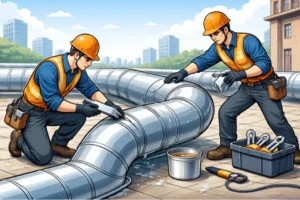
Exterior HVAC infrastructure operates in a hostile thermodynamic environment where standard indoor solutions are destined to fail. Unlike indoor systems that benefit from climate-controlled stability, air ducts installed on rooftops or building exteriors are subjected to relentless thermal cycling, intense ultraviolet (UV) radiation, and direct precipitation. In these exposed conditions, the integrity of the outdoor duct seal is not merely a maintenance concern; it is the definitive factor in preserving system performance and structural longevity. When exposed to extreme temperature fluctuations, metal substrates expand and contract significantly. Without specialized sealants designed for high elasticity and elongation, these physical shifts lead to micro-fractures in the bond, compromising the entire system’s static pressure and structural integrity.
The financial and operational consequences of inadequate sealing in outdoor environments extend far beyond simple air loss. When an exterior duct sealant fails, it opens a direct pathway for moisture ingress, which is the primary catalyst for insulation saturation and rapid biological growth. Once water penetrates the thermal barrier, the R-value of the insulation drops precipitously, and the risk of deep-seated corrosion on spiral duct and fittings increases exponentially. Furthermore, because these ducts traverse unconditioned spaces, any leakage represents a total thermodynamic loss. Unlike indoor leaks where conditioned air might still contribute to the building’s overall thermal load, air escaping from outdoor rectangular duct and fittings is energy that is permanently lost to the atmosphere, directly inflating operational costs and reducing equipment lifespan.
Mastering the application of outdoor sealing requires a rigorous approach to material selection and application technique. A robust weatherproof duct seal must be hydrophobic, UV-resistant, and chemically compatible with the specific duct material, whether galvanized steel, aluminum, or PVC. It must also possess the dielectric strength to resist degradation caused by environmental pollutants and oxidation. Addressing these challenges involves more than just applying a patch; it requires understanding air duct leakage classes and selecting compounds that ensure long-term adhesion. This guide explores the technical nuances of securing exterior HVAC infrastructure, detailing the specific formulations, surface preparation standards, and maintenance protocols required to achieve a durable, airtight seal that withstands the test of time and weather.
Effective outdoor duct sealing is the definitive factor in preserving HVAC system integrity, preventing energy loss, and safeguarding against environmental degradation. Unlike indoor applications, exterior ductwork faces distinct challenges that require specialized materials and precise application techniques. The following key takeaways outline the critical strategies for achieving weatherproof, long-lasting seals in exposed environments.
Mastering the application of outdoor duct seal involves understanding the interplay between material science and environmental variables. The subsequent sections provide a comprehensive technical analysis of sealant types, application methodologies, and best practices for securing exterior HVAC infrastructure against the elements.
The structural integrity of an HVAC system is defined not merely by the gauge of the steel, but by the resilience of its weakest points: the joints and seams. When moving beyond the building envelope, the physics governing air ducts changes continually. Unlike conditioned indoor environments, where temperature and humidity fluctuations are managed within a narrow band, exterior ductwork is subjected to the full, unmitigated force of thermodynamic cycling. The failure of a standard sealant in an outdoor environment is rarely due to poor application alone; rather, it is a failure to account for the coefficient of thermal expansion (CTE) inherent in metal substrates.
Metals such as galvanized steel and aluminum expand and contract significantly as ambient temperatures oscillate between day and night, and between seasons. For instance, a 100-foot run of steel ductwork can expand by over an inch when subjected to a 100°F temperature delta. If the outdoor duct seal applied to the joints lacks the requisite elongation properties (elasticity) to accommodate this movement, the sealant will experience cohesive failure (tearing within the sealant) or adhesive failure (delamination from the substrate). This creates a “pumping” effect, where the expansion and contraction cycles physically work the sealant loose, opening microscopic pathways for air leakage and moisture ingress.
The most insidious enemy of exterior duct sealant is Ultraviolet (UV) radiation. Solar exposure initiates a chemical process known as photo-oxidation in polymers that are not specifically engineered with high-grade UV inhibitors. In standard indoor mastics, the polymer chains that provide the sealant with its flexibility and bond strength are attacked by high-energy UV photons. These photons possess enough energy to break the carbon-hydrogen bonds within the polymer matrix.
This molecular scission results in a phenomenon known as “chalking,” where the surface of the sealant turns into a fine powder. As the surface erodes, fresh material is exposed to the UV radiation, perpetuating the cycle until the sealant becomes brittle. Once embrittlement sets in, the vibration from the HVAC equipment and the thermal expansion mentioned previously cause the sealant to crack. A high-performance outdoor duct seal must contain robust UV blockers—typically titanium dioxide or carbon black—mixed into the polymer backbone to absorb or reflect UV radiation before it can degrade the binder.
Water management on exterior ductwork goes beyond simply deflecting rain. It involves preventing the capillary action that draws moisture into the seams of spiral duct and fittings. When water penetrates a seam, it acts as an electrolyte. If the duct system involves dissimilar metals (such as steel screws in aluminum duct, or copper piping interacting with galvanized supports), the presence of water accelerates galvanic corrosion. This electrochemical process eats away at the metal substrate, undermining the structural integrity of the joint.
Furthermore, the sealant itself must possess high dielectric strength to act as an insulator rather than a conductor. Mere water resistance is insufficient; the sealant must be hydrophobic. Standard water-based sealants can re-emulsify or soften when subjected to standing water (ponding) on top of horizontal duct runs. An industrial-grade outdoor duct seal creates an impermeable barrier that prevents moisture from reaching the metal surface, thereby acting as a primary component of a comprehensive anti-corrosion approach. Without this barrier, the freeze-thaw cycle of trapped water will expand within the joint, mechanically forcing the seam apart with hydraulic pressure capable of deforming the steel.
Selecting the correct chemical composition for an outdoor duct seal is a decision that dictates the lifespan of the rooftop installation. Facility managers often default to general-purpose mastics to reduce inventory complexity, but this is a false economy. The material science defining exterior performance is distinct from interior requirements, particularly regarding Volatile Organic Compounds (VOCs), cure mechanisms, and solids content.
Historically, solvent-based mastics were the standard for exterior applications due to their inherent water resistance and rapid cure rates. However, advancements in acrylic polymer chemistry have allowed for high-performance water-based sealants that rival their solvent-based counterparts, provided they are allowed to cure fully before exposure to precipitation. Understanding the trade-offs between these two categories is essential for project planning.
| Feature | Water-Based Mastics (Exterior Grade) | Solvent-Based Mastics |
|---|---|---|
| Cure Mechanism | Evaporation of water (Slow in high humidity) | Solvent evaporation (Rapid, less weather dependent) |
| UV Resistance | Excellent (with UV inhibitors) | Good to Excellent (depends on formulation) |
| Elasticity | High elongation (maintains flexibility) | Moderate (can become brittle over decades) |
| VOC Content | Low (LEED Compliant) | High (Requires ventilation/PPE) |
| Application Temp | Above 40°F (4°C) | Can be applied in sub-freezing temps |
For most modern applications, a high-solids, UV-resistant water-based mastic is preferred due to environmental regulations and ease of cleanup. However, “high-solids” is the operative term. A sealant with low solids content acts as a solvent carrier that evaporates, leaving very little actual material behind to seal the gap. High-solids formulations ensure that the wet film thickness closely matches the dry film thickness, reducing shrinkage and the risk of cracking during the curing phase.
It is imperative to distinguish between “duct tape” (cloth-backed pressure-sensitive tape) and engineered butyl-backed foil tapes. Standard duct tape has no place in exterior HVAC applications; the adhesive desiccates, and the backing degrades within a single season. Conversely, outdoor duct seal systems often utilize butyl rubber gaskets or tapes as a primary or secondary line of defense.
Butyl is an isobutylene-isoprene copolymer known for its exceptional impermeability to air and water. Unlike curing mastics, butyl remains permanently tacky and non-hardening. This “self-healing” characteristic allows it to flow into micro-abrasions and adjust to thermal movement without snapping. When paired with a heavy-duty aluminum foil backing (typically 15-17 mils thick), it provides an instant waterproof barrier that reflects UV radiation. This makes butyl tape an excellent solution for sealing transverse joints on rectangular duct and fittings where immediate weatherproofing is required before a liquid mastic can be applied.
While silicone offers immense temperature resistance (often up to 400°F) and natural UV stability, it presents specific challenges in ductwork applications. Neutral-cure silicone is preferred over acetoxy-cure silicone, as the latter releases acetic acid during curing, which can corrode galvanized steel. Furthermore, silicone is notoriously difficult to paint. If the exterior ductwork requires a color-matched protective coating for architectural reasons, standard silicone will repel the paint.
Polyurethane sealants offer a middle ground, providing extreme toughness and abrasion resistance, making them suitable for ducts in high-traffic rooftop areas where maintenance personnel might step on duct runs. However, polyurethanes can be sensitive to UV light if not top-coated or specifically formulated for exposure. When specifying a weatherproof duct seal, the engineer must verify the ASTM C920 classification to ensure the sealant meets the movement capability required for the specific metal gauge and run length.
The most expensive, high-performance outdoor duct seal will fail if applied to a compromised substrate. Adhesion is a chemical bond, and contaminants interfere with the molecular interaction between the sealant and the metal. In exterior retrofit scenarios, the duct surface is often covered in a patina of pollen, grease, oxidation, and atmospheric soot. In new construction, the challenge is different but equally critical: mill oil.
New galvanized steel and aluminum ducts are often coated with a thin layer of oil from the manufacturing process to prevent white rust during storage and transport. This oil is hydrophobic; applying a water-based sealant directly over it will result in immediate delamination—the sealant will essentially “float” on the oil layer. Before applying any exterior duct sealant, the metal must be degreased using a non-residue solvent or a specialized biodegradable cleaner.
Once degreased, the surface profile becomes relevant. While sealants can bond to smooth metal, a slightly scuffed surface often improves mechanical adhesion. However, care must be taken not to remove the zinc coating on galvanized steel, which provides cathodic protection. For older ducts exhibiting surface rust, the oxidation must be removed via wire brushing, and the area should be treated with a zinc-rich primer before sealing to prevent the corrosion from spreading underneath the new seal.
Sealing double-wall rectangular duct systems presents a unique set of variables. In these systems, a layer of fiberglass or mineral wool insulation is sandwiched between a solid outer shell and a perforated inner liner. The integrity of the outer shell’s seal is paramount. If the outdoor duct seal fails on a double-wall system, water enters the annular space and saturates the insulation.
Wet insulation loses its R-value (thermal resistance), transforming the duct into a massive thermal bridge. Worse, the wet material becomes a breeding ground for mold and bacteria. Because the inner wall is perforated, these contaminants are then drawn directly into the airstream and distributed throughout the building. When sealing double-wall systems, special attention must be paid to the “sanding” or “end capping” of the duct sections to ensure the insulation is fully encapsulated and protected from the elements during the installation phase, prior to the final mastic application.
The application of weatherproof duct seal is not a cosmetic procedure; it is a structural reinforcement. To achieve an airtight and watertight seal capable of withstanding 20+ years of exposure, technicians must adhere to rigorous application standards, often exceeding the baseline recommendations found in SMACNA guidelines.
A common failure mode is “starving” the joint—applying a layer of sealant so thin that it splits upon the first instance of thermal expansion. Industry best practices dictate the “nickel-thick” rule, which suggests that the wet film thickness of the applied mastic should essentially match the thickness of a nickel (approximately 2mm or 80 mils). This generous application ensures that even after the solvent or water carrier evaporates (shrinkage), sufficient solids remain to form a robust, elastic gasket.
For high-pressure systems or joints subject to significant movement, the usage of a reinforcing membrane is non-negotiable. This involves a three-step process: applying a base coat of mastic, embedding a fiberglass or polyester mesh into the wet sealant, and immediately covering it with a top coat. This fiber reinforcement acts much like rebar in concrete, significantly increasing the tensile strength of the seal and preventing crack propagation. This “sandwich” technique creates a seamless, monolithic barrier that is far superior to a single pass of sealant.
While transverse joints (where two sections of duct connect) receive the most attention, longitudinal seams (the seam running the length of the duct) are frequent sources of failure in outdoor applications. On rectangular duct and fittings, the Pittsburgh or Snap-Lock seams are not inherently watertight. Under wind-driven rain, water can be forced into these seams.
A comprehensive outdoor duct seal strategy requires sealing every longitudinal seam, wall penetration, and hardware attachment point. Even the screws used to secure internal vanes or external supports must be encapsulated with a dollop of sealant. If left exposed, water will wick along the threads of the screw and enter the duct interior, causing rust streaks and eventual structural degradation.
The curing window is the most critical variable in outdoor applications. Unlike indoor work, where the environment is controlled, outdoor sealing is at the mercy of the weather. Water-based sealants require low humidity and temperatures above 40°F to cure properly. If the temperature drops below freezing before the sealant has cured, the water within the emulsion will freeze and expand, destroying the polymer matrix.
CRITICAL WARNING: Never apply water-based exterior duct sealant if rain is forecast within 24 to 48 hours of application. A heavy rainstorm can wash the uncured sealant straight off the metal, leading to environmental runoff issues and a total project restart. For emergency repairs during wet or freezing conditions, specialized solvent-based mastics or butyl tapes must be utilized.
The implications of a compromised outdoor duct seal extend directly to the operational efficiency of the HVAC plant. In a typical commercial building, the air handling unit (AHU) expends significant energy pressurizing the supply air. Leaks in indoor ducts are problematic, but the conditioned air is at least lost into the building envelope. Leaks in outdoor ducts, however, represent a 100% thermal loss to the atmosphere.
When supply air leaks from rooftop ductwork, the system must condition more makeup air to satisfy the building’s thermostat. This increases the load on chillers and boilers. Conversely, leaks in return air ducts on the roof can draw in hot, humid summer air (or freezing winter air) along with exhaust fumes, pollen, and rain. This places an immense latent load on the cooling coils, requiring them to remove far more moisture than they were designed for.
Adhering to strict air duct leakage classes (such as SMACNA Class 3 or better) is essential for exterior ductwork. Sealing these ducts to a high standard can result in energy savings of 10% to 30%, depending on the severity of the initial leakage. This efficiency gain provides a rapid Return on Investment (ROI) for the cost of the labor and high-grade sealant materials.
Duct leakage fundamentally alters the system curve against which the fans operate. Significant leakage causes a drop in static pressure at the terminal units (VAV boxes). To compensate, variable frequency drives (VFDs) will ramp up the axial fans or centrifugal blowers to maintain the required setpoint. This increases the RPM, resulting in higher electrical consumption (following the affinity laws, where power is proportional to the cube of the speed) and accelerated mechanical wear on bearings and belts.
By achieving a hermetic outdoor duct seal, facility engineers stabilize the static pressure profile of the system. This allows fans to run at lower, more efficient speeds, reducing noise vibration and extending the operational lifespan of the capital equipment. The ductwork acts as the vascular system of the building; if the arteries are leaking, the heart (the fan) must work dangerously hard to maintain circulation.
There is no such thing as a “maintenance-free” outdoor duct system. Even the highest quality UV-resistant sealants have a finite lifespan. As buildings settle and thermal cycles accumulate, stress fractures will inevitably appear. A proactive maintenance strategy shifts the focus from emergency leak response to planned lifecycle management.
Facility managers should schedule exterior duct inspections twice annually: once in the spring (post-winter thaw) and once in the autumn (pre-winter freeze). These inspections should verify the integrity of the outdoor duct seal, check for loose insulation jacketing, and ensure that duct supports have not shifted. For large or difficult-to-access rooftop systems, the use of drones with high-resolution cameras has become a viable method for identifying visible sealant failures without requiring personnel to traverse the roof.
The early warning sign of sealant failure is “spider-web cracking.” These are microscopic fissures on the surface of the mastic. While they may not yet be leaking air or water, they indicate that the material is losing its elasticity and is near the end of its service life. Identifying these common air duct problems early allows for a simple solution: applying a fresh top-coat of compatible sealant over the existing layer (bridging encapsulation).
If these micro-fractures are ignored, they will deepen into full splits, requiring the removal of the old sealant—a labor-intensive process. Regular cleaning of the duct exterior to remove debris and standing water also prolongs the life of the seal. For a comprehensive guide on maintaining the hygiene and efficiency of the system, refer to our air duct maintenance tips. By treating the exterior ductwork with the same care as the internal mechanical components, BromingHvac ensures that building owners maximize their asset value and minimize unexpected operational downtime.
The transition from interior climate control to the harsh reality of exterior exposure represents a fundamental shift in HVAC engineering. As we have explored, the integrity of an outdoor HVAC system relies less on the sheer mass of the metal and more on the scientific precision applied to its weakest points: the seams and joints. An effective outdoor duct seal is not a simple adhesive application; it is a strategic defense against the relentless forces of thermodynamics, ultraviolet radiation, and galvanic corrosion. Understanding these physical stressors is the first step toward ensuring the longevity of your air ducts.
Success in exterior weatherproofing begins with rejecting the “one-size-fits-all” approach to sealants. The chemical composition of the material must be specifically engineered to handle the coefficient of thermal expansion found in metals. Whether you are working with spiral duct and fittings or large rectangular mains, the sealant must possess high elongation properties to move with the substrate without experiencing cohesive failure. We have seen that standard indoor mastics, lacking robust UV inhibitors like titanium dioxide, will inevitably chalk and crack under solar exposure, compromising the system within a single season.
Furthermore, the choice between solvent-based and water-based mastics is a critical decision driven by environmental conditions and curing windows. While modern water-based formulas offer eco-friendly benefits and LEED compliance, they require strict adherence to weather forecasts to prevent washout. Conversely, the utility of butyl-backed foil tapes provides an immediate, impermeable barrier for transverse joints, acting as a “self-healing” shield against moisture ingress. Selecting the right material is not just about adhesion; it is about choosing a compound that creates a hydrophobic, dielectric barrier to stop the electrochemical processes that lead to rust and degradation.
Even the most advanced chemical sealants will fail if the application protocol is flawed. The “nickel-thick” standard serves as a crucial benchmark for technicians, ensuring that enough solid material remains after the carrier evaporates to form a durable gasket. Equally important is the rigorous preparation of the substrate. Removing mill oil, oxidation, and atmospheric contaminants ensures that the chemical bond is never compromised. For complex systems like double-wall rectangular duct, this precision prevents water from saturating insulation, thereby avoiding the disastrous loss of thermal resistance and the formation of biological contaminants.
Ultimately, the quality of the exterior seal has a direct correlation to the operational budget of the facility. A hermetically sealed system stabilizes static pressure, allowing axial fans and blowers to operate at optimal speeds without unnecessary strain. By eliminating leakage, building owners prevent the 100% thermal loss associated with escaping supply air and the latent load increases caused by infiltrating humid air. This translates to reduced wear on mechanical components and significant energy savings.
An exterior HVAC system is a significant capital investment that demands protection commensurate with its value. By prioritizing high-grade materials, adhering to strict application standards, and implementing a proactive inspection schedule to catch micro-fractures early, facility managers can extend the life of their equipment by decades. Don’t let the elements dictate the lifespan of your infrastructure. Trust in proven engineering principles and superior materials to weather the storm. For industry-leading solutions and expert guidance on your next project, explore the comprehensive resources available at BromingHvac.


