Need Specifications or a Quote?
Share your ventilation project requirements and our engineers will reply within 12 hours with technical specs, pricing, and lead time.
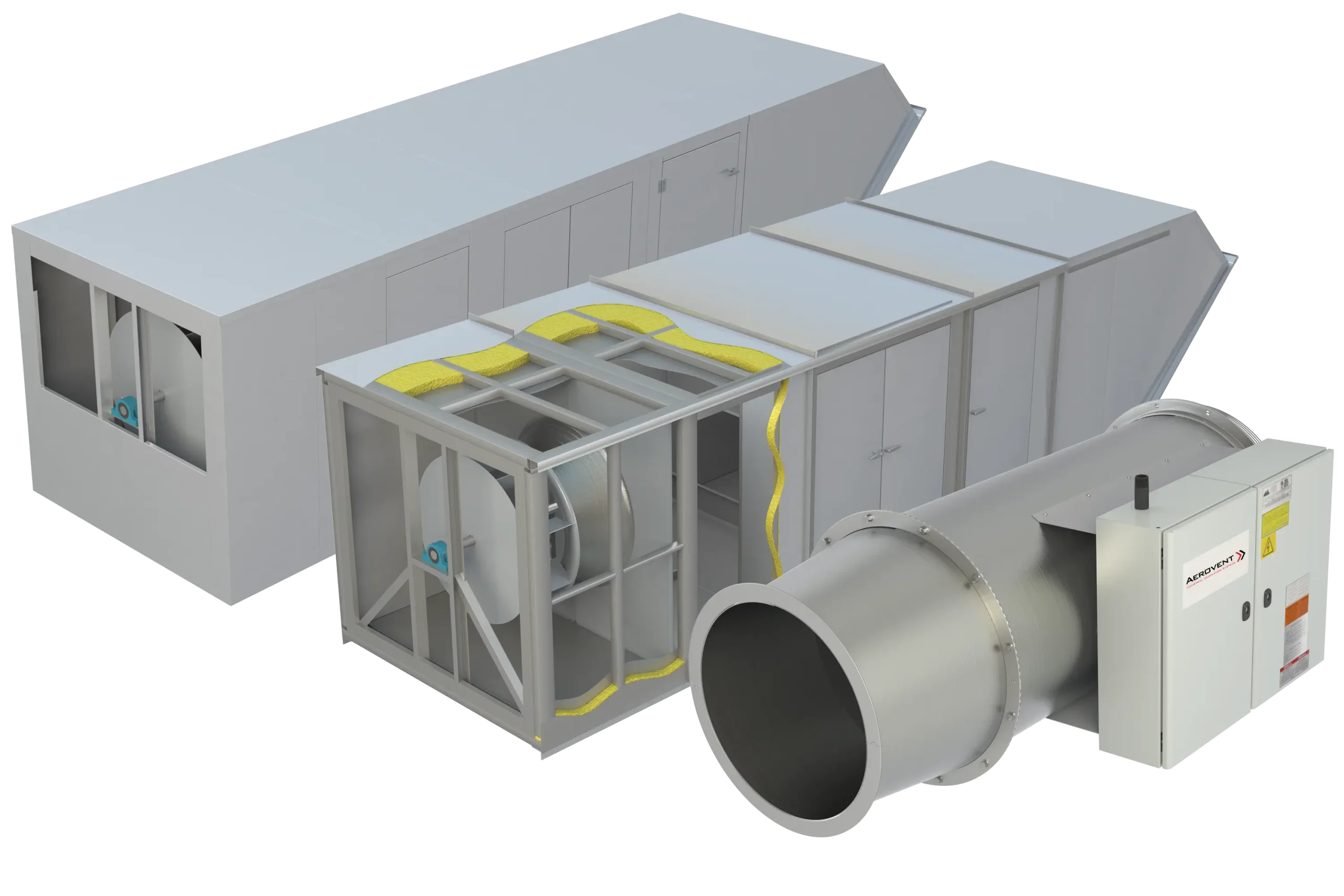


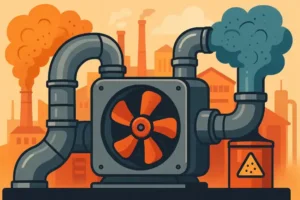
Industrial processes release a variety of contaminants—high-temperature gases, corrosive chemical vapors, solvent fumes, particulate matter, and process dust. These emissions cannot be managed by general ventilation alone. Exhaust systems must remove contaminants directly from process zones while protecting equipment, workers, and building structures. When exhaust systems are improperly designed or installed, the consequences often appear as corrosion, blockage, failed duct sections, unstable airflow, or violations of safety standards.
As described in HVAC Air Duct System Basics, air movement, pressure stability, and duct construction directly influence system longevity and performance. Industrial exhaust systems amplify these concerns because they handle extreme temperatures, abrasive materials, and reactive gases. Proper engineering requires understanding contaminant characteristics, temperature classes, material compatibility, and airflow behavior.
Industrial exhaust design begins with identifying the type of contaminant to be removed. Exhaust load categories determine material selection, duct geometry, velocity requirements, and filtration needs.
Processes such as curing ovens, foundry operations, heat treatment lines, and kilns generate exhaust temperatures significantly higher than typical HVAC systems. High-temperature exhaust requires ducts capable of withstanding thermal stress, avoiding warping, and managing thermal expansion. Insulation, clearance from combustibles, and temperature-rated materials are essential components in these systems.
Chemical manufacturing, laboratories, battery production, plating operations, and solvent-based processes generate fumes that may be acidic, corrosive, or solvent-laden. These fumes condense into corrosive liquids when cooled, leading to internal duct erosion. Material selection is critical to avoid premature duct failure.
Processes such as grinding, sanding, packaging, woodworking, and powder handling generate dust and particulate matter. These particles require specific conveyance velocities—typically 2500–4500 fpm—to prevent settlement inside ducts. Adequate transport velocity and smooth fittings reduce blockage risk and maintain airflow stability.
Material selection is one of the most important engineering decisions in industrial exhaust design. Each contaminant type requires specific resistance properties. As described in Air Duct Material Selection Guide, duct materials influence durability, corrosion resistance, and compliance with safety standards.
Galvanized steel is suitable for low-to-moderate temperature exhaust without corrosive compounds. However, zinc coatings rapidly deteriorate under chemical exposure or sustained high temperatures. For high-temperature applications, coatings may vaporize or flake, exposing base metal to oxidation.
Stainless steel provides excellent structural strength and chemical resistance but increases material cost. It is commonly used in laboratories, chemical plants, and food-processing environments.
When stainless steel is not required, coated steel systems provide a cost-effective alternative. Internal epoxy, phenolic, or polymer-based coatings protect ducts from chemical attack. These coatings must be applied continuously and inspected regularly to avoid coating failure.
FRP ducts offer exceptional chemical resistance and low corrosion. They are widely used in wastewater treatment plants, chemical processing zones, and battery manufacturing. However, FRP has limitations in high-temperature environments and requires rigorous joint sealing.
The effectiveness of an industrial exhaust system depends on the combined behavior of duct geometry, fittings, support, and sealing. Structural integrity is critical due to the forces and temperatures involved.
High-temperature or high-negative-pressure ducts require increased metal thickness and structural reinforcement. Long horizontal runs must account for deflection and thermal expansion. The fabrication process, detailed in Sheet Metal Duct Fabrication Process, influences dimensional accuracy and resistance to deformation.
High-temperature ducts expand significantly. If expansion joints or allowances are not included, ducts may warp, buckle, or stress fittings. Proper expansion joints and sliding hangers are essential to accommodate thermal movement safely.
Exhaust ducts carrying chemical or particulate-laden air must have tight sealing. Leakage can release corrosive fumes into mechanical rooms or ceiling cavities. Refer to Air Duct Leakage Classes & Sealing for performance guidelines.
Elbows, reducers, tees, and transitions must be designed to minimize pressure drop and maintain transport velocity. Poorly designed fittings cause particulate settlement or fume stagnation. For detailed fitting behavior, see Duct Fittings Selection & Function Guide.
Fans must be selected based on contaminant type, temperature, static pressure requirements, and potential hazard classification. Undersized fans can lead to inadequate capture velocity, condensation, backflow, or accumulation of hazardous fumes.
Centrifugal fans are commonly used for particulate, chemical, and high-temperature exhaust. Different impeller types suit different applications:
Stainless steel or coated fans may be required to prevent corrosion. High-temperature-rated fans must be installed where temperature fluctuations do not exceed manufacturer limits.
Pull (negative pressure) systems are preferred for contaminated exhaust because leaks draw air inward, preventing contaminant release. Push systems may be used only when equipment design requires it.
Industrial exhaust streams often require pre-filtration, particulate removal, or chemical treatment before discharge.
Cyclones remove larger particulates using centrifugal force. They reduce load on downstream filters and prevent duct abrasion.
Textile filters remove fine particulate matter. Cartridge filters provide higher filtration efficiency at lower pressure drop.
ESP systems capture extremely fine particles and fumes through electrostatic force. They are suitable for welding fumes and fine smoke streams.
Scrubbers neutralize chemical vapors through liquid absorption. They are essential in chemical manufacturing, plating areas, and battery facilities.
Activated carbon adsorbs solvent fumes and VOCs. Carbon beds must be sized based on contaminant concentration and airflow rate.
Industrial exhaust systems must be routed for stable pressure, safe discharge, and reliable contaminant transport.
Chemical fume exhaust ducts require slope toward drain points to prevent acidic condensate pooling. Improper slope accelerates corrosion and reduces duct life.
Particulate exhaust systems require a transport velocity of 2500–4500 fpm to prevent dust settlement. Low velocity leads to blockage, pressure instability, and fire hazards.
Exhaust stacks must be tall enough to disperse contaminants safely. Local regulations may require minimum discharge heights.
Facilities with multiple exhaust points may require staged control to maintain system stability. Dampers, sensors, and VFD controls help manage dynamic loads.
Improper design or installation often results in early system degradation or performance loss. Maintenance issues and contaminant exposure intensify these effects.
Acidic vapors condense in uninsulated or improperly sloped ducts. This leads to rapid corrosion, pinhole leaks, and structural failure. See Anti-Corrosion Coatings for Industrial Ducts for mitigation strategies.
Using materials not rated for temperature peaks results in warping, paint burnout, and mechanical joint failure.
Inadequate velocity causes particulate accumulation. This increases pressure drop, reduces airflow, and may lead to fire hazards in combustible dust environments.
Fans exposed to corrosive or hot gas streams may experience bearing failure, impeller distortion, or coating breakdown.
Industrial facilities with exhaust requirements vary widely in contaminant load and process characteristics. Typical scenarios include:
Industrial exhaust systems must be engineered to match the properties of the contaminants they handle. Key decisions involve material selection, temperature rating, filtration type, airflow requirements, fitting geometry, and corrosion protection. When system components align with process conditions, exhaust systems provide safer operations, reduced maintenance needs, and long-term performance stability.
If you have exhaust system drawings or process specifications, our engineering team can evaluate temperature class, chemical exposure, particulate loads, and duct performance requirements.