Need Specifications or a Quote?
Share your ventilation project requirements and our engineers will reply within 12 hours with technical specs, pricing, and lead time.
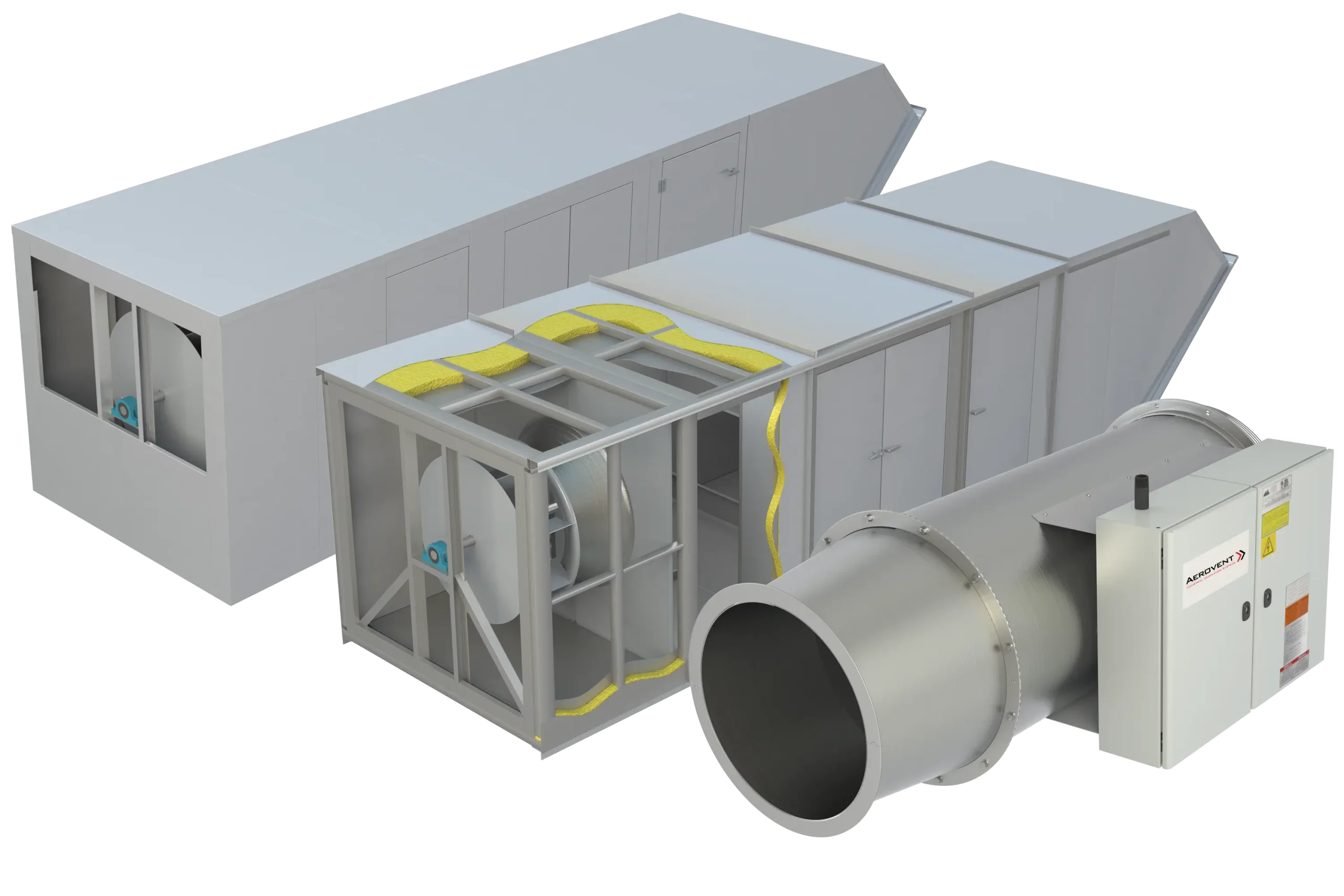



A 6×14 rectangular duct is a core component in many HVAC systems. Know the specifications before you design or install.
Nominal dimensions are 6 inches high by 14 inches wide. Its performance is defined by airflow capacity, measured in Cubic Feet per Minute (CFM).
A properly installed 6×14 rectangular air duct handles approximately 320 CFM. This assumes a standard friction rate of 0.07 inches of water column per 100 feet. Use this rating to size your ductwork for specific heating and cooling loads. This ensures effective air delivery without over-pressurizing the system.
Most metal rectangular duct is galvanized steel. The zinc coating resists corrosion. It prevents rust in humid environments like basements or attics.
Also, galvanized steel provides structural rigidity. The duct maintains its shape under air pressure. It also resists damage during installation. This durability makes it a reliable and code-compliant choice for an HVAC rectangular duct system.
Compare a 6×14 rectangular duct to its round equivalent. A 10-inch or 12-inch round duct is required for the same 320 CFM at the same friction rate.
This is the main advantage of the rectangular profile. It delivers substantial airflow in less vertical space. This comparison also introduces aspect ratio (14:6 or ~2.3:1). High aspect ratios can add more friction than round duct. You must account for this in the overall system design.
The 6×14 duct’s specs solve common construction challenges. Use it when integrating HVAC systems into space-conscious building layouts.
The primary advantage of the 6×14 profile is fitting where round ducts cannot. Its 6-inch height fits within standard 2×6 wall cavities (5.5″ actual depth). It can also run tight against ceiling joists without protruding. This helps in retrofits where you must preserve ceiling height.
For example, in a basement finish, a 12-inch round trunk line requires a large soffit. This lowers the ceiling height. Using a 6×14 rectangular duct, you can run the same capacity line against the joists. This creates a much smaller soffit and a more open space.
The 6×14 duct is a workhorse in residential jobs.
Its capacity is correct for delivering air to a large master suite or an open-concept living area.
Round ducts have good airflow efficiency. However, rectangular ducts offer practical advantages when dealing with structural limits and layout problems.
The flat profile of a rectangular air duct is critical when navigating wood framing. Cutting a 12-inch hole for a round duct can compromise joist integrity. It often violates building codes without engineered reinforcement.
A 14-inch-wide rectangular duct can run between parallel joists. Or it can run perpendicular beneath them with minimal intrusion. This simplifies installation and preserves the building’s structural soundness.
HVAC layouts are not straight lines. Rectangular ducting runs flush against beams and fits within narrow soffits. It can also make tight, flat turns. This provides design flexibility. It allows you to route air pathways without dictating the room’s design. The mechanical systems serve the architectural vision, not the other way around.
Proper installation is non-negotiable. Poor work leads to energy loss, bad airflow, and noise. Follow best practices for every connection, seal, and support.
Join metal rectangular duct sections with S-cleats and drive cleats. S-cleats go on the long sides. Drive cleats are hammered onto the short sides to draw the sections together.
This mechanical lock is not airtight. You must seal every seam, joint, and connection. Use a quality duct mastic or an approved foil tape (UL 181A-P/B-FX). This prevents air leakage, which can cause up to 30% of energy loss in a system.
The 6×14 is a standard size. It works with off-the-shelf fittings like 90-degree elbows, end caps, and register boots.
Rectangular-to-round transitions are especially useful. These fittings connect a 6×14 trunk to an 8-inch or 10-inch round duct. This gives you the flexibility to switch to round branch lines where space allows.
Support rectangular ductwork to prevent sagging. An unsupported duct can bend or cause joints to separate.
Proper support maintains structural integrity and ensures quiet, efficient operation.
A good installation cannot fix a bad design. Understand potential problems with sizing and friction loss.
Duct sizing requires calculation, not guesswork. Do not use a 6×14 duct for runs needing more than its ~320 CFM capacity. Forcing too much air through it will cause problems:
Use a duct sizing calculator (ductulator) to match the duct size to the required CFM for each run. This guarantees balanced and quiet airflow.
A rectangular duct has a higher surface-area-to-volume ratio than a round equivalent. This creates more friction loss. This resistance can reduce airflow to the furthest registers.
To manage friction, design long, straight runs. Use fittings with a gradual, sweeping radius instead of sharp, 90-degree turns. Minimizing turbulence ensures air moves smoothly and efficiently.