Need Specifications or a Quote?
Share your ventilation project requirements and our engineers will reply within 12 hours with technical specs, pricing, and lead time.
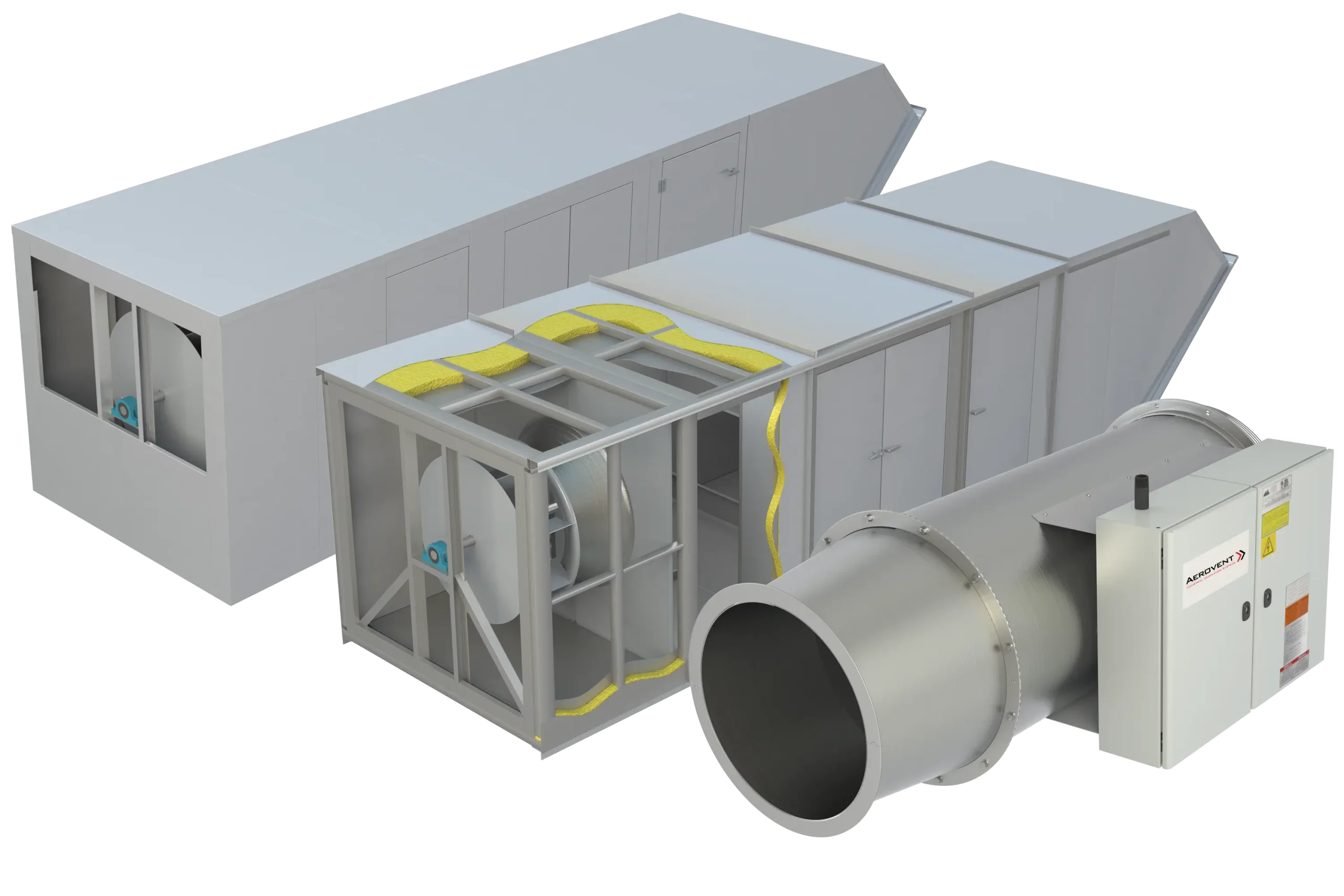


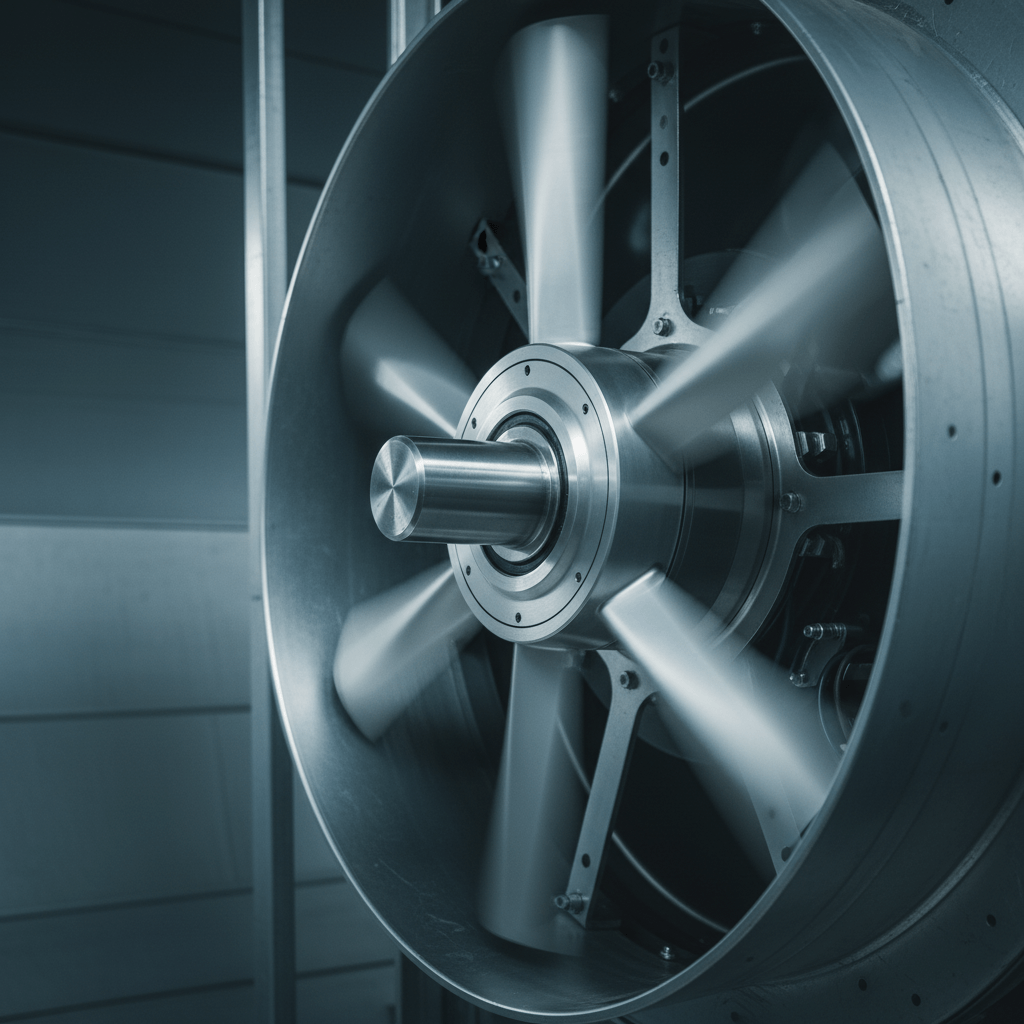
The performance of any ventilation or cooling system begins with understanding the core technology driving it. For many applications, the axial fan is the component of choice, engineered for moving large volumes of air efficiently. Its design is both simple and highly effective, but its success hinges entirely on the motor that powers it.
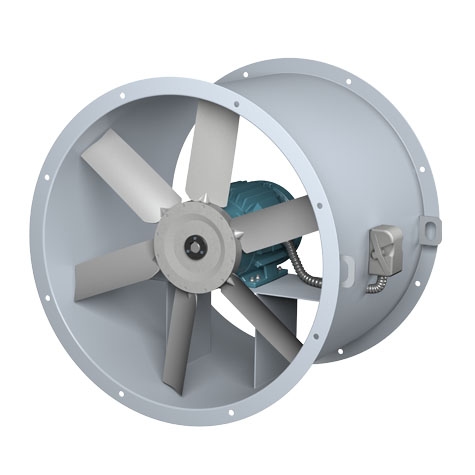
An axial fan operates on a straightforward principle: its blades rotate around a central axis, or shaft, pulling air in and pushing it out in a direction parallel to that shaft. This creates a column of air that flows straight through the fan assembly, similar to an airplane propeller. This mechanism is fundamentally different from a centrifugal (or radial) fan, which draws air in axially and discharges it perpendicularly (radially) from the fan housing. This distinction makes axial fans ideal for applications requiring high-volume airflow with low static pressure, such as general ventilation or cooling electronic components in an open chassis.
While the blades and housing shape the airflow, the axial fan motor is the heart of the entire assembly. It is the component that dictates the fan’s power, speed, energy consumption, and long-term reliability. The motor converts electrical energy into the mechanical rotational force needed to turn the blades, directly influencing the fan’s ability to meet performance specifications. A high-quality fan assembly paired with a subpar motor will inevitably lead to inefficiency, premature failure, and increased operating costs. Therefore, selecting the right motor is not just a component choice—it is a strategic decision that defines the system’s success.
The evolution of motor technology has provided engineers with distinct choices that carry significant implications for performance and cost. The two predominant types of axial fan motors are Alternating Current (AC) and Electronically Commutated (EC), each suited for different operational and financial priorities.
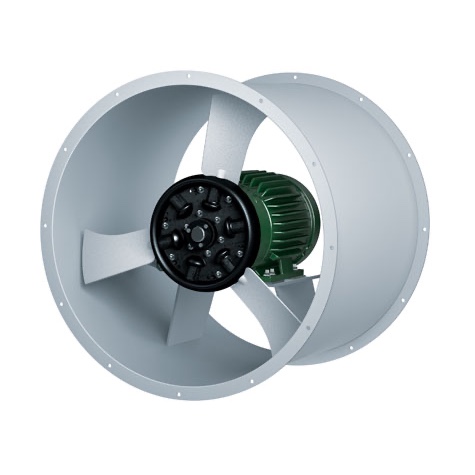
AC motors are the conventional workhorses in the fan industry. Technologies like shaded-pole or permanent split capacitor (PSC) motors are known for their simple construction, robustness, and lower upfront cost. They connect directly to an AC power source and typically operate at a fixed speed determined by the line frequency. This simplicity makes them a cost-effective solution for applications where continuous, single-speed operation is sufficient and precise control or peak energy efficiency is not the primary concern. However, their limitations include lower electrical efficiency and an inability to easily modulate airflow without external hardware like a variable frequency drive (VFD).
EC motors represent a significant technological leap, combining the reliability of brushless DC motor principles with the convenience of an AC power input. An integrated electronic circuit converts the incoming AC power to DC, providing precise control over the motor’s speed and torque. This design offers substantial advantages, including superior energy efficiency (often reducing consumption by up to 70% compared to AC equivalents), fully variable speed control via simple analog or digital signals, and significantly quieter operation. These benefits make EC motors the premier choice for modern HVAC systems, data centers, and any application where energy savings and intelligent control are critical.
Choosing between AC and EC technology requires a careful evaluation of priorities, particularly the total cost of ownership (TCO) over the product’s lifecycle.
This comparison reveals that the optimal choice depends heavily on whether the goal is to minimize initial capital expenditure or to optimize long-term operational performance and cost.
Once the motor type is determined, selecting the correct model requires a deep dive into its performance metrics and physical specifications. Looking beyond the basic size and voltage ensures the chosen axial fan motor will perform reliably and efficiently within its intended system.
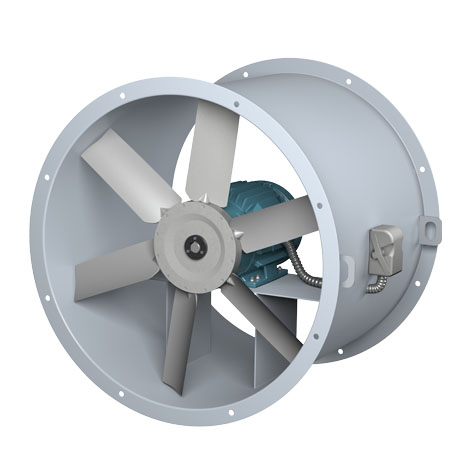
The primary function of a fan is to move air, but how it moves that air is critical. Three key metrics define its capabilities:
A motor’s longevity is determined by its ability to withstand its operating environment. Several key features provide this resilience:
Finally, the motor must integrate seamlessly with your system. Always verify:
These detailed specifications are not just line items on a data sheet; they are the determining factors in whether an axial fan motor will deliver consistent performance or become a point of failure.
The unique characteristics of axial fans—high volume airflow at low static pressure—make them indispensable in a wide range of commercial and industrial sectors. Their ability to efficiently circulate, cool, and exhaust air translates directly into improved operational performance and tangible financial returns.
In HVAC systems, axial fan motors are the primary drivers for condenser units in air conditioners and heat pumps, where they dissipate heat by moving large volumes of ambient air across coils. For commercial buildings and warehouses, large-diameter axial fans provide general ventilation, destratification of heated air, and comfort cooling.
Industrial applications are equally diverse. Axial fans are used for:
For example, a large-scale logistics center implemented a series of high-volume, low-speed (HVLS) axial fans to improve air circulation across its 500,000-square-foot facility. This not only improved employee comfort but also reduced winter heating costs by 25% by pushing trapped warm air down from the ceiling, demonstrating the direct operational impact of proper fan selection.
The strategic upgrade to high-efficiency EC axial fan motors is one of the most effective ways for businesses to reduce operational expenditures. By replacing legacy AC motors, facilities can achieve energy consumption reductions of up to 70%. This efficiency gain is not just an environmental benefit; it is a powerful financial lever.
Consider a data center that retrofitted its computer room air handler (CRAH) units with variable-speed EC axial fans. The original fixed-speed AC fans ran at 100% capacity regardless of the IT load. The new EC fans automatically modulated their speed to match the real-time cooling demand. This intelligent control led to a 42% reduction in fan energy consumption, saving the facility over $80,000 annually and achieving a full return on investment in under two years. This case study underscores that choosing an efficient axial fan motor is an investment that lowers the total cost of ownership and contributes directly to the bottom line.
Selecting the right axial fan motor is the first step; ensuring its long-term performance requires a commitment to proactive maintenance. Simple, consistent practices can prevent the majority of common failures, protecting your investment and guaranteeing system uptime.
A straightforward maintenance schedule is the most effective way to maximize the lifespan of an axial fan motor. By addressing minor issues before they escalate, you can avoid costly downtime and premature replacement. Key practices include:
Even with proper maintenance, problems can arise. A systematic approach to troubleshooting can quickly identify the root cause.