Need Specifications or a Quote?
Share your ventilation project requirements and our engineers will reply within 12 hours with technical specs, pricing, and lead time.


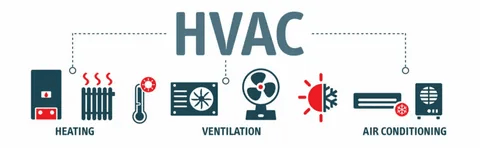
Don’t confuse HVAC ventilation with air conditioning or heating. They are not the same.
AC circulates and cools existing indoor air. Heating circulates and warms it. Neither process brings in fresh air. This difference defines indoor air quality.

For professionals, HVAC ventilation is the controlled exchange of indoor air with outdoor air. The system dilutes indoor pollutants. It brings in fresh, filtered outdoor air. It exhausts stale, contaminated indoor air.
This is not just opening a window. A mechanical HVAC ventilation system controls the air exchange for both air quality and energy efficiency.
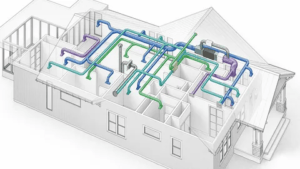
An HVAC ventilation system follows a clear sequence:
This cycle continuously dilutes airborne contaminants.
Modern buildings are airtight to conserve energy. This also traps pollutants.
Without proper air exchange, indoor contaminant levels can exceed outdoor levels. Ventilation solves this. It purges stale air and supplies fresh air.
Indoor air contains many contaminants.
A proper HVAC ventilation strategy reduces the concentration of these pollutants. It removes contaminants to reduce respiratory irritation, allergy symptoms, and CO2 buildup.
Ventilation also manages indoor humidity. Cooking, showering, and breathing add moisture to the air. In an airtight structure, this moisture gets trapped. It causes condensation on windows and walls.
Excess humidity supports mold, mildew, and dust mites. A ventilation system exhausts this moist air. This prevents mold growth that damages the building and releases spores.
An HVAC ventilation system integrates multiple components to manage airflow. Each part has a specific function. Know these components to understand system performance.
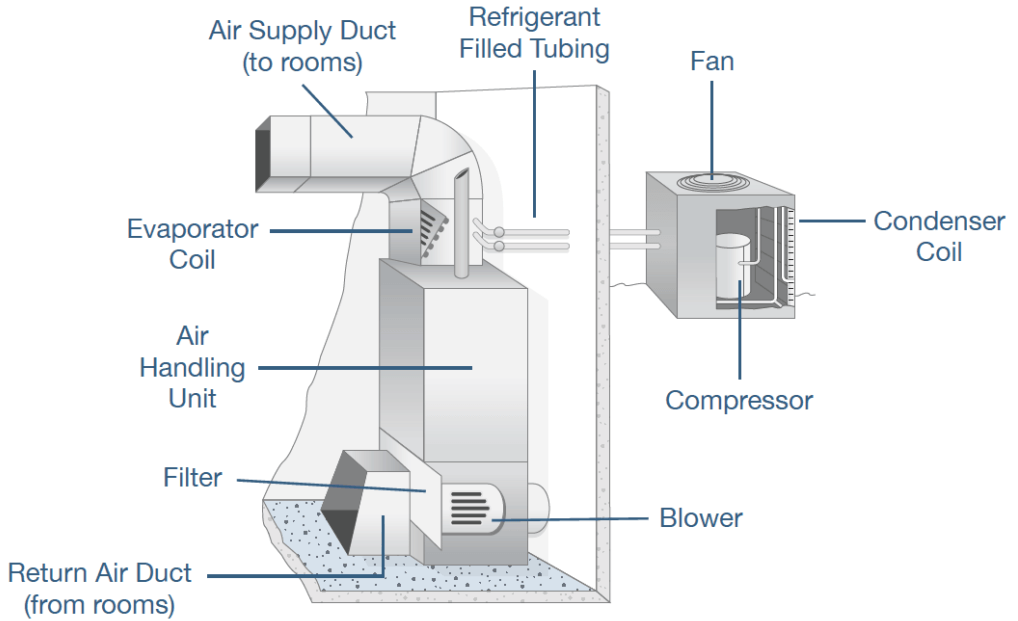
Proper design, sizing, and sealing are mandatory. Leaks or incorrect sizing cause energy loss and poor air distribution. This degrades system performance.
Fans and blowers move the air. They create the airflow and static pressure to push air through ducts and filters. The application determines the fan type.
Fan power and efficiency determine system performance.
Air filters clean incoming air. They install at the air intake to capture particulates like dust and pollen.
Filter effectiveness is measured by its Minimum Efficiency Reporting Value (MERV) rating. A higher MERV rating captures smaller particles. However, you must balance filtration with system capability. A high-MERV filter adds airflow resistance. It may require a more powerful fan to maintain system performance.
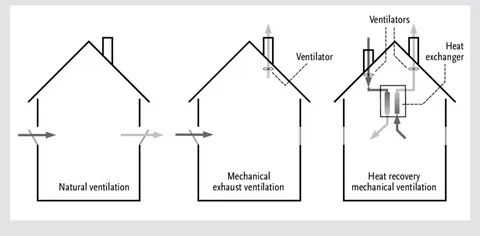
Ventilation strategy depends on building design, climate, and air quality targets. You can use natural, mechanical, or hybrid ventilation.
Natural ventilation (opening windows) is unreliable and inefficient. Mechanical ventilation HVAC systems are the standard for controlled air quality.
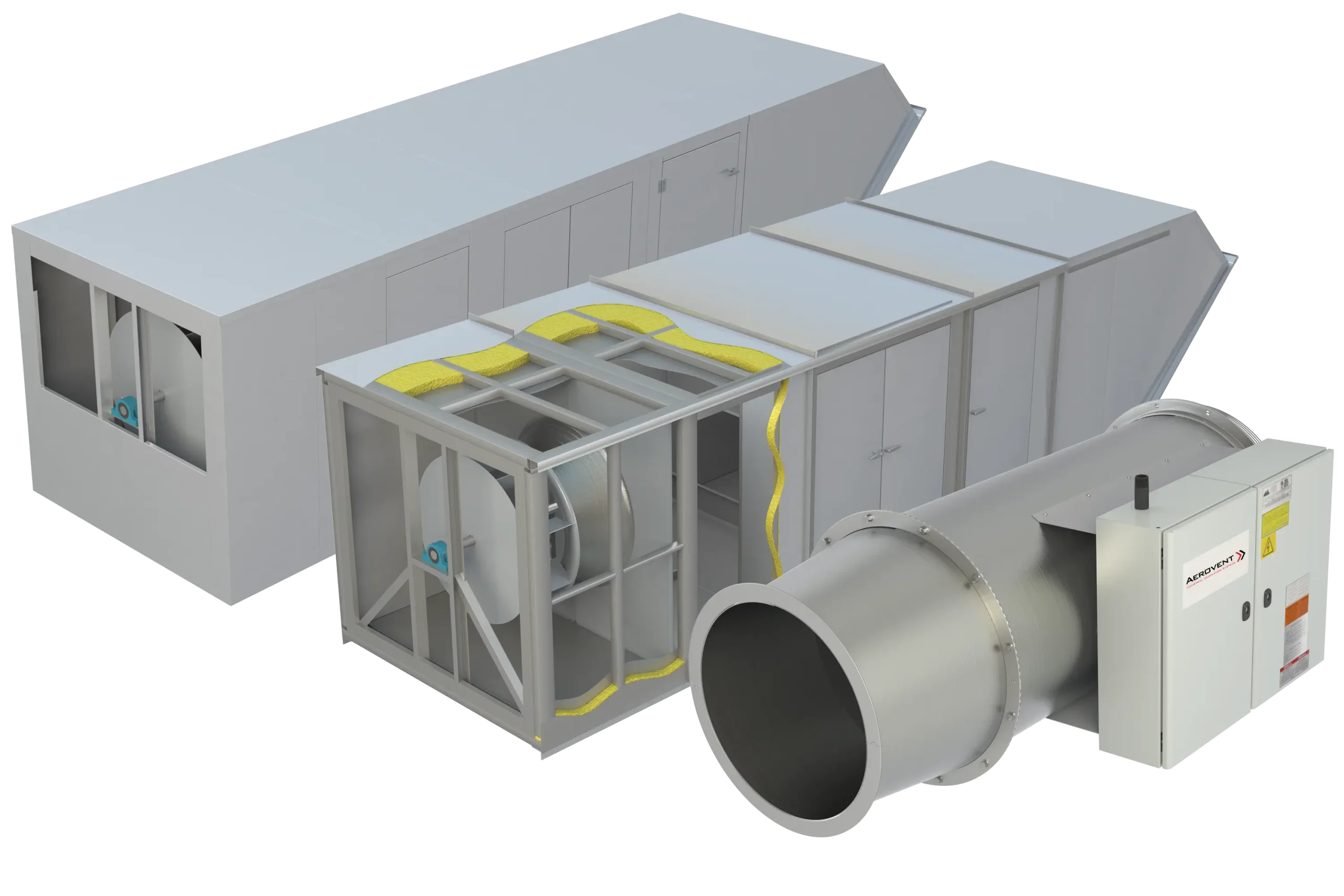
Mechanical ventilation uses fans and ducts to control airflow. It provides a reliable air exchange rate in any weather. These systems can integrate filtration and energy recovery. This gives you control over indoor air quality and reduces utility costs.
Select the whole-house system based on performance, cost, and climate. The three primary systems are:
Ventilating a building wastes energy. You exhaust heated air in winter and cooled air in summer. Energy recovery technology solves this.
These systems exchange air while minimizing heating and cooling costs. You get good air quality with high energy efficiency in HVAC.
A Heat Recovery Ventilator (HRV) is a balanced system for cold climates. It uses a heat exchanger core. The core transfers heat from the outgoing stale air to the incoming fresh air. In winter, the warm exhaust air pre-heats the cold supply air.
An Energy Recovery Ventilator (ERV) also uses a heat exchanger core. The ERV core is semi-permeable. It transfers both heat and moisture.
This makes ERVs effective for managing both temperature and humidity.
The choice between an HRV and an ERV depends on your climate. This decision impacts comfort and utility costs.
These advanced ventilation types provide high indoor air quality without high energy costs.