Need Specifications or a Quote?
Share your ventilation project requirements and our engineers will reply within 12 hours with technical specs, pricing, and lead time.



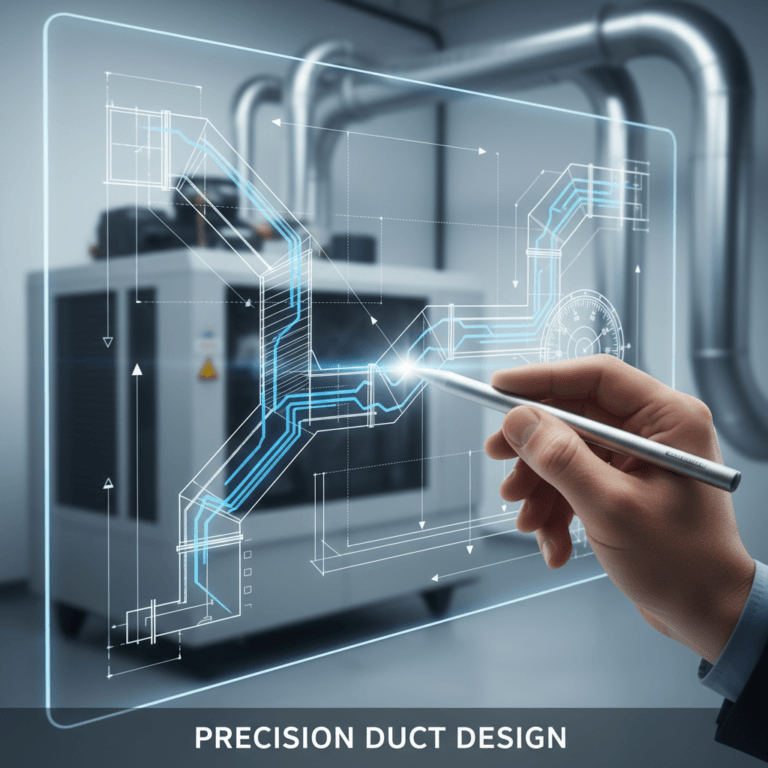
The era of static, schedule-based climate control is rapidly ending, replaced by a dynamic environment where buildings “think” and adapt to their occupants. As global construction standards shift toward Net Zero and decarbonization, the mechanical systems that support our infrastructure are undergoing a radical technological overhaul. At the center of this transformation is HVAC ventilation, which has evolved from a simple method of air exchange into a sophisticated, data-driven science. For facility managers and engineers, understanding these innovations is no longer optional—it is a requisite for maintaining operational efficiency and regulatory compliance.
The impetus for this shift lies in the urgent need for energy conservation. Traditional systems often operate on fixed parameters, expending massive amounts of energy to condition unoccupied spaces or fighting against external thermal loads without predictive logic. Future-ready BromingHVac systems leverage the power of the Internet of Things (IoT) and Artificial Intelligence (AI) to analyze real-time variables—from occupancy density to ambient weather patterns. By processing this data, modern ventilation strategies can modulate airflow with precision, significantly reducing the carbon footprint of commercial and industrial facilities while maintaining superior indoor air quality (IAQ).
However, advanced software requires equally capable hardware to function effectively. The implementation of smart algorithms is futile without high-performance mechanical components designed to handle variable air volumes and pressure differentials. Innovations in aerodynamics are reshaping the design of essential components, such as high-efficiency axial fans and precision-engineered tubeaxial commercial fans. These modern air movers are built to integrate seamlessly with variable frequency drives (VFDs) and automated controls, ensuring that energy consumption scales linearly with demand.
Furthermore, the structural integrity of the distribution network plays a critical role in system performance. The industry is seeing a renewed focus on minimizing static pressure loss through the use of streamlined spiral duct and fittings and leakage-proof air ducts. Even the terminal units, such as supply grilles and return grilles, are being optimized to enhance throw patterns and reduce noise criteria, ensuring that the physical delivery of air matches the sophistication of the digital controls governing it.
As we look toward the future of building management, the synergy between intelligent software and robust mechanical design will define the standard for high-performance architecture. The following guide provides a technical deep dive into the specific innovations revolutionizing the industry, offering actionable insights into how these technologies can be deployed to elevate HVAC ventilation performance, ensure occupant health, and achieve long-term sustainability goals.
The landscape of HVAC ventilation is undergoing a profound transformation, driven by the convergence of artificial intelligence, IoT connectivity, and advanced sustainability standards. As buildings become tighter and energy regulations stricter, the industry is shifting from simple air exchange methods to intelligent, data-driven climate control systems. The following key takeaways outline the critical innovations currently redefining the future of ventilation technology.
These advancements represent more than just incremental technical improvements; they signal a fundamental shift in how we approach indoor environmental quality and energy conservation. In the subsequent sections, we will delve deeper into these specific technologies, examining how smart and sustainable solutions are being implemented to revolutionize modern HVAC ventilation strategies.
The paradigm of hvac ventilation is undergoing a fundamental shift. For decades, ventilation strategies relied on static scheduling—systems that operated on fixed timetables regardless of the actual building utilization. This approach, while reliable, resulted in massive energy inefficiencies, often conditioning air for empty conference rooms or under-ventilating densely occupied spaces. The future of HVAC technology is defined by the transition from static operation to dynamic, sensor-driven demand management, facilitated by the Internet of Things (IoT).
While most content focuses on traditional mechanical systems, the real revolution lies in the intersection of smart home technology, AI, and IoT. These digital layers are not just add-ons but are becoming essential for optimizing ventilation control and efficiency. In this modern ecosystem, the ventilation infrastructure acts as a living organism, constantly sensing, analyzing, and reacting to the environment in real-time.
The backbone of a smart ventilation strategy is the sensor ecosystem. Modern building management systems (BMS) are moving beyond simple thermostats. We are seeing the deployment of granular sensor arrays that monitor Carbon Dioxide (CO2), Volatile Organic Compounds (VOCs), relative humidity, particulate matter (PM2.5), and occupancy levels via infrared or optical counting.
The data collected by these sensors allows for micro-adjustments in damper positions and fan speeds. For instance, in a high-density scenario such as a crowded auditorium, a traditional system might wait for a temperature spike to increase airflow. An IoT-enabled system, however, detects the rapid rise in CO2 levels and occupancy counts immediately. It preemptively ramps up the outdoor air intake before air quality degrades, maintaining the ppm_threshold within optimal limits. This responsiveness is critical not only for occupant comfort but also for cognitive function and health.
Furthermore, these sensors do not operate in isolation. They feed data into edge computing devices that process the information locally, reducing latency. This allows the hvac ventilation system to make split-second decisions regarding air distribution, balancing the need for fresh air against the energy cost of conditioning that air.
The implementation of these sensor networks is made possible by robust wireless connectivity protocols. The days of running hardwired conduit for every sensor are fading. Protocols such as BACnet/IP, Zigbee, and LoRaWAN allow for the deployment of mesh networks where sensors communicate seamlessly with the central controller and with each other.
Remote diagnostics represent a significant leap forward. Facility managers can now access the system status via secure cloud dashboards. If a damper actuator fails or a filter becomes clogged, the system sends an alert with specific error codes, such as E_diff_pressure_high, allowing for targeted maintenance rather than routine, time-consuming inspections. This connectivity ensures that the hvac ventilation system remains in peak operational condition with minimal downtime.
| Feature | Traditional Ventilation | IoT-Enabled Ventilation |
|---|---|---|
| Response Mechanism | Reactive (based on thermostat triggers or fixed schedules). | Proactive (predictive based on real-time occupancy and air quality data). |
| Energy Usage | High (often conditions unoccupied spaces). | Optimized (conditions only where and when needed). |
| Maintenance Strategy | Calendar-based (preventative or run-to-failure). | Condition-based (predictive maintenance alerts). |
| Data Granularity | Zone-level temperature only. | Granular data (IAQ, occupancy, humidity) per room. |
| System Latency | High (thermal lag). | Low (immediate adjustment to environmental changes). |
As these digital ecosystems mature, the sheer volume of data generated exceeds human analytical capacity. This necessitates the integration of a higher level of intelligence to interpret the data and automate complex decision-making processes.
As we generate terabytes of data from IoT sensors, the question arises: “How will AI impact HVAC ventilation systems?” The answer lies in the shift from automation to autonomy. Artificial Intelligence (AI) and Machine Learning (ML) algorithms are transforming the BMS from a simple command-and-control interface into a predictive brain that anticipates needs before they arise.
One of the most profound applications of AI in future hvac technology is the creation of “Digital Twins.” A Digital Twin is a virtual replica of the building’s physical HVAC system. By running continuous simulations based on real-world data, the AI can predict how the system will react to various stressors, such as a sudden heat wave or a change in building occupancy patterns.
Predictive modeling utilizes historical data and external forecasts to optimize thermal loads. For example, if the AI analyzes weather data and predicts a high solar load on the building’s east facade at 10:00 AM, it can pre-cool those zones or adjust the position of variable air volume (VAV) dampers in advance. This smooths out the demand curve, preventing the spikes in energy consumption that typically occur when a system scrambles to catch up with a thermal load. The AI calculates the optimal discharge_air_temperature_setpoint dynamically, ensuring maximum efficiency without compromising comfort.
Beyond energy management, AI is revolutionizing maintenance through Automated Fault Detection and Diagnostics (FDD). Traditional BMS alarms are often binary—signaling only when a component has failed. AI-driven FDD, however, analyzes patterns to detect degradation before failure occurs.
Consider a ventilation fan bearing. As it begins to wear, it may produce subtle vibrations or draw slightly more current. A human operator might not notice a 2% increase in amperage, but an AI algorithm monitoring the motor_current_draw and vibration frequency spectrum will flag this anomaly immediately. It can cross-reference this data with the manufacturer’s specifications to predict the remaining useful life of the component.
Expert Insight: “The transition to AI-driven maintenance means we are no longer fixing things because they broke; we are fixing them because the data tells us they are about to break. This shift from reactive repairs to predictive intervention creates a 20-30% reduction in long-term maintenance costs and ensures zero unplanned downtime for critical ventilation infrastructure.”
By identifying issues such as stuck dampers, leaking valves, or sensor drift early, AI prevents the “energy drift” where systems slowly become less efficient over time. This continuous commissioning ensures that the ventilation innovations implemented during construction retain their value throughout the building’s lifecycle. However, intelligence software requires high-efficiency hardware to execute its commands effectively, leading us to the evolution of energy recovery.
With energy codes becoming increasingly stringent, energy recovery ventilation (ERV) is moving from an optional high-performance feature to a mandatory baseline requirement in many jurisdictions. The core principle—reclaiming energy from exhaust air to precondition incoming fresh air—remains the same, but the technology driving this exchange is seeing rapid advancement.
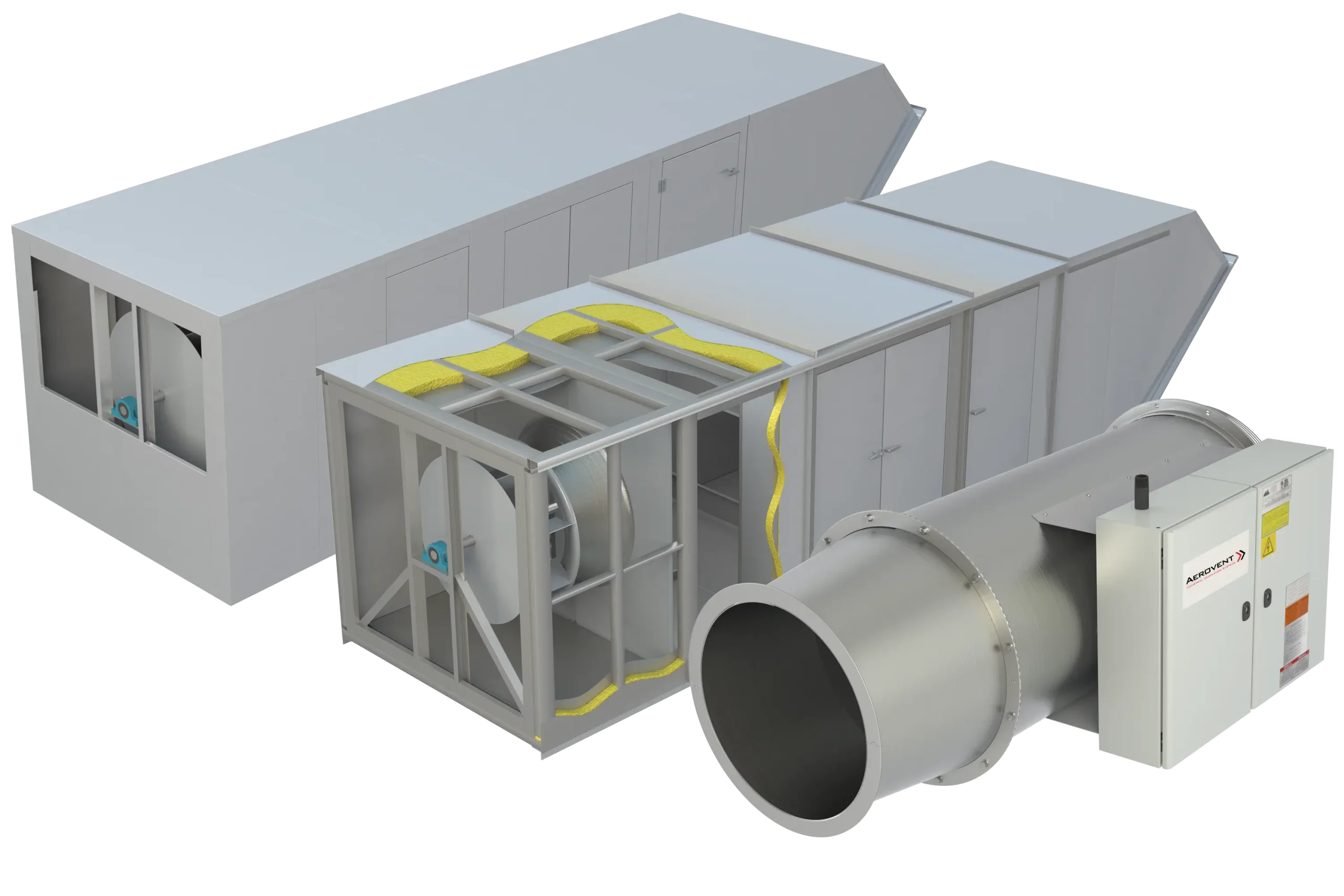
The heart of modern ERV systems lies in the heat exchanger material. Traditional aluminum wheels were effective for sensible heat transfer (temperature) but struggled with latent heat (moisture). The future hvac technology in this sector utilizes advanced desiccant-coated polymer membranes and sorption wheels.
These next-generation materials allow for molecular-level selectivity. They can transfer water vapor between airstreams to balance humidity levels without transferring contaminants like VOCs or CO2. This is critical for maintaining high ventilation efficiency in humid climates, where removing moisture from the air accounts for a massive portion of the cooling load. By pre-dehumidifying the intake air, the mechanical cooling load on the chiller or DX system is significantly reduced. Case studies have shown that replacing standard recovery wheels with advanced polymer desiccant wheels can improve latent recovery efficiency by up to 40%, drastically lowering the latent_cooling_load on the primary HVAC plant.
Future ERV systems are not static; they are hybrid and adaptive. In the past, ERVs might have been bypassed entirely during “economizer” conditions (when outdoor air is cool enough to use directly). Modern systems use complex logic to modulate the recovery wheel speed or bypass dampers incrementally.
For instance, in a “partial economizer” mode, the system might run the wheel at 20% speed to recover just enough heat to prevent over-cooling the space while still benefiting from free cooling. This modulation prevents the “hunting” behavior where a system rapidly cycles between full recovery and full bypass. Furthermore, these systems are now designed with frost control algorithms that intelligently manage the defrost_cycle_duration based on outdoor dew point, ensuring continuous operation even in extreme winter conditions without the energy penalty of electric pre-heaters.
To fully realize the potential of these advanced recovery and control systems, the fundamental mechanical components—fans, ducts, and grilles—must be optimized to reduce static pressure and noise.
Software and sensors are the brains of the operation, but the mechanical components are the muscle. Even the most sophisticated AI cannot overcome the physics of a poorly designed duct system or an inefficient fan. To achieve true ventilation innovations, engineers must focus on the aerodynamics and structural integrity of the air distribution hardware.
The prime mover of any ventilation system is the fan. In modern high-performance buildings, the industry is shifting away from belt-driven centrifugal fans toward direct-drive plenum fans and axial designs. Belt drives introduce transmission losses, require frequent maintenance (belt tensioning), and generate rubber dust. In contrast, direct-drive electronically commutated (EC) motors offer superior efficiency and infinite speed modulation.
For applications requiring high airflow at lower static pressures, axial fans are becoming the standard. The blade profiles of these fans are now modeled using Computational Fluid Dynamics (CFD) to minimize turbulence and noise generation. Specifically, the tubeaxial commercial fan direct drive units provide a robust solution for commercial settings, eliminating the efficiency losses associated with belt slippage and reducing the mechanical footprint.
Selecting the correct air mover is complex. Engineers must analyze the system curve and match it to the fan curve to ensure operation at the peak efficiency point. For a deeper dive into selection criteria, professionals should consult resources on hvac ventilation fans: how to choose the best option for your system. Correct sizing prevents the common issue of fans running in surge or stall regions, which causes vibration and premature failure.
Once the air is moving, it must be transported with minimal resistance. The parameter of concern here is static_pressure_loss. Every inch of water column (w.g.) lost to friction requires more fan horsepower to overcome. While rectangular ductwork is common due to space constraints in ceiling plenums, it is aerodynamically inferior to round ductwork.
High-performance designs are increasingly utilizing air ducts that prioritize aerodynamic flow. Specifically, spiral duct and fittings offer distinct advantages. The spiral lock seam provides structural rigidity, allowing for lighter gauge metal without compromising strength. More importantly, the round profile eliminates corners where turbulence eddies form, significantly reducing friction loss per linear foot compared to rectangular equivalents. Furthermore, spiral ducts typically have lower leakage classes (Class 3 or better), ensuring that the conditioned air actually reaches the occupied zones rather than leaking into the ceiling void.
The final mile of hvac ventilation is the delivery of air into the room. If the velocity is too high, it creates drafts; if too low, it results in stagnant zones and poor mixing. The selection of terminal units is critical. For supply air, the supply grille single double deflection allows for precise control over the throw and spread of the air jet. By adjusting the vertical and horizontal blades, facility managers can tailor the airflow pattern to the specific geometry of the room, ensuring that the ventilation_effectiveness_ratio remains high.
Equally important is the return path. Undersized return paths cause room pressurization issues, which can force conditioned air out through building envelope cracks or prevent supply doors from closing properly. Using properly sized return grilles ensures a balanced system where the supply and return airflows are synchronized. For a comprehensive overview of how these elements fit together, referring to hvac ventilation design: essential components and optimization strategies is recommended.
With the mechanical pathway optimized, the system can effectively implement advanced control strategies that manage not just temperature, but the holistic quality of the indoor environment.
Future ventilation strategies are expanding the definition of air quality. While traditional Demand-Controlled Ventilation (DCV) focused primarily on CO2 as a proxy for human bio-effluents, modern IAQ management is multi-dimensional. The objective is to balance the competing goals of energy reduction and health optimization.
Advanced DCV systems now aggregate data from a spectrum of pollutants. This includes Volatile Organic Compounds (VOCs) off-gassing from furniture and cleaning agents, and PM2.5 arising from external pollution or indoor activities. A robust hvac ventilation system must be able to differentiate between sources. For example, a spike in VOCs might trigger a temporary increase in air change rates, whereas a spike in outdoor PM2.5 might trigger the system to close outdoor dampers and rely on high-MERV recirculation filtration.
Understanding the broad landscape of system types is crucial here. Facility managers should review the guide to 4 main types of ventilation systems explained to understand which architectures support these advanced DCV strategies. For instance, a dedicated outdoor air system (DOAS) offers superior decoupling of latent and sensible loads, making it ideal for precision IAQ control.
To prevent system instability, advanced control logic utilizes a “deadband” or hysteresis loop. If the target CO2 level is 800 ppm, the system should not ramp up immediately at 801 ppm and ramp down at 799 ppm. Instead, algorithms define a control_deadband (e.g., +/- 50 ppm) and use proportional-integral-derivative (PID) loops to smooth the response. This prevents the mechanical wear and tear associated with rapid actuator cycling.
The system must also account for the “purge” requirement. In post-pandemic building standards, there is often a requirement to flush the building with outdoor air before occupancy. Smart DCV systems automate this pre_occupancy_purge sequence based on the building schedule, ensuring the indoor environment is reset daily.
As the construction industry pushes toward Net-Zero Energy Buildings (NZEB), ventilation plays a pivotal role. In a super-insulated, airtight building envelope, the HVAC system is the primary driver of energy consumption. Therefore, smart ventilation systems are no longer just about comfort; they are a prerequisite for sustainability certification.
The future of HVAC is integration. The ventilation system must communicate with the lighting, security, and shading systems. If the security system indicates that a wing of the building is armed and empty, the BMS should automatically set the ventilation to a deep setback mode. Conversely, if the shading system detects high solar gain, it should communicate with the HVAC system to prepare for a thermal load.
This holistic approach allows for load shedding and peak shaving. By slightly reducing ventilation rates (within safe limits) during peak electrical pricing hours, buildings can act as virtual batteries, reducing strain on the grid. The interoperability of these systems ensures that every watt of energy expended on moving or conditioning air contributes directly to the utility of the building.
Finally, the most efficient ventilation is natural ventilation. Future designs are increasingly employing hybrid strategies that utilize automated windows and louvers to provide natural cooling and airflow when ambient conditions allow. The mechanical system acts as a supplement rather than the sole source. The BMS constantly monitors outdoor enthalpy and wind velocity to determine when to switch between mechanical mode and natural mode, seamlessly blending nature with technology to achieve the ultimate goal of sustainable, healthy, and efficient indoor environments.
The transformation of the HVAC industry is no longer on the horizon; it is happening now. As we have explored, the convergence of the Internet of Things (IoT), Artificial Intelligence (AI), and advanced mechanical engineering is redefining what it means to ventilate a building. We are moving away from the era of static, “set-it-and-forget-it” schedules and entering a new paradigm where ventilation systems are dynamic, living ecosystems. By integrating real-time data with predictive modeling, facility managers can now achieve a delicate balance that was previously impossible: significantly reducing energy consumption while simultaneously optimizing indoor air quality (IAQ) and occupant health.
The shift from reactive maintenance to predictive intervention is perhaps the most significant operational advantage of modern smart ventilation. The utilization of digital twins and Automated Fault Detection and Diagnostics (FDD) allows building operators to foresee issues before they manifest as critical failures. Instead of waiting for a component to break, the data speaks for itself, highlighting anomalies in motor currents or airflow sensors.
This intelligence ensures that the system is always operating at its designed peak efficiency, preventing the “energy drift” that plagues aging infrastructure. However, software and algorithms are only as effective as the physical components they control. To fully realize the benefits of AI-driven decisions, the underlying mechanical hardware must be capable of executing precise commands with minimal resistance and maximum reliability.
Even the most sophisticated AI cannot overcome the laws of physics if the air distribution system is flawed. The “muscle” of the system must match the “brain.” This begins with the prime movers. Utilizing efficient axial fans ensures that airflow is generated with the lowest possible energy expenditure. Specifically, the tubeaxial commercial fan direct drive offers the reliability and infinite speed modulation required for variable demand strategies, eliminating the transmission losses associated with older belt-driven units.
Furthermore, the transport of air requires aerodynamic integrity. High-performance designs now favor spiral duct and fittings over traditional rectangular ductwork. The structural rigidity and round profile of spiral ducts minimize friction losses and air leakage, ensuring that the conditioned air reaches its destination efficiently. Finally, the precise delivery of this air into the occupied zone is managed by terminal units. A supply grille single double deflection allows for the exact sculpting of airflow patterns to prevent drafts, while properly sized return grilles maintain the necessary pressure balance to keep the system stable.
Ultimately, the goal of these innovations extends beyond simple cost savings. As the construction industry pushes toward Net-Zero Energy Buildings (NZEB), the ventilation system becomes a critical pillar of sustainability. By combining energy recovery technologies with smart Demand-Controlled Ventilation (DCV), buildings can drastically reduce their carbon footprint.
For those looking to deepen their understanding of how these elements come together in a holistic layout, reviewing hvac ventilation design: essential components and optimization strategies provides essential insights into creating systems that stand the test of time.
The future of HVAC technology is defined by integration. It is the seamless communication between high-tech sensors, intelligent algorithms, and robust mechanical components. Whether you are retrofitting an existing facility or designing a new structure, the key to success lies in viewing the ventilation system not as a collection of parts, but as a cohesive, intelligent entity. By investing in quality infrastructure—from the digital layer to the physical ducts and fans—you are investing in a building that is not only more efficient and sustainable but also healthier for the people inside. The tools for this revolution are available today; it is time to build the smart, breathable buildings of tomorrow.