Need Specifications or a Quote?
Share your ventilation project requirements and our engineers will reply within 12 hours with technical specs, pricing, and lead time.
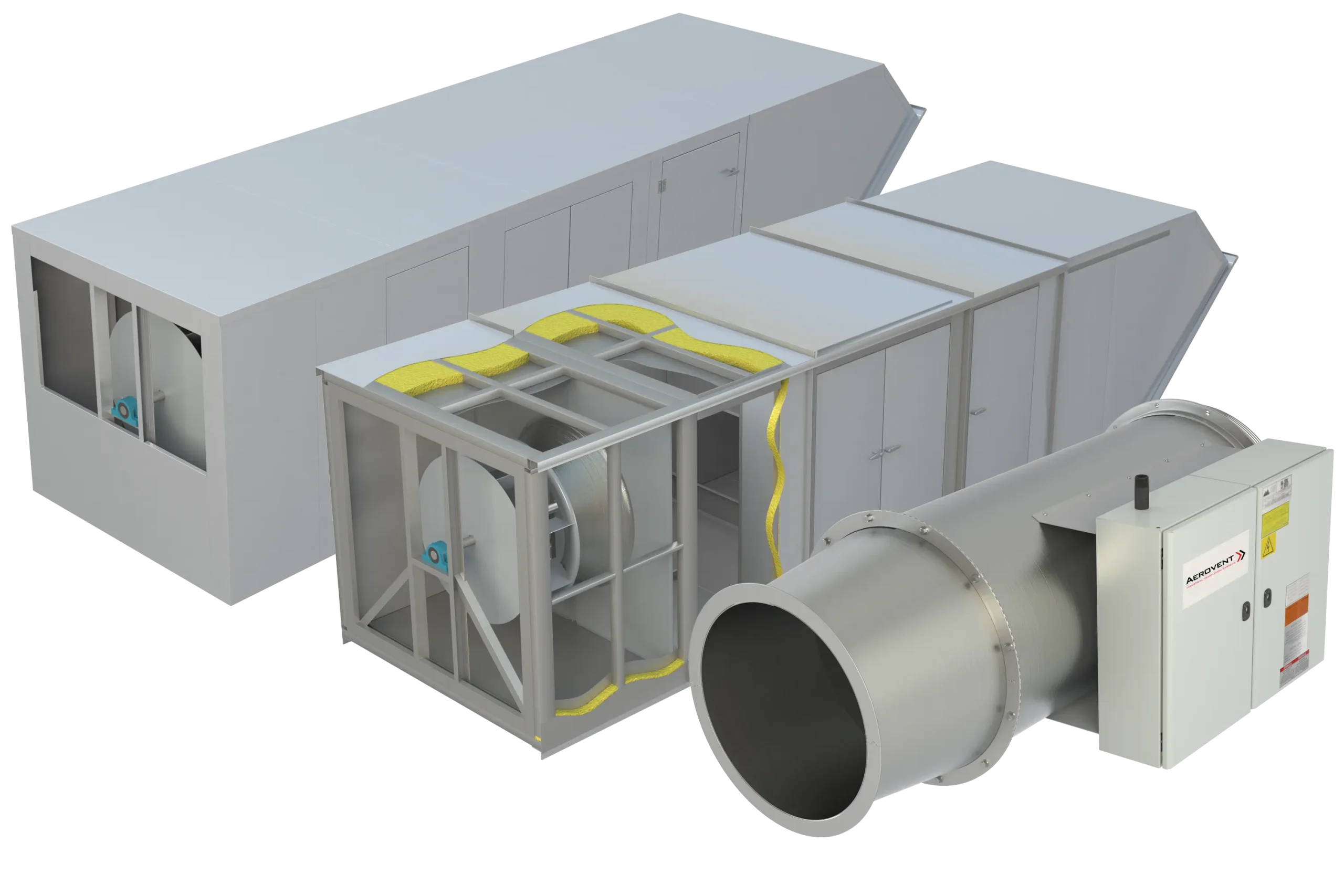


Axial fans / industrial ventilation
Axial fans for HVAC ventilation, exhaust and air circulation. Compare grille, tube, post-type and portable models for your airflow and installation requirements.
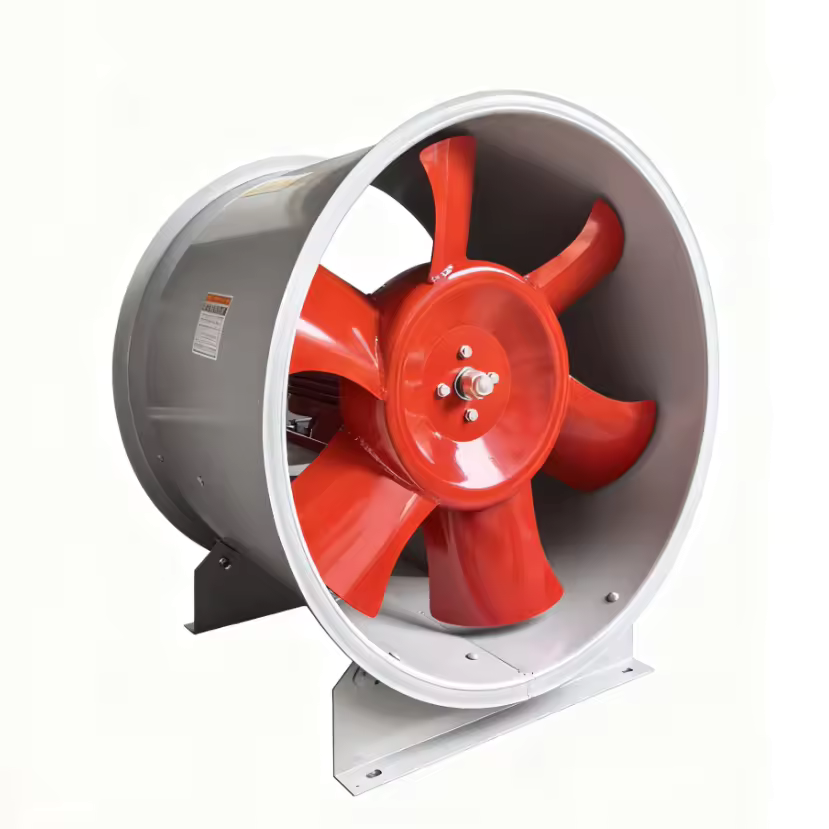
Axial fan configurations
The catalog includes grille, square-frame, tube, post-type, portable and EC/DC external-rotor models.
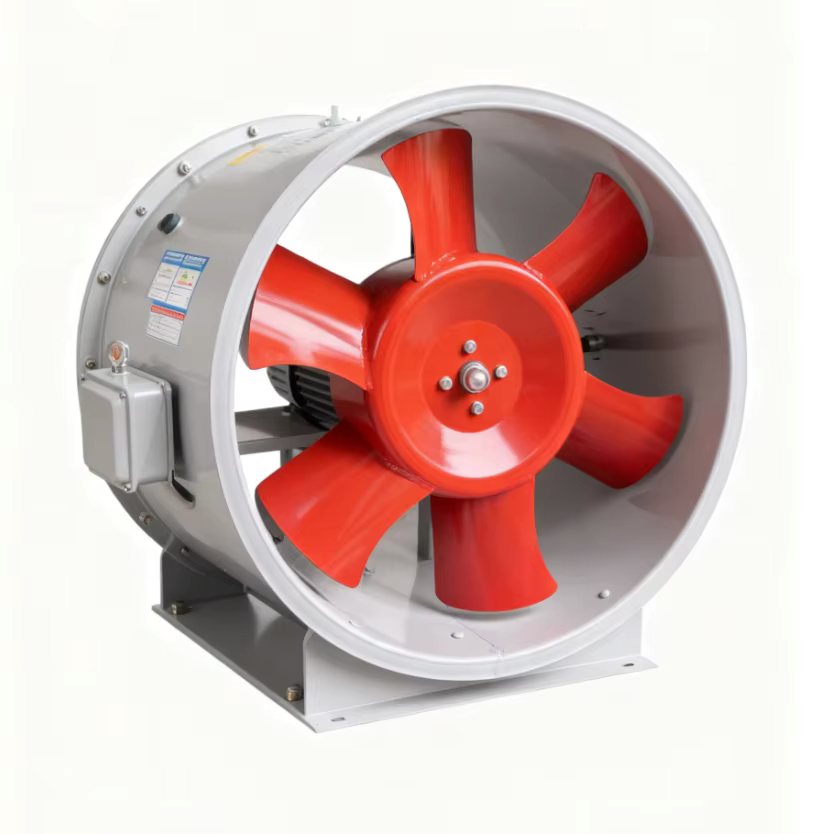
Compare grille and square-frame models by opening size, mounting layout, airflow and system pressure.
Compare listed ranges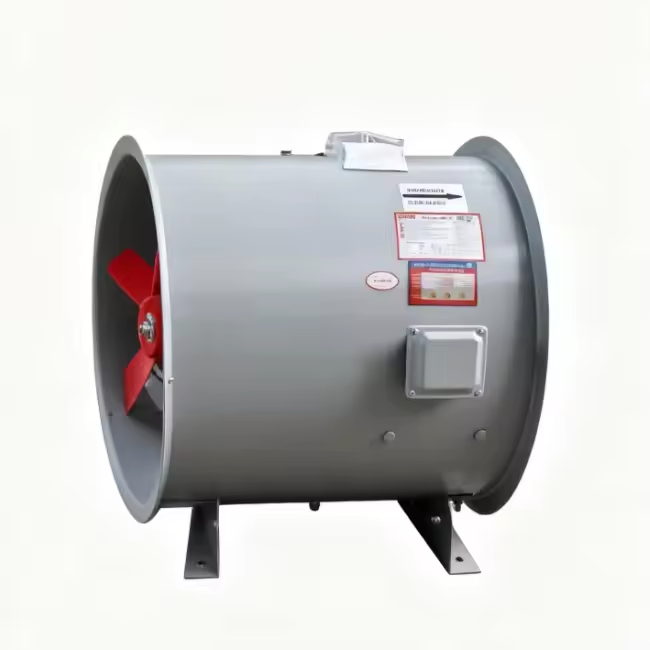
Check duct connection, available space and pressure losses against the selected model’s performance data.
Review typical applications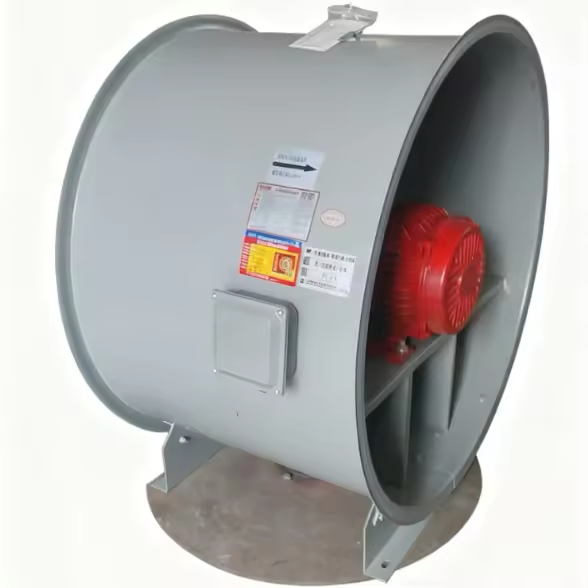
Review the listed speed options, motor supply, control requirements and model-specific airflow and pressure.
Review selection factorsCatalog data / axial fan range
Compare the catalog airflow ranges by fan construction. Each range covers multiple models and operating speeds.
| Catalog family | Airflow range / selection guide | Supply / frequency | Static pressure / selection guide |
|---|---|---|---|
| Axial fan with grille | 830–30,000 m³/h | 220 / 380 V · 50 Hz | Low-pressure ventilation; confirm by model curve |
| Axial fan with square frame | 830–30,000 m³/h | 220 / 380 V · 50 Hz | Low-pressure ventilation; confirm by model curve |
| Tube axial fan | 830–13,000 m³/h | 220 / 380 V · 50 Hz | Low-to-medium pressure duty; confirm by model curve |
| Post-type axial fan | 2,200–13,000 m³/h | 220 / 380 V · 50 Hz | 110–310 Pa |
| Adjustable-speed post fan | 0–8,850 m³/h | 220 V · 50 Hz | 0–310 Pa |
| Long-tube portable fan | 650–6,500 m³/h | 220 V · 50 Hz | 70–310 Pa |
EC / DC external-rotor models
Catalog motor data for the EC and DC axial fan families.
| Fan family | Model diameter | Supply | Speed | Motor power | Noise | Temperature |
|---|---|---|---|---|---|---|
| EC external-rotor axial fan | 200–630 mm | 220 V / 3-phase 380 V | 1,150–3,150 rpm | 55–950 W | 54–78 dB(A) | −25 to +60 °C |
| DC external-rotor axial fan | 200–450 mm | 24 / 48 / 310 V | 1,480–3,150 rpm | 55–280 W | 60–72 dB(A) | −25 to +60 °C |
Send the required airflow and static pressure to match the operating point to a specific EC or DC model.
Applications
Use the application to define the duty point, air conditions and installation constraints before comparing models.
| Application | Project details to compare |
|---|---|
| Building ventilation and exhaust | Required airflow, system resistance, operating schedule and mounting location |
| Ducted ventilation | Fan connection, duct layout, fittings and pressure losses |
| Equipment ventilation | Available space, air temperature, electrical supply and control needs |
| Local or portable air movement | Required reach, tube length, airflow at the operating point and power supply |
Project selection
Send the details you have; use the selected model’s documents to confirm the duty and installation fit.
| Check | Project information | Confirm against |
|---|---|---|
| Duty point | Required airflow and static pressure | Selected model performance curve |
| Air conditions | Application, temperature, moisture and particulates | Model operating limits and construction |
| Installation | Connection size, layout, mounting and service access | Outline drawing and site dimensions |
| Electrical | Voltage, phase, frequency and control method | Model motor and control data |
A drawing, schedule or existing model reference can help complete the review.
Model verification
Use the documents for the proposed model to check performance, physical fit and electrical compatibility.
Airflow and pressure at the project duty.
Connection, mounting and clearance.
Supply, power and control compatibility.
Fan type comparison
Fan type is a starting point for evaluation. The selected model’s performance and the system curve determine whether it can meet the project requirement.
| Consideration | Axial fan | Centrifugal fan |
|---|---|---|
| Air direction | Air moves generally parallel to the fan shaft. | Air enters the impeller and is discharged outward from it. |
| Typical evaluation | Often considered for ventilation or exhaust paths where the required duty suits the selected axial model. | Often considered where the system layout or resistance calls for a centrifugal arrangement. |
| Project check | Verify the model curve at the required airflow and system resistance. | Verify the model curve at the required airflow and system resistance. |
| Installation review | Check duct or opening, envelope, mounting and access. | Check inlet and outlet arrangement, envelope, mounting and access. |
| When to compare alternatives | Compare other fan types if the duty point, noise, space or air path is not a fit. | Compare other fan types if the duty point, noise, space or air path is not a fit. |
Neither fan type is universally better. Compare the actual operating point, model data and installation constraints.
Common questions
An axial fan moves air generally parallel to its shaft. It is evaluated for a project by comparing the selected model’s performance with airflow, system resistance and installation conditions.
The catalog lists 830–30,000 m³/h for grille and square-frame families, 830–13,000 m³/h for tube axial fans, 2,200–13,000 m³/h for post-type fans, and additional ranges for portable families. These are summaries across models, not the range of one fan.
Compare the catalog’s model-level speed, voltage, power, current, noise and temperature information with the project supply and operating conditions. Because airflow and pressure depend on the specific fan and control setting, use the selected model’s performance curve to verify the project duty.
Start with required airflow and system resistance, then check model performance, duct or opening dimensions, motor data, mounting space and service access.
No. Confirm the selected model’s performance at the system’s operating resistance. Ducts, fittings, grilles and other components affect the duty point.
Share airflow, static pressure or system information, application, air conditions, duct dimensions, power supply, mounting constraints and quantity if known.
Compare them when the air path, system resistance, available space or required duty could suit more than one fan arrangement. Review model-specific performance rather than choosing by fan type alone.
Axial fan project inquiry
Send your airflow, pressure, application and installation details. If some values are still being confirmed, describe the system and share the documents you have.
Request an axial fan quotation