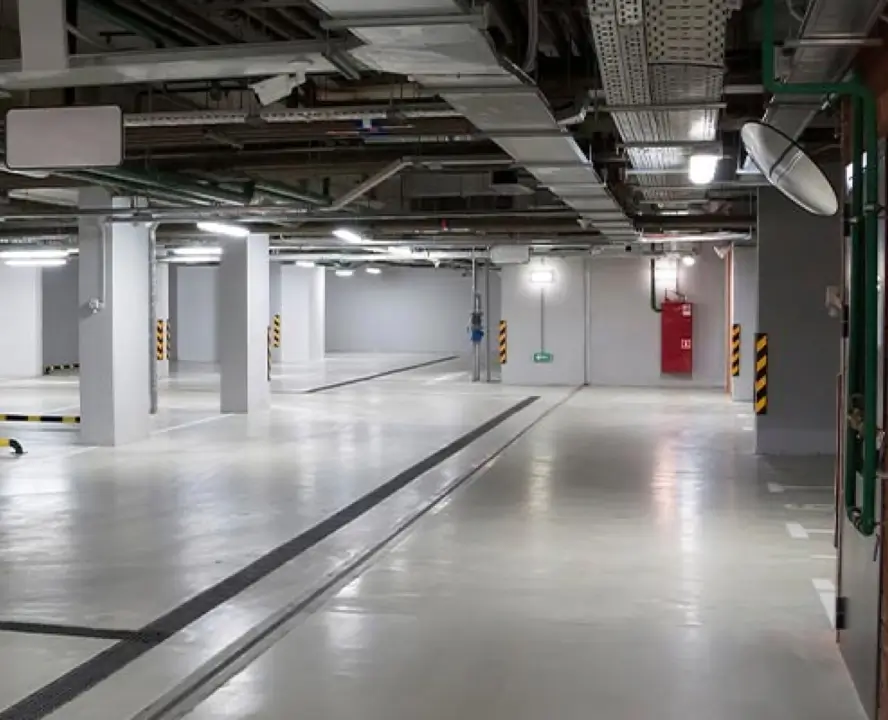
In underground garages, effective ventilation and smoke exhaust systems are critical for ensuring safety and air quality. Our Garage Ventilation & Smoke Exhaust solutions are designed to address these needs by providing a reliable airflow system, smoke control during emergencies, and improved safety for both vehicles and occupants. With a comprehensive approach combining ducts, fans, fire dampers, and exhaust outlets, our solutions help prevent the accumulation of hazardous gases and ensure smooth operation even in the event of a fire.
Ventilation Challenges in Underground Garages
Limited natural airflow: Underground garages are enclosed spaces where fresh air exchange is minimal, making mechanical ventilation essential.
Vehicle exhaust accumulation: Emissions such as carbon monoxide (CO) and nitrogen oxides (NOx) can build up quickly during peak traffic hours.
Uneven air distribution: Poor airflow design can create dead zones where pollutants and heat are not effectively removed.
Fire and smoke risks: In fire scenarios, uncontrolled smoke spread can severely reduce visibility and hinder safe evacuation.
Regulatory compliance pressure: Garage ventilation and smoke exhaust systems must meet strict building and fire safety codes.
An Integrated Ventilation & Smoke Exhaust Solution
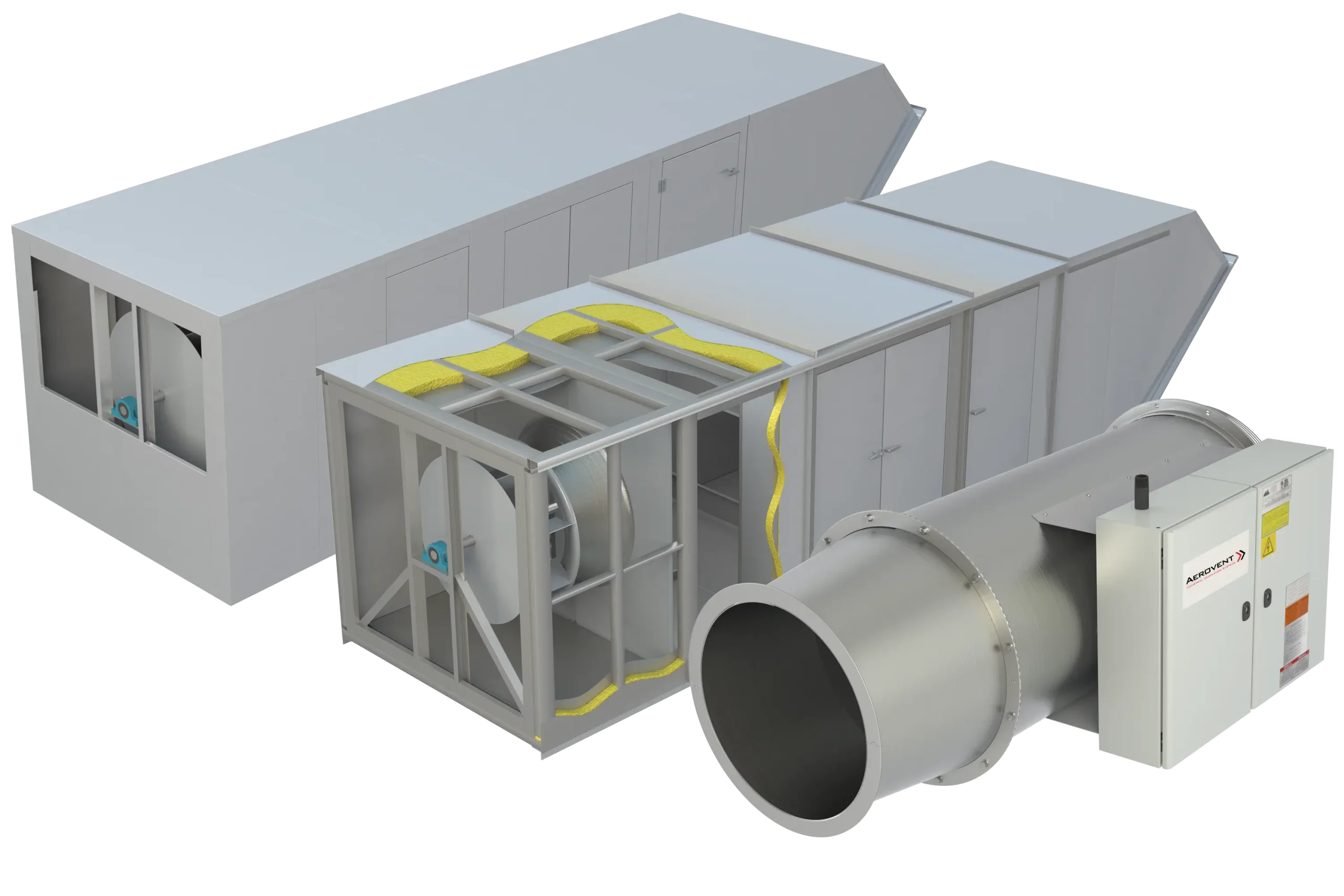
Our Garage Ventilation & Smoke Exhaust solution is designed as a fully integrated system rather than a collection of individual products. It combines ventilation ducts, mechanical fans, fire dampers, and air outlets into a coordinated airflow network that supports both daily ventilation and emergency smoke exhaust.
By aligning system design with real operating conditions, this solution ensures consistent air quality during normal use while enabling controlled smoke extraction and compartmentalization when a fire occurs. The result is a safer, more compliant underground parking environment with predictable and reliable performance.
Our HVAC Components
Air Duct Systems
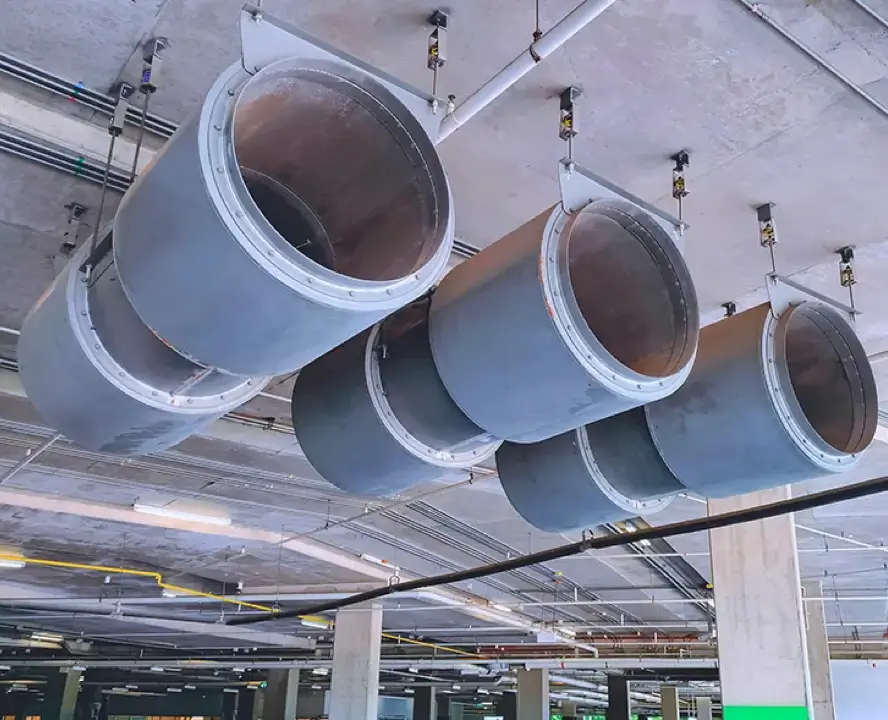
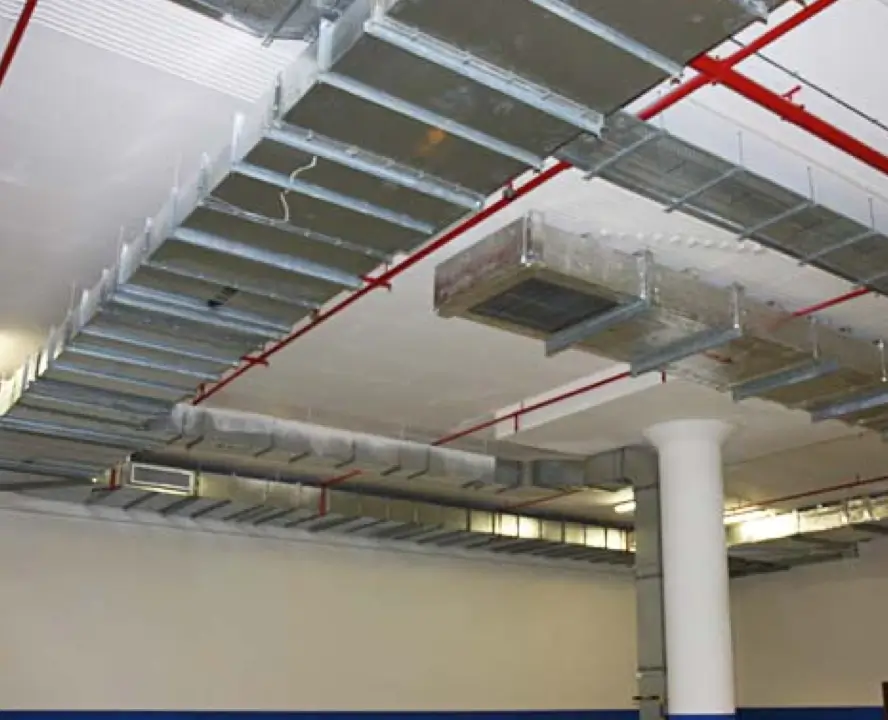
Precision-fabricated spiral and rectangular ductwork available in galvanized and stainless steel for all pressure classes.
The system is designed to manage airflow and smoke movement under both normal and emergency conditions. In fire scenarios, controlled smoke exhaust helps maintain visibility, limit smoke spread, and support safer evacuation routes. This improves overall safety for occupants while creating better conditions for emergency response within underground garages.
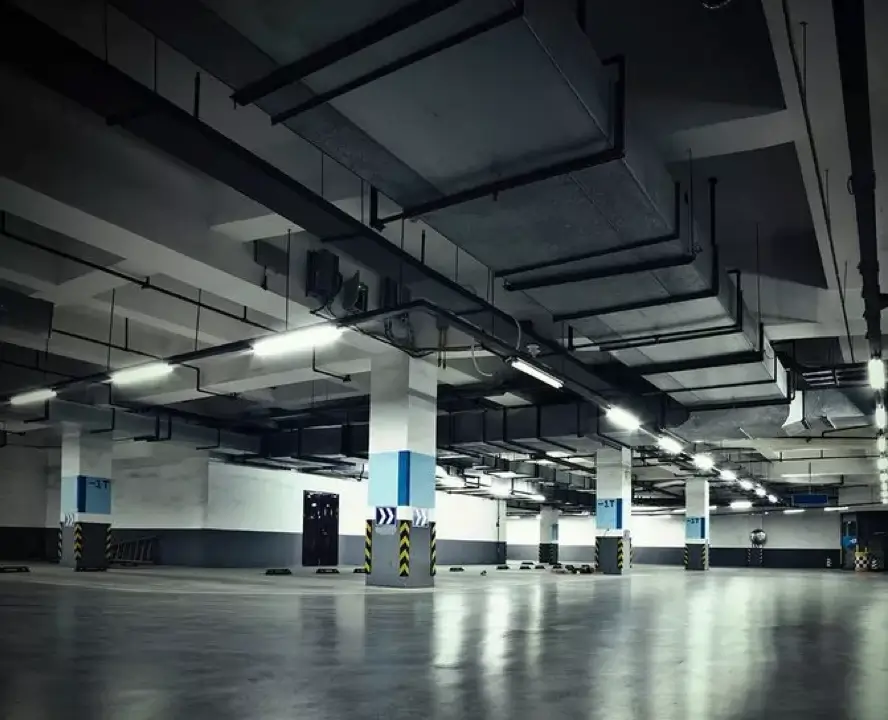
During everyday use, the ventilation system continuously removes vehicle exhaust gases and supplies fresh air across the parking area. Balanced duct layout and properly selected fans reduce stagnant zones and ensure consistent airflow, even during peak traffic periods. This supports a healthier environment and more comfortable user experience.
Rather than relying on isolated components, the solution is engineered as a coordinated system. Ducts, fans, fire dampers, and air outlets are designed to work together based on a unified airflow strategy. This system-level approach improves reliability, reduces performance conflicts between components, and ensures predictable behavior in different operating modes.
Flexible Configuration with Regulatory Compliance in Mind
The solution can be adapted to different garage layouts, project sizes, and functional requirements. Flexible duct routing, fan capacity selection, and damper placement allow the system to align with common building and fire safety regulations. This adaptability helps project stakeholders meet compliance requirements while avoiding unnecessary overdesign.
Frequently Asked Questions about Garage Ventilation
How can we ensure the safety of occupants and vehicles in case of fire or smoke incidents?
Our integrated ventilation and smoke exhaust solution is designed to automatically respond in emergencies. Fire dampers compartmentalize affected zones, and high-capacity fans extract smoke efficiently, maintaining visibility and clear evacuation routes. This helps protect both people and property during fire scenarios.
Will the ventilation system maintain adequate air quality during normal daily operation?
Yes. The system continuously removes vehicle exhaust gases such as CO and NOx while supplying fresh air throughout the garage. Optimized duct layout and properly sized fans ensure balanced airflow and minimal stagnant zones, even during peak traffic hours, supporting a healthier environment for users.
Does the system comply with fire safety and building regulations?
Absolutely. All components—including fire dampers, fans, and air outlets—are selected and installed to meet local and international building codes. The system’s design ensures regulatory compliance for both smoke management and daily ventilation.
Can the system be adapted to different garage layouts, sizes, and traffic patterns?
Yes. Our solution is highly flexible. Duct routing, fan capacity, and outlet placement can be customized to accommodate multi-level garages, irregular layouts, or variable traffic patterns, providing consistent performance across diverse project types.
What are the long-term operational and maintenance requirements?
Routine inspection and cleaning of fans, ducts, and fire dampers are recommended to ensure optimal performance. All components are designed for durability and easy accessibility, minimizing maintenance downtime and helping facilities manage operational costs effectively.
Is the solution energy-efficient and cost-effective while ensuring performance?
Yes. Fans and ducts are engineered for efficient airflow management, reducing energy consumption without compromising ventilation or smoke control. System-level integration also avoids redundancy and maximizes the effectiveness of each component, resulting in a cost-effective solution over the lifecycle of the garage.